
How Chinese New Year is celebrated
Original
Chinese Festival
Dec 07 • 384 read
Chinese New Year Celebration is the most important celebration of the year, we want our family members and friends to be healthy and lucky during next year.
/fit-in/0x0/img/201912/Chinese_New_Year-article-1575704696.jpg)
A Public Holiday
In many Asian countries such as Singapore, Taiwan, and, of course, China, Chinese New Year and the Spring Festival are now part of a weeklong holiday. Workplaces and Schools in China close for around two weeks during Chinese New Year, in the same way, they close in other parts of the world during Christmas or Hanukkah. People take the time to rest, visit with their families, travel and eat. Because so many Chinese people live in other countries, away from their families, travel is a massive part of the New Year celebrations.
In many large Asian cities, celebrations are held in public places where lots of people gather. Hong Kong’s Chinese New Year festival is one of the most popular festivals in the world for tourists. The three-day festival begins on New Year’s Eve with the Night Parade down Hong Kong’s busiest streets, complete with illuminated floats, musicians and stilt walkers. This parade is even shown on television. On New Year’s Day, an elaborate fireworks display is set off at the city’s Victoria Harbour. And on the third day, people crowd into the Sha Tin Racecourse for an exciting day of horse racing. In recent years, New Year celebrations have included laser light shows, carnivals, and rugby matches.
The celebrations for Chinese New Year, like those for any other holiday, change over time to incorporate new technology and ways of thinking. For example, at Christmas, you can now track the progress of Santa Claus with an app on your smartphone. Chinese-language hip-hop musicians perform alongside traditional Chinese opera singers. Parades are live-streamed on the Internet so anyone can watch them from anywhere in the world. Red lucky money is now sent and received with messaging apps and is called e-hongbao. The New Year is about celebrating tradition but is also an opportunity to celebrate the new and exciting things in our lives. While firecrackers pop on the sidewalk, computer-designed fireworks displays bloom overhead.
Family First
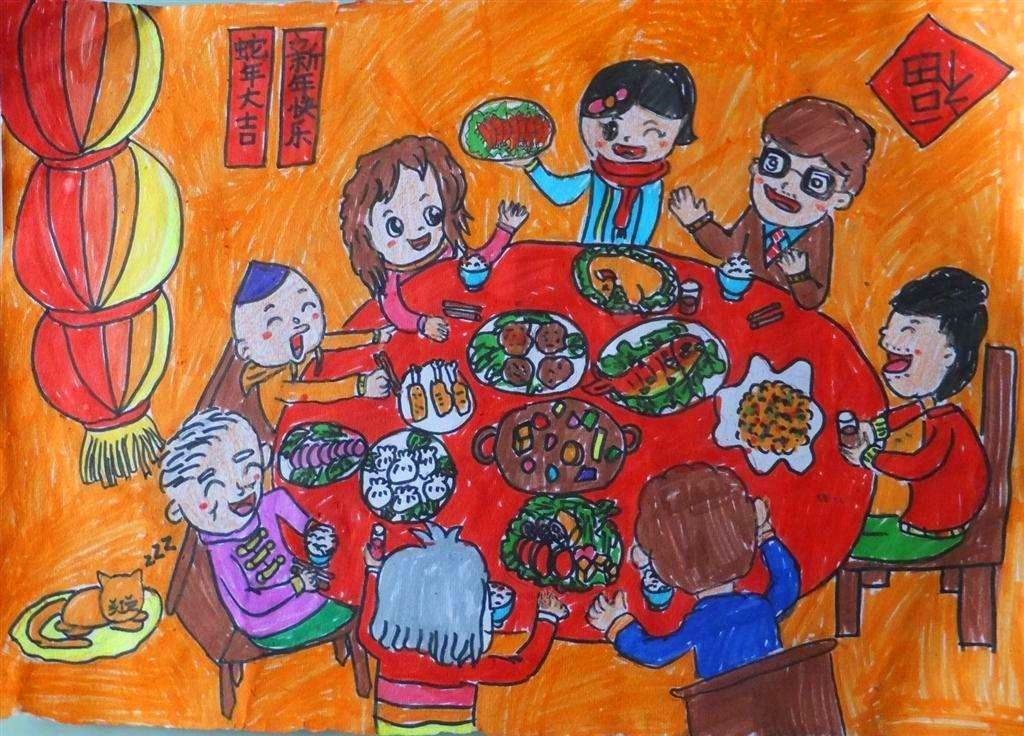
At festivals in China and around the world, the events are always family-friendly. After all, Chinese New Year is all about celebrating family and spending time with our oldest and youngest loved ones. At Chinese New Year parades, the fan dancers, drummers, and lion dancers are often children or teenagers. Along the parade route, people marching in the parade or riding on floats pass out candy to the children watching the festivities.
Chinese New Year Facts
Since cash gifts are so much a part of Chinese New Year, trying to meet the demand for all that money can be a problem for Chinese banks. Because people make withdrawals to give as lucky red money, the People’s Bank of China supplies banks across the country with short-term injections of cash.
One of the most significant aspects of Chinese New Year for children is showing respect and affection to their elders—their parents and grandparents—by visiting and bringing them gifts of fruit, candy, and lucky money. This vital tradition continues to this day. At a very young age, children are taught Chinese sayings that are meant to wish their elders a long life, good luck, and good fortune. Children are expected to engage in the celebrations at home by helping the adults prepare the big dinner and by creating decorations and banners to hang throughout the house. These decorations incorporate paper cut-outs of the coming year’s zodiac animal. And older children help adults set off the firecrackers, a noisy and smoky task.
Chinese New Year celebrations, along with many other customs, stick to tradition a lot of the time, with practices like the giving of red lucky money that have not changed at all over thousands of years. Chinese culture respects progress and invention in business and technology; after all, most of our smartphones are made in Chinese factories. But life at home for many Chinese families often follows traditional customs, like the careful use of color. The lunar calendar determines lucky days for money and love. Feng shui, a way of arranging your home to create harmony and prosperity, is practiced by experts and families alike. The core of Chinese New Year has always been family, and it will remain that way for many years to come.
The Importance of Color
During Chinese New Year, it is common to see red colors everywhere: red envelopes, red clothing, and red candies. Red, however, is an important color in Chinese culture year-round. Red is related to fire, with happy and exciting celebrations. This is why you will see the red color on Chinese wedding invitations. Red-dyed eggs are used to celebrate the birth of a new baby. When a new business is established, friends will send potted plants draped in red banners.
Other colors also play a big role in Chinese culture. Gold, the color of wealth and nobility, is also used during Chinese New Year to help welcome in a year of prosperity. Red and gold is a classic combination used in restaurants, Buddhist temples, and banks. Chocolate coins wrapped in gold foil are popular gifts.
If there is one color that is opposite to red or gold in meaning, it is white. White is traditionally the color of funerals, at which mourners usually wear white from head to toe. White envelopes containing money are given to everyone attending. White is the color of sadness and bad luck and is never worn or used during celebrations. In Chinese films and television shows, ghosts are often depicted with long white hair and wearing white robes.
It’s Not All About the Money
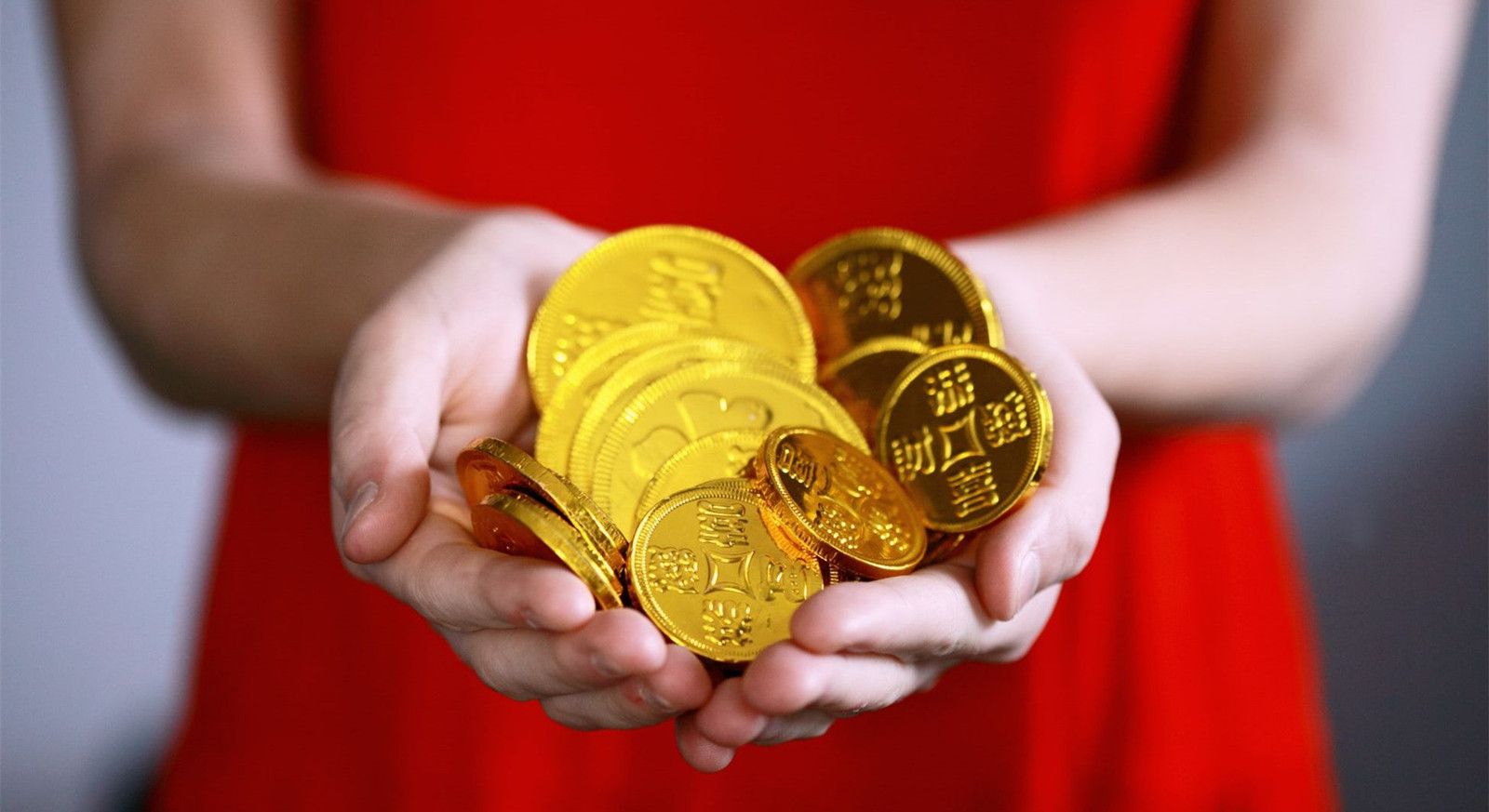
Red lucky money, Dumplings shaped like gold ingots (rectangular blocks of pure metal that can be used to make jewelry or coins). With all these things, it may appear like the Chinese New Year is all about money. But if you look closer, prosperity, as the Chinese like to call wealth, is about more than just becoming wealthy.
In traditional Chinese culture, the family is very important. In some households, money earned by working is shared by all members and spent on what makes the most sense for the whole family. Mealtimes are often spent together. Decisions about school or work are made jointly by the entire family. And holidays are about eating together and paying respect to the elders.
For most of China’s history, ordinary families lived in poverty. Whether they were farmers or fishers, many people struggled to buy enough food or pay the rent on their homes. It was practical to pool resources as a family, and it was essential to save money and always look for ways to earn more. Money became a symbol or something that means more than just the dollars and cents that people earned, spent or saved. Having money meant you could afford to eat. It meant your family would not get evicted from your home. It meant that if someone got sick, you could afford to buy medication. Although many more people have good jobs and earn much higher salaries now in the past, millions of families in China do not earn very much at all, and the struggle to survive continues.
Chinese New Year Facts
Twenty percent of the world’s population celebrates Chinese New Year.
In 2019, people in China spent US$1,400 billion on shopping and eating out during the Chinese New Year period.
According to China’s Ministry of Culture, 133 countries around the world host Chinese New Year celebrations.
During the Chinese New Year period, 415 million trips are made by air within China.
For people who have had difficulty earning enough money to support their loved ones, the Spring Festival is an opportunity to start a new year that could be happier than the previous one. And of course, prosperity, or wealth, is an integral part of that. The traditions that relate to money are not really about money at all, but about maintaining happiness and health and keeping your family safe.
Recently, the emphasis in China has shifted from giving and receiving money during the Spring Festival to buying gifts for loved ones. Many large retail chains from Europe and the United States have opened stores in China in the past few years because people there now have more money to spend on expensive shoes, electronics, and other luxury purchases. Gifts can be extravagant, like cakes stuffed with gold ingots, or flower arrangements with money hidden among the stems.
To accommodate this new interest in gifts, shopping malls have been built quickly in the last twenty years, and there are now about four thousand across China. The largest mall in the world is in the Chinese city of Dongguan. However, these malls have not all been successful, and many spaces in them remain empty. New South China Mall was only 10 percent full ten years after it was built and has been called a ‘ghost mall.’ This is partly because the malls were being built more quickly than stores could fill them, and partly because the stores that did occupy the spaces were selling luxury or costly items that people like factory workers could not afford. Since then, shops and restaurants that sell lower-priced products and food, have become more common in the malls, and some now include free entertainment areas like the Teletubbies Edutainment Center in the South China Mall.
While Chinese New Year is about survival and new beginnings, it is also big business for stores and restaurants, which are constantly changing to reflect the evolving interests of the Chinese people. And even though money and gifts have a prominent role in the New Year celebrations, the core of what the holiday is really about has always remained the same: the hope that our loved ones will be healthy and happy during the coming year and for many years to come.
Longevity noodles
Long noodles are a part of most traditional Chinese New Year dinners, and families use whatever kind of noodle they like with different sauces and toppings. Some families use chewy wheat or egg noodles, called Mian. Some families use rice vermicelli, called Fen. They’re sometimes fried with meat and vegetables, or included in a soup. Raw, these noodles are white and look a lot like vermicelli. Once they’re cooked, they’re transparent, like glass. People eat them like rice, with other, more complicated dishes spooned on top.
Responses • 0
0/2000
ID: 322
Matthias
Offline
Oct 10
Visited
From
Hafizabad, Pakistan
Send Message
Related
I uploaded "My Chinese Picture Dictionary (Kazakh)", enjoy it.
https://www.cchatty.com/pdf/3897I uploaded "380 Most Commonly Used Chinese Verbs", enjoy it.
https://www.cchatty.com/pdf/3239I uploaded "Tang Poetry 1 - Version of Classical Chinese Poetry", enjoy it.
https://www.cchatty.com/pdf/3333I uploaded "Introduction to Standard Chinese Pinyin System Workbook 2", enjoy it.
https://www.cchatty.com/pdf/3904中文普通话跟读练习-中国年轻人怎么存钱-中文普通话发音-How do young Chinese save money-HSK5-6-C1-C2- correcting prounciation - YoutubeI uploaded "Practical Medical Chinese - Clinical (Internal Medicine)", enjoy it.
https://www.cchatty.com/pdf/3496Have you ever tried to study Chinese throughout reading comics like Doraemon?Hi, glad to meet new friends here.I uploaded "First Steps in Chinese Short Course in Everyday Chinese", enjoy it.
https://www.cchatty.com/pdf/3901I uploaded "A Beginners Guide to Chinese Brush Painting", enjoy it.
https://www.cchatty.com/pdf/2910