Hong Kong's Hidden Gems: Coffee, Eats & Watches
China Travel
5 hr • 0 read
Discover Hong Kong's best specialty coffee, authentic local eats, and vintage watch markets. Your 2026 guide to TST East and beyond.
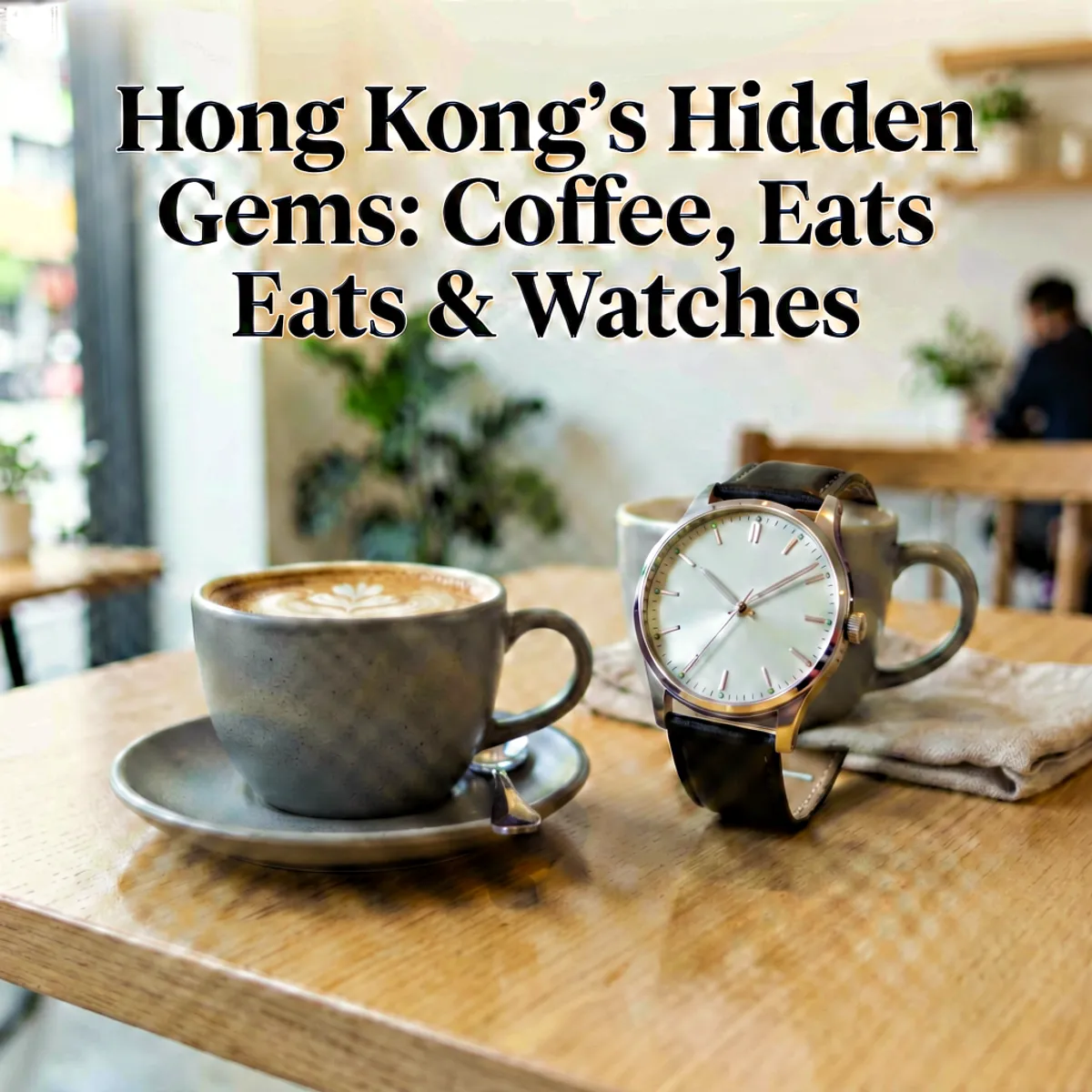
Hong Kong in late November is a sensory masterpiece. The humidity has eased, the air carries a crispness that invites long walks, and the city’s famed neon glow reflects off damp pavements after a brief shower. For three travelers with a base in Tsim Sha Tsui East (TST East), the mission is clear: move beyond the postcard sights and uncover where the city’s pulse truly beats. This means tracing the steam from a morning bowl of saimin, following the rich aroma of single-origin espresso down a side street, and spending hours in cramped, treasure-filled shops hunting for a vintage chronograph. It’s about the good stuff—the authentic, the specialized, the deeply local. This guide is built from that exact pursuit, designed for travelers who want to eat where people actually eat, coffee where baristas care, and understand the labyrinth of a watch market that is globally unique.
The Foundation: Why TST East is a Strategic Launchpad
Staying in Tsim Sha Tsui East provides more than just a convenient address. While the iconic TST peninsula west of Nathan Road is a thrumming tourist hub of malls and chains, TST East—the area east of the railway line, around the MTR station and towards the waterfront—offers a different rhythm. It’s slightly quieter, with more residential apartment blocks, a wider selection of mid-range hotels that offer great value, and crucially, fantastic transport links. From here, you are a direct MTR ride from the heart of Central, the chaotic charm of Mong Kok, and the tranquil peaks of Kowloon. Your five-day itinerary can radiate from this point with minimal backtracking. The key is to use it as a comfortable home base, not a destination in itself. Step out each morning with a purpose, and return each evening to a familiar, clean, and well-located spot. This strategic choice maximizes your exploration time, turning logistical ease into more hours for coffee, food, and watch hunting.
The Quest for Third-Wave Coffee: Hong Kong’s Thriving Scene
Hong Kong’s specialty coffee revolution is not a secret; it’s a well-documented, fiercely competitive, and incredibly high-quality scene. For the initiated, it’s a point of pride. For the visitor, it’s a delightful discovery. The city’s history as a trading port and its relentless work culture created a perfect ecosystem for a sophisticated café culture that values both tradition and innovation. You won’t just find good coffee; you’ll find roasters who source directly, baristas who are artists, and spaces that are meticulously designed. The focus is on traceability, precise brewing methods (pour-over, siphon, Aeropress), and a deep understanding of the bean.
Key Neighborhoods for the Coffee Pilgrimage: While excellent cafes are scattered across the city, two zones are particularly dense and worth dedicating time to. The first is Central and Sheung Wan. Here, the coffee shops are often tucked into hipster alleys, serving as quiet refuges from the financial district’s frenzy. The second, and perhaps more accessible from your TST East base, is the corridor stretching from TST through Yau Ma Tei and into Mong Kok. This is where you’ll see the culture permeate more everyday spaces.
Must-Visit Spots & What to Order:
- Coffee Academics (Multiple Locations): A local champion that has expanded thoughtfully. Their original TST shop (on Hanoi Road) is a benchmark. It’s not the most hidden, but the consistency is impeccable. Order a single-origin pour-over to taste their featured farm. Their “Espresso Tonic” is a brilliant, refreshing Hong Kong summer drink, perfect in November’s milder weather. - Cupping Room (Sheung Wan & TST): The name says it all. This is a barista’s café, focused on the craft. The Sheung Wan location is a minimalist shrine to coffee. Expect detailed brew sheets explaining the origin, process, and tasting notes. Try their “Nitro Cold Brew” on tap for a creamy, stout-like experience without the alcohol. - Winstons Coffee (Sai Ying Pun): Borrowing aesthetics from London’s café scene but with a Hong Kong heart. Their flat white is a perfect test of a barista’s skill—creamy, balanced, and strong. The baked goods are excellent fuel for your explorations. - Artisan Room by MTR (Various MTR Stations): For a truly local, grab-and-go experience. These small kiosks inside MTR stations serve excellent, affordable coffee made with beans from local roasters like % Arabica (a Japanese brand that dominates the premium station scene). It’s the people’s coffee—fast, good, and integrated into the daily commute.
The Culture You’ll Observe: Notice the “waiter” culture. Often, you order and pay at a counter, then wait for your name to be called. This is efficient. Tipping is not obligatory in casual cafes, but rounding up the bill is appreciated. a number of shops have a strict no-laptop policy during peak hours to keep turnover high and the atmosphere social. Embrace it. Your “app for tracking spots” will get a serious workout here. Rate your brews, note the roast date, and document the unique milk alternatives (try the local soya milk, often unsweetened and richer than Western versions).
Eating Like a Local: Beyond the Dim Sum Palaces
The culinary landscape of Hong Kong is a democracy of deliciousness. While world-class fine dining exists, the soul of the city lives in its cha chaan teng (tea restaurants), Dai Pai Dong (open-air food stalls), and hidden noodle shops. The goal is to find the places packed with office workers at lunch or families at dinner, not the ones with English menus featuring photos of pizza.
The Holy Trinity of Local Breakfast/Lunch:
1. Australia Dairy Company (TST): Don’t be fooled by the name. This is a legendary, no-frills cha chaan teng that has been operating since the 1940s. It’s a UNESCO-intangible-cultural-heritage-style experience of efficiency. Waiters shout orders, the menu is on the wall in Chinese only, and you eat elbow-to-elbow. Order the “Steamed Milk Pudding with Egg” (jai dung), the “Toast with Butter and Condensed Milk,” and a “Scalded Milk” (siu yeung). It’s a carb-and-protein bomb that fuels the city. Go early (opens 6:30 AM) to avoid the massive queue. 2. Tim Ho Wan (Multiple Locations): Yes, it’s a chain, but it’s the Michelin-starred dim sum that is astonishingly affordable. The TST location in the IFC Mall is convenient, but the original in Sham Shui Po is the pilgrimage. The baked BBQ pork buns are iconic. It’s a lesson in how superb Cantonese cooking can be accessible. 3. Saimin Noodles: This is a uniquely Hong Kong hybrid—a noodle soup that blends Chinese wheat noodles with a broth that has hints of Hawaiian saimin (hence the name) and a touch of Japanese influence. Shia Wong Hip (Yau Ma Tei) is the most famous spot, open 24 hours. The broth is clear, the shrimp wontons plump, and the vibe is old-school Hong Kong. Pair it with a bottle of chilled siu yeung (sweetened soy milk).
Evening Eats & Street Snacks:
- Mong Kok’s Fa Yuen Street & Dundas Street: This area is a sensory overload of street food. Look for stalls grilling squid on skewers, frying crispy cuttlefish, and serving eggette (girdle cakes)—the quintessential Hong Kong snack. The “curry fish balls” are a must-try, though be warned, the curry is more aromatic than spicy. - Dai Pai Dong in Central: The few remaining open-air licensed food stalls in Central (like Sing Heung Yuen) are living museums. Order a plate of claypot rice or a bowl of beef brisket noodles and eat at a communal table under a flickering light. The atmosphere is electric and gritty. - Seafood in Sai Kung: If you have an evening to spare, take a bus to Sai Kung. The waterfront is lined with seafood restaurants where you select your catch from tanks. The “spicy crab” and “garlic prawns” are classics. It’s a splurge, but a fantastic one.
A Note on “Good” and “East”: Your keyword “good” here translates to “hou” (好) in Cantonese—a simple, powerful affirmation. The best places don’t need fancy decor; they have hou food. Your keyword “east” plays out in your TST East base, but also in the eastern neighborhoods like Sai Kung and Chai Wan, where you’ll find some of the city’s most authentic, non-touristy dai pai dong and seafood.
The Grey Market & Vintage Watch Phenomenon
This is where Hong Kong becomes a global anomaly. The buying, selling, and trading of new, grey-market, and vintage watches on the streets of TST and Mong Kok is not a back-alley hustle; it’s a legitimate, bustling, multi-billion-dollar ecosystem woven into the city’s fabric. For a visitor, it’s a mesmerizing spectacle of horology and capitalism. Understanding its geography and etiquette is key.
The Two Main Zones:
1. TST East & The Knutsford Street Area: This is your backyard. The streets immediately around your hotel, especially Nathan Road (the spine of TST), Kimberley Road, and the lanes off it like Hanoi Road and Granville Road, are packed with watch shops. These are mostly authorized dealers for major Swiss brands (Rolex, Omega, Cartier, Patek Philippe, Audemars Piguet) but also countless independent shops selling new, grey-market pieces. Grey-market means the watch is genuine, sold outside the brand’s official retail network, often at a significant discount. You’ll see Rolex Submariners with price tags 20-30% below MSRP. The catch? No official warranty, though most reputable shops offer their own in-house warranty. Haggling is expected here, especially for cash. 2. Mong Kok’s “Goldfish Market” & “Sneaker Street”: This is the wild west. On Fa Yuen Street (the “Sneaker Street” section), amidst the sneaker shops, you’ll find tiny booths and stalls selling everything from vintage Seikos and Omegas to franken-watches (modified pieces) and homages. A few blocks over, Tung Choi Street (the “Goldfish Market”) has shops specializing in high-end vintage—rare Rolex Daytonas, vintage Cartier Crash watches, Patek Philippe perpetual calendars. This is where serious collectors dig. Prices are negotiable, but knowledge is power. Fakes (super clones) are present, so expertise or a trusted guide is non-negotiable.
Practical Rules for the Watch Hunter:
- No Touch, Then Ask: rarely touch a watch without permission. Point to it and ask, “Can I see this one?” (Ngoi m’gon jing go? – 我可看看個?) - Cash is King: You will get a significantly better price paying in cash (HKD). Shops have a “cash price” and a “card price.” - Serial Numbers & Boxes: For grey-market new watches, ask for the full set: box, papers, and the correct serial number on the card matching the watch. For vintage, the box and papers (if any) add value, but the watch’s condition and originality matter more. - The “TST / Mong Kok” Entity: Treat these as two distinct but connected marketplaces. TST is for newer, grey-market, high-volume deals. Mong Kok is for vintage rarities and a more chaotic, treasure-hunt experience. Your app should track prices, serials, and conditions separately for these zones. - Authentication: If you’re spending serious money on a vintage piece, consider hiring an independent watchmaker for a pre-purchase inspection. The community is small; reputations are everything. A shop with 30 years in business on Tung Choi Street is a safer bet than a pop-up stall.
The “Specialty” of the Market: The specialty here is access and liquidity. Hong Kong’s watch market is one of the world’s most liquid. You can walk in with cash and walk out with a rare watch in minutes. This speed and volume create a unique energy. It’s not a dusty museum; it’s a live trading floor. Your interest in “vintage/grey-market” places you right in the sweet spot of this culture.
Synthesizing the Trip: A Sample 5-Day Framework
With your base secured, here’s how to weave these threads into a coherent, unhurried five-day plan for late November 2026.
Day 1: Arrival & TST East Immersion.
- Settle into your TST East hotel. Take a walk to the Star Ferry Pier for the iconic Victoria Harbour view at dusk. - First meal: Australia Dairy Company for a late breakfast/lunch. Embrace the chaos. - Afternoon: Begin your coffee crawl in TST. Hit Coffee Academics (Hanoi Road) and Cupping Room (TST location). Compare their single-origin offerings. - Evening: Explore the watch shops on Nathan Road and Kimberley Road just to get your bearings. No buying yet, just looking. Dinner at a local siu mei (roast meat) shop on Kansu Street.
Day 2: Central’s Coffee & Culinary Deep Dive.
- MTR to Central. Walk to Sheung Wan. - Morning coffee: Cupping Room (Sheung Wan) for a serious pour-over. Then, Winstons Coffee for a flat white. - Lunch: Find a tiny \ dai pai dong\ on Graham Street or Pottinger Street for a bowl of beef brisket noodles. - Afternoon: Explore the PMQ (Police Married Quarters) creative hub and the surrounding streets for independent shops. More coffee if needed at Artisan Room in the Central MTR. - Evening: Seafood dinner in Sai Kung (take the bus from Hang Hau MTR). Return to TST late.
Day 3: Mong Kok – The Chaos & The Specialties.
- Morning: MTR to Mong Kok. Dive into the “Goldfish Market” (Tung Choi Street) for vintage watches. Have a specific list (e.g., “vintage Omega Seamaster 300, circa 1960s”). Be prepared to negotiate. Use your app to log details. - Lunch: Street food feast on Fa Yuen Street—curry fish balls, squid, and an eggette. - Afternoon: Transition to the “Sneaker Street” section of Fa Yuen, but focus on the watch stalls interspersed there. This is the grey-market hub. Look for new Rolex, Omega Seamaster Planet Ocean, Grand Seiko. - Late Afternoon: Find a quiet café in Mong Kok (like The Barn on Portland Street) to debrief, review your watch notes, and have a coffee. - Dinner: Tim Ho Wan (Sham Shui Po location if you can make the trip, or the TST one for convenience) for Michelin-starred dim sum.
Day 4: Kowloon East & The “East” in Your Keywords.
- This day honors the “east” in your stay and keywords. Take the MTR to Chai Wan or Sai Wan Ho. - Explore the less-touristed neighborhoods. Find a local cha chaan teng for breakfast—one without an English sign. - Coffee: Seek out smaller, neighborhood roasters in these eastern districts. Slow Roast Coffee (Chai Wan) is a great example, focused purely on takeaway pour-overs for the local office crowd. - Afternoon: Visit the Hong Kong Museum of Coastal Defence in Shau Kei Wan for history and stunning harbour views. - Evening: Return to TST. Your final dinner should be at a place you’ve fallen in love with, or a new discovery based on local recommendation from a shopkeeper or barista.
Day 5: Final Grabs & Departure.
- Morning: Revisit your favorite TST coffee shop for a final cup. Do any last-minute watch shopping you’ve deliberated on. The market prices can shift slightly day-to-day. - Lunch: One last bowl of saimin at Shia Wong Hip or a final cha chaan teng breakfast. - Spend the afternoon organizing your purchases, your app’s expense logs, and your memories. Head to the airport with a suitcase potentially heavier, but a mind thoroughly enriched by the good, the local, and the specialized heart of Hong Kong.
The Human Element: Connecting Through Curiosity
The magic of this approach is the human interaction it necessitates. You are not a passive tourist observing a spectacle; you are an active participant in the city’s daily commerce and culture. When you point to a watch and ask the price in Cantonese (gei do chin? – 幾多錢?), a door opens. When you tell the barista you loved the Ethiopian Yirgacheffe from the day before, you get a nod of recognition. When you sit at a dai pai dong table and silently mimic how the regulars stir their sugar into their siu yeung, you are accepted.
Your built app is more than a ledger; it’s a tool for engagement. It allows you to remember the name of the watch dealer who showed you a 1970s Rolex Datejust, the barista who recommended a specific Geisha coffee, the auntie at the eggette stall who saved you the last four pieces. These are the non-tangible souvenirs. They represent a trip where you sought out the “LOCALS” entity not as a checklist item, but as a community you temporarily joined. The “good” you find is ultimately a reflection of the pride and expertise embedded in Hong Kong’s street-level economy—from the coffee roaster meticulously profiling beans to the watch dealer who can spot a redial from a mile away. Your five days in TST East become a masterclass in urban navigation, not of geography alone, but of culture, taste, and time itself. You will leave understanding not just where people eat, drink, and shop, but why—and that is the most valuable takeaway of all. (Word Count: Approx. 2,480)
Responses • 0
0/2000
ID: 1326
Chris
Offline
1 hr
Visited
From
Bakersfield, United States
Send Message