Hebei Cuisine
Original
Chinese Food
Nov 21 • 3304 read
Hebei Province, called “Ji” in ancient times, was one of the nine provinces in ancient China. Therefore, Hebei Cuisine is also called “Ji Cuisine” for short. Hebei Cuisine is one of the local schools of Chinese cuisine.
Formation and Characteristics of Hebei Cuisine
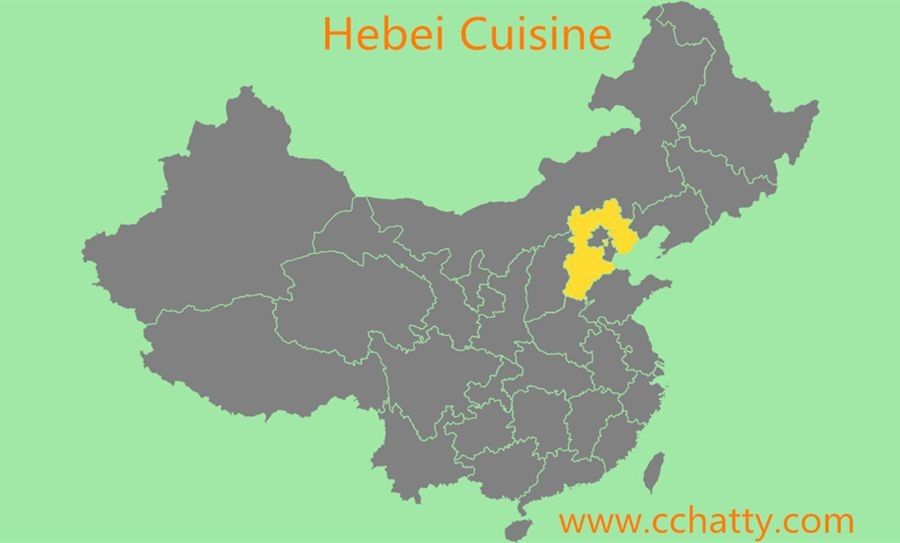
Located in the northern part of North China, Hebei spans the southeastern area of the Inner Mongolia Plateau and borders the Bohai Sea in the east. With favorable geographical conditions, Hebei is one of the earliest developed regions in China. In the Tang and Song dynasties, Baoding, Zhending (present-day Zhengding), Darning, Xinde (present-day Xingtai) had a prosperous economy, and people there invented a great number of special local dishes. In the Yuan and Ming dynasties, the nation’s political center was moved to Hebei, thus greatly facilitating the economic and cultural development of the region. In the meantime, the region’s culinary culture witnessed rapid growth. In mid-Qing Dynasty, the Hebei Cuisine took shape.
Hebei is adjacent to Shandong, so Shandong Cuisine has exerted great influence on Hebei cuisine. Overall, Hebei Cuisine adopted the advantages of both Shandong Cuisine and Beijing Cuisine.
Hebei Cuisine has the following characteristics: Materials from the locality, meticulously selection of ingredients, emphasis on slicing techniques, gravy and soup, a salty taste and a fainted smell.
2. Famous Dishes and Snacks of Some Cities in Hebei
(1). Shijiazhuang
Shijiazhuang is the capital of Hebei Province, which was called “Shimen” in ancient China. Shijiazhuang is an important agricultural production base, with a highly intensified and industrialized agriculture.
Special Local Dishes:
Lion-shaped Fish—金毛狮子鱼
Procedure: Prepare a carp as the main ingredient, clean the carp, slash the carp diagonally, and fry the carp until the fish meat stripes erect. Before it is served, pour the ready-made gravy onto the fish.
The fish is in the shape of a lion’s head, hence the name. The dish has a unique shape and is very delicious.
White Dragon Crossing the River—白龙过江
Procedure: Prepare a carp and scallops as the main ingredients, clean the carp and stew it with scallops and some ready-made broth. Before the dish is served, pour egg white paste onto it which represents a “white dragon.”
Braised Chestnuts and Pork in Soy
Sauce—栗子红烧肉
(Braise pork and chestnuts with soy sauce, salt, and other seasonings.)
Special Local Snacks:
Condensed Tofu Jelly—豆腐脑
Cake Baked in Jar—缸炉烧饼
(A traditional local wheaten food)
Steamed Bun with Mutton Stuffing—羊肉包子
Buckwheat Hele Noodles—荞麦饸饹
Procedure: Press buckwheat dough into noodles, boil the noodles and add seasonings to the noodles before it is served.
Baodu—爆肚
(Quick-boiled tripes)
Eight-treasure Golden Millet—八宝黄粱饭
Naked Oats Bun—莜面窝窝
Jiaozi Dumpling—水饺
(2). Baoding
Baoding is a city with a long history. The catering trade in the city is very mature.
Special Local Dishes:
Stewed Sliced Fish in Sauce—酱汁瓦块鱼
(The main raw material of the dish is a fresh black carp. The fish is cooked with more than ten kinds of seasonings. When finished, the dish is bright red, and aromatic.)
Sweet and Sour Carp—糖醋鲤鱼
Stewed Soft-shelled Turtle in an Earthen
Pot—沙锅元鱼
(Prepared with soft-shelled turtles and various kinds of supplementary materials in an earthen pot, this dish is delicious and very nutritious.
Steamed Crabs in Clear Soup—清蒸湖蟹
Mr. Xiang Bean Curd—相先生豆腐
In ancient China, a wealthy official by the surname of Xiang was very fond of this dish, hence the name.
Procedure: Prepare bean curd as the main ingredient, cut bean curd into pieces, fry bean curd slices one by one, and cook the bean curd with onions, ginger, garlic and spicy sauce.
Bright red in color, this dish is very delicious.
Special Local Snacks:
Lightly Fried Dumpling—锅贴
Bai Yunzhang Steamed Bun with
Stuffing—白运章包子
Created by a person by the name of Bai Yunzhang, this steamed bun with stuffing is very tasty.
Baked Wheaten Cake with Boiled
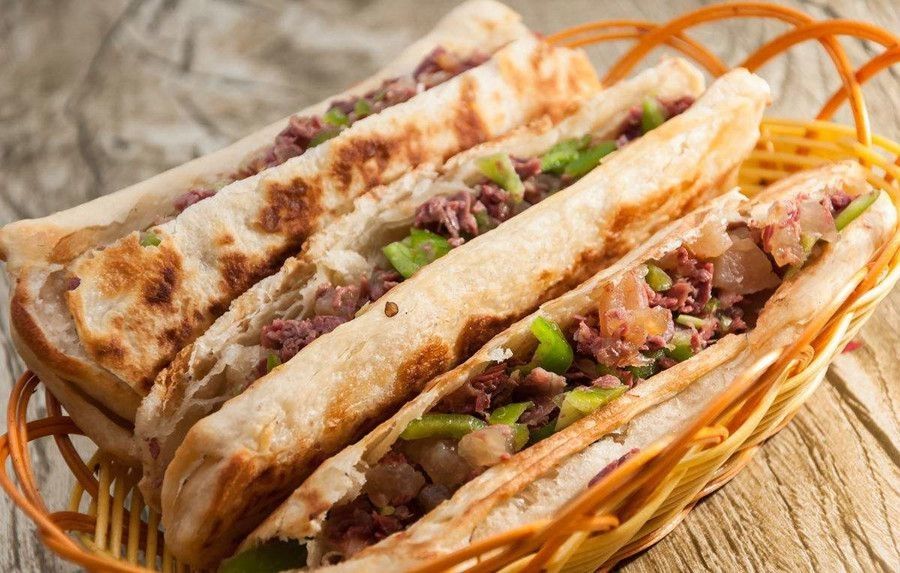
Pork—白肉罩火烧
This dish consists of three parts: Pork boiled in a soup with a wide variety of seasonings, the soup, and baked wheaten cakes.
Pot-stewed Chicken by Ma’s Old Chicken Delicatessen—马家老鸡铺卤鸡
-article-1577681573)
(3). Chengde
Chengde is well known both at home and abroad for the Chengde Summer Resort and the Eight Outer Temples. Here tourists can taste special delicious food from the north of the Great Wall and the dishes and snacks of the provisional imperial palace, especially the delicious dishes prepared with the game, and wild vegetables and edible funguses.
Special Local Dishes:
Roast Whole Deer—烤全鹿
Beggar’s Pheasant—叫化子山鸡
(Similar to Beggar’s Chicken of Jiangsu)
Gaidaorou—改刀肉
(Fried
shreds of pork and bamboo shoot in the shape of a pyramid)
Gaidaorou was created by the provisional imperial kitchen in the Mountain Resort of Chengde and can be preserved for several months in winter. It has the same taste as the Twice-cooked Pork. In the Qing Dynasty, Gaidaorou was a must food for Manchu and Mongolian nobilities when they need to take along journey to the capital.
Fried Pheasant Slices—滑炒山鸡片
Procedure: Slice an artificially raised pheasant, and fry the sliced pheasant meat together with many kinds of required seasonings.
This dish is less delicious if prepared with home-raised chicken.
Game Chafing Dish—野味火锅
(Prepared with pheasant meat, deer meat and wild edible funguses as the raw materials)
Fried Tender Brake Ferns and Pork Shreds—厥菜肉丝
Special Local Snacks:
Instant-boiled Mutton—涮羊肉
Qizi Sesame Seed Cake—棋子烧饼
Shaped like the pieces on the board of Chinese chess, such cakes are crisp, soft and aromatic.
Fresh Rose Cake—鲜花玫瑰饼
(Baked cake stuffed with rose petals, sugar, and kernels)
Almond Tea—杏仁茶
Procedure: Add water to apricot kernels, grind them into pulp, and boil the pulp.
Nansha Cake—南沙饼
It
was created in the early Qing Dynasty and is aromatic and soft. It is easy to
preserve. Like Gaidaorou, Nansha Cake
was a must food for the Manchu and Mongolian nobilities during their journey to
the capital.
(4). Tangshan
Tangshan borders the Bohai Sea in the south. It is an industrial city and an important transportation hub with an advanced transportation infrastructure.
Special Local Dishes:
Grapes in Hot Toffee—拔丝葡萄
Stir-fried Conches in Original
Juice—爆原汁海螺
(Conches cooked with many kinds of seasonings. The dish is delicious and tender.)
Three-taste Flatfish—三吃比目鱼
(Cut
flatfish into three parts and cook them
with three different methods.)
This dish provides three tastes and has unique characteristics.
Sesame Seed and Mutton—芝麻羊肉
Procedure: Cut mutton into small pieces, add various seasonings to them, cover the mutton with sesame seeds, and fry the mutton until it is well done.
Special Local Snacks:
Jiaozi dumplings—水饺
Steamed Buns with Various Kinds of Stuffing—不同口味的包子
Almond Porridge—杏仁茶
Fried Cake Stuffed with Turnip
Shreds—萝卜丝饼
(5). Anguo
Anguo is named the “capital of medicine.” The medicated food restaurants in the city reflect the quintessence of the homologous nature of medicine and food. Dishes in Anguo perfectly combine herbal medicines with delicacies.
Sweet Rice of the Seeds of Job’s Tears—惹米甜饭
Lilies and Sliced Pork—百合肉片
Braised Chinese Caterpillar Funguses and Pork’s Elbows—虫草扒肘子
Fried Fruits of Chinese Wolfberry and Scalloped Pork Kidneys—杞果腰花
3. Interesting Stories of Some Hebei Dishes
-article-1577681644)
Gaocheng
Palace Noodles—藁城宫面
Gaocheng Palace Noodles originated from Gaocheng, Shijiazhuang. In the Guangxu reign period (1875-1908), such noodles were tributes to the imperial palace, hence the name “Palace Noodles.” The dried noodles to be contributed to the emperor were wrapped with yellow paper, tied with yellow ropes and placed in yellow boxes. After being examined by the county official, the noodles would be sent to the capital. There are three kinds of Gaocheng Palace Noodles, i.e., Fried Noodles, Egg Fried Noodles and Rice Noodles. The noodles are white, shiny, thin, even and hollow in the middle. They are not easy to be melted even after being boiled for a long time. Such noodles are loved by many customers both at home and abroad. Many people in Hong Kong and Japan give Gaocheng Palace Noodles to their relatives and friends as gifts.
Golden-thread
Noodles—金丝杂面
Golden-thread Noodles is a famous food of Raoyang County, Hengshui City, with a history of over 170 years. Legend has it that such noodles were created by a person by the surname of Chou in Guangdong Village, Raoyang County. One day during his travel incognito, Emperor Qianlong came to Raoyang. Feeling hungry, he entered an eatery. The owner prepared a bowl of noodles for him. After eating the noodles, the emperor could not help praising it. Later local officials sent such noodles to the emperor every year as tributes. Meticulously prepared with wheat flour, bean flour, yolk, white sugar and sesame oil, the delicious and nutritious noodles are golden in color and as thin as silk.
Eight-treasure
Golden Rice—八宝黄粱饭
Eight-treasure Golden Rice is a famous dessert. In this dish, the rice is steamed with millet, wheat, the seeds of Job’s tears, sorghums, purple rice, Gorgon fruits, and red beans. Its name is derived from an allusion called “Golden Millet Dream.”
“In the Kaiyuan reign period of the Tang Dynasty, a poor scholar by the surname of Lu went to the capital to take the imperial examination. In Handan, Lu met Lǚ Dòngbīn, one of the Eight Immortals in Taoist mythology, who disguised himself as an ordinary scholar. They sat down and had a chat. Scholar Lu complained about his bad luck. Lǚ did not give a reply. Instead, he took out a porcelain pillow, and let Scholar Lu have a nap. He said to him: “You will get everything you want with the pillar.” At this moment, the owner of the restaurant was pouring some millet into a pot. Lu fell asleep. In the dream, Lu became a high official and enjoyed a life of wealth and comfort. But when he got old, he suffered a lot of diseases, and no one can cure him. When he was about to die from illness, he suddenly waked up and find that it was just a dream, and the pot of millet was still cooking on the fire for him. Lǚ Dòngbīn nodded to him with a smile. Scholar Lu suddenly understood why Lǚ did this, and he went away with the Immortal Lǚ.”
Gaidaorou—改刀肉
Gaidaorou was created by the Wukuaiyuan Restaurant in Pingquan County, Chengde City. According to legend, during the Qianlong reign period, Master Liu was an experienced chef of the Mountain Resort, the temporary imperial palace of the Qing Dynasty. He prepared food for Emperor Qianlong for several dozens of years. After his retirement, he came back to his hometown, Pingquan County, where he opened a restaurant, called “Wukuaiyuan” and took in five apprentices. Prepared mainly with port and bamboo shoots through a special cooking method, Gaidaorou is very tasty and easy to be preserved. Its storage period in winter is three months; and in hot summer, one month.
Responses • 0
0/2000
ID: 322
Matthias
Offline
1 day
Visited
From
Orlando, United States
Send Message