Hangzhou's Modern Surge
AI Learn Chinese
5 hr • 0 read
Exploring Hangzhou's modern districts near West Lake. Are they livable? A look at urban development and lifestyle.
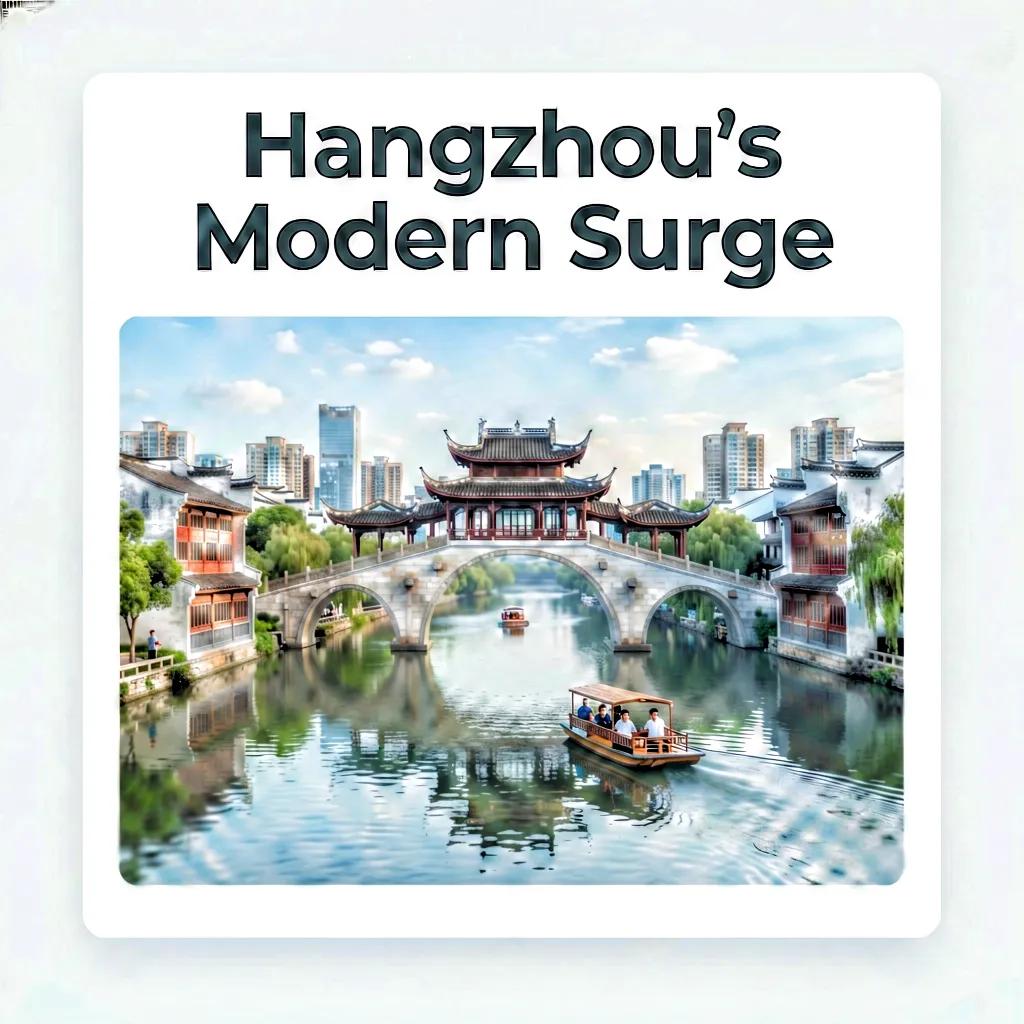
The taxi ride from Hangzhou Xiaoshan International Airport to West Lake is a masterclass in urban transformation. For the first twenty minutes, the scenery is a relentless canvas of construction cranes, glass-and-steel monoliths, and sprawling, meticulously planned complexes. This is not the ancient, watery Hangzhou of poets and painters. This is a different city, rising with astonishing speed from the flatlands of the Qiantang River delta. The question posed by a recent visitor—"What area is that? Is it nice to live?"—touches on the very soul of contemporary Hangzhou. It is a query that reveals the stunning visual dichotomy between the city's legendary natural heritage and its aggressively modern present. The "lot" of high-rises you saw is not a random accident; it is the deliberate, concentrated manifestation of China's economic rise, and Hangzhou is one of its most compelling case studies. To understand that view from the highway is to understand where this city is going, and what it means to call one of its new "modern areas" home.
The Engine of Change: From Canal Town to Digital Capital
To grasp the scale of what you witnessed, one must first understand Hangzhou's recent history. For centuries, its identity was synonymous with West Lake (Xi Hu), a UNESCO World Heritage site that inspired countless landscapes, poems, and the serene, garden-centric lifestyle of the southern Yangtze region. The city was a beautiful, relatively sleepy provincial capital, famous for silk and tea. That all began to change with tectonic force in the late 20th and early 21st centuries. The catalyst was the rise of Alibaba and an entire ecosystem of tech giants, startups, and supporting industries that clustered around this digital leviathan. Hangzhou transformed from a historical museum piece into a magnet for millions of ambitious young professionals from across China and the world.
This explosive economic growth required land, infrastructure, and a new urban vocabulary. The answer was massive, state-led development projects that pushed the city's boundaries far beyond the old urban core centered on West Lake. The area you saw—likely the Qianjiang New City district and its extensions towards the airport—is the flagship of this expansion. What was farmland and less-dense manufacturing a mere fifteen years ago is now a forest of skyscrapers housing corporate headquarters, luxury hotels, high-end shopping malls, and thousands of residential towers. The "rise" is literal and metaphorical. By 2026, this district is projected to be fully integrated into the city's primary business spine, a seamless corridor of activity connecting the international airport to the historical heart.
Decoding the Skyline: Key Modern Districts
Your vantage point on the road into the city offers a prime view of several key zones. Identifying them helps answer "what area is that?"
Qianjiang New City (钱江新城): This is the centerpiece. Developed starting in the late 2000s, it was designed to be Hangzhou's new CBD. Its iconic skyline, dominated by the curved "Double Star" towers and the distinctive, sail-like architecture of the Hangzhou Grand Theatre, is visible for miles. This area is a vertical city: office towers, the massive mix-use complex Raffles City, and the Shangri-La Hotel cluster around a central public space and the Qiantang River itself. It is the epitome of the "modern, clean, and sterile" aesthetic you described. The streets are wide, the sidewalks are pristine, and green spaces are architecturally integrated rather than organically wild.
Qianjiang Century City (钱江世纪城): Directly across the Qiantang River from Qianjiang New City, connected by multiple bridges and the metro, this is the next phase. Even more aggressively planned, it features super-tall residential towers, the massive Hangzhou Olympic Sports Expo Center (built for the 2022 Asian Games), and vast commercial complexes. This is where much of the newest, highest-density residential supply is located. The "look" is similar but often even more uniform and new.
Xiaoshan District (萧山区): As you get closer to the airport, you enter Xiaoshan, which has been incorporated into Hangzhou's greater metropolitan area. This district has its own industrial and commercial history but is now experiencing a wave of modern logistics hubs, airport-linked business parks, and newer residential communities catering to the workforce that serves the airport and the eastern economic zones. The feeling here can be slightly less "downtown" and more functional, but the architecture is no less contemporary.
The "about 1 km" references in the data might pertain to distances from West Lake to the edge of these modern zones. In reality, the transition from the ancient lakefront to the modern CBD is shockingly fast. You can be strolling the bamboo-lined paths of West Lake in the morning and dining in a 50th-floor restaurant overlooking the Qianjiang River skyline by evening. The physical proximity makes the contrast—and the question of livability—so potent.
The Livability Equation: Modern, Clean, and Sterile
Your desire for an "immediate neighbourhood to be modern, clean and sterile" is precisely what these new districts are engineered to provide. For many residents, this is the primary draw. Let's break down the components of this engineered livability.
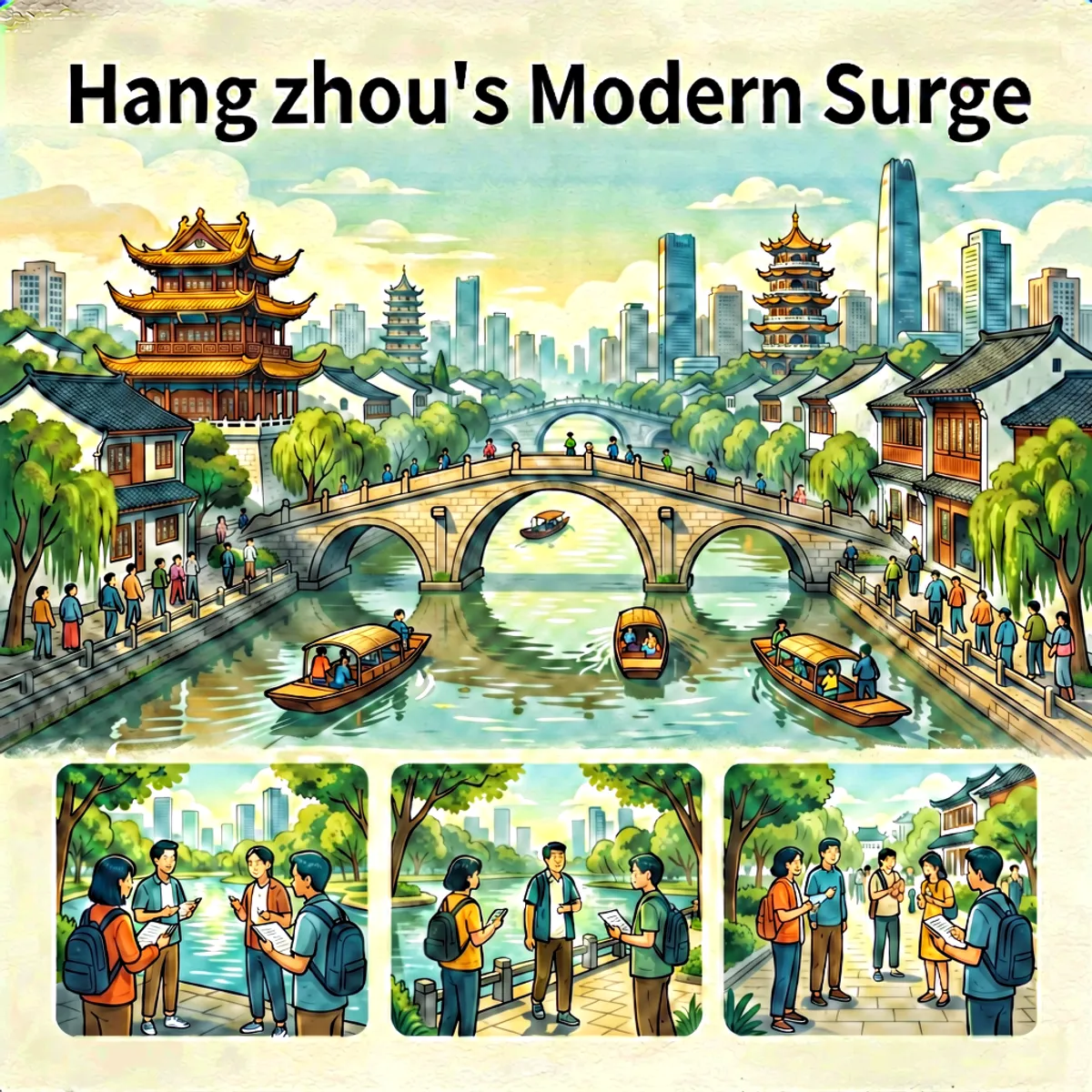
Cleanliness and Order: These are not organic, centuries-old neighborhoods. They are planned communities with strict property management, dedicated cleaning crews, and uniform building facades. Litter is rare, public spaces are meticulously maintained, and there is a palpable sense of order. The "sterile" aspect comes from this deliberate control—less of the chaotic, layered street life of older Chinese cities, and more of a managed, predictable environment. For expatriates and domestic professionals accustomed to different urban rhythms, this can be a significant quality-of-life upgrade, reducing the sensory overload common in many Asian metropolises.
Infrastructure and Convenience: The modern districts are built for the 21st century. The metro network is extensive and new, with stations integrated into shopping malls and office towers. Bike-sharing docks and wide, separated bike lanes are standard. Grocery delivery, food delivery apps, and co-working spaces are ubiquitous. Everything is designed for efficiency. The "lot" of modern buildings you saw are not just offices; they are vertical ecosystems containing apartments, clinics, cafes, and gyms. Need a haircut, a coffee, or a pharmacy? They are likely in the podium of your residential tower or across a clean, landscaped plaza.
Safety and Community: These areas typically boast very low crime rates, benefiting from dense populations, ample CCTV coverage, and a resident demographic of professionals and families. The community feel can be different from traditional hutongs or longtangs (old lane communities). It can be more anonymous, with neighbors being fellow professionals rather than multi-generational families who have lived there for decades. But, this is offset by the proliferation of high-quality, building-managed amenities: children's playgrounds, indoor swimming pools, gyms, and social event spaces that foster a different kind of community among residents.
The Environmental Paradox: There is a fascinating environmental dimension. These new districts are often "greener" in terms of per-capita park access (large, central plazas) and building standards (energy-efficient glass facades, modern HVAC). They are also, ironically, the reason for Hangzhou's broader environmental challenges. The concentration of construction, increased traffic (though mitigated by metro), and industrial activity during the build-out phase contribute to air and noise pollution in these specific zones, even if individual buildings are "clean." The air quality you experience driving through may not reflect the air quality at your apartment window, which could be better due to height and filtration systems.
The Trade-Offs: What You Might Lose
The "modern, clean, and sterile" ideal comes with inherent trade-offs that define the lived experience in these areas.
Cultural and Historical Texture: The most obvious loss is the deep, layered history that defines West Lake and the old city. Your new neighborhood will have a 7-Eleven, a Starbucks, and a网红 (wanghong, internet-famous) bubble tea shop, but it will lack the centuries-old teahouses, temples tucked away in alleys, or the sense of timelessness that permeates areas like the Lingyin Temple vicinity. The architecture is globalized, similar to modern districts in Shanghai, Shenzhen, or even Seoul or Singapore. The unique "Hangzhou-ness" is in the natural backdrop (the lake, the river) and the people, not the built environment itself.
Urban Vitality and Spontaneity: The sterility you seek can also mean a lack of spontaneous street life. In older areas, you might stumble upon a local market, a group of elders playing cards, or a tiny restaurant with decades of history. New districts are planned for specific uses at specific times. The energy is often confined to large shopping malls or business hubs, not spilling organically onto the streets. The "look" is impressive but can feel static, like a backdrop rather than a living stage.
Cost of Entry: Desirability has a price. Apartments in prime Qianjiang New City or Century City command significant premiums. While still potentially more affordable than equivalent apartments in central Shanghai or Beijing, the cost is high by Hangzhou's historical standards. The investment is in the modern infrastructure and the prestige of the address.
Transportation Trade-offs: While metro-connected, these districts can be car-dependent for certain trips, especially if you live in a tower complex slightly removed from a main station. Traffic congestion on the major arteries like Jiang-Gan Road or Qianjiang Road during rush hour is legendary, a direct result of the density you see from the highway. Your commute time, if you work in a different part of the city, must be calculated carefully.
The West Lake Proximity: Your Secret Weapon
Here is the critical factor that elevates the livability equation for these modern areas: their proximity to West Lake. The "about 1 km" distance mentioned in the data is potentially transformative. A residential tower in the northern edge of Qianjiang New City or the southern edge of the old urban district can, in theory, offer a rare hybrid lifestyle.
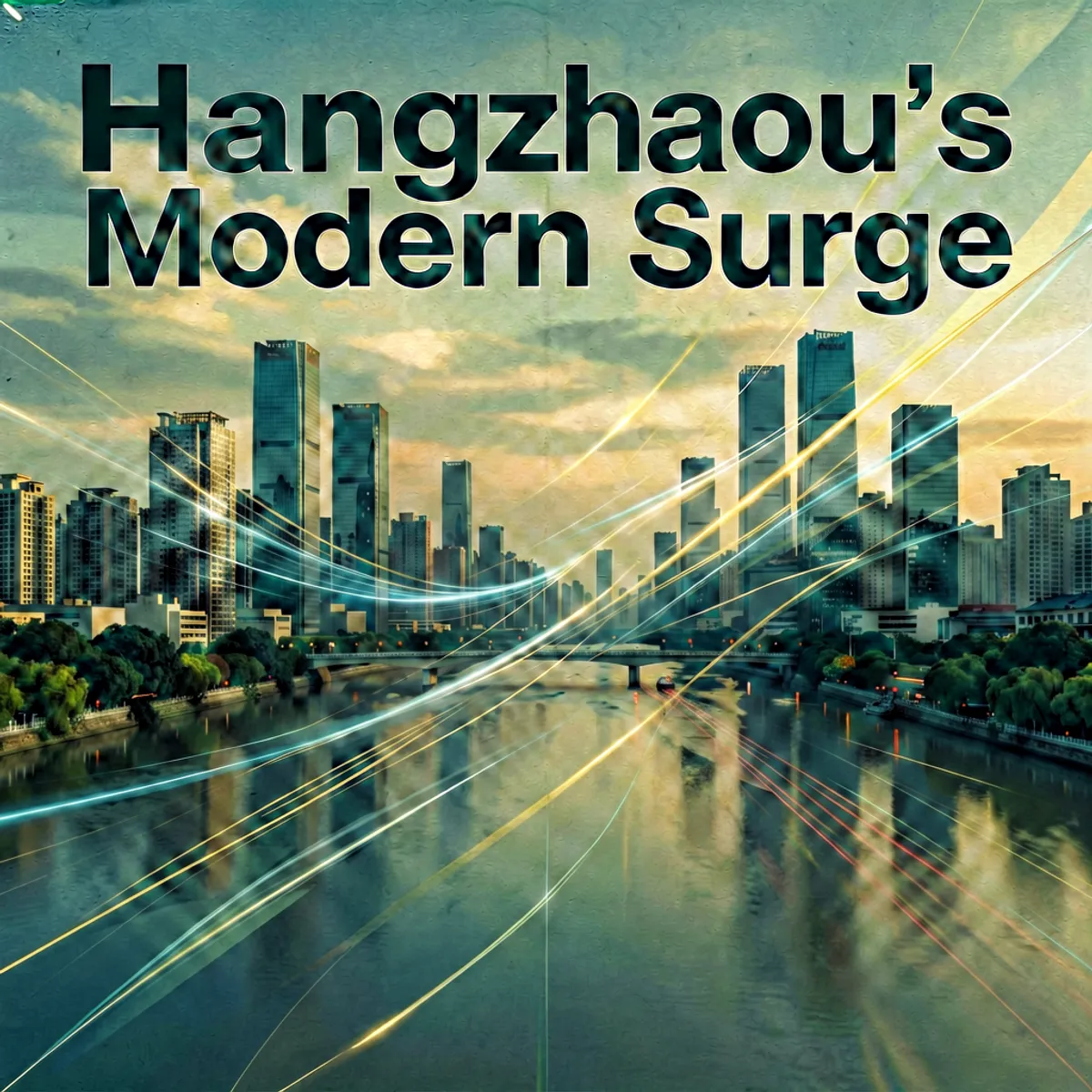
Imagine living in a sleek, soundproofed apartment with a view of a manicured plaza and a distant skyline, but being able to walk or bike for ten minutes to the causeways of West Lake. You can trade the sterile, modern immediate vicinity for the organic, culturally rich, and naturally beautiful environment of the lake on weekends and evenings. This is the unique value proposition of Hangzhou that cities like Shenzhen (with its sheer scale and lack of comparable ancient core) cannot match. You can have the efficiency of a new Asian megacity and the soul of a classical Chinese garden within a short commute. This balance is what makes Hangzhou consistently rank among China's most livable cities, despite its size and growth.
By 2026, this walkable/bikeable corridor between the new CBD and the old lakefront will be even more refined, with dedicated greenway expansions and improved pedestrian bridges over the major roads that separate the two worlds. The key is choosing a building in that specific transitional zone, not too deep into the sterile jungle of the new district, but not so far into the old city that you sacrifice the modern amenities.
A Comparative Glance: How Does This Stack Up?
To fully answer "Is it nice to live?" requires a frame of reference. How does this Hangzhou model compare to other Chinese city-development archetypes?
- Versus Beijing/Shanghai Old Core: Compared to living in a refurbished hutong in Beijing or a shikumen lane in Shanghai, the Hangzhou modern district is quieter, cleaner, more spacious, and has newer infrastructure. You lose the profound historical texture and central location for walkability, but gain significantly in daily comfort, space, and modern convenience. The air quality in Hangzhou's new districts is generally better than in Beijing's core. - Versus Shenzhen: Shenzhen is the ultimate "modern city," built from scratch. Its districts are even more uniformly modern, tech-centric, and densely packed. Hangzhou's modern areas feel slightly more spacious and are graced by the extraordinary natural asset of West Lake. Shenzhen's advantage is sheer economic dynamism and proximity to Hong Kong; Hangzhou's is a better balance of nature, history, and modernity. - Versus Chengdu/Chongqing: These southwestern cities blend modern development with a famously relaxed, culinary, and socially vibrant street culture. Their new districts are similar, but the old city areas have a different, often more boisterous and grassroots energy. Hangzhou's vibe is more polished, tech-driven, and serene, influenced by its lake and its status as an internet capital.
Your preference for a "modern, clean, and sterile" immediate neighborhood aligns perfectly with the Hangzhou new district model. The question then becomes one of priorities: is the trade-off in unique cultural texture and spontaneous street life worth the gain in order, space, and cutting-edge amenities? For a professional in the tech or creative industries, the answer is often a resounding yes. For a historian or a bohemian, it might be a painful compromise.
The Human Experience: A Day in the Life
What does this actually feel like? Let's construct a hypothetical day in 2026 for a resident of a typical tower in Qianjiang New City.
You wake up in a 35th-floor apartment. The floor-to-ceiling windows frame a panoramic view: the ordered grid of the city, the snaking Qiantang River, and, on a clear day, the hazy, green silhouette of the hills beyond West Lake in the distance. The apartment is quiet, the air filtered. Your morning commute is a five-minute walk to the metro station, buried in the basement of your building complex. The station is spotless, with digital signage predicting train times. A 15-minute metro ride, with a transfer, deposits you in the Xixi Wetland area or the Wulin Square area of the old city for work. You've traded a 45-minute drive in traffic for a calm, reliable transit ride.
After work, you might meet colleagues at a new restaurant in the Raffles City complex, where international chains sit alongside trendy local brands. On the weekend, you rent a shared bike and take the dedicated, riverside bike path all the way to the West Lake dikes. The contrast is jarring and wonderful: one minute you're in a canyon of glass towers, the next you're passing willow trees and ancient pavilions. You return home to your quiet, secure building. The neighborhood is safe enough for a late-night walk. There's no bustling night market on your block, but your building's app can deliver anything from a late-night snack to a full dinner.
This is the promise: a private, high-tech, clean nest with effortless access to one of the world's great natural and cultural landscapes. The "sterile" zone is your controlled, private domain; the "living" zone is the vast, beautiful, historic public realm just a short ride away.
Conclusion: The Answer in the Architecture
So, what is that area you saw? It is Hangzhou's answer to the 21st century. It is Qianjiang New City and Century City—planned, modern, and relentlessly upward-looking. Is it nice to live? For the person who values predictability, cleanliness, modern convenience, and a quiet, secure home environment, the answer is a qualified yes. It delivers exactly on the "modern, clean, and sterile" promise. The qualification is that this sterility is a choice that comes at the cost of the unplanned, historic, and spontaneously human-scale charm found in older parts of the city and in other global capitals.
The genius of Hangzhou's development is that it hasn't paved over its soul. The West Lake remains, a constant, breathtaking anchor. The "lot" of high-rises you saw are not an intrusion but a complementary, if visually jarring, new layer. By choosing to live in one of these new districts, you are choosing to live in the engine room of Hangzhou's future, with the privilege of having its most cherished past as your backyard. It is a lifestyle that is uniquely Hangzhou: hyper-modern yet deeply connected to a timeless sense of place. The view from the airport road is not just a skyline; it is the vista of a city confidently straddling two eras, offering residents a chance to live in both, if they know where to look.
Responses • 0
0/2000
ID: 1326
Chris
Offline
5 hr
Visited
From
Bakersfield, United States
Send Message