Hangzhou's Active Expat Revolution
AI Learn Chinese
5 hr • 1 read
How active expats in Hangzhou are using hiking, tennis, and CrossFit to build meaningful cross-cultural friendships and combat loneliness in 2026.
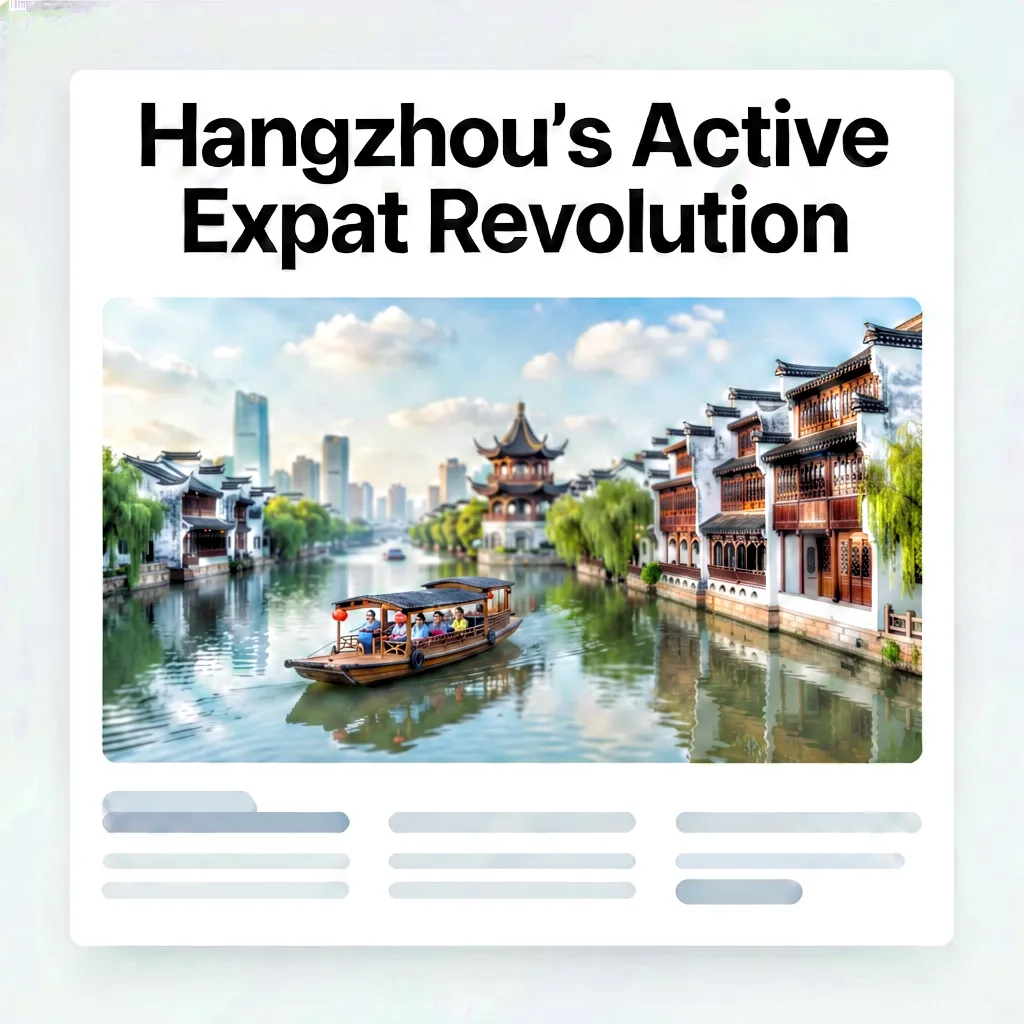
The mist clung to the bamboo groves of Xihu’s outskirts, a damp blanket muffling the sounds of the waking city. For Alex, the crisp, polluted air of a Boston morning was a memory. Here, in Hangzhou, the air carried the scent of wet earth, blooming osmanthus, and the faint, ever-present aroma of river dampness. He adjusted the straps of his backpack, the familiar weight a comfort. Today was the weekly hike with the "West Lake Wanderers," a group he’d found on a hyper-local social platform. As he walked, the rhythmic crunch of gravel under his trail-running shoes synced with his breathing. This was his ritual, his anchor in a city of 10 million strangers. He wasn’t just exercising; he was engineering a social life from the ground up, one step, one conversation, one shared water break at a time.
Alex’s story, shared in a simple, upbeat post on a popular expat forum, is no longer an anomaly. It represents a significant and measurable shift in how international newcomers, particularly those from Western countries, are integrating into cities like Hangzhou. The classic model—revolving around embassy mixers, overpriced expat bars, and formal "international clubs"—is being quietly supplemented, and in many cases replaced, by a more organic, activity-based model. The core philosophy is simple: shared physical pursuit breaks down barriers faster than shared drinks. The keywords from Alex’s post—hiking, tennis, CrossFit, meet new people—are not just hobbies; they are the foundational pillars of a new social architecture. This article delves into this phenomenon, exploring why an active lifestyle is becoming the most effective tool for building a fulfilling expat existence in 2026, using Hangzhou as a prime case study.
The ABC in Hangzhou: A Identity in Motion
To understand Alex’s approach, one must first understand his self-identification: an ABC, or American-Born Chinese. This is not merely a demographic label; it’s a complex, often fraught, psychosocial space. ABCs navigate a perpetual dual consciousness. They look Chinese, which in Hangzhou immediately triggers assumptions of linguistic fluency and cultural literacy. Yet, their formative years were spent in a different cultural ecosystem—in Alex’s case, Boston—shaping their thought patterns, humor, and social scripts. The moment they step off the plane, they are subjected to a relentless, often unconscious, performance review. Do they speak Mandarin well enough? Do they understand the nuanced hierarchy of a tea ceremony? Do they know how to properly use chopsticks? The pressure to "perform" their Chineseness can be exhausting.
For Alex, hiking and tennis became neutral territories. On a mountain trail behind Lingyin Temple, no one cares about his Boston accent or his struggle with the precise tones of the local Hangzhou dialect. The shared challenge of a steep incline, the mutual appreciation for a panoramic view of the Qiantang River, creates a pure, unmediated bond. His CrossFit box, a converted warehouse near the Qianjiang New City skyline, is a microcosm of global Hangzhou. The coach is a South African, the regulars include a French data scientist, a Turkish engineer, and several locals. The language of the workout—"AMRAP," "snatch," "double-under"—is a universal jargon that supersedes Mandarin or English. Here, his identity is not "ABC" first; it's "the person who can do 20 pull-ups" or "the one who always arrives early to Mobilize." The activity defines him, allowing the more complex layers of his identity to emerge slowly, organically, and on his own terms.
This phenomenon extends beyond the ABC experience. For any expat, the initial months are a whirlwind of administrative tasks: securing a residence permit, opening a bank account, navigating the healthcare system. These are isolating, transactional processes. They do not foster connection. The traditional social outlets—language exchange "corners" (often structured like a classroom), formal networking events—can feel like extensions of this transactional world. You are there to "improve" your Chinese or "expand your professional network." The pressure is palpable. By comparison, a game of tennis at the public courts near the Grand Canal has a singular, clear objective: get the ball over the net. Success is measured in rallies, not business cards. The camaraderie that forms in the brief pauses between points—a nod, a shared groan after a missed shot, a laugh at a poorly executed backhand—is genuine, unforced, and built on the simple, human joy of coordinated movement. It’s social chemistry, not social engineering.
Hiking: The Great Social Equalizer on Hangzhou’s Trails
Hangzhou is a geographic gift for this model. The city is not a flat, concrete plain; it is a basin cradled by hills and threaded by waterways. Within a 30-minute metro ride from the city center, one can be on a forested path ascending either the Feilai Feng (Flying Peak) or the more gentle slopes of Wu Shan (Wu Mountain). This accessibility is crucial. It transforms hiking from an occasional weekend expedition into a feasible, regular social event.
The "West Lake Wanderers" group Alex joined is a perfect case study in low-friction organization. It exists on a common messaging platform, with a simple rule: propose a hike, state the difficulty (using a 1-5 scale), and see who joins. There is no fee, no central authority, no commitment beyond showing up. Last week, eight people showed up: two Germans working in automotive engineering, a Japanese graphic designer, a Canadian English teacher, and three locals—a software developer, a freelance photographer, and a retired history teacher. The conversation during the ascent was a delightful, chaotic tapestry. It jumped from the technical merits of different hiking boot brands to the best local tea houses, to the frustrating nuances of the local metro app, to a heated but good-natured debate about the best season to view the lotus flowers at Xihu. Language was a fluid thing. Simple Mandarin mixed with English, gestures, and shared laughter at miscommunications. The local history teacher, Mr. Zhang, became an impromptu guide, pointing out a centuries-old stone carving and explaining its significance. The German engineer asked about the local geology. The connection was built on mutual curiosity, not a shared syllabus.
This model works because hiking imposes a natural, prolonged interaction. Unlike a 30-minute coffee meetup, a two-hour hike creates a sustained, shared experience. You see people’s characters revealed: who is encouraging, who complains, who is observant, who is lost in thought. You share water, snacks, a moment of rest on a mossy rock. You help each other navigate a slippery section of path. These are small, cooperative acts that build trust rapidly. The physical exertion also releases endorphins, creating a natural sense of well-being that positively colors the social interaction. You are more likely to feel fondly about someone you struggled up a mountain with than someone you sat across from in a silent cafe, both staring at phones. By 2026, data from local outdoor gear retailers suggests a 40% increase in sales of mid-range hiking equipment among the 25-45 expat demographic in Hangzhou, a strong indicator of this trend’s penetration beyond dedicated groups.
Tennis Courts: The Unlikely Cross-Cultural Arena
If hiking is the great equalizer, the public tennis courts near the Hangzhou Olympic Sports Center are the great democratizer. They are open, affordable (around 30 RMB per hour for a court in 2026), and operate on a first-come, first-served basis, especially on weekday mornings. This creates a fluid, ever-changing roster of players. You might play with a retired local professor one day, a young French au pair the next, and a group of Indian IT professionals the day after.
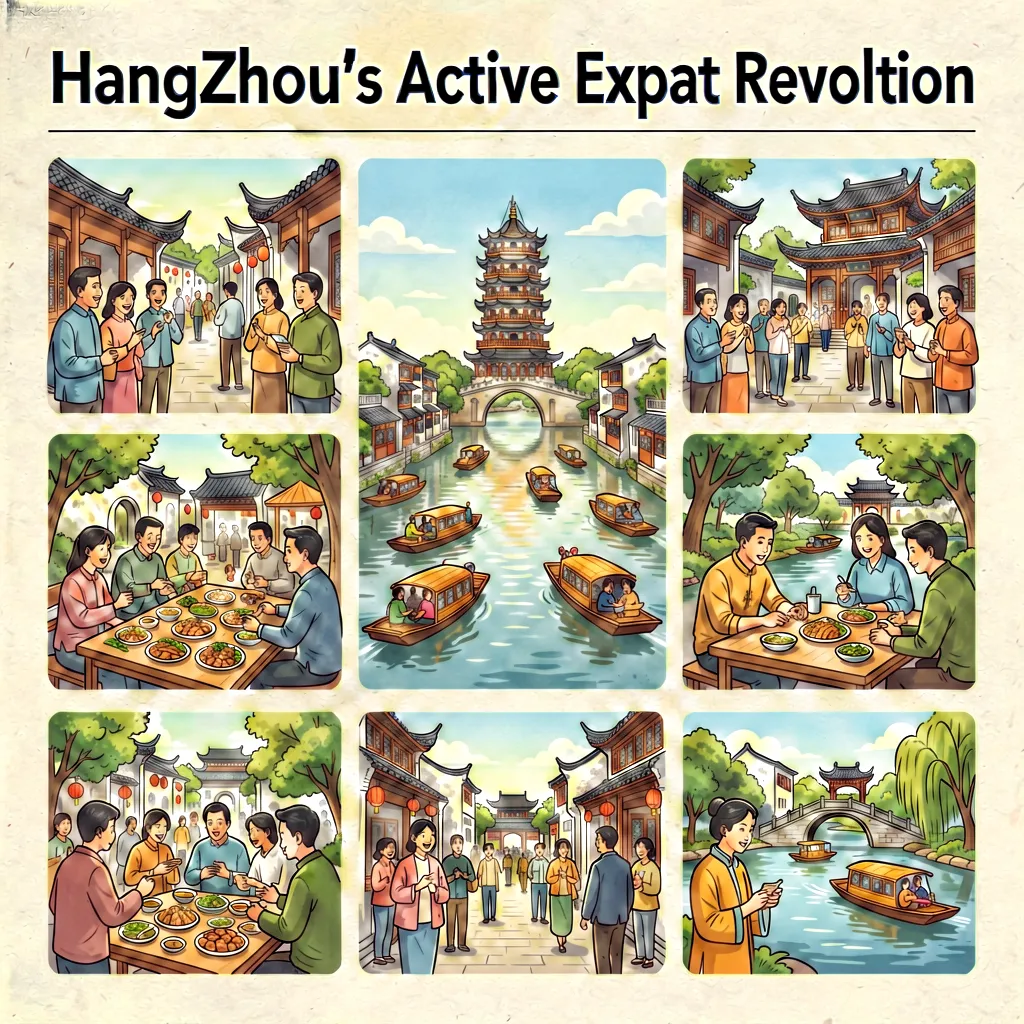
The game itself is a perfect metaphor for cross-cultural exchange. It has simple, immutable rules. The scoring system, while peculiar ("love," "15," "deuce"), is a fixed code everyone must learn. There is no room for cultural interpretation in whether the ball landed in or out. This shared, objective framework provides a stable foundation. The banter between points, however, is where culture collides and mingles in beautiful ways. Alex, our ABC, found himself explaining the concept of a "let" serve to a local player, only to be taught a slang term for a lucky shot by the same player minutes later. A British expat’s dry wit about his own poor backhand was met with confused but smiling nods from a Chinese couple, who then offered unsolicited, enthusiastic technical advice, demonstrating the correct grip with intense seriousness.
These courts become micro-communities. Regulars recognize each other. A nod, a wave, a shouted "good morning!" across the net. The "group chat" for the courts is legendary—a chaotic, multilingual stream of "Court 4 free in 20 mins?!" " anyone want to hit? beginner friendly!" "lost a yellow Wilson ball near net post." It is pure, unmoderated, functional communication. It bypasses the need for formal introductions. The shared resource—the court—creates a temporary tribe. You are not an "expat from Canada" or a "local from Xiaoshan"; you are "the lefty with the strong forehand" or "the guy who always brings extra balls." This role-based identity is powerful. It builds reputation on skill and sportsmanship, not on job title or visa status. In a world where expat status can feel like a label, these courts offer a brief, blissful anonymity where you are simply a player.
CrossFit Boxes: The Engineered Community
For those seeking more structure and intensity, the city’s growing network of CrossFit boxes (affiliated gyms) have become powerhouse community hubs. CrossFit, by design, is a communal sport. The Workout of the Day (WOD) is completed simultaneously, with everyone in the box pushing through the same physical trial. You cheer for the person on the next rig. You hold the clock for someone else. The coach’s voice booms, correcting form, urging on the last rep. This engineered communal struggle creates incredibly tight bonds, often faster than any other social setting.
Alex’s box, "Hangzhou Strong," is a vivid example. The owner, a former athlete from New Zealand, intentionally cultivates a "no ego" atmosphere. The 6 AM class is a motley crew. It includes Alex, the aforementioned French data scientist (who deadlifts twice her body weight), a local entrepreneur who uses the workouts to manage stress, and a young Chinese woman training for her first fitness competition. The shared vocabulary of "Fran," "Murph," "chipper," and "hero WOD" is another universal language. Post-workout, while sprawled on the rubber floor gasping, conversations happen. They are raw, unfiltered, and real. You discuss the agony of the just-completed "grace" (30 clean and jerks for time) with the same intensity you might discuss a business deal or a cultural confusion. The vulnerability of physical limits levels the playing field.
These boxes also host social events—potlucks, outdoor workouts in the park, charity fundraisers. The social capital earned during the brutal 5 PM "chipper" (a long, grueling workout) translates directly into a stronger, more trusting social network. If you see someone consistently show up, work hard, and support others, you inherently trust them. You’re more likely to grab a post-workout smoothie with them, to invite them to a hiking group, or to ask for advice on navigating the city’s bureaucracy. By 2026, Hangzhou boasts over fifteen officially affiliated CrossFit boxes, a staggering number for a city of its size, each with its own distinct international-to-local member ratio, but all serving the same fundamental purpose: building tribe through shared sweat.
The Psychology of Active Integration
Why does this model work so effectively where traditional methods often falter? The answer lies in basic social psychology and the unique stressors of expat life. The initial phase of relocation is characterized by what psychologists term "social homelessness." One’s old social network—the friends, the casual acquaintances, the familiar faces at the coffee shop—is abruptly severed. The new environment is a social desert. Traditional methods of connection often require a pre-existing social confidence or a specific skill set (e.g., fluent language, professional status). They are high-stakes, low-reward in the beginning. A failed conversation at a networking event feels like a personal rejection. A quiet coffee meetup can feel like an interrogation.
Active pursuits change this equation entirely. They are low-stakes, high-reward. The primary focus is the activity itself: hit the ball, follow the trail, complete the rep. The social interaction is a secondary, organic byproduct. There is no pressure to "perform" socially because you are already performing physically. The shared activity provides a built-in conversation starter and a natural endpoint. "That was a tough hill" is an easier, more genuine opener than "So, what do you do?" The activity also creates a sense of "flow," that psychological state of being fully immersed and enjoying the process. People in a state of flow are more open, more present, and less guarded. They are not worrying about how they are being perceived; they are simply experiencing.
In addition, physical activity is a potent antidote to the anxiety and depression that can accompany relocation. The "expat blues" are a well-documented phenomenon. Exercise releases endorphins, reduces cortisol, and improves sleep. A person who feels physically good is more socially confident and approachable. The hiking group or the tennis court becomes not just a social outlet but a mental health maintenance routine. The routine itself is critical. Humans are creatures of habit. Having a standing weekly hike or a regular morning CrossFit class creates a predictable anchor in an otherwise chaotic new life. It provides a reason to get out of the apartment, to interact, to have a purpose beyond work and administrative tasks. This consistency is what transforms a one-off meeting into a genuine friendship.
Hangzhou: The Perfect Urban Canvas
Hangzhou’s specific geography and urban planning make this active integration model uniquely viable. The city is designed around its natural assets. The West Lake is not just a tourist site; it’s a public park with miles of paths for walking, running, and cycling. The mountain ranges to the west are designated as forest parks with well-maintained trails. The Grand Canal, a UNESCO World Heritage site, has been revitalized with pedestrian and cycling paths lining its banks for kilometers. The city government has actively promoted a "healthy city" initiative, resulting in an abundance of public sports facilities—basketball courts, outdoor fitness equipment stations, and yes, public tennis courts—integrated into neighborhoods.
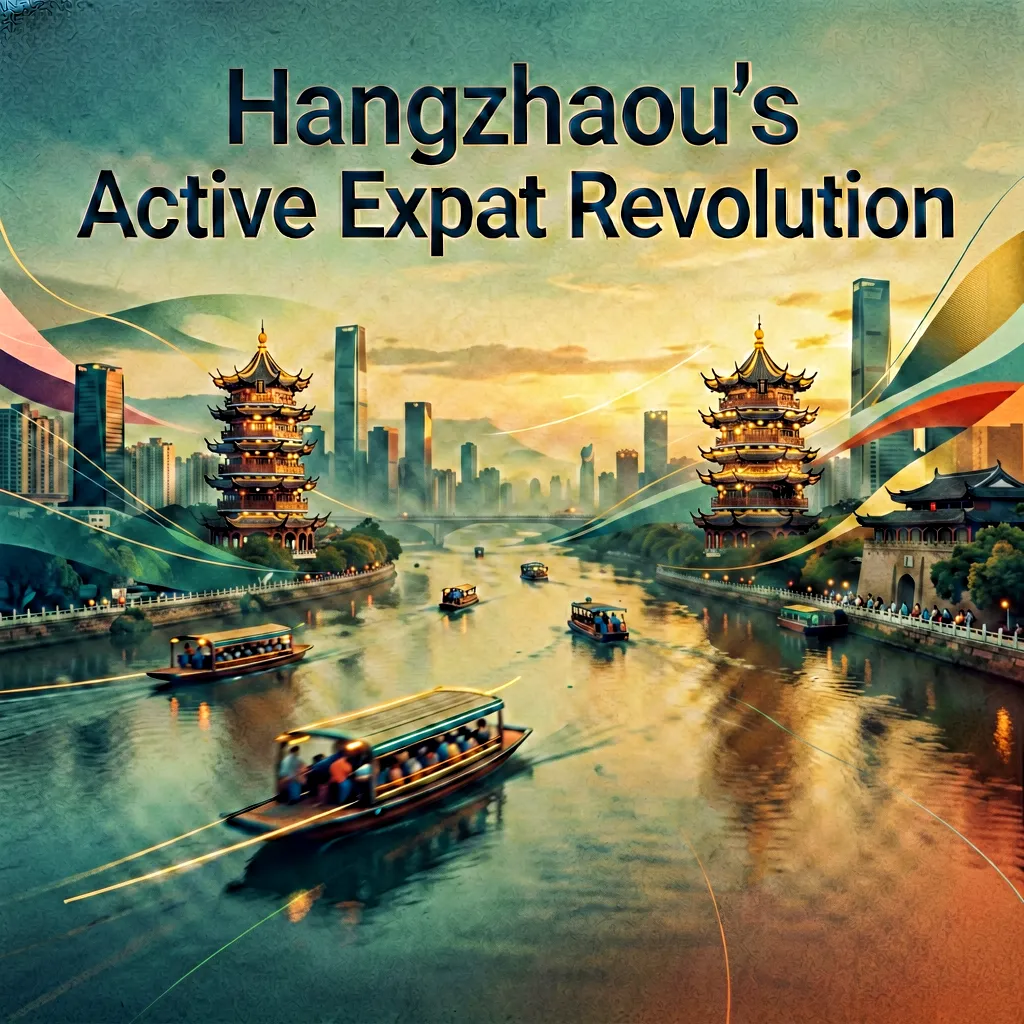
This infrastructure means access is democratized. You don’t need a expensive gym membership to be active. You can meet people on a public path or a municipal court. This contrasts sharply with cities where such activities are privatized and costly, creating socioeconomic barriers within the expat community itself. In Hangzhou, a young English teacher and a senior executive can easily find themselves on the same hiking trail or sharing a tennis court. The activity, not the expense, becomes the common denominator. The city’s scale also helps. It’s large enough to have a critical mass of internationally-minded people to sustain these informal groups, yet its core attractions (West Lake, the hills) are concentrated enough that these groups naturally converge on the same limited set of prime locations, increasing the chances of overlap and network growth.
The cultural attitude of Hangzhou residents also plays a role. There is a deep, ingrained appreciation for nature, leisure, and health. The practice of "san bu" (散步), or leisurely strolls, is a national pastime. Joining a group for a hike is not seen as a strange "foreign" activity; it’s a logical extension of this local custom. Locals are often just as eager to practice their English in a low-pressure setting as expats are to practice their Mandarin. The tennis courts, while a more Western import, are seen as a healthy, modern pursuit. This cultural receptivity means expats engaging in these activities are not perceived as invaders of a private space, but as participants in a shared urban lifestyle. The exchange is reciprocal.
Beyond the ABC: A Model for All
While Alex’s story highlights the ABC experience, the model is universally applicable. A 28-year-old software engineer from Berlin, a 50-year-old finance director from Sydney, a 35-year-old journalist from Toronto—all can benefit. The key is the intentionality behind the activity. It’s not about being the world’s best hiker or tennis player. It’s about using the activity as a vessel for connection. The "hit" in Alex’s post—"hitting some tennis balls"—is deliberately casual. It implies a beginner-friendly, no-pressure invitation. It’s an invitation to shared effort, not elite competition.
This requires a shift in mindset from "networking" to "neighboring." Networking is transactional, goal-oriented. Neighboring is relational, process-oriented. You go to the court to play tennis. Friendship is a potential byproduct, not the stated objective. This removes the desperation and expectation that can poison initial interactions. You show up consistently. You are reliable. You cheer for others. You are humble about your skills. Over time, familiarity breeds trust, and trust breeds friendship. The group chat evolves from "who’s playing?" to "how was your week?" to "my company is hosting an event, you should come." The social fabric is woven thread by thread, through shared sweat and shared scenery.
The "meet new people" goal is achieved not by seeking out a "social event," but by inserting oneself into an existing, activity-based ecosystem. The West Lake Wanderers don’t exist to help expats make friends; they exist to hike. The expat who joins them does so to hike, and the friendships are a consequence. This is a crucial psychological distinction. It aligns with how adults naturally form friendships post-education—through shared interests and repeated exposure, not through structured "friend-making" sessions.
The 2026 Horizon: Sustaining the Network
Looking ahead to 2026, this model shows signs of becoming self-sustaining. The initial wave of pioneers like Alex has seeded the groups. Now, as they move on or integrate deeper, they pass the baton. The "West Lake Wanderers" now has two local co-organizers. The tennis court regulars have a rotating schedule for who brings the spare rackets. The CrossFit box’s social committee is run by a mix of expats and locals. The network is no longer dependent on a single foreign founder; it is becoming a hybrid, local-international institution.
This evolution is critical for long-term community health. It prevents the "expat bubble" from being a transient, foreign-only enclave. The goal is not to create a parallel society of hiking-and-tennis-playing expats, but to use these activities as bridges into the broader social fabric. The local history teacher from the hike, Mr. Zhang, now invites the group to a private viewing of his calligraphy collection. The French data scientist from the CrossFit box gets a freelance translation gig through a connection made while complaining about the WOD. These are the true markers of integration: relationships that transcend the initial activity and enter the realm of mutual support, professional collaboration, and cultural exchange.
The challenge for 2026 and beyond is scaling this organic model without bureaucratizing it. The moment a "Hangzhou Expat Hiking Association" is formed with membership fees and a board, the magic dissipates. The power is in its informality, its low barrier to entry, its responsiveness. Technology facilitates this. The group chats are the nervous system. They allow for rapid, decentralized organization. A beautiful weekend is forecasted? Someone posts, "West Lake loop Saturday 9 AM?" Ten people confirm. No central planning required. This hyper-local, app-mediated coordination is the engine of the new model.
Conclusion: The Simple Invitation
Back on the trail, Alex reached the summit of a lesser-known peak near Yangjiaochi. The group sat on the rocks, sharing tangerines and water. The conversation, which had started with complaints about the humidity, had drifted to the upcoming Mid-Autumn Festival. Mr. Zhang was explaining the legend of Chang’e and the moon rabbit. The German engineer asked about local mooncake varieties. A plan was hatched: a group would reconvene at a lakeside tea house for the festival. The invitation was extended not as a formal event, but as a natural continuation of today’s hike. "Since we’re all here, and we like tea…"
This is the essence of the new Hangzhou expat experience. It is built not on a shared nationality or a shared professional field, but on a shared willingness to engage, to be active, to be present in the city’s physical space. The keywords—hiking, tennis, CrossFit, meet—are the verbs of this new integration. "Hiking" is the exploration of the physical and social landscape. "Tennis" is the direct, rule-based engagement. "CrossFit" is the engineered, intense community building. "Meet" is the simple, open-ended outcome.
Alex finished his tangerine, stood up, and stretched. The descent was easier, the conversation flowing more freely. He pulled out his phone, not to check work email, but to post in the group chat: "Awesome hike today. Thanks, everyone. Tea house for Mid-Autumn? I’ll check prices." The message was sent. The connection was made. The cycle, simple and profound, was complete. In Hangzhou in 2026, the most valuable degree is not a business degree or a language certificate. It is a degree in active participation, earned one hike, one match, one workout at a time.
Responses • 0
0/2000
ID: 1326
Chris
Online
From
Bakersfield, United States
Send Message