Guangzhou Taxi Truths
AI Learn Chinese
1 hr • 0 read
Evaluating a tourist's Guangzhou taxi experience: common scams, legitimate fares, and how to navigate China's urban transport safely.

Introduction: A Common Travel Anxiety
A traveler arrives in Guangzhou, a major Chinese metropolis. A thirty-minute taxi ride from the station to the hotel begins a familiar story. The driver lacks visible identification or a displayed QR code for digital payment.
When questioned, he becomes angry, claiming only police can ask. The core questions emerge: was this a deliberate tourist scam? Is the final price normal?
This scenario taps into a widespread concern for international visitors. Understanding the reality of taxis in China requires separating myth from methodical practice. It involves knowing the legitimate systems, the common pitfalls, and the practical steps to ensure a fair ride.
The goal is not to induce paranoia but to foster informed confidence.
The Context of Urban Taxis in China
China's urban landscapes are defined by immense scale and rapid development. Cities like Guangzhou, Shenzhen, and Beijing function as vertical, sprawling networks. Taxis are a critical component of public transit, bridging gaps between subway stations and final destinations.
The industry is heavily regulated at the municipal level. Each city's transport commission sets specific rules for vehicle types, driver licensing, fare structures, and mandatory in-car equipment. This regulation creates a baseline of legitimacy but does not eliminate all problems.
The sheer volume of taxis and the constant influx of tourists create opportunities for exploitation. The system's complexity can be opaque to first-time visitors, making them vulnerable to operators who bend or break the rules.
The Psychological Trigger: The "Tourist Scam" Narrative
The idea of a "tourist scam" is a powerful narrative. It frames the incident as a premeditated act targeting foreign appearance. While this can be true, it's crucial to analyze the behavior through other lenses.
The driver's aggressive response to a simple query about credentials is a significant red flag. Legitimate professionals, subject to regular checks, typically comply politely or explain the system. Anger is often a deflection tactic, used to intimidate and shut down inquiry before it escalates.
This reaction suggests the driver has something to hide, whether it's an unlicensed vehicle, a manipulated meter, or a deliberate overcharge plan. The scenario fits a classic scam pattern: create a situation where the victim feels too uncomfortable or rushed to verify details, then present an inflated bill.
Common Taxi Irregularities in Chinese Cities
Not all bad taxi experiences are identical. They fall into distinct categories, from the merely inconvenient to the clearly fraudulent. Recognizing these patterns is the first step in prevention.
Unlicensed or "Black" Cars
The most fundamental violation is operating without a legal taxi license. These vehicles, often private cars, lack the mandatory markings, rooftop lights, and registration with the city's taxi management bureau. They may park near transport hubs, offering rides to weary travelers.
The driver in the user's story may have been using a personal vehicle. The absence of displayed driver details and a payment QR code is a classic sign. Licensed taxis in Guangzhou, for instance, must have a visible driver photo and ID card on the dashboard, along with a certified QR code for official payment platforms like WeChat Pay or Alipay.
The claim that "only police can ask" is nonsense; any passenger has the right to verify they are entering a legitimate, regulated vehicle.
Meter Tampering and Fare manipulation
Even a licensed taxi can be weaponized. The most common technical scam is a faulty or tampered meter. Drivers may use a "speed-up" button that accelerates the fare increment or a remote control to jump the price mid-ride.
Some may simply refuse to turn the meter on, quoting a flat, exorbitant rate upfront, banking on the passenger's fatigue or language barrier. The user did not mention the meter's status, which is a critical piece of information. Was it on?
Did the rate per kilometer seem absurdly high? A normal starting fare in Guangzhou in 2026 is typically between ¥10-¥13, with a per-kilometer charge of around ¥2.0-¥2.6, depending on the time of day. A 30-minute ride in moderate traffic could cover 15-20 kilometers, leading to a reasonable fare of approximately ¥40-¥60, plus possible waiting time fees.
The "Long Route" or "Detour" Scam
This is a more subtle but prevalent scheme. The driver deliberately takes a circuitous route to inflate the distance and time on the meter. They might claim a main road is congested (which may be true) and opt for a far longer alternative.
This relies on the passenger's unfamiliarity with the city's layout. Using a personal map application on a smartphone with data is the primary defense. Following the route in real-time allows a passenger to politely question an obvious detour.
The driver's prior aggression might have been a preemptive strike to discourage the passenger from ever consulting a map.
Payment and Currency Tricks
The final stage of the scam often involves payment. If the driver refused the meter and quoted a flat price, that price is likely 2-5 times the legitimate fare. They may also claim they have no change for large bills, forcing the passenger to overpay.
Some may accept only cash to avoid a digital paper trail, or conversely, insist on a specific payment app that links to a personal account rather than the taxi company's. The mandated QR code in a legal taxi links to the company's centralized payment system, providing a record.
Identifying a Legitimate Taxi in Practice
Knowing what to look for transforms anxiety into agency. The checklist for a legal taxi is standardized across major Chinese cities.
Visual Markings and Vehicle Condition
A legitimate taxi is a specific color scheme designated by the city. In Guangzhou, taxis are typically a distinct blue and white or sometimes a uniform yellow. They bear the official taxi company's logo and name in Chinese characters on the doors.
The vehicle should be reasonably clean and well-maintained. A rooftop light with the word "TAXI" or the Chinese character "的" (dī) is mandatory and illuminated when the taxi is available for hire. The license plate itself may have a specific color or format, though this is harder for a tourist to verify instantly.
The most immediate visual cue is the overall professional appearance—a uniform livery is a strong signal of regulation.
Mandatory In-Car Documentation
Inside, the requirements are explicit. A driver's photo ID card, showing their name, license number, and the taxi company, must be displayed on the dashboard or sun visor. This is non-negotiable.
The user's observation that this was missing is a major red flag. Next, the taxi meter must be visible, certified with a seal, and operational. It should start at the official base fare when the "start" button is pressed.
Finally, and critically, a payment QR code must be prominently displayed. This is not just for convenience; it is a regulatory requirement linking the ride to a traceable transaction. The code should be for the official platform (WeChat Pay or Alipay) and belong to the taxi company or fleet, not an individual's personal account.
Driver Behavior and Demeanor
Professionalism is a key indicator. A licensed driver understands they are providing a service. They should be willing to answer reasonable questions about the route or fare politely.
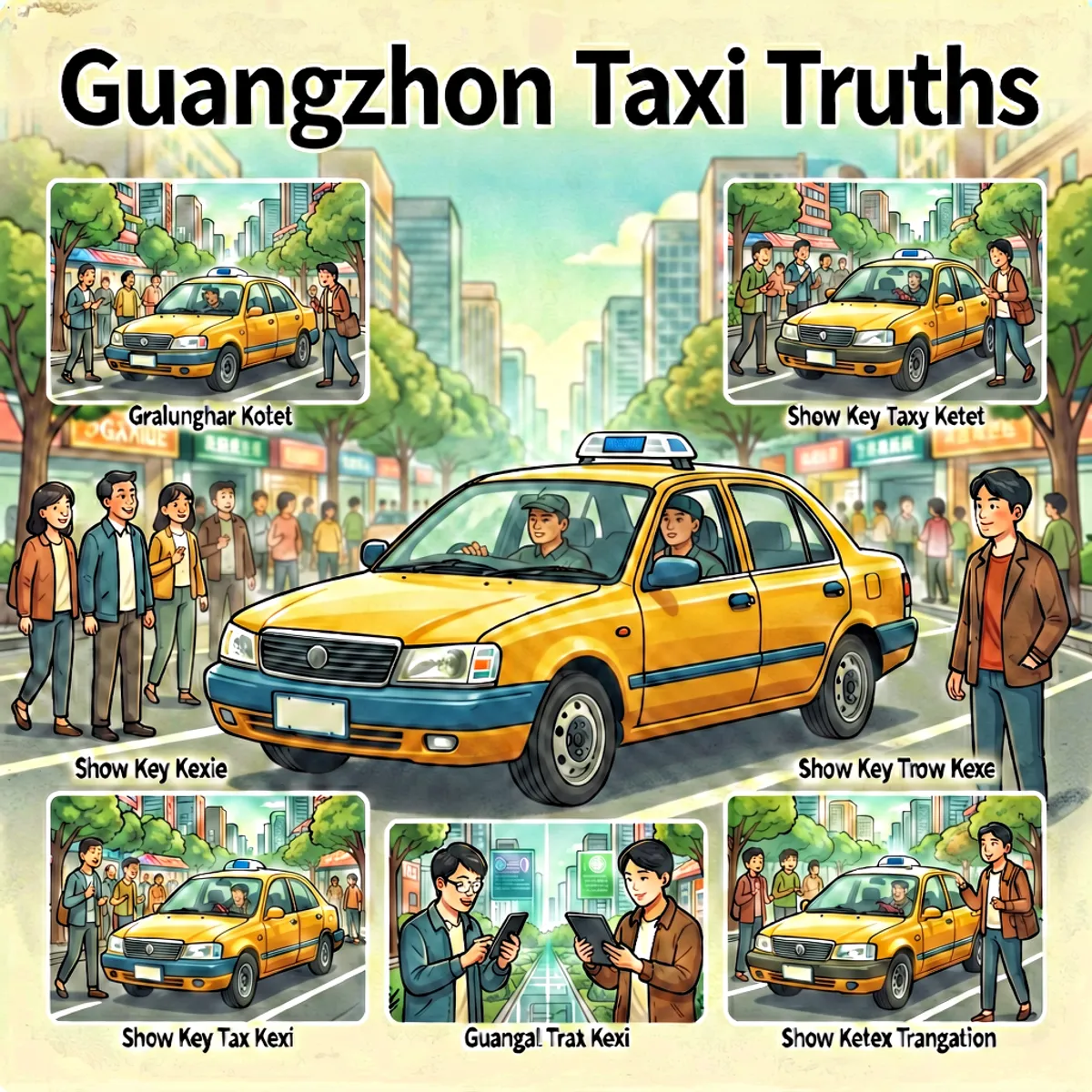
They will use the meter without argument. They will not become angry or confrontational over simple requests. Aggression is a power play used by those operating outside the rules.
A driver who says "only police can ask" is almost certainly trying to intimidate a potentially suspicious passenger. This is not normal behavior for a compliant operator. In addition, the driver should know basic landmarks and major roads.
Complete cluelessness about a central hotel's location can indicate they are not a full-time professional.
Understanding Normal Fares and Pricing Structures
Price anxiety is at the heart of the user's query. A basic grasp of the fare calculation demystifies the "normal" price.
The Components of a Taxi Fare
The fare is a formula, not a random number. It consists of: 1) Starting Flag Fall (the initial charge for boarding, e.g., ¥13). 2) Per-Kilometer Charge (e.g., ¥2.4/km after the first 3km).
3) Waiting Time Charge (a fee per minute when the vehicle is stationary or moving very slowly, often lower than the per-km rate). 4) Night Surcharge (a percentage or fixed increase after 11:00 PM). 5) Fuel/Service Surcharge (a small fixed amount per ride in some cities).
The meter mechanically calculates this. A passenger has the right to see the meter at the end of the trip. The final number should align with the distance/time shown on a personal map app, adjusted for the city's specific rate.
Guangzhou-Specific 2026 Rates
While rates can be adjusted annually, a typical 2026 structure in Guangzhou for a standard taxi is as follows: Starting fare of ¥13 for the first 3 kilometers. Then ¥2.4 per additional kilometer. Waiting time is charged at ¥0.6 per 3 minutes (or about ¥0.20 per minute).
A 10% night surcharge applies from 23:00 to 05:00. For a 30-minute, 18-kilometer trip in daytime traffic, the calculation would be: ¥13 (start) + (15 km * ¥2.4) = ¥13 + ¥36 = ¥49. Add a small waiting fee for 5-10 minutes in traffic, perhaps ¥5-¥10.
A total of ¥55-¥65 would be a credible, normal daytime fare. A quote of ¥250, as hinted in the user's linked entities (CYN might be a misformatted currency), is astronomically high and a definitive scam indicator.
The Role of Ride-Hailing Apps
The landscape has been transformed by Didi Chuxing (滴滴出行), China's dominant ride-hailing platform. Using the official Didi app (available in international versions) is the single most effective way to avoid scams. The app provides the estimated fare upfront, tracks the route, uses digital payment linked to the user's account, and records the driver's verified details, car model, and license plate.
The driver cannot deviate from the quoted price or route without the passenger's consent. While Didi can have surge pricing, it is transparent and capped. For any tourist with a smartphone and data connection, prioritizing Didi over street-hailing is the modern, safest protocol.
The user's experience highlights the risk of the old-school street hail.
What To Do If You Suspect a Scam
If the ride concludes with an outrageous demand, panic is the worst response. A calm, firm strategy is required.
At the Moment of Payment
Do not hand over cash or confirm a payment until you have noted the details. First, take a photo of the driver's displayed ID and the taxi's license plate. Then, photograph the meter reading at the end of the trip.
Politely but firmly state the fare seems incorrect and reference the distance on your map. If the driver becomes threatening, do not argue. Your safety is paramount.
In this digital age, you can often initiate a payment via the displayed QR code for the actual metered amount, ignoring their verbal demand. If they block the phone or become violent, your priority is to exit the vehicle safely.
Post-Ride: Documentation and Reporting
Once safe, document everything. Write down the time, location, car plate number (from the photo), driver name/ID from the dashboard, and the exact fare demanded versus the meter reading. In China, there are official channels for complaints.
Every city has a 12328 transportation service hotline for reporting taxi issues. Complaints can also be filed via the official WeChat account of the local Transport Commission. For rides hailed through Didi, use the in-app customer service with your trip record.
Provide all documented evidence. While immediate refunds are not guaranteed, repeated valid complaints against a driver or vehicle can lead to license suspension. The process is bureaucratic but functional.
Managing the Emotional Aftermath
Being scammed is frustrating and can sour a trip. It's important to contextualize it. This was likely one bad actor in a vast industry of professional, honest drivers.
Do not let this one incident color all interactions. The next time, use the Didi app or hail a taxi from a designated official taxi stand at hotels or train stations, where vehicles are queued and monitored. The goal is not to live in fear, but to adapt your tactics based on new information.
Leveraging Technology as Your Primary Shield
While the street hail carries inherent risk, the digital ecosystem in China offers robust, scam-resistant alternatives that have fundamentally reshaped urban mobility. The Didi Chuxing platform is the cornerstone, but understanding its full capabilities and complementary tools creates a multi-layered defense strategy. The goal is to move from reactive suspicion to proactive, tech-aided certainty before even stepping into a vehicle.
The Didi Ecosystem: More Than Just a Ride
The international version of the Didi app, accessible with a foreign phone number and credit card, provides a complete transaction firewall. Upon requesting a ride, the app displays the driver's verified name, a photo, the vehicle's make, model, color, and the full license plate number. This information is recorded in your trip history.
The fare is calculated based on a transparent algorithm that uses the city's official rate card, with any dynamic pricing clearly shown before confirmation. The route is plotted using high-precision mapping data, and any deviation by the driver triggers an immediate in-app alert to both you and Didi's security center. Payment is processed automatically through the app upon arrival, eliminating any cash dispute.
The record is permanent and can be used as irrefutable evidence in any complaint. For the Guangzhou traveler in 2026, downloading and setting up this app before departure is non-negotiable. It is the single most effective tool to neutralize the classic scams of unlicensed cars, meter tampering, and detours.
Supplementary Digital Tools: Offline Maps and Verification
Relying solely on a ride-hailing app can be insufficient if your data connection falters in a tunnel or a remote district. A critical backup is downloading comprehensive offline maps of Guangzhou via Google Maps or Maps.me before your trip. This allows you to independently verify the route logic in real-time.
If a driver on a street-hailed ride (a practice now strongly discouraged) begins a suspicious detour, you can calmly reference your offline map. More powerfully, you can cross-reference the taxi's legitimacy using official municipal resources. a number of Chinese cities, including Guangzhou, have official government apps or WeChat mini-programs for transport services.
These often include a "taxi inquiry" function where you can input a license plate number to check its registration status and affiliation with a licensed company. While this requires a moment to pull up, it provides definitive validation that a simple visual check cannot.
The "Digital Paper Trail" Principle
The core weakness of a scam is its reliance on anonymity and a one-time transaction. Every digital tool you employ creates a traceable record that deters fraudulent behavior. When you pay via the official Didi in-app system or the mandated company QR code in a licensed taxi, the transaction is logged against the vehicle's license plate and driver ID.
This linkage is what makes the "only police can ask" tactic so absurd—the system itself is a form of continuous, automated oversight. A scammer operating a "black car" cannot provide this traceability; their personal QR code or cash demand leaves no official record. So, a passenger's insistence on a traceable, digital payment method is a direct challenge to the scammer's operational model.
It transforms you from an anonymous cash target into a documented user with recourse. Your active participation in creating this digital paper trail—by photographing IDs, noting plate numbers, and using app-based payments—is a conscious act of self-protection that shifts the power dynamic.
Cultural and Linguistic Strategies for Assertive Communication
Technology is a shield, but communication is the sword. For the non-Mandarin speaker, navigating a potential dispute in a Guangzhou taxi can feel daunting. But, a few prepared phrases and an understanding of local communication norms can de-escalate tension and assert your rights clearly. The goal is not fluency, but the demonstration of informed intent.
Essential Phrases for the Taxi Context
Memorizing and having these phrases written or saved on your phone is invaluable. Start with the foundational question: "Nǐ kěyǐ zhǎo dào nǐ de jiùshìzhèng ma?" (你可以找到你的技师证吗? - Can you show me your professional certificate?). This directly asks for the driver's license, which should match the dashboard ID.
For the fare: "Qǐng kāi mǐ" (请开米 - Please turn on the meter) or "Mǐ bǐ jiào guì" (米比叫贵 - The meter is more expensive than quoted) to challenge a flat rate. To reference your map: "Wǒ yòng gōngjù kàn lù" (我用工具看路 - I am using a tool to check the route) or simply point to your phone and say "Google Maps" or "Didi lùjǐng" (滴滴路径 - Didi route). If you feel unsafe: "Qǐng tíngchē, wǒ yào xiàchē" (请停车,我要下车 - Please stop the car, I want to get off).
For reporting: "Wǒ yào bàogào nǐ" (我要报告你 - I am going to report you). Deliver these phrases calmly and slowly. The act of attempting Chinese, however broken, signals you are not a passive, confused target.
It shows you have engaged with the system.
Understanding "Face" and Non-Confrontational Assertiveness
Chinese culture places a high value on mianzi (面子), or "face." A public, humiliating confrontation is deeply avoided. This cultural nuance can be your ally. Instead of yelling "You are a cheat!" which causes a driver to lose face and may trigger aggression, frame your concerns as neutral, system-based inquiries.
Use the language of rules and procedures. Say, "Gōngsī guīdìng shuō... " (公司规定说...
- The company regulations say...) or "Chéngshī guīdìng yào..." (城市规定要... - City regulations require...). This removes the personal accusation.
You are not attacking the driver's character; you are simply referencing an external, objective standard they are failing to meet. This approach is harder for them to argue against without appearing unreasonable themselves. A driver operating a black car has no company regulations to cite, and their angry deflection becomes a clear admission of guilt to any observer.
Your demeanor should be politely firm, not angry. This controlled assertiveness is culturally intelligible and often more effective than Western-style direct confrontation.
Reading Context and Choosing Your Battles
Not every irregularity warrants a full-blown confrontation. Your safety and the efficient resolution of the situation are paramount. If a driver refuses the meter but quotes a price only 20-30% above the normal range, and you are tired and late, paying and reporting later via Didi or the hotline may be the wiser, lower-stress choice.
Save your assertive energy for clear, egregious scams—like a ¥250 charge for a ¥50 ride, or a driver who is visibly hostile from the outset. The psychological trigger from the introduction—the preemptive anger—is your strongest signal to disengage immediately. In that moment, the priority is to end the transaction safely.
Pay the minimum possible (e.g., the starting fare in cash if you must) and leave. The post-ride report is where you fight the battle. Understanding this hierarchy of response—immediate safety first, systematic reporting second—prevents a bad situation from escalating into a dangerous one.
Advanced Scam Variations and Seasonal Risks
The basic scams are well-documented, but operators constantly adapt. Being aware of more sophisticated or context-specific schemes further inoculates you against surprise. These often combine multiple tactics or exploit specific traveler vulnerabilities during high-pressure periods.
The "Airport/Train Station Mafia" and Collusion
At major transportation hubs like Guangzhou South Railway Station or Baiyun Airport, the environment is chaotic. Scam operations can be more organized. "Touts" or "runners" may approach you inside the terminal, offering "official taxis" or "fixed price" rides.
They will lead you not to a taxi queue, but to a waiting car parked in a non-public area. This car and driver are part of a collusive group. The tout may speak a little English and seem helpful, building false trust.
The driver then operates the scam, and the tout gets a cut. The key defense is absolute refusal of any pre-arranged ride offer inside the station. Ignore all solicitors.
Proceed directly to the clearly marked, official taxi queue, which is monitored by uniformed staff or security. If a driver approaches you in the arrivals hall claiming his taxi is "official," your response is a polite but firm "Xièxie, wǒ zài děng páizi" (谢谢,我在等排子 - Thank you, I am waiting for the queue). Do not engage further.
The official queue is your only safe starting point at these hubs.
The "Fake Meter" or "Silent Meter" Scam
A more advanced technical scam involves a meter that appears to work but is programmed to calculate incorrectly. The numbers increment normally, but the rate per kilometer or minute is secretly set to a multiple (e.g., 5x the legal rate). The "silent meter" variant has the driver claim the meter is broken and quote a high flat rate, but if you insist on the meter, they turn it on and it runs at the fraudulent rate.
Without a baseline knowledge of the expected fare for your distance, you cannot detect this. This is where your pre-trip fare estimation via Didi or a quick check of the city's transport commission website is vital. If the final meter reading is 3-4 times your estimated amount, you have been hit by this.
The evidence is the meter itself, hence the critical importance of photographing it at the trip's end. This scam is harder to pull off with Didi, as the app's algorithm cross-checks distance and time against the city's base rates, flagging anomalies.
Holiday and Weather Amplification
During major holidays like Chinese New Year, National Day, or during extreme weather (typhoons, torrential rain), the risk profile changes. Demand for taxis skyrockets, and legitimate drivers may work longer hours, potentially becoming irritable. More critically, the supply of available licensed taxis decreases as many drivers take time off.
This scarcity is a golden opportunity for black cars. They proliferate near hubs, offering "help" to stranded travelers. The normal visual checks become even more crucial.
The pressure to accept any ride is high, but this is precisely when you must be most disciplined. Use Didi even more vigilantly during these periods, understanding that wait times may be long but the security is worth it. If you must street-hail, do so only from a designated, policed queue, and perform the full ID and QR code check with extra scrutiny.
The holiday excuse ("all taxis are busy") is a common scammer narrative to justify unlicensed operation or exorbitant flat rates.
The "Change Scam" and Cash Manipulation
This low-tech but persistent scam targets tourists who pay with large bills (e.g., a ¥100 note for a ¥60 fare). The driver may claim they have no change, suggesting you pay the full ¥100. Alternatively, they might hand you back "change" that is short by a significant amount, counting it quickly and pressuring you to leave.
The defense is twofold: always carry smaller denominations (¥10, ¥20, ¥50 notes) obtained from an ATM. Second, never hand over the payment until you have counted your change in full, in the car, in view of the driver. Use the phrase "Qǐng shǔ qǐlái" (请数起来 - Please count it out).
If they resist or become flustered, it confirms the scam. In the modern context, this scam is declining due to digital payment dominance, but it remains a risk for those using cash, especially after a late night when ATMs may be inaccessible. The mandated taxi QR code exists precisely to eliminate this cash-based vulnerability.
Conclusion: Informed Navigation Over Fear
The traveler's experience in Guangzhou contains all the hallmarks of a classic tourist-targeting taxi scam: missing credentials, aggressive deflection, and a likely inflated final price. The answer is clear: this was almost certainly not a normal transaction. It was a predatory encounter exploiting a lack of familiarity.
The "normal" taxi price for a 30-minute daytime ride in Guangzhou is a fraction of what was probably demanded. The path forward is knowledge. By recognizing the visual and behavioral signs of a legitimate taxi, understanding the basic fare formula, and leveraging technology like official ride-hailing apps, travelers can confidently navigate China's urban transport.
The system is designed to be safe and fair when used correctly. The key is to move from being a potential target to an informed participant, using the very regulations that exist to protect passengers. A single negative experience is a lesson, not a verdict on the entire system.
Responses • 0
0/2000
ID: 1326
Chris
Offline
1 hr
Visited
From
Bakersfield, United States
Send Message