HSK 4
Correct
几乎 vs 差不多
/ jīhū vs chàbùduō /
Strokes
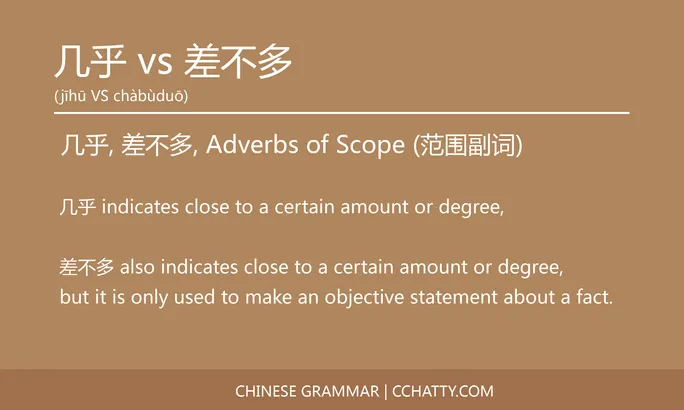
Definition
几乎 and 差不多 are both Adverbs of Scope (范围副词):
1, 几乎 indicates close to a certain amount or degree,
2, 差不多 also indicates close to a certain amount or degree, but it is only used to make an objective statement about a fact.
几乎 HSK 3
差不多 HSK 4
Example
几乎 indicates close to a certain amount or degree.
The speaker thinks the amount is large or the degree is high.
1
Tā
他
tài
太
è
饿
le
了
,
jīhū
几乎
chī
吃
le
了
wǔ
五
wǎn
碗
fàn
饭
。
He was too hungry, he almost has eaten five bowls of rice.
2
Jīhū
几乎
suǒyǒu
所有
rén
人
dōu
都
bù
不
xǐhuan
喜欢
zhè
这
běn
本
shū
书
。
Almost nobody like this book.
3
Zuìjìn
最近
jīhū
几乎
tiāntiān
天天
dōu
都
xiàyǔ
下雨
。
Recently, It's been raining almost every day.
差不多 also indicates close to a quantity or degree.
But it is only used to make an objective statement about a fact.
4
Tā
他
chàbuduō
差不多
chī
吃
le
了
wǔ
五
wǎn
碗
fàn
饭
。
(
shuōhuà
说话
rén
人
zhǐshì
只是
zài
在
shuō
说
tā
他
chī
吃
le
了
wǔ
五
wǎn
碗
fàn
饭
,
méiyǒu
没有
juéde
觉得
duō
多
huòzhě
或者
shǎo
少
。
)
He has almost eaten five bowls of rice. (The speaker is just making a statement about the fact without making any comment.)
5
Wǒ
我
chàbuduō
差不多
děng
等
le
了
nǐ
你
liǎng
两
gè
个
xiǎoshí
小时
。
(
shuōhuà
说话
rén
人
zhǐshì
只是
zài
在
shuōmíng
说明
yī
一
gè
个
qíngkuàng
情况
,
méiyǒu
没有
juéde
觉得
shíjiān
时间
cháng
长
huòzhě
或者
duǎn
短
。
)
I have almost waited you for two hours. (The speaker is just making a statement about the fact without making any comment.)
Only 差不多 is used when indicating a small amount, a low degree or a short time.
6
Wǒmen
我们
chàbuduō
差不多
xiūxi
休息
le
了
10
10
fēnzhōng
分钟
。
We have almost rested 10 minutes.
7
Zhè
这
běn
本
shū
书
wǒ
我
chàbuduō
差不多
cái
才
kàn
看
le
了
5
5
xié
页
。
I read this book almost 5 pages.
"差不多 + Verb/Adjective" is used to make an objective statement.
8
Wǒ
我
mǎi
买
le
了
10
10
gè
个
,
chàbuduō
差不多
gòu
够
le
了
。
I bought ten, it's nearly enough.
9
A
A
:
shū
书
kàn
看
wán
完
le
了
ma
吗
?
B
B
:
chàbuduō
差不多
kàn
看
wán
完
le
了
。
A: Have you finished this book ?B: Almost.
几乎 places special emphasis on being close to a degree.
10
Tīngdào
听到
zhège
这个
xiāoxi
消息
,
tā
她
gāoxìng
高兴
de
得
jīhū
几乎
tiào
跳
le
了
qǐlai
起来
。
She almost jumped up when she heard the news.
11
Zhège
这个
diànyǐng
电影
méiyìsi
没意思
,
wǒ
我
kàn
看
zhāo
着
kàn
看
zhāo
着
,
jīhū
几乎
yào
要
shuìzhāo
睡着
le
了
。
This movie is not interesting, I was almost asleep when I watched it.
Exercise
Fill in the blanks with 几乎 or 差不多:
1. 我们说好三点见,他( )两点四十五就到了。
2. 见到10年没见的同学,他们激动得( )要哭了。
3. 全班有50个人,但是( )只有5个人参加了比赛。
4. 当他知道自己考上北京大学的时候,高兴得( )跳了起来。
5. 电影( )结束了。
6. 为了减肥,她( )试过所有的办法。
7. A:作业两个小时能做完吗? B:( )。
8. 放假了,同学们( )都回家了。