Free OpenSource HSK 13 Chinese Learning Platform
AI Learn Chinese
2 hr • 0 read
Explore a 100 free, opensource HSK 13 learning platform with graded readers, flashcards, and zero subscriptions or ads.

Introduction: The Chinese Learning Gap and a New Solution
Learning Chinese often begins with enthusiasm that quickly collides with a wall of characters, unfamiliar tones, and resources that feel disconnected from real-world use. a number of beginners abandon their studies not because the language is inherently too difficult, but because traditional tools are expensive, rigid, or fail to provide a clear, structured path to early success. The core issue is a lack of accessible, engaging materials that focus on the most useful vocabulary first.
This gap between textbook knowledge and practical ability is the primary reason learners stall. A fundamental shift is required: a focus on a tiny, high-impact subset of the language. Research in language acquisition consistently shows that a very small number of words constitute the majority of everyday speech and writing.
Capturing this core vocabulary builds immediate confidence and utility. The challenge has been finding a tool that delivers this focused, high-frequency vocabulary in an effective, enjoyable, and truly free way. Most available apps lock content behind paywalls or lack the depth to support genuine reading development from the very beginning.
This is where a new paradigm emerges: a completely free and open-source solution. It rejects the proprietary, subscription-based model, treating educational content as a communal good. Built by a developer for the community, it provides a solid foundation without any cost barrier.
The goal is simple yet profound: to give every aspiring learner a fair shot at mastering the essential building blocks of Chinese. This isn't just another app; it's a reusable, modifiable toolkit for the entire global community of Chinese language enthusiasts.
Why HSK 1-3 is the Smartest Starting Point
The Hanyu Shuiping Kaoshi, or HSK, is China's official standardized test for non-native speakers. It is divided into six levels, with Level 1 being the most basic. Levels 1 through 3 collectively cover approximately 300 distinct Chinese characters and around 600 to 900 words, depending on the specific word list version.
While this seems like a minuscule fraction of the tens of thousands of characters in existence, its practical power is immense. Linguistic analysis of written Chinese consistently shows that the first 1,000 most frequent characters are responsible for roughly 80% of the vocabulary found in casual, everyday texts and conversations. This creates a massive return on investment for study time.
By mastering HSK 1-3, you are not learning "easy" Chinese; you are learning the most useful Chinese. You will recognize the majority of words in a simple newspaper headline, a children's book, a menu, or a basic social media post. This immediate recognizability transforms the language from a cryptic code into a partially decipherable script.
The psychological boost from being able to understand real content, however simple, cannot be overstated. It fuels motivation and proves that proficiency is an achievable goal. So, any serious beginner's curriculum must prioritize this HSK 1-3 core.
The material you engage with—reading passages, flashcards, games—must be meticulously crafted to use only this vocabulary. Introducing words beyond this set too early creates unnecessary cognitive load and disrupts the learning flow. A tool that strictly adheres to the HSK 1-3 lexicon provides a pure, uncluttered environment for building foundational recognition and recall.
It allows you to focus on grammar patterns and character components without the distraction of unfamiliar vocabulary.
Platform Overview: A Trifecta of Free, Focused Learning
The resource in question is a comprehensive, web-based platform designed from the ground up around the HSK 1-3 word list. It integrates three primary modes of interaction: a graded reader, a flashcard system, and a suite of vocabulary games. This trifecta addresses the key pillars of language acquisition: comprehensible input, spaced repetition, and active retrieval.
The entire project is hosted at chinesereader.net and is released under a permissive open-source license. This means the source code is publicly available for anyone to inspect, modify, and distribute. Its feature set is robust for a free tool.
Users can create an account to save their progress across sessions. You can "star" words you find difficult, creating a personalized review list. The platform tracks your reading history, your flashcard review statistics, and your game scores.
The interface is clean and intuitive, stripping away unnecessary clutter to focus on the learning task. It works directly in your web browser, requiring no software installation and functioning equally well on desktops, tablets, and smartphones. What truly sets it apart is its licensing.
It is not a freemium model where advanced features cost money. It is not an advertisement-supported service that sells your attention. It is free as in freedom, not just free as in price.
The creator, pourteaux, has explicitly stated that it will always remain free and open source. This commitment removes all commercial pressure from the project's direction. Its evolution is guided solely by what benefits learners and the community, not by profit metrics or investor demands.
You can use it, learn from it, and even take the entire codebase to launch your own version if you wish.
The Graded Reader: Decoding Real Chinese from Day One
The heart of the platform is its graded reader. It contains a collection of short stories and paragraphs written using only the vocabulary and grammar from HSK Levels 1, 2, and 3. This constraint is not a limitation but its greatest strength.
It guarantees that a learner who has studied the word list can, with effort, decode the text. The stories are designed to be interesting and coherent, not just random sentence drills. They cover everyday scenarios: meeting friends, shopping, describing hobbies, navigating a city.
This context makes the vocabulary memorable and demonstrates its practical use. The reading interface is designed for clarity and focus. Chinese text is presented in a large, readable font.
You can click on any character or word to see its pinyin pronunciation and English definition instantly. This "pop-up dictionary" feature allows for smooth reading without constant context-switching to a separate dictionary app. Hovering over a word provides immediate feedback, reinforcing recognition.
You can also toggle pinyin on or off for the entire text, enabling you to practice reading pure characters once you're ready. This graduated support is crucial for moving from decoding to fluent reading. Progress is saved automatically.
The platform remembers which stories you have started and completed. It may also estimate your comprehension based on how frequently you look up words. This creates a sense of continuous advancement.
You can browse the library by HSK level or by story length, allowing you to choose material that matches your current confidence. The act of finishing a story using only your known vocabulary is a powerful accomplishment, cementing those words in your long-term memory far more effectively than isolated drills.
Story Design Principles
Effective graded text is an art. The writers must craft narratives that are compelling yet linguistically constrained. This often involves repetitive structures in early stories to reinforce new patterns, and clever use of illustration to convey meaning that vocabulary cannot yet express.
The stories on this platform avoid being patronizing; they aim for genuine, simple storytelling. A story about a lost dog or a mistaken meeting can be just as engaging as any complex novel, provided the language is accessible. The goal is to make the reader think in Chinese, even if only for a few sentences at a time.
How Stories Are Graded
Grading follows a strict HSK level protocol. A "HSK 1" story uses only the 150 words from the official HSK 1 list. "HSK 2" stories introduce the additional 150 words from HSK 2, but may also reuse HSK 1 words.
"HSK 3" stories integrate the 300 words from that level. Mixed-level stories exist to provide review and bridge the gap between levels. This transparency allows learners to choose material that is precisely at their "i+1" level—just beyond their current ability, which is the sweet spot for acquisition.
Smart Flashcards: Science-Backed Vocabulary Retention
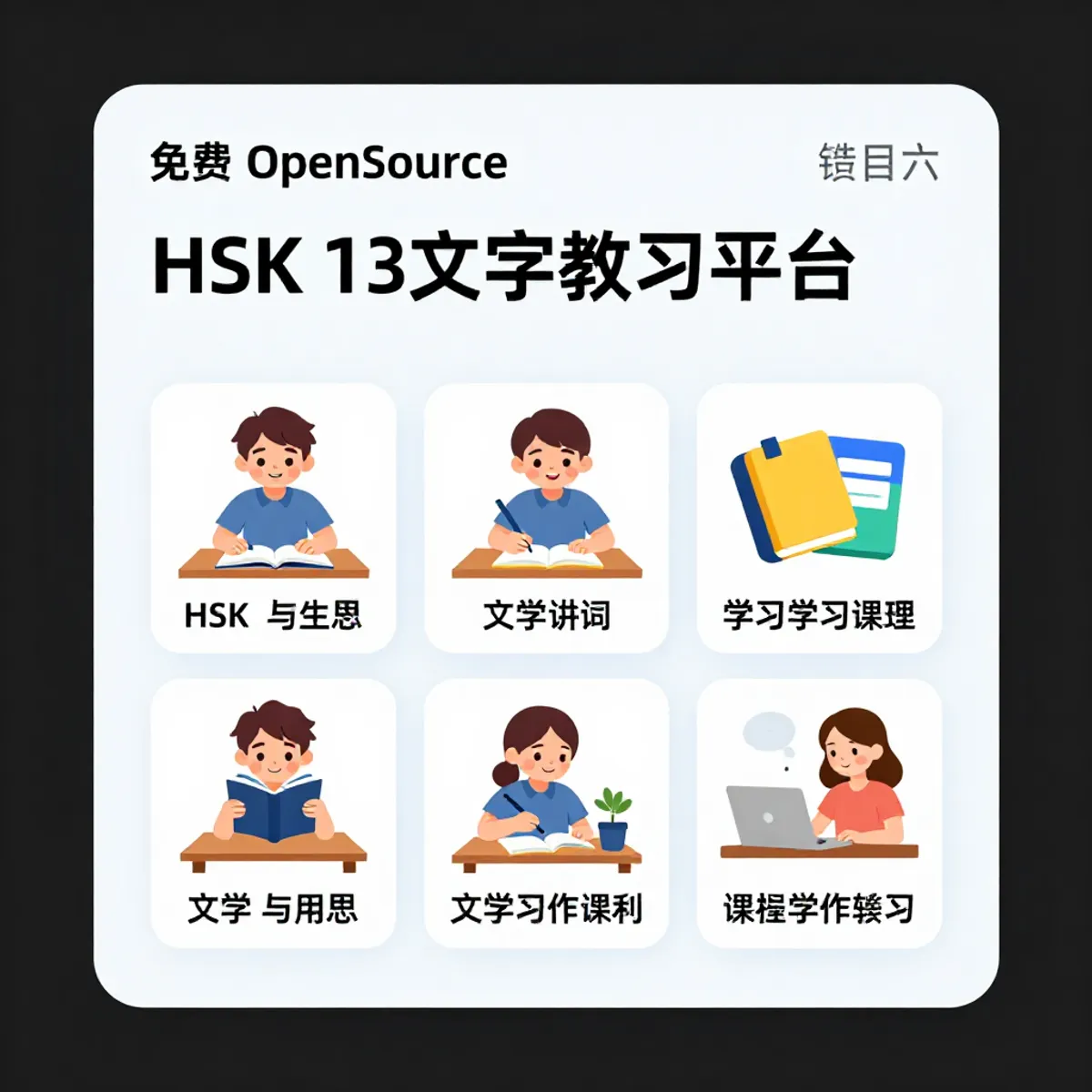
Flashcards are the classic tool for vocabulary memorization, but their effectiveness hinges on the underlying algorithm. The platform's flashcard system employs a spaced repetition schedule, similar to the proven SuperMemo or Anki algorithms. When you review a card, you rate your recall as "again," "hard," "good," or "easy." Based on this rating, the system calculates the optimal interval before showing you that card again.
A word you struggle with will appear daily; a word you know well may not reappear for months. This method scientifically combats the "forgetting curve," ensuring you review words just before you're likely to forget them. The card content is straightforward.
The front shows the Chinese character(s) and, optionally, the pinyin. The back shows the English definition and an example sentence using the word in context, ideally from the platform's own stories. Context is king in language learning; seeing a word in a sentence prevents the common mistake of memorizing a single, sometimes awkward, translation.
You can also create your own custom decks if you wish to focus on a specific theme, though the pre-made HSK 1-3 decks are the core offering. The system learns from your entire review history. It doesn't just track individual cards; it models your overall memory strength for the entire deck.
This means the daily review load is dynamically adjusted. On some days, you might have 50 cards due; on others, only 10. This prevents the overwhelming backlog that plagues manual flashcard systems.
The goal is a sustainable, daily habit of 10 to 20 minutes, not a crushing weekly marathon. Your starred words are automatically added to a dedicated deck for extra attention.
The Science of Spaced Repetition
Spaced repetition is arguably the single most important technological innovation for self-directed language study. It operationalizes Ebbinghaus's forgetting curve, which shows that memory decays rapidly after learning but can be flattened by timely review. The algorithm schedules reviews at exponentially increasing intervals.
First review after 1 day, then 3 days, then 7, then 16, and so on. Each successful recall strengthens the memory trace. This method allows you to maintain thousands of vocabulary items in your active memory with a minimal daily time investment, as you only review what is due.
Customizing Your Flashcard Experience
While the defaults are well-tuned, the open-source nature means advanced users can tweak the algorithm parameters if they wish. More immediately, you can customize card appearance. Do you want to see the pinyin first to practice pronunciation?
Or hide it to force character recognition? You can set these preferences globally or per deck. You can also add your own notes or images to cards, personalizing the mnemonic associations.
This flexibility ensures the tool adapts to your personal learning style, whether you're a visual thinker or an auditory learner.
Gamifying Vocabulary Acquisition
Games provide a low-stakes, high-engagement environment for vocabulary retrieval. They transform the chore of review into a playful challenge. The platform incorporates several lightweight games that test your knowledge of HSK 1-3 words in different formats.
One classic is a timed "matching" game where you pair Chinese characters with their English definitions as quickly as possible. Another might be a "type-the-word" game where you hear a word (via text-to-speech) and must type the correct characters. These games focus on speed and accuracy under pressure, a different kind of recall than the deliberate pace of flashcards.
The key to effective educational games is alignment with learning objectives. These games are not flashy, complex video games. They are purpose-built drills disguised as fun.
The scoring is simple: points for correct answers, bonuses for speed, and streaks for consecutive correct responses. Leaderboards or social sharing are intentionally absent to avoid competitive anxiety; the focus is on personal bests and self-improvement. The games serve as a complementary review system, a way to engage different cognitive pathways while reinforcing the same core vocabulary.
Because the game data pulls directly from the HSK word list and your personal study history, it remains relevant. You might choose to play a game using only the words you've starred as difficult, creating an intense, targeted practice session. Alternatively, you can play with the entire HSK 1-3 set for a broader review.
The games provide immediate, unambiguous feedback. A wrong answer shows the correct one, turning every mistake into a micro-learning moment. This "fail fast, learn faster" loop is highly efficient for solidifying recall.
Types of Games and Their Learning Outcomes
Different game formats target different skills. A matching game primarily trains visual recognition and rapid association. A typing game forces engagement with character composition and spelling, reinforcing motor memory.
A listening game (using text-to-speech) trains auditory discrimination and pronunciation recall. A fill-in-the-blank game within simple sentences tests contextual understanding. By offering a variety, the platform caters to different learning preferences and prevents boredom.
You can cycle through games to keep your study sessions fresh while always working on the same foundational vocabulary.
The Role of Play in Serious Learning
Play reduces the affective filter—the anxiety and self-consciousness that can block learning. When you're trying to beat your own high score, the fear of making a mistake diminishes. You become willing to guess, to experiment, to fail repeatedly in pursuit of the goal.
This mindset is ideal for memory formation. The games create a positive emotional association with the act of reviewing Chinese vocabulary. Instead of dread, you might feel anticipation for your daily game session.
This emotional shift is subtle but powerful, making long-term study sustainable.
Open-Source Freedom: Customize, Contribute, Own Your Tool
The open-source license is the platform's defining philosophical and practical feature. The code is published on a public repository, typically GitHub. This means anyone with basic technical skills can download the entire project, modify it, and host their own version.
You could change the color scheme, add new story content, integrate a different flashcard algorithm, or even translate the interface into another language. The only requirement is to comply with the license terms, which usually involve attributing the original creators and sharing any modifications under the same open terms. This freedom enables true customization.
A teacher might fork the project to add a class roster feature and custom vocabulary lists for their students. A developer might integrate it with a popular dictionary API or add a voice chat feature for pronunciation practice. A content creator could write new, culturally specific stories using the HSK 1-3 framework and contribute them back to the main project.
The platform becomes a foundation, a starting kit, rather than a finished product. It empowers the community to build the exact tool they need, without waiting for a central company to implement features. The commercial clause is also critical.
The license permits you to sell your modified version. This isn't a contradiction of the "free" ethos; it's an extension of it. If you add significant value—premium content, specialized features, managed hosting—you can charge for your service.
The original free version remains available for all. This model encourages professional development around the core free tool. It means the project's sustainability doesn't depend on donations or ads, but on a thriving ecosystem of value-added services built on its open foundation.
It aligns incentives: improve the core, and everyone benefits.
How to Fork and Contribute
For a non-technical user, "forking" might sound daunting. The process is straightforward on platforms like GitHub: you click the "Fork" button, which creates a copy in your own account. You then clone that copy to your local machine, make changes using a code editor, and push them back.
The project's README file should contain setup instructions. Even if you can't code, you can contribute by writing new graded stories, proofreading existing content, or reporting bugs. The open-source model lowers the barrier to contribution; you don't need to be hired by a company to improve the tool you use.
Who This Platform Is For (And Who It Isn't)
This platform is not for everyone, and that's by design. Its laser focus on HSK 1-3 makes it ideal for absolute beginners and early intermediate learners. If you are just starting out, it provides a structured, low-overhead path to building your initial 300 to 600 word vocabulary.
If you have dabbled in Chinese before but your reading is shaky, it offers a systematic way to fill gaps and achieve fluency with the core set. The constraint is its strength for this group. Advanced learners, however, will find the content too limited and should look elsewhere.
Self-directed learners are a perfect fit. If you are disciplined enough to study on your own, the platform gives you all the materials and tracking you need without a subscription. There are no locked levels or premium paywalls.
Teachers of introductory Chinese can use it as a supplemental resource. They can assign specific stories for reading homework, use the flashcard decks for vocabulary drills, or employ the games as in-class activities. The open-source nature allows a school or tutor to host a private instance for their students if data privacy is a concern.
Software developers interested in language learning or edtech can use it as a real-world case study. The codebase demonstrates how to build a spaced repetition system, a simple web-based reader, and game mechanics for education. It's a practical example of a full-stack application.
Advocates for open education will appreciate its commitment to free and open knowledge. It stands as a tangible alternative to the increasingly commercialized language learning app market. Ultimately, anyone who believes quality educational tools should be accessible to all, regardless of economic means, will find a kindred spirit in this project.
A Tool for Specific Goals
Consider your objective. If your goal is to pass HSK 1, 2, or 3, this platform covers the tested vocabulary directly. If your goal is to read simple Chinese texts like children's books or basic news, the graded reader provides that bridge.
If your goal is to build a solid vocabulary base before moving to more complex materials, its focused scope prevents dilution. If your goal is to understand ~80% of casual conversation, mastering this list is the most efficient path. Align your goal with the tool's purpose for the best results.
Getting Started: A Simple, Step-by-Step Onboarding
Beginning is intentionally simple. Open your web browser and navigate to chinesereader.net. You will be greeted by a clean homepage explaining the project's philosophy.
Click the "Sign Up" or "Get Started" button. Registration requires only an email and password—no payment information, ever. Once you confirm your email, you are logged into your personal dashboard.
Your dashboard shows your overall progress: words reviewed, stories read, current level. The main navigation is clear: Reader, Flashcards, Games, Profile. Start with the Reader.
Browse the library; you'll see collections for HSK 1, HSK 2, and HSK 3. Pick the first story in HSK 1. Read it slowly.
Click on any unknown word to see its meaning. Try to understand the whole sentence before clicking. After reading, go to Flashcards.
You'll find a pre-made deck for HSK 1. Begin your first review session. The algorithm will take over from there.
Incorporate Games on days when you feel less inclined for focused reading. A quick 5-minute game session is a perfect supplement. Use your Profile page to review your starred words and see your learning statistics.
This data—how many words you've mastered, your review consistency—is motivating and helps you gauge your pace. Set a small, daily goal: "I will read one story and do one flashcard session today." Consistency is far more important than marathon sessions.
Integrating into a Broader Study Routine
This platform is a core engine for vocabulary, but language is more than words. Pair it with other activities. Listen to Chinese podcasts aimed at beginners (many use HSK 1-3 vocab).
Practice speaking by shadowing audio or using language exchange apps. Write simple sentences using your new words. The platform gives you the what (the words) and a method for the how (input, SRS, games).
You must provide the context—real communication. Think of the platform as your daily vocabulary gym; you still need to go out and play the sport of actual conversation.
The Community Engine: How Users Shape the Project
An open-source project lives or dies by its community. The initial code and content were created by pourteaux, but its future growth depends on contributions from users like you. The primary hub for collaboration is the public GitHub repository.
Here you can see the issue tracker—bugs to fix, features to suggest. You can submit a "pull request" with your own code improvements or story translations. Even non-coders can help by testing the site, writing new graded texts, or improving documentation.
Discussion often happens on the platform's associated forum or subreddit (implied by the original Reddit-style submission). Here users share tips, report problems, and suggest new story ideas. This creates a feedback loop.
The developer can see what learners struggle with—maybe a particular grammar pattern is confusing—and prioritize improvements or new content. The community aspect transforms a static tool into a living, evolving project. You are not just a user; you are a potential co-creator.
This model also builds trust. Because the code is open, there are no hidden trackers, no secret data sales, no sudden policy changes. The project's roadmap is public.
You can see exactly what is being worked on. This transparency is rare in commercial products and fosters a sense of shared ownership. When you use the platform, you are supporting a specific ethos of educational freedom.
Your continued use and contribution signal that this model is valuable and worth sustaining.
How to Contribute Without Coding
You don't need to be a programmer. The most needed contributions are often content-based. The HSK 1-3 word list is fixed, but there is infinite room for new stories.
Write a short, 200-word story using only HSK 1 vocabulary. Submit it via the repository's guidelines. It will be reviewed for vocabulary compliance and interest.
If accepted, it becomes part of the global library for all users. You can also proofread existing stories for errors, suggest better example sentences for flashcards, or translate the interface into your native language to make it accessible to more people. Every contribution, big or small, improves the resource for the entire community.
Looking Ahead: Scaling an Open Ecosystem
As of 2026, the platform stands at a crossroads. Its core HSK 1-3 offering is stable and useful. The natural next step is expansion.
The community is discussing extending the model to HSK 4, 5, and 6. This is a significant challenge, as the vocabulary grows exponentially and the constraint becomes harder to manage for natural storytelling. It may require a different architectural approach or a separate project.
The open-source model allows such branches to form organically if there is enough demand and contributor interest. Beyond vocabulary expansion, potential enhancements include audio integration. Adding recorded pronunciations for all words and stories would be a massive upgrade.
Speech recognition for speaking practice is another frontier, though technically complex. Mobile apps built from the same open codebase could improve the on-the-go experience. Analytics dashboards for teachers could provide insights into class progress.
The future direction will be determined by what contributors prioritize and what users need most. The ultimate vision is a complete, free, and open ecosystem for Chinese language learning. Not just one tool, but interconnected tools covering reading, listening, speaking, and writing, all built on open principles.
This platform is the first major piece—a solid, focused foundation for the beginner journey. Its success proves that a community-driven, non-commercial approach can produce a world-class learning resource. The next phase is about scaling that success, maintaining the core values of freedom and access, and ensuring that no learner is left behind due to cost or proprietary lock-in.
The Sustainability Question
How does an open-source project survive long-term? Servers cost money. Developer time is valuable.
The project may rely on volunteer maintainers and donations for hosting costs. Some contributors might offer paid support or custom hosting, feeding back into the project's infrastructure. The license ensures that even if the original creator steps away, the code cannot be taken proprietary.
It remains a public good. This creates a different kind of sustainability—not corporate, but communal. Its longevity is tied to the ongoing engagement of its user community, which is its greatest asset.
Conclusion: Your Free, Community-Built Path to Chinese
The path to learning Chinese is now clearer than ever. You don't need to spend hundreds of dollars on apps or courses to build a strong foundation. The most critical 1,000 characters, responsible for 80% of casual communication, are available to you for free through a tool built on open collaboration.
This platform strips away the commercial noise and delivers what matters: a vast library of readable texts, a scientifically sound flashcard system, and engaging games—all centered on the HSK 1-3 core. The power now lies in your hands. You can use the tool as is, benefiting from its thoughtful design.
Or, if you have the skill and passion, you can improve it, extend it, and share your improvements. This is the promise of open source: a resource that belongs to everyone and can grow in any direction the community imagines. Whether you are a complete beginner taking your first steps or an educator seeking quality materials, this project offers a genuine, no-strings-attached starting point.
Visit chinesereader.net today. Create an account. Read your first story.
Review your first flashcards. Play your first game. Experience the momentum of recognizing word after word, sentence after sentence.
Feel the confidence that comes from engaging with real Chinese content using the vocabulary you've mastered. This is how sustainable language learning begins—not with an expensive purchase, but with a single click on a free, open resource built for the community, by the community. Your journey to understanding Chinese starts now, and it's yours to shape.
Responses • 0
0/2000
ID: 1326
Chris
Online
From
Bakersfield, United States
Send Message