Free Authentic Taiwanese Mandarin Tone Practice Tool
AI Learn Chinese
3 hr • 0 read
Free Chinese tone practice tool with real audio from Taiwans Ministry of Education. Explore 1400 authentic samples to perfect your Taiwanese Mandarin.
Introduction: The Gap in Taiwanese Mandarin Resources
For many students of Mandarin, the learning journey begins with a subtle but critical assumption: that all spoken Mandarin is essentially the same. Textbooks, apps, and online courses overwhelmingly present a standardized form rooted in Mainland China, often with a northern accent. This creates a significant gap for those specifically aiming to understand and speak Mandarin as it is used in Taiwan. The differences extend beyond vocabulary; pronunciation, particularly the realization of tones, varies in ways that can hinder comprehension and natural interaction.
This disparity leaves learners who engage with Taiwanese media, plan to travel or work in Taiwan, or simply appreciate the island's linguistic culture at a disadvantage. They may study hard, only to find that the audio they hear from native speakers in Taiwan sounds distinctly different from their study materials. The challenge is not merely academic; it directly impacts real-world communication and cultural integration.
Enter a practical solution born from personal necessity. A developer known as aevitas encountered this very problem while learning Mandarin with a focus on Taiwan. Frustrated by the lack of targeted resources, they built a specialized tool.
This article explores that tool—a free, no-frills tone practice platform—and places it within the broader context of Taiwanese Mandarin acquisition. We will examine why such a resource is needed, how it works, and who stands to benefit most from its use. The discussion will move from the phonetic realities of Taiwanese Guoyu to the pedagogical implications of using authentic, region-specific audio, and finally to the tool’s role within a larger ecosystem of language learning.
Taiwanese vs. Mainland: Pronunciation Divergences Explained
Tone Contour Variations
The assumption of a monolithic Mandarin pronunciation is one of the first hurdles for serious learners. While Standard Mandarin (Putonghua in Mainland China, Guoyu in Taiwan) shares a common written form and core phonetics, spoken reality is more nuanced. The most pronounced differences lie in tone contours, final consonants, and specific consonant sounds. Understanding these divergences is the first step toward accurate listening and speaking.
Tone realization is perhaps the most noticeable variation. For instance, the second tone in Mainland Mandarin is a rising tone, starting mid and gliding up. In many Taiwanese accents, this tone is often realized with a less steep rise, sometimes bordering on a high-level tone, which can confuse learners trained on mainland models. Similarly, the third tone’s characteristic dip is frequently shallower or even realized as a low, level tone in casual Taiwanese speech, differing from the dramatic fall-rise taught in many textbooks.
Consonant and Final Differences
Beyond tones, consonant sounds show regional patterns. The retroflex series (zh, ch, sh, r) in Mainland Mandarin is often articulated with the tongue curled back. In Taiwan, these sounds are frequently produced as alveolar (z, c, s) or with a less curled tongue, making words like "熱" (rè, hot) sound more like "熱" pronounced with a "z" sound to untrained ears.
The "w" and "v" distinction for sounds like in "我" (wǒ) can also vary, with some speakers using a labiodental fricative closer to a "v" sound. Final consonants also present a key difference. Mainland Standard Mandarin preserves the -n and -ng finals clearly. In Taiwan, especially in southern accents or rapid speech, the -ng final can be realized as a nasalized vowel or even dropped, affecting words like "東" (dōng, east) or "中" (zhōng, middle).
Systematic Features, Not Errors
These phonetic shifts mean that a learner accustomed only to mainland audio may struggle to recognize words when spoken by a native Taiwanese. The "er" sound (兒化) is also less pervasive in Taiwan. It is crucial to understand that these are not errors but systematic features of a legitimate regional standard.
They represent a consistent set of phonological rules within Taiwanese Guoyu, shaped by historical, social, and contact influences, particularly from Hokkien. Recognizing them as systematic, rather than random mistakes, is key to adapting one's perceptual framework. For the learner, this meansactively retraining the ear to expect and identify these variations as valid and predictable.
Tones as the Core of Mandarin Communication
Tones as Phonemic Distinctions
Mandarin is often described as a tonal language, a phrase that can understate their fundamental importance. Tones are not merely melodic embellishments; they are phonemic. That is, changing the tone of a syllable changes its lexical meaning, often with no alteration to the consonants or vowels. The syllable "ma" illustrates this perfectly: first tone (mā) means "mother," second tone (má) means "hemp," third tone (mǎ) means "horse," and fourth tone (mà) means "scold." Mispronouncing a tone does not just sound odd; it risks complete communicative breakdown.
For listening comprehension, tones provide essential contextual cues. Native speakers process tone patterns rapidly to segment speech and predict vocabulary. A learner who cannot reliably identify tones is effectively trying to understand a language where key distinguishing features are systematically removed. This creates a constant state of ambiguity where even a correct consonant and vowel guess, paired with an incorrect tone, yields an entirely different word.
The Cognitive Load of Tone Ambiguity
This creates a constant state of ambiguity. Even if one guesses the correct consonants and vowel, a wrong tone guess yields a different word entirely. The cognitive load is immense.
The brain must simultaneously decode segmental phonemes (consonants/vowels) and suprasegmental phonemes (tones) in real-time. For speakers of non-tonal languages, this dual-processing requirement is initially overwhelming.
This is why dedicated tone training is non-negotiable in the early stages. It must precede, or at least run parallel to, vocabulary and grammar study. Yet many learners rush through tone drills or rely on mnemonic stories that do not translate to auditory recognition.
True tone competence requires extensive listening to natural speech, where tones vary in connected discourse, and active production with feedback. It is a perceptual and motor skill that demands repetitive, focused practice.
Tone Sandhi in Connected Speech
The challenge is compounded by the fact that tone sandhi (tone change rules) further alter surface pronunciations. The most famous is the third-tone sandhi: two consecutive third tones pronounce as a second tone followed by a third tone. A learner who only recognizes isolated syllable tones will be lost when encountering fluent speech.
So, practice material must eventually incorporate these natural variations, which the Taiwanese tool begins to address through its use of authentic phrases. The specific application of sandhi rules can also vary slightly between Taiwanese and Mainland standards, adding another layer of complexity for the targeted learner. For example, the realization of a neutral tone after a fourth tone may differ subtly in pitch and length between the two standards.
Designing the Tone Practice Tool: Features and Accessibility
Frictionless Access and Minimalist Design
The tool created by aevitas directly addresses the need for accessible, authentic tone practice. Its design philosophy prioritizes simplicity and immediate utility. There is no mandatory signup, no paywall, and no distracting advertisements.
Users can simply visit the webpage and begin listening. This frictionless access is crucial for maintaining practice momentum, as any barrier can cause a learner to abandon the activity. The psychology of habit formation relies on minimizing activation energy; a tool that loads instantly and requires no account creation is far more likely to be used consistently.
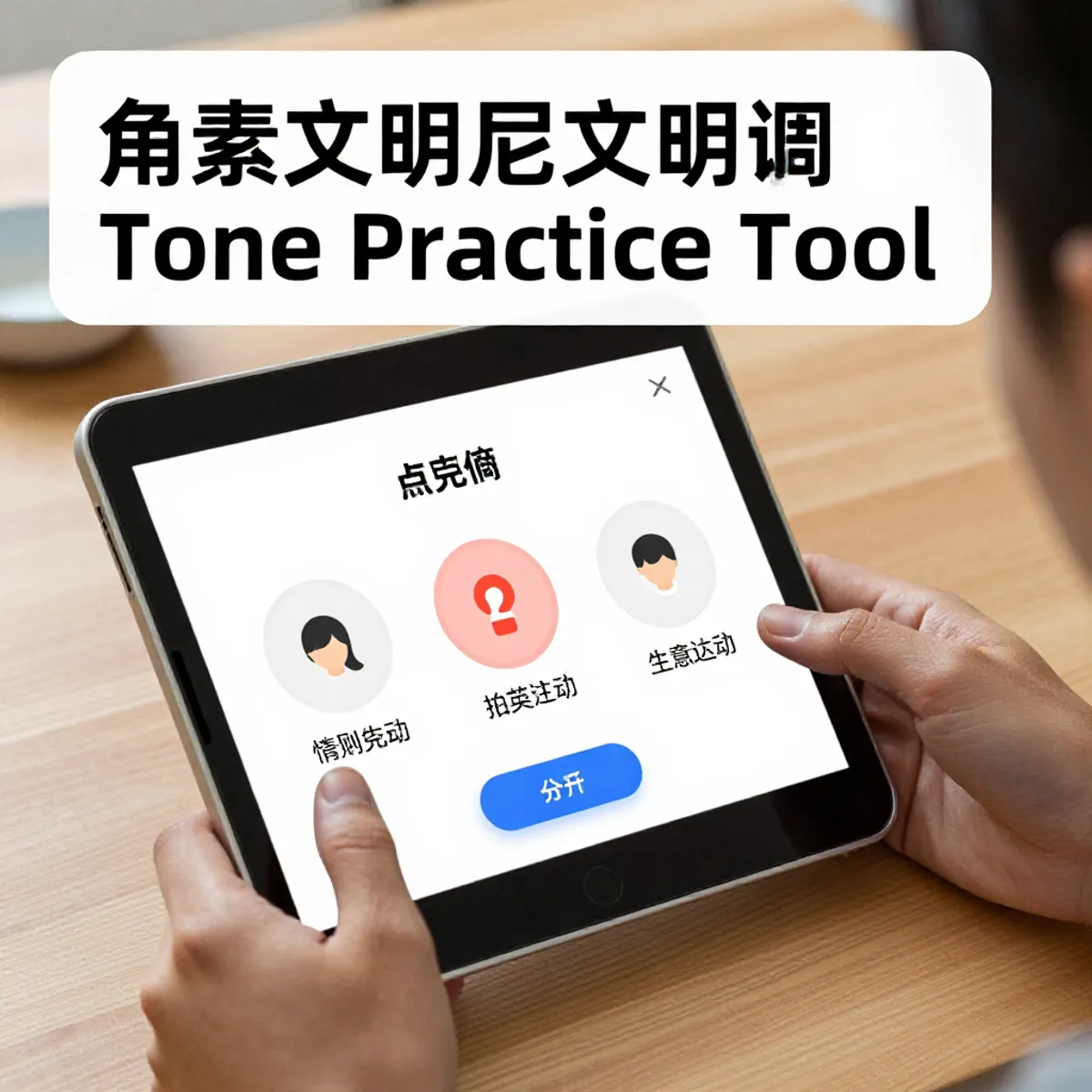
The user interface is intentionally minimal. The main page presents a grid or list of tone categories. Clicking on a tone, say the first tone, loads all associated audio clips.
Each clip is a single word or short phrase, spoken clearly. A play button allows for immediate playback. The simplicity means the tool works on any device with a web browser—a phone, tablet, or computer—without requiring a dedicated app download.
This universality supports learning in short bursts throughout the day, aligning with the principles of microlearning and spaced repetition.
Curated Authentic Content
The core content is a database of over 1400 audio samples. These are not synthesized or computer-generated; they are recordings of real human speakers. The samples are meticulously curated from the Taiwan Ministry of Education’s official language resources, ensuring authenticity and regional accuracy.
Each sample is tagged with its tone (first through fourth, plus the neutral tone), allowing for targeted practice. The distribution across the five categories provides a balanced workout for each tone type. The process of extraction and cleaning, as described by the creator, involved selecting clear, well-enunciated words and short phrases suitable for beginner and intermediate tone practice.
The Ministry’s original materials may have been designed for children or specific curriculum units, but their clarity makes them perfect for adult learners focusing on phonetics. The tool repurposes this high-quality, publicly funded content into a conveniently accessible format for a global audience.
Technical Efficiency and Universal Compatibility
Underlying this simplicity is a deliberate technical choice. The audio files are hosted efficiently, ensuring quick loading even on modest internet connections. The site’s code is lightweight, avoiding the bloat common in modern web applications. This focus on core functionality reflects the creator’s original intent: to solve a specific problem (tone recognition with Taiwanese pronunciation) without feature creep.
It is a tool, not a platform, and it excels at that singular purpose. The technical stack likely involves static site generation and direct audio file serving, minimizing server costs and complexity. This approach ensures the resource remains stable, fast, and unlikely to break due to backend changes. For the end-user, it means a reliable, predictable experience that functions equally well a decade from now on a modern browser, a testament to sustainable web design.
Effective Learning Methods with the Platform
Active Engagement Over Passive Listening
Simply clicking through audio clips will yield limited results. To maximize the tool’s potential, learners should adopt structured practice methods. The tool is best used as a dedicated listening and mimicry station, not as background noise.
Active engagement is required. A recommended session involves selecting one tone category at a time, listening to each sample multiple times, and attempting to immediately reproduce the tone and syllable.
One effective technique is "shadowing." After hearing a clip, the learner pauses it and immediately repeats the word, trying to match the speaker’s pitch contour, volume, and rhythm. This builds the muscle memory for producing tones. Another method is "tone discrimination": listening to two clips in sequence and identifying if they have the same or different tones, purely by ear.
This sharpens perceptual awareness, which is often the harder skill for adults. The learner can practice this by playing a clip, mentally noting its tone, then playing the next and comparing.
Progressing from Words to Phrases
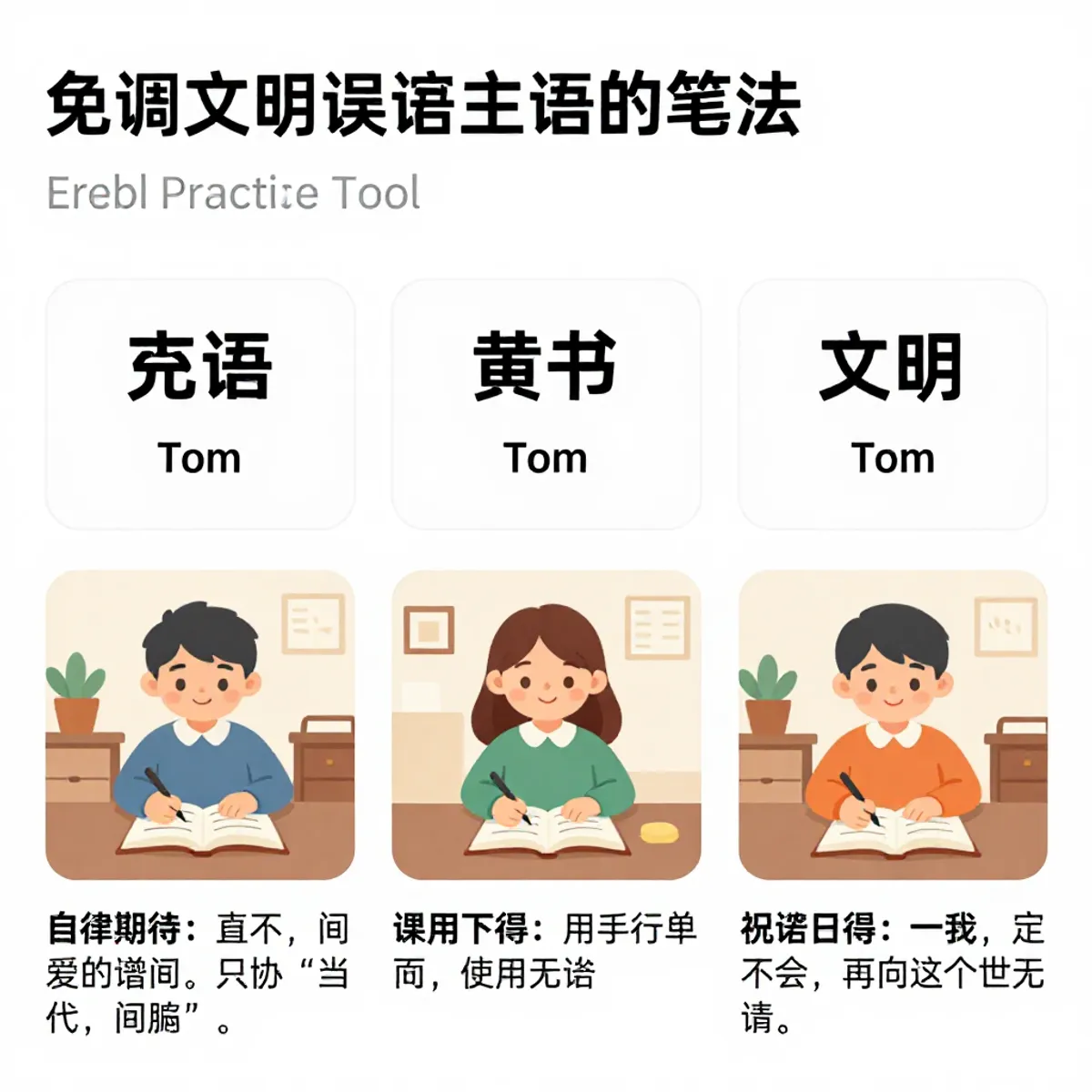
The tool’s large sample size is an asset for variety. After mastering single words, learners can progress to the short phrases, where tone sandhi naturally occurs. Here, they can observe how a third tone changes before another third tone, or how a second tone might be influenced by a preceding fourth tone in natural Taiwanese speech.
Noting these patterns in authentic data bridges the gap between textbook rules and real usage. For example, hearing how 你好 (nǐ hǎo) often sounds like ní hǎo in fast speech due to third-tone sandhi is a concrete lesson. The learner can use the tool to find multiple examples of common two-syllable words and consciously listen for these sandhi patterns, internalizing them through repeated exposure.
Consistency and Spaced Practice
Consistency and frequency trump long, infrequent sessions. Ten minutes of focused practice daily, rotating through all five tone categories, is more effective than a two-hour weekly marathon. The tool’s accessibility makes this possible.
A learner might practice first-tone words during a morning commute, third-tone discrimination during a lunch break, and neutral tone recognition in the evening. Spaced repetition of auditory patterns is key to neural pathway formation. The key is to make the practice habitual and integrated into daily routines.
Setting a specific, tiny goal—like "complete all second-tone samples today"—can make the habit stick.
The Irreplaceable Value of Real Human Recordings
The Messiness of Human Speech
While text-to-speech technology has advanced dramatically, it cannot yet replicate the full spectrum of human speech. Synthetic voices typically produce idealized, consistent tones. Each syllable is rendered with a perfect, static pitch contour. This is pedagogically useful for initial introduction but fails to prepare learners for the messy reality of human conversation, where tones vary with emotion, speaking speed, dialectal background, and individual voice quality.
Real human audio contains micro-variations. A speaker might produce a second tone with a slightly higher starting pitch when excited, or a fourth tone that doesn’t fall as sharply at the end of a breath group. These subtleties are not errors; they are the fabric of natural speech.
Training on only synthetic sound can create a brittleness in listening skills, where a learner understands a perfectly pronounced clip but is lost when encountering a natural, slightly varied utterance. The human voice also includes breath sounds, slight hesitations, and natural rhythm that synthetic speech lacks.
Diversity of Voices and Styles
The 1400 samples in this tool come from a diverse pool of speakers within the official corpus. This diversity exposes learners to different ages, genders, and speaking styles within a Taiwanese standard. It prevents the over-attunement to a single voice, which can happen with some commercial products that use one or two professional narrators.
This variety is a hidden strength, building a more robust and flexible listening skill set. Hearing the same tone produced by a male news anchor, a female teacher, and an elderly person provides a richer perceptual template than a single, optimized synthetic voice. The learner begins to abstract the tone contour from the specific voice, understanding it as a category rather than a fixed pattern attached to one timbre.
Emotional and Cultural Connection
In addition, the emotional and cultural resonance of a real human voice is significant. Hearing a genuine Taiwanese speaker—with their unique timbre, pace, and occasional hesitations—connects the learner to the human reality behind the language. It fosters empathy and a more nuanced ear.
The slight imperfections and natural rhythm in the Ministry of Education recordings provide a model that is both accurate and relatable. This human element transforms abstract phonetics into a lived, cultural experience. There is a sense of presence and authenticity that a machine voice cannot convey, making the practice feel more like engaging with a real person from Taiwan rather than interacting with a software program.
Authenticity Through Official Taiwanese Educational Sources
Official Source, Authoritative Standard
The credibility of any language learning resource hinges on the authenticity of its source material. This tone tool’s greatest asset is its direct lineage from the Taiwan Ministry of Education’s linguistic database. The Ministry, as the governing body for education in Taiwan, curates and produces language materials that reflect the official Guoyu standard as taught in schools and used in formal broadcasting. This is not an informal collection but a pedagogically vetted corpus.
Sourcing from this official channel guarantees that the pronunciation models are those considered normative within Taiwan’s educational system. For learners aiming for accuracy within a Taiwanese context—whether for academic exams, professional communication, or social integration—this alignment is invaluable. They are not learning a fringe dialect but the standard form as defined by the region’s own institutions. This avoids the potential pitfall of using resources that mix regional accents without clear labeling, which can confuse learners about what is considered "standard" in Taiwan.
Pedagogical Clarity for Adult Learners
The Ministry’s original materials are designed for clarity and pedagogical progression. The words and phrases selected are often basic, high-frequency items that are perfectly suited for drilling tonal contours without semantic distraction. An adult learner can focus entirely on pitch and rhythm, knowing the vocabulary itself is standard and useful. This repurposing of children’s curriculum material for phonetic training is a clever hack that leverages decades of official linguistic refinement.
The vocabulary is not random; it is chosen to be simple, common, and phonetically transparent. This allows the learner to isolate the tonal component without struggling with unfamiliar words or complex semantics. It’s a focused workout for the ear, much like a musician practicing scales on a well-tuned instrument.
Stability and Trust in the Corpus
This official sourcing also future-proofs the resource. The Ministry periodically updates its standards and recordings. While this tool uses a static snapshot, its foundation in an authoritative corpus means it represents a stable, recognized standard.
It is not subject to the whims of a commercial app developer’s changing voice cast or algorithmic pronunciation shifts. The learner can trust that the audio reflects a consistent, regionally appropriate model. This stability is a rare commodity in the fast-changing world of language learning apps, where updates can sometimes alter pronunciation models or remove features. The user knows that the core content, derived from an official source, will remain a reliable benchmark for Taiwanese pronunciation.
From Personal Need to Shared Resource: The Creator's Journey
Identifying a Personal Pain Point
The story of this tone practice tool is a testament to the "scratch your own itch" philosophy of development. The creator, aevitas, was learning Mandarin with a specific interest in Taiwan. They found that existing resources, even those claiming to be "Chinese," were heavily weighted toward Mainland China’s Putonghua.
The tonal and phonetic differences were causing tangible learning friction. They could understand textbook audio but struggled with Taiwanese dramas or news broadcasts. This gap was not just annoying; it was blocking progress toward their personal goal of achieving functional fluency in a Taiwanese context. The frustration was not with Mandarin itself, but with the available learning materials' inability to represent the specific variant they targeted.
From Personal Script to Shared Tool
Rather than accepting this gap, they applied technical skills to build a solution for themselves and their immediate study group. The initial version was likely rudimentary—a simple webpage with linked audio files, perhaps hosted on a personal server or GitHub Pages. Its success for aevitas and classmates prompted the decision to "clean it up and share it." This involved improving the user interface, ensuring robust audio hosting, organizing the content logically by tone, and adding basic navigation. The core mission never changed: provide pure, unfiltered Taiwanese tone input.
The development process was iterative. Feedback from the initial study group likely highlighted usability issues, leading to refinements. The creator’s primary motivation was utility, not fame or profit, which is evident in the tool’s lack of commercial elements. It was built to solve a problem, and once it solved that problem for its creator, sharing it was a natural extension.
Altruistic Motivation and Community Focus
The decision to release it freely, without signup or cost, reflects a community-oriented mindset common in independent developer circles. There was no business plan, no venture capital. The motivation was pure utility: "it'll probably be useful to more people out there." This altruistic approach means the tool remains uncluttered by commercial pressures.
Its evolution is driven by user feedback and the creator’s own continued learning, not by metrics like user engagement time or conversion rates. This origin story explains its focused utility; it was not designed to be a comprehensive language course, but to solve one precise problem: training the ear to recognize Taiwanese Mandarin tones. The creator’s personal stake in the problem ensures the tool remains true to its original purpose, resisting the tendency to broaden scope in ways that might dilute its effectiveness.
Ideal Learners: Who Benefits Most?
Students of Taiwanese Mandarin
While any Mandarin learner can use the tool for tone practice, it holds particular value for a specific cohort. First and foremost are students of Taiwanese Mandarin specifically. This includes individuals preparing to study, work, or live in Taiwan, or those with familial or cultural ties to the island.
For them, mastering the local pronunciation is not an academic exercise but a practical necessity for daily life and social acceptance. Misunderstanding tones can lead to confusion in markets, offices, and social settings. This tool provides the targeted ear training they need to bridge that final gap between textbook learning and real-world comprehension. It helps them transition from understanding a standardized, mainland-influenced model to recognizing the authentic speech patterns they will encounter daily.
Self-Directed Learners Beyond Textbooks
A second key group is self-directed learners who have progressed beyond beginner textbooks. These learners often consume Taiwanese media—dramas, news, podcasts—and notice a disconnect between what they hear and their study materials. They are motivated enough to seek out supplemental resources and will appreciate a targeted tool that bridges that gap without requiring a full course enrollment.
They likely have some foundation in tones but need perceptual refinement. They are often frustrated by the Mainland bias of popular resources and seek an authentic alternative. This tool serves as a perfect "bridge" resource, allowing them to adapt their existing knowledge to a new phonetic reality without starting from scratch.
Instructors and Tutors
Teachers and tutors also constitute an important user base. An instructor teaching Taiwanese-focused Mandarin can use the tool for in-class listening drills or assign it for homework. Its simplicity and lack of login requirements make it easy to integrate into a curriculum.
The official source material provides a credible reference point for explaining pronunciation differences to students. A tutor might assign "listen to all second-tone examples and note the contour" as a preparatory exercise before a lesson on Taiwanese phonology. It saves instructors time from having to curate their own authentic audio samples, providing a ready-made, authoritative bank of examples.
Heritage Learners and Linguistically Curious
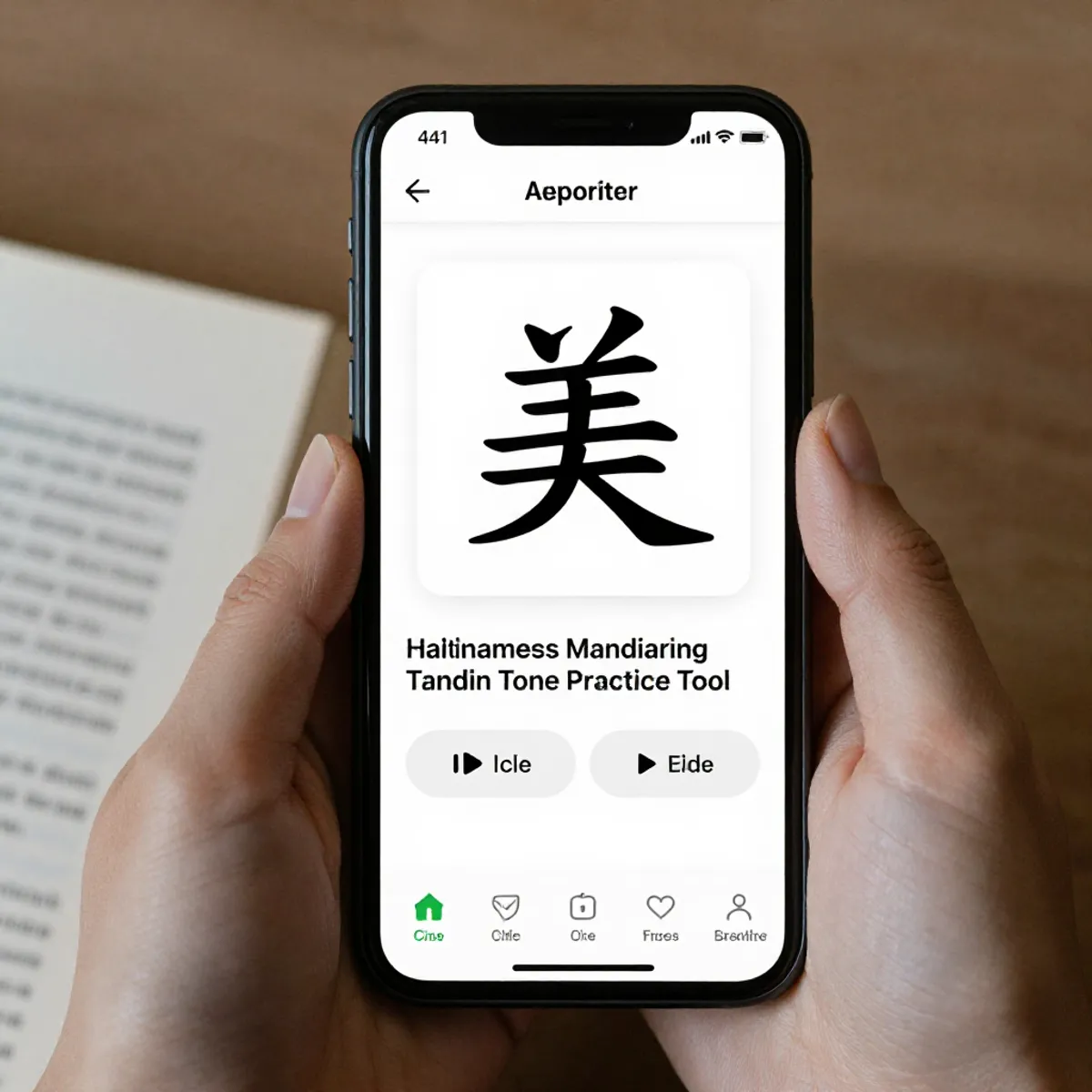
Finally, linguistically curious individuals and heritage learners fall into this category. Heritage learners who grew up hearing Taiwanese Mandarin at home but never formally studied it may have intuitive but inconsistent tone recognition. This tool offers a structured way to hone that perceptual skill, turning passive understanding into active, conscious mastery.
Similarly, language enthusiasts interested in sociolinguistics will find the concrete examples of regional variation fascinating and educational. They might use the tool not just to learn tones, but to analyze the patterns of Taiwanese Guoyu as a linguistic case study. For them, the tool is both a practical trainer and an object of academic interest, demonstrating phonological rules in action.
Tackling Persistent Tone Learning Challenges
The Perennial Third Tone Struggle
Even with dedicated practice, certain tone-related hurdles plague learners. The third tone, with its fall-rise contour, is notoriously difficult for speakers of non-tonal languages. It is often mispronounced as a simple low tone or a half-third tone in isolation. The psychological barrier is high; learners may feel they are producing the dip but their ear does not recognize it in others.
The tool combats this by providing abundant third-tone examples, allowing learners to internalize the characteristic dip through repetition. The use of real human audio shows how the third tone is often reduced in fast speech, managing expectations. Learners hear both the "full" third tone in isolation and the "half" third tone before a non-third tone, which is crucial for realistic perception. By hearing dozens of examples, the pattern becomes ingrained, and the learner’s ear learns to pick up the subtle rise even when it’s not exaggerated.
Second Tone Confusion and Discrimination
Second-tone confusion is another common issue. Learners may produce a tone that rises too abruptly or not enough, or they may confuse it with the rising part of a third tone. Discrimination between second and third tones is a frequent listening challenge, especially since the Taiwanese second tone can be less steep.
The tool’s format of listening to pure tone examples helps isolate these contours. By focusing solely on the pitch pattern without consonant/vowel distraction, users can sharpen their ear for the subtle difference in rise steepness and starting pitch. Repeated listening to contrasting pairs (e.g., má vs. mǎ) builds this discriminative ability. A learner can deliberately create a playlist of second-tone words and third-tone words and quiz themselves, strengthening the neural pathways that distinguish these two critical tones.
Demystifying the Neutral Tone
The neutral tone (or light tone) presents a different problem: it is often perceived as "no tone" or a vague reduction. In reality, the neutral tone in Mandarin has a predictable, context-dependent pitch contour that varies based on the preceding tone. The tool includes neutral tone samples, helping learners recognize that it is not a flat, toneless sound but a specific, often shorter, realization.
Hearing it after different tones (e.g., after a first tone vs. after a fourth tone) builds important pattern recognition. For instance, the neutral tone after a first tone is often a mid-level tone, while after a fourth tone it may be a low, falling tone. Without hearing these context-specific realizations, learners will continue to misidentify neutral tones as simply "wrong" or "lazy" pronunciation, rather than a systematic rule.
Re-calibrating Expectations for Taiwanese Realizations
For learners accustomed to mainland models, the Taiwanese realizations of the second and third tones can initially sound "wrong." This psychological barrier is significant. The learner’s internal template, built from mainland resources, rejects the new input as incorrect rather than different. The tool normalizes these variations by presenting them as the standard within its corpus. Regular exposure helps re-calibrate the learner’s internal template.
The key is consistent, mindful listening, acknowledging that both mainland and Taiwanese standards are valid, just different regional norms. The tool does not explicitly label tones as "Taiwanese," it simply presents them as the authentic model, allowing the learner to absorb the patterns without preconceived notions of "correctness." This passive normalization is powerful; it avoids triggering defensiveness in the learner who may have invested heavily in a mainland model.
Future Directions for Taiwanese Mandarin Tools
Expanding Vocabulary and Context
The current tone practice tool is a focused, static resource. Its success points to a broader need for expanded materials that cover the full spectrum of Taiwanese Mandarin. Future developments could logically extend from this foundation.
One obvious area is vocabulary. While tones are the focus, learners eventually need to connect tones to meaningful words and phrases within a Taiwanese context, including local vocabulary like "便當" (biàndāng, lunch box) or "耖" (cào, a specific kitchen tool). A next-step tool could present the same tone-minimalist approach but with words that are culturally and lexically specific to Taiwan. This would help learners not only with tones but also with the unique lexicon that defines Taiwanese daily life.
Connected Speech and Natural Rhythm
Another direction is expanding into connected speech features beyond simple tone sandhi. This includes the reduction of certain syllables, the merging of sounds in rapid speech (like "一下" becoming "一哈"), and the characteristic rhythm and intonation patterns of Taiwanese Mandarin discourse. These could be addressed through longer audio passages—short sentences or dialogues—with annotated features. Imagine a section where a phrase is played in slow, clear speech, then in natural, rapid conversation, highlighting how tones and syllables blur together.
This would train learners to understand fluent speech, not just isolated words. It’s the natural progression from tone recognition to comprehension of continuous speech.
Interactive Feedback Mechanisms
An interactive component could also be added. While the current tool is listen-only, a future version might incorporate simple speech recognition to give feedback on a user’s tone production. Using browser-based APIs, it could analyze a user’s recorded attempt to mimic a clip and provide a rough score or visual pitch contour comparison.
This would close the loop between perception and production. The barrier to entry for such a feature is now quite low, with Web Audio API and machine learning models available in the browser. A learner could record themselves saying a word, see a visual representation of their pitch curve alongside the native speaker’s, and adjust accordingly. This would transform the tool from a passive listening device into an active training station.
Contrastive Learning Modules
In addition, there is potential for comparative modules. A section that plays a Mainland standard pronunciation of a word immediately followed by its Taiwanese counterpart would explicitly train learners to hear the differences. This contrastive approach is powerful for those who already have some mainland-based training and need to adjust their ear.
Such a feature would directly address the core problem that spurred the tool’s creation. It could be toggled on or off, serving both beginners and those needing remedial contrastive training. For example, a learner could select "contrastive mode" for the second tone and hear a mainland rising tone followed by a Taiwanese high-level tone for the same syllable, making the difference stark and clear.
Community-Driven Expansion
Community contributions could also enrich the resource. If a mechanism for user-submitted, verified audio were added (with proper moderation), the sample size could grow organically. This would allow the corpus to evolve, incorporating newer vocabulary or different speaker demographics.
But, as discussed in the sustainability section, this introduces significant quality control challenges that must be balanced against the benefits of scale and freshness. A community-driven section, clearly labeled as such, could complement the official core, offering variety without compromising the authoritative standard.
Sustainability and the Challenge of Growth
Technical and Financial Realities
The tool’s minimalist, ad-free existence is both its greatest virtue and its most significant long-term vulnerability. As word spreads among Taiwanese Mandarin learners, the traffic to the site grows, bringing with it the mundane realities of bandwidth costs, domain renewal, and the creator’s available time. What began as a personal project to solve a specific problem now faces questions of sustainability.
The promise of perpetual free access hinges on low operational overhead, but rising hosting expenses for thousands of audio files cannot be ignored indefinitely. The community’s reliance on a single individual’s goodwill creates a fragile dependency, prompting discussions about how to preserve this resource without compromising its core philosophy. Potential models include a donation system, institutional hosting, or a lightweight sponsorship that does not interfere with the user experience.
Community Governance and Quality Control
The proposed expansion into user-submitted audio introduces a complex layer of quality assurance. Authenticity is the tool’s bedrock; allowing open submissions risks diluting the Taiwanese standard with non-native or regionally inconsistent accents. A viable model would require a rigorous verification process, potentially involving a panel of Taiwanese linguists or educators from the Ministry of Education’s network to vet each contribution.
This creates a governance challenge: how to build a community-driven system without sacrificing the authoritative source that gives the tool its credibility. The process must be transparent, with clear criteria for acceptance based on speaker origin, enunciation clarity, and tonal accuracy. Any community expansion must be additive and clearly demarcated from the official core to maintain trust.
Institutional Endorsement and Its Double-Edged Sword
Official endorsement from Taiwan’s Ministry of Education would provide immense legitimacy and potentially secure hosting or funding. But, this path carries risks. Governmental involvement could lead to bureaucratic slowdowns, mandated content changes, or the imposition of a formal educational framework that conflicts with the tool’s self-directed, agile nature.
The original resource was extracted from Ministry materials but repurposed with a learner-centric flexibility that a state institution might not prioritize. Any partnership would need to guarantee the tool’s continued independence in presentation and access, preserving its raw, utilitarian interface that users rely on. The ideal scenario might be a formal acknowledgment or link from the Ministry’s own language resources, lending authority without operational control.
Preserving the Original Vision Amidst Demand
User requests for new features—integrated pinyin, stroke order diagrams, spaced repetition algorithms—are understandable but represent a pivot from the tool’s essential purpose: pure tone perception training. Succumbing to feature creep would transform it from a sharp, dedicated instrument into a bloated application, losing the very clarity that makes it effective. The community must champion its identity as a supplementary “ear trainer,” not a comprehensive course.
This requires active communication from the creator about the tool’s intended scope, gently redirecting requests to other specialized resources for vocabulary, grammar, or character learning, thereby protecting its integrity and ensuring it remains a reliable, singular focus in a learner’s toolkit. The tool’s value lies in its singular focus; broadening it risks making it just another mediocre all-in-one app.
Conclusion: Embracing Mandarin's Regional Diversity
The tone practice tool from aevitas is more than a simple webpage with audio files. It represents a necessary corrective in the Mandarin learning landscape. By centering authentic Taiwanese pronunciation from an official source, it validates a regional standard that is often marginalized in global learning materials. It empowers learners to make a conscious choice about which variant of Mandarin they wish to acquire, rather than being passively funneled toward a Mainland-centric model.
Its beauty lies in its specificity and lack of pretense. It does not attempt to teach grammar, writing, or vocabulary in depth. It does one job—tone training—and does it well, with high-quality input and zero barriers to access. In doing so, it highlights a broader truth: language learning is not about mastering a single, monolithic system, but about navigating a landscape of related dialects and standards, each with its own internal logic and cultural weight.
For the learner, engaging with this tool is an act of both practical skill-building and cultural respect. It signals an acknowledgment that Mandarin, like any global language, wears different accents in different places. The Taiwanese variation is not a "corrupted" form but a living, official standard with its own history and legitimacy.
By training the ear to hear these specific tones, learners do more than improve their pronunciation; they develop a more sophisticated, empathetic, and accurate understanding of Mandarin in all its rich, regional diversity. This tool, in its elegant simplicity, provides a direct auditory bridge to that understanding, one authentic tone at a time.
Responses • 0
0/2000
ID: 1326
Chris
Offline
2 hr
Visited
From
Bakersfield, United States
Send Message