Forging Identity: Chinese Warrior Names
AI Learn Chinese
2 hr • 0 read
Create authentic Chinese names for fantasy warriors. Explore cultural meanings, phonetics, and Taiwanese gaming preferences for immersive character identity.
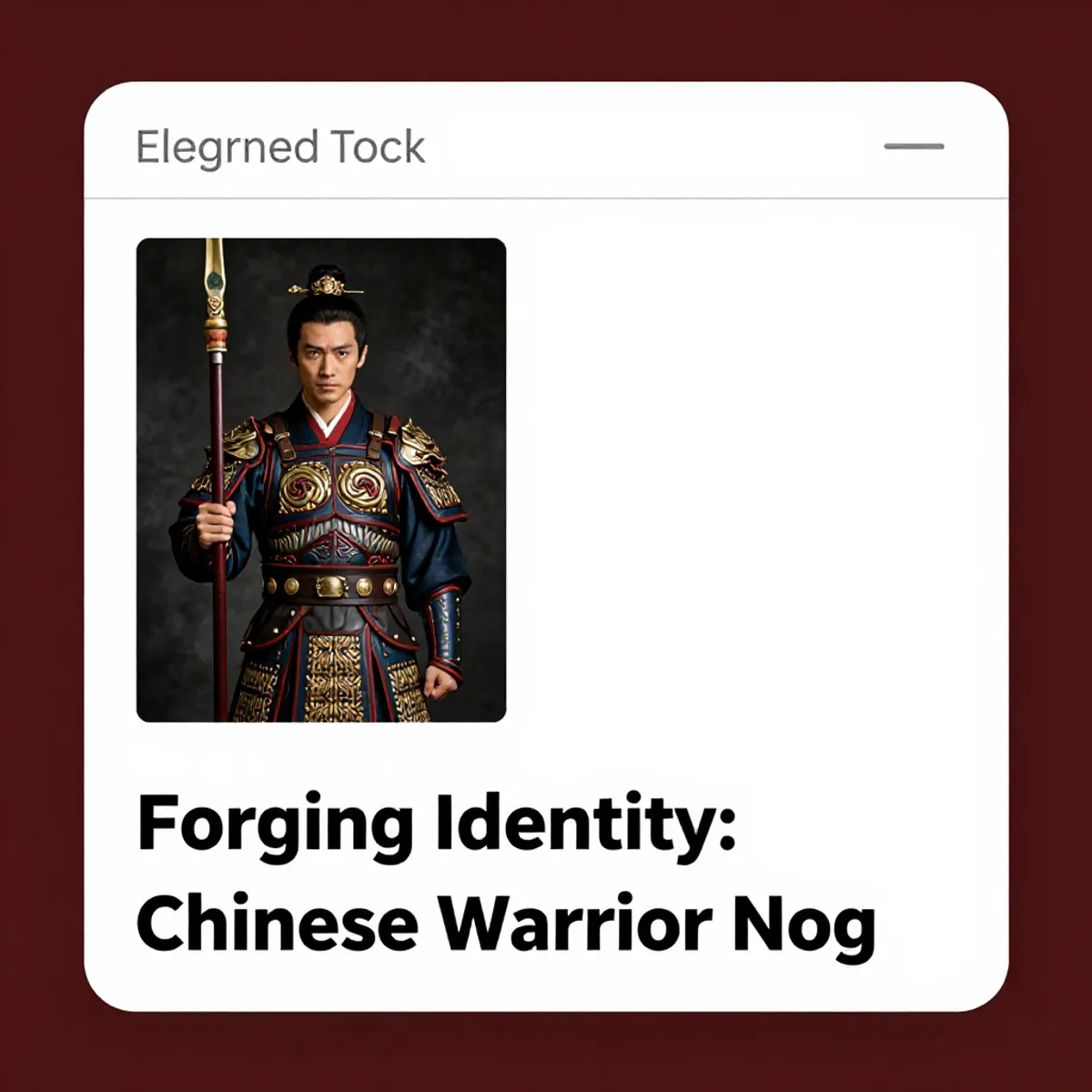
The Cross-Cultural Challenge of Fantasy Naming
Crafting a character name in a fantasy game is more than a creative exercise; it is the first step in building a digital identity. For players on Taiwanese servers, this task carries an extra layer of complexity. They seek a name that feels authentically Chinese, resonates with the game's lore, and is phonetically pleasing to a community of fellow gamers.
A beginner's hesitation is completely understandable. The gap between a name that sounds cool in English and one that carries semantic depth and cultural appropriateness in Chinese is vast. This article bridges that gap.
We will deconstruct the components of Chinese names, analyze specific proposals, and provide a clear methodology for forging a name that feels both powerful and genuine for a female elf warrior. The goal is not just to generate a list, but to equip you with the understanding to evaluate and create names that stand up to scrutiny.
The initial list of proposed names—銀翎, 霜刃, 曦刃, 皓鋒, 怒鋒, 鐵嗔, 烈鋒, 鐵誓, 烈鐵, 鐵烈—reveals a thoughtful but uncertain attempt. The user has correctly identified potent, poetic radicals like 刃 (blade/edge), 鋒 (sharp point/edge), and 鐵 (iron). They have also explored descriptive modifiers: 銀 (silver), 霜 (frost), 曦 (dawn light), 皓 (bright white), 怒 (fury), 烈 (fierce/blazing).
This is an excellent starting point. The core struggle lies in evaluating how these elements combine. Does 鐵嗔 (Iron Wrath) sound like a name for a graceful elf, or a brutish orc?
Does 烈鐵 (Blazing Iron) flow phonetically? We will answer these questions by moving from general principles to specific analysis.
Foundations: How Chinese Names Actually Work
Before judging any proposal, we must understand the architecture of a typical Chinese personal name. A full name consists of a surname (姓) and a given name (名). In gaming contexts, players often use only a given name or a single, unique two-character name, which functions as a full identity.
This is crucial. Your warrior's name will likely be a two-character compound, not a traditional surname-plus-given-name structure. So, the rules for constructing a given name apply directly.
Given names prioritize semantic meaning, phonetic harmony, and cultural connotation. They are rarely random combinations of cool-sounding characters.
The Primacy of Semantic Meaning
Each Chinese character carries a core meaning, often derived from its pictographic or ideographic origins. 刃 (rèn) means "blade" or "edge of a weapon." 鐵 (tiě) means "iron." 烈 (liè) means "fierce," "ardent," or "blazing." These meanings are not ambiguous. A name is a statement.
霜刃 (Frost Blade) immediately evokes an image of a cold, sharp weapon. 怒鋒 (Fury's Edge) suggests a blade wielded in anger. The semantic content is the name's soul.
For a female elf warrior, we must consider if the core meaning aligns with common archetypes: grace, swiftness, magical affinity, or a fierce, noble protectiveness. "Iron Wrath" (鐵嗔) leans heavily toward raw, unrefined anger and brute force, which may clash with an elven aesthetic of elegance and ancient wisdom.
Phonetics: The Sound of a Name
A Chinese name must be spoken and heard. Mandarin Chinese is a tonal language. The pitch contour (tone) of each syllable affects the name's rhythm and feel.
A harmonious name often avoids jarring tone sequences. For example, a fourth tone (falling) followed by another fourth tone can sound abrupt. A mix of tones is usually more melodic.
In addition, the pinyin spelling matters for typing and for players who may not know characters but recognize sounds. Names like 曦刃 (Xī Rèn) have a smooth, flowing sound: a first tone (high level) followed by a fourth tone (falling). 鐵烈 (Tiě Liè) uses a third tone (low dipping) and a fourth tone, which can feel more forceful.
You must say the name out loud. Does it roll off the tongue? Does it sound like a mumbled insult or a clear, proud declaration?
This auditory test is non-negotiable.
Gender Coding in Characters
While Chinese is less grammatically gendered than many languages, certain characters carry strong masculine or feminine associations. Characters related to strength, metal, and aggression like 鐵 (iron), 剛 (hard), 猛 (fierce) are overwhelmingly masculine. Characters suggesting beauty, flowers, jade, or gentleness like 嬋 (graceful), 琳 (jade), 芳 (fragrant) are feminine.
An elf warrior exists in a fascinating middle ground. She is a warrior, so strength is appropriate. But as an elf, she is often portrayed with ethereal grace, a connection to nature, and ancient, elegant aesthetics.
A name like 皓鋒 (Brilliant White Edge) uses 皓 (hào, bright white), which can be gender-neutral or slightly masculine due to its association with brightness and clarity. 銀翎 (Silver Feather/Wing), however, uses 翎 (líng), a character specifically meaning the long, decorative feathers on a bird's wing or a pheasant's tail. This is a strongly feminine character, evoking imagery of delicate beauty and flight.
It is an excellent choice for an elf, suggesting both grace and a lethal, feathered arrow or spear tip.
Deep Dive: Analyzing the Proposed Names
Let's apply our framework to each proposal. We will assess semantic fit for a female elf, phonetic flow, and gender coding. The analysis will reveal which names are promising, which are problematic, and why.
The "Blade" and "Edge" Cluster: 霜刃, 曦刃, 怒鋒, 烈鋒
The suffix 刃 (blade) and 鋒 (edge) are direct, powerful, and thematically perfect for a warrior. Their meanings are unambiguous. * 霜刃 (Shuāng Rèn - Frost Blade): Semantically excellent.
"Frost" suggests cold, precision, and a magical chill, a classic elven attribute. It is gender-neutral. Phonetically, 霜 (first tone) + 刃 (fourth tone) is clear and strong.
This is a top-tier contender. * 曦刃 (Xī Rèn - Dawn Light Blade): 曦 (xī) means the morning sunlight, often poetic and beautiful. It pairs "dawn" with "blade," suggesting a weapon of purifying light.
Semantically, it's very elven—think a blade that glows at sunrise. It is gender-neutral to slightly feminine. Phonetic flow is smooth (first tone + fourth tone).
Another strong candidate. * 怒鋒 (Nù Fēng - Fury's Edge): 怒 (nù) means "anger" or "fury." The meaning is explicitly emotional and aggressive. While an elf can be fierce, "Fury's Edge" implies a loss of control, a rage-driven weapon.
This leans masculine and brutish, clashing with typical elven serene ferocity. Phonetically, the fourth tone (nù) followed by a first tone (fēng) is acceptable, but the semantics are a mismatch for a female elf archetype. * 烈鋒 (Liè Fēng - Fierce/Blazing Edge): 烈 (liè) means "fierce," "ardent," "blazing." It is stronger and more sustained than 怒 (fury).
It can imply passion and intense spirit, not just anger. This is more usable than 怒鋒. It has a heroic, almost classical feel.
It is gender-neutral but leans masculine. Phonetically, the third tone (liè) to first tone (fēng) is fine. It is a plausible, if less nuanced, choice.
The "Iron" and "Fierce" Cluster: 鐵嗔, 鐵誓, 烈鐵, 鐵烈
This group uses 鐵 (iron) as a base, implying strength, durability, and a perhaps a more "heavy" or "mortal" forging style, which may contrast with elven "living steel" or mithril concepts. * 鐵嗔 (Tiě Chēn - Iron Wrath): This is the most problematic. 嗔 (chēn) is a rare character meaning "to be angry," "to scowl." It is almost exclusively used in compound words like 嗔怒 (fury).
As a standalone name element, it feels archaic, harsh, and intensely negative. It carries a specific, unattractive nuance of pettish anger. Combined with 鐵, it creates a name that sounds like "Iron-Sulk" or "Grudge-Iron." It is profoundly masculine and aesthetically unpleasing for any character, let alone a graceful elf.
Avoid.
* 鐵誓 (Tiě Shì - Iron Oath): A significant improvement. 誓 (shì) means "oath," "vow." It introduces concepts of loyalty, solemn promise, and unwavering duty—highly noble traits for a guardian warrior. Semantically, "Iron Oath" is strong, credible, and gender-neutral.
It suggests a steadfast protector. Phonetically, third tone (tiě) + fourth tone (shì) is solid. This is a very good, serious name.
* 烈鐵 (Liè Tiě - Blazing Iron): Reverses the order from 鐵烈. In Chinese compounding, the modifier usually comes first. 烈鐵 reads as "Blazing Iron," describing the iron's quality.
It suggests iron that is fiercely hot, perhaps from a magical forge. It's a descriptive, powerful name. It is gender-neutral but leans masculine due to 鐵.
Phonetically, fourth tone (liè) + third tone (tiě) is a common, strong pattern. It is a valid, if metal-heavy, choice. * 鐵烈 (Tiě Liè - Iron Fierceness): This order is less natural.
It reads as "Iron's Fierceness" or "Fierceness of Iron," which is a more abstract and slightly clunky concept. It personifies the iron rather than describing a quality of the warrior. It feels less direct than 烈鐵.
Semantically, it's similar but slightly weaker in impact. The phonetics are the same as 鐵誓 but with a different character, so it's acceptable but not optimal.
The Ethereal and Noble Cluster: 銀翎, 皓鋒
These names move away from pure weapon descriptors toward more poetic, aesthetic qualities. 銀翎 (Yín Líng - Silver Feather/Wing): This is arguably the best proposal for a female elf*. 銀 (yín, silver) is beautiful, precious, and associated with moonlight and magic.
翎 (líng) is the key. It refers specifically to the long, decorative feathers on a bird's wing, especially of a majestic bird like a phoenix or eagle. It is intrinsically feminine, graceful, and avian.
For an elf, it suggests a connection to sky, flight, and perhaps arrows fletched with silver feathers. The meaning is "Silver Feather" or "Silver Wing." It is elegant, unique, and perfectly on-theme. Phonetically, second tone (yín) + second tone (líng) creates a rising, melodic, and gentle sound.
This name is a winner. * 皓鋒 (Hào Fēng - Brilliant White Edge): 皓 (hào) means "bright white," "pure white," often used for teeth, moonlight, or a brilliant sheen. It is a literary, positive character.
Paired with 鋒, it suggests a blade of pure, luminous sharpness. It is gender-neutral. It has a high-class, almost celestial feel, suitable for a noble elf.
Phonetically, fourth tone (hào) + first tone (fēng) is clear and commanding. It is an excellent, strong, and elegant choice.
The Taiwanese Server Context: Nuance and Preference
Playing on Taiwanese servers means your name will be read in Traditional Chinese characters and heard in Mandarin, but with a local cultural lens. Taiwan's linguistic landscape is distinct. While Standard Mandarin is the formal norm, Taiwanese Hokkien (Minnan) is widely spoken.
This affects name perception in subtle ways. A name that is beautiful in Mandarin might have an unfortunate homophone or connotation in Hokkien. For example, names with 死 (sǐ, death) or 衰 (shuāi, decline) are avoided, but our list doesn't have those.
More relevantly, certain poetic or literary characters might be more or less common.
Traditional characters are used. All the proposed names are valid in Traditional Chinese. But, aesthetic preferences can differ.
Taiwanese pop culture, from wuxia novels to idol dramas, influences what sounds "cool" or "pretty." Names from classic literature like 倚天屠龍記 (The Heaven Sword and Dragon Saber) or 神雕俠侶 (The Return of the Condor Heroes) set precedents. Female characters often have names with characters like 芷 (zhǐ, a fragrant herb), 若 (ruò, like/resembling), 語 (yǔ, speech), or 儀 (yí, ceremony). Male warriors have names with 剛 (gāng, hard), 峰 (fēng, peak), 雄 (xióng, hero).
Our elf warrior exists in a blend: the martial "edge" (刃, 鋒) with the poetic "silver" (銀) or "frost" (霜).
Server culture also matters. Taiwanese gaming communities can be particularly appreciative of linguistic creativity and cultural depth. A name that is obviously machine-generated or nonsensical will be mocked.
A name that shows careful thought—like 銀翎 (Silver Feather)—will be respected. It signals the player cares about the game's world and its cultural texture. This is your advantage as a deliberate creator.
Phonetic and Aesthetic Harmony in Practice
We must now systematize the phonetic evaluation. Say each candidate name aloud in Mandarin. Listen to its rhythm and tone contour.
1. 銀翎 (Yín Líng): Two rising second tones. It sounds like a question or a melodic phrase—"silver feather?"—soft, continuous, beautiful.
Perfect for a graceful being. 2. 霜刃 (Shuāng Rèn): First tone (high, flat) + fourth tone (sharp fall).
It sounds decisive, crisp, like a sword cut through frost. Strong and clear. 3.
曦刃 (Xī Rèn): First tone + fourth tone. Similar to 霜刃 but with a brighter, more "dawn" feel. The vowel sound in 曦 (like "she") is open and resonant.
4. 皓鋒 (Hào Fēng): Fourth tone (abrupt) + first tone (clear). It has a punchy, declarative start followed by a sustained note.
It sounds authoritative. 5. 鐵誓 (Tiě Shì): Third tone (dip) + fourth tone (fall).
It has a weighty, solemn cadence, fitting for an oath. 6. 烈鐵 (Liè Tiě): Fourth tone + third tone.
A falling tone followed by a dip. It sounds forceful and slightly heavy, like hammering metal.
Contrast these with the rejected 鐵嗔 (Tiě Chēn). Third tone + first tone. The dip in 鐵 and the flat, high 嗔 creates a sound that is neither melodic nor strong; it feels mumbled and unpleasant, matching its negative meaning.
Also, consider initial and final consonants. Names that start with the same consonant (e.g., 烈鐵 - both start with 'L' sound in pinyin? No, 烈 is 'L', 鐵 is 'T' – different) or end with the same vowel can be monotonous.
Our good names have variety: Yín-Líng, Shuāng-Rèn, Xī-Rèn. They are phonetically diverse.
Finally, ease of typing on a standard Mandarin keyboard (Bopomofo or Cangjie) is a practical concern for other players. Common, high-frequency characters like 銀, 霜, 鐵, 锋 are easy. Rarer ones like 嗔 or 曦 are slightly harder but still manageable in a gaming context.
翎 (líng) is moderately common. This is a minor point but contributes to a name's usability.
Cultural Symbols: Blade, Iron, Blaze, and the Elf
We must reconcile the weapon-centric lexicon (刃, 鋒, 鐵) with the elven archetype. Elves in Western fantasy are often master smiths, creating blades of unparalleled quality and magical resonance (e.g., Glamdring, Sting). Their weapons are not crude iron; they are artifacts.
So, a name like 鐵刃 (Iron Blade) might be too crude, suggesting a common soldier's weapon. But 皓鋒 (Brilliant White Edge) or 曦刃 (Dawn Light Blade) transforms the blade into something magical and pure. The modifier (皓, 曦) elevates the base weapon term.
The element 鐵 (iron) is tricky. It is foundational, heavy, and mortal. Elven steel is often called 鋼 (gāng, steel) or is left implicit, with the magic described in the modifier.
烈鐵 (Blazing Iron) could work if it implies iron forged in dragon's fire or a magical flame, giving it an exceptional quality. But alone, it's just hot iron. 鐵誓 (Iron Oath) succeeds because it shifts focus from the material to the concept—the unbreakable vow the weapon symbolizes.
This is a sophisticated approach: use the weapon term as a canvas for a philosophical or magical quality.
Blaze (烈) and Fierce (烈) are excellent modifiers. They convey passion, magical fire, and indomitable spirit. 烈鋒 (Fierce Edge) is good because it describes the edge's quality, not the wielder's emotion directly.
It suggests the blade itself is fiercely sharp. This is more objective and therefore more suitable for a name than a direct emotion like 怒 (anger).
Feather (翎) and Silver (銀) are pure elven. They introduce an aerial, precious, and luminous quality that perfectly counterbalances the martial blade/edge. 銀翎 is a masterpiece of contrast: the softness of a feather with the implied sharpness of a weapon (a feather can be an arrow fletching). It is subtle, poetic, and deeply appropriate.
Crafting Your Own Name: A Step-by-Step Methodology
Armed with analysis, you can now generate and evaluate names systematically. Follow this process.
Step 1: Define Core Archetype. Is your elf a Swift Archer (speed, precision, nature), a Guardian Knight (protection, oath, light), or a Blade Dancer (grace, ferocity, artistry)? 銀翎 suits an archer or a graceful duelist. 皓鋒 suits a guardian. 霜刃 suits a precise, cold-blooded killer.
Step 2: Select a "Base" Radical. Choose a character representing the core concept: 刃 (blade), 鋒 (edge), 劍 (sword), 弓 (bow), 誓 (oath), 光 (light). For a warrior, weapon terms are strong.
Step 3: Select a "Modifier" Radical. Choose a character that qualifies the base. Categories: Material/Precious: 銀 (silver), 金 (gold), 玉 (jade), 皓 (brilliant white). Natural Element: 霜 (frost), 曦 (dawn light), 嵐 (mountain mist), 露 (dew).
Qualitative/Abstract: 烈 (fierce), 堅 (firm), 靈 (spiritual), 誓 (oath). Avian/Graceful: 翎 (feather/wing), 鵬 (mythical bird), 鸞 (mythical phoenix). Ensure the modifier's meaning complements the base.
"Frost Blade" (霜刃) works. "Dew Blade" (露刃) is less coherent.
Step 4: Test Semantic Coherence. Combine them. Does "Silver Feather" make sense as a warrior's name? Yes, implying a feathered weapon or a light, swift style.
Does "Iron Wrath" make sense? Yes, but is it the right sense? Likely not for an elf.
Step 5: Auditory Test. Say it. Write its pinyin. Check tone sequence.
Is it melodic (e.g., Yín Líng) or clunky (e.g., Tiě Chēn)? Does it sound like a name or a dictionary definition?
Step 6: Gender and Cultural Scan. Does the modifier have strong gender coding? 翎 is feminine. 鐵 is masculine.
皓 is neutral. Balance is key. A feminine modifier on a neutral/masculine base (銀翎) creates a feminine-leaning name.
A neutral modifier on a masculine base (鐵誓) creates a neutral/masculine name. For a female elf, leaning feminine or neutral is safer.
Step 7: Community Vibe Check. Imagine typing this name in a Taiwanese guild chat. Would other players understand it's a name? Would they ask, "What does your name mean?" A good name invites curiosity.
銀翎 would. 鐵嗔 would provoke laughter or confusion.
Common Pitfalls for the Beginner
Your list shows you are already avoiding some traps, but beware these: Overused Tropes: Names like 無敵 (invincible), 戰神 (god of war), 天下 (under heaven) are cliché and sound like a novice's power fantasy. Avoid. Literal Weapon Chains: 刀劍鋒芒 (blade sword edge brilliance) is a phrase, not a name.
Names are compact, usually two characters. Don't overstuff. * Negative Connotations: 嗔 (anger) is negative.
衰 (decline), 敗 (defeat), 穢 (filthy) are obvious no-gos. Even positive words can have negative homophones. 鐵 (iron) sounds like 貼 (to paste/stick) in some contexts, but this is minor.
* Gender Mismatch: Using extremely masculine characters for a female character without a balancing feminine element can feel tonally off. 鐵嗔 is doubly masculine and negative. 烈鐵 is masculine but neutral in valence.
Phonetic Ugliness: Names that are hard to say, have awkward consonant clusters (e.g., 絲 si + 詩 shi = 絲詩, which is fine, but avoid rare combos), or sound like vulgar words in Mandarin or Hokkien. often vocalize. Lore Inconsistency: If the game's world has established naming conventions (e.g., all elves have names starting with "A" or use only nature words), your name should fit.
Research the game's existing NPC names.
The Social Dimension: Names in a Living Community
Your name exists in a social space. On a Taiwanese server, it will be read, spoken, and judged by other players. A well-crafted name like 銀翎 becomes a conversation piece.
It demonstrates cultural literacy. A poorly crafted name becomes a mark of inexperience. This social pressure is real.
You are "trying" to get it right because you care about your integration into the game's community.
Consider uniqueness. In a popular game, many simple names are taken. A two-character name using moderately common but not ultra-frequent characters (like 銀, 翎, 霜, 皓) has a better chance of being available than a name using 龍 (dragon) or 鳳 (phoenix).
Your proposed list is full of good, less-overused characters. This is wise.
Also, think about scalability. Does the name suit the character at level 1 and at level 100? A name like 怒鋒 might feel too "angry newbie" for a seasoned champion.
皓鋒 or 鐵誓 sounds dignified at any level.
The Visual Dimension: Character Aesthetics and Balance
Beyond sound and meaning, the visual presentation of your chosen characters contributes significantly to the name's overall impact. In a game's interface, where names appear in chat boxes, nameplates, and character sheets, the stroke count, structural density, and radical composition of each character create an immediate visual impression. A balanced pair feels harmonious and intentional, while an unbalanced one can appear clumsy or jarring, even if semantically sound. This aesthetic layer is part of the holistic evaluation; your name must satisfy the ear, the mind, and the eye.
Consider the visual harmony of 銀翎 (Yín Líng). Both characters contain 11 strokes, creating a symmetrical weight. The radicals—金 (metal) in 銀 and 羽 (feather) in 翎—are distinct yet complementary, visually echoing the name's semantic blend of precious solidity and graceful lightness.
By comparison, 鐵嗔 (Tiě Chēn) pairs 鐵 (22 strokes, densely packed) with 嗔 (11 strokes, cramped structure). The visual imbalance mirrors its semantic and phonetic flaws, making it feel unwieldy and unpleasant at first glance.
Radical Synergy: How Components Interact Visually
Chinese characters are constructed from radicals that carry inherent visual and semantic cues. When two characters are combined, their radicals can create a subtextual narrative that reinforces or undermines the name's coherence. For 銀翎, the 金 and 羽 radicals present a clear visual dichotomy: metal versus feather. This contrast is not only semantically apt but also visually engaging, suggesting a fusion of disparate elements into a unified identity.
Similarly, 霜刃 (Shuāng Rèn) pairs the 雨 (rain) radical of 霜 with the pictographic 刃. The 雨 radical introduces a natural, atmospheric element that softens the harshness of the blade, visually supporting the "frost" modifier. 鐵誓 (Tiě Shì) combines the heavy 金 radical of 鐵 with the 言 (speech) radical of 誓.
This juxtaposition visually encodes a story: the enduring weight of metal meets the human act of pledging a vow. When selecting characters, examine their radicals. Do they tell a compatible mini-story, or do they clash (e.g., fire next to water without context)?
Radical synergy elevates a name from a simple compound to a carefully constructed symbol.
This visual scrutiny is especially crucial for a female elf warrior, where elegance and balance are paramount. Names like 皓鋒 (Hào Fēng) benefit from the open, bright 白 radical in 皓 contrasting with the sharp 金 radical in 鋒, creating a dynamic yet controlled visual tension. Conversely, a name like 烈鐵 (Liè Tiě) uses two characters with strong, angular radicals (火 in 烈, 金 in 鐵), which can feel overly aggressive and visually heavy. Aim for radical pairings that mirror the character's intended grace and power—often a softer or more celestial radical (如 白, 羽, 日) paired with a martial one (如 金, 刃) achieves this equilibrium.
Conclusion: From Hesitation to Creation
The journey from "I don't know if this sounds like rubbish" to "I have a name that feels right" is one of learning the logic behind Chinese name construction. You have already done the hardest part: generating meaningful components. Your list contains several strong contenders—銀翎 (Silver Feather) and 皓鋒 (Brilliant White Edge) stand out as particularly excellent for a female elf warrior, balancing martial theme with elven grace.
霜刃 (Frost Blade) and 曦刃 (Dawn Light Blade) are also superb. 鐵誓 (Iron Oath) is a powerful, solemn alternative if you want a more grounded, knightly feel.
The names to discard are clear: 鐵嗔 (Iron Wrath) for its harsh, negative, and masculine connotations, and 怒鋒 (Fury's Edge) for its overly aggressive and less nuanced emotion. 烈鐵 (Blazing Iron) and 烈鋒 (Fierce Edge) are usable but less refined than your top choices.
Your methodology should now be: choose from your top semantic fits, run them through the phonetic test (say them aloud), confirm the gender tone feels appropriate for your elf's specific personality, and finally, check availability on your Taiwanese server. You are not just picking a cool-sounding word. You are forging a piece of identity that respects a linguistic tradition and enhances your immersive experience.
The fact that you are asking these questions means you are on the right path. Trust your analysis, embrace the learning process, and step into your game with a name that carries both meaning and might. Your elf warrior deserves it.
Now, go forth and try your chosen name with confidence.
Responses • 0
0/2000
ID: 1326
Chris
Offline
2 hr
Visited
From
Bakersfield, United States
Send Message