Finding Your Feet in Zhongshan
Learn Chinese
1 hr • 0 read
Navigate social connections in Zhongshan (中山), Guangdong. Discover local WeChat groups, language tips, and community spots to build your network in this vibrant Chinese city.
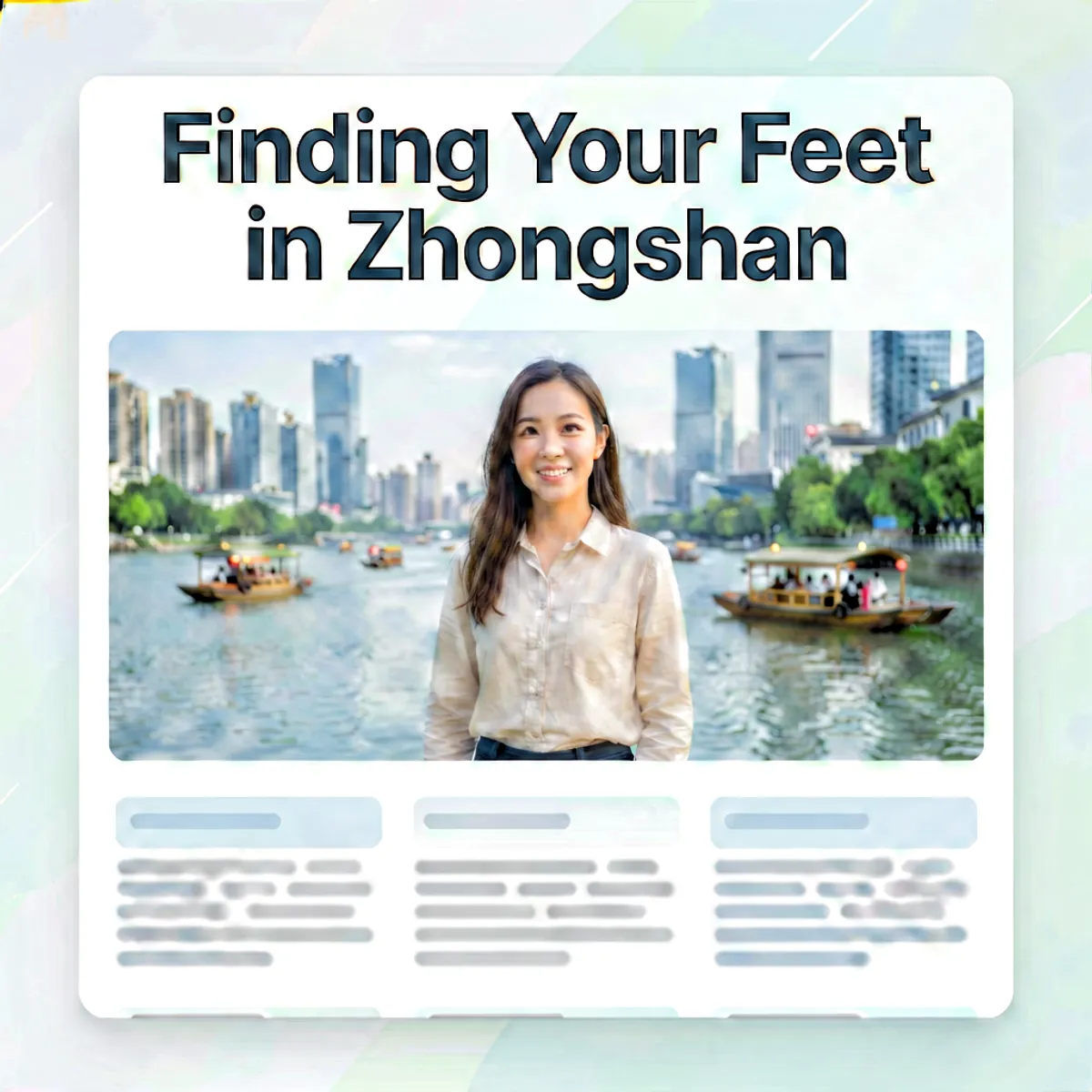
The digital post was simple, direct, and resonated with a quiet, universal truth of relocation: “Anyone living in Zhongshan (Guangdong)? Moved to Zhongshan (Guangdong) from Hong Kong about half a year ago and realizing I don’t really know anyone here.” This wasn't a query about real estate prices or school districts; it was a human call for connection, a digital flare shot into the night sky of a new city. The author, a recent transplant from the hyper-connected, densely populated Special Administrative Region to the sprawling, historically rich prefecture-level city of Zhongshan in Guangdong Province, articulated a feeling many experience but few admit so openly. The follow-up was a generous invitation: “I’m up for pretty much anything, whether it’s grabbing coffee, hitting the gym, playing sports, exploring the city, or just hanging out.” The subtext was clear: the map of Zhongshan was physically known, but its social landscape was a mysterious, uncharted territory. This article is for that person, and for anyone else standing in a similar spot, looking at a new home and wondering how to move beyond being a resident to becoming a local.
The initial period in any new city is a study in contrasts. The thrill of exploration—the smell of fresh baozi from a street-side stall, the visual feast of a bustling market like Shiqi or the modern curves of the Zhongshan Grand Mosque—is often tempered by the profound loneliness of not sharing those experiences with someone. This gap is especially acute for those moving within the Guangdong region, like from Hong Kong to Zhongshan. While the cultural and linguistic bridge is shorter than, say, a move from Europe, the nuances of daily life, the unspoken rhythms of a community, and the existing social fabric remain stubbornly opaque. The problem isn't a lack of people; Zhongshan is a city of over 4 million. The issue is the architecture of connection. How do you find your people? Where do these “active communities” the original poster sought actually gather, especially when the primary digital social hub, WeChat, operates on a model of closed, invitation-only groups?
The Linguistic Landscape: More Than Just Mandarin
Before diving into apps and groups, one must understand the soundscape of Zhongshan. The entity list from our source data correctly identifies Cantonese and Mandarin as key languages. This is the foundational layer of any social integration effort here. While Mandarin (Putonghua) is the official language of government, education, and formal business throughout China, Guangdong’s soul speaks Cantonese. In Zhongshan, the local dialect is actually a variant of Cantonese, often with its own distinctive tonal shifts and vocabulary. You will hear it in the wet markets, in the tea houses (cha chaan teng), and in the lively conversations outside school gates. A working knowledge of Mandarin will get you by in shops, restaurants, and with officials. But a willingness to learn, or even just understand, the local Cantonese inflection is a profound social signal. It says, “I am here, and I respect the place you call home.”
This isn't about fluency. It’s about engagement. Learning basic greetings like “dim aa?” (how are you?) or “m goi” (thank you/excuse me) in the local tongue can instantly dismantle a barrier. For the Hong Kong mover, the transition might feel linguistically smoother than for someone from Beijing, but the cultural codes embedded in the language are different. The rhythm, the indirectness, the specific terms for local foods and places—these are the keys to feeling less like an observer and more like a participant. Numerous community centers and informal tutors offer Cantonese classes specifically for mainlanders from other provinces and international newcomers. Seeking these out is a dual-purpose mission: language acquisition and immediate social contact with fellow learners.
WeChat: The Digital Town Square
There is no discussion of modern Chinese social life without WeChat. It is not merely an app; it is the operating system for daily existence. The original poster’s mention of “WeChat groups” is the most critical keyword in their search. These groups are the hidden veins of community information. But, they are not discoverable through a simple search. They are cultivated, shared, and guarded.
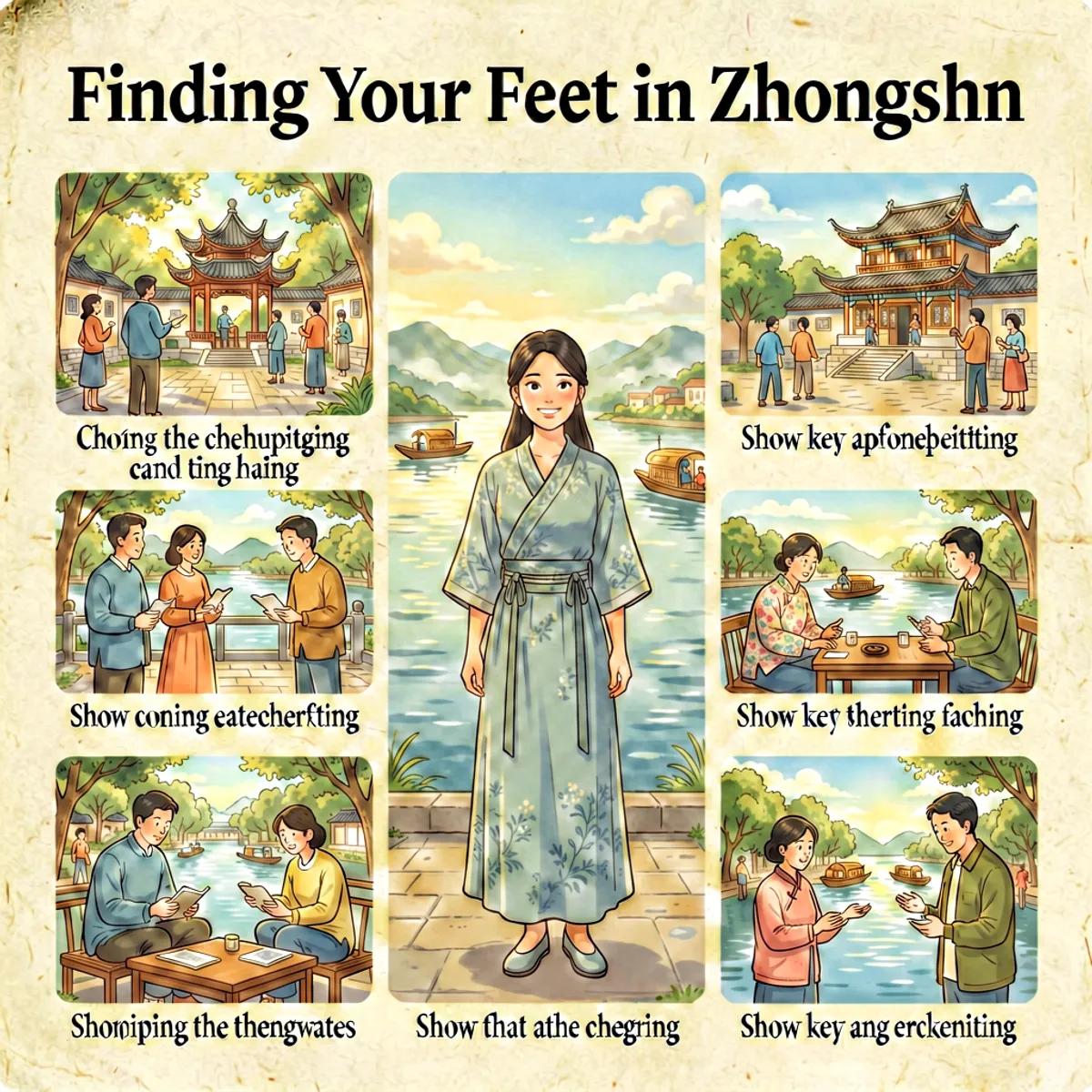
The primary method of entry is through hyper-local, real-world interactions. Joining a gym? Ask the front desk if there’s a member WeChat group. Buying a regular breakfast from a stall? Politely inquire if the owner knows of any “Zhongshan Living” or “Zhongshan Expats” groups. The key is the chain of trust. A recommendation from a local, even a slight acquaintance, is worth more than any online directory. The groups themselves vary wildly. Some are massive, megaphone-style broadcasts for buying and selling used furniture (a lifeline for new arrivals). Others are smaller, focused on hobbies: hiking on the nearby peaks of the Wuguishan Range, cycling along the Jinzhong River, or basketball games at the Zhongshan Sports Center. There are also groups for specific nationalities or regions—a “Hong Kong People in Zhongshan” group would be a perfect starting point for our Redditor.
For those without an existing Chinese social network to bootstrap this process, there are public, searchable entry points. Searching on WeChat’s “Discover” > “Groups” section with keywords like “Zhongshan” (中山), “Zhongshan Life” (中山生活), “Guangdong Expats” (广东外派), or “Zhongshan Friendship” (中山交友) can yield results. Persistence is required. a number of groups are full or inactive. The active ones often have a name that includes a year, like “Zhongshan 2026 New Friends Group,” indicating it was created recently for newcomers. Once in, the protocol is to introduce oneself briefly: name, where you’re from, what you do, and what you’re interested in. The response is usually a flood of welcoming messages and invitations to smaller, more specific subgroup chats.
Beyond the Screen: Mapping Physical Third Places
The digital connection must crystallize into physical, recurring interaction. This is where the “grabbing coffee, hitting the gym, playing sports” part of the request becomes actionable. Zhongshan, like any city of its size, has a constellation of “third places”—locations that are neither home nor work but are essential for community building. Identifying and frequenting these is strategy.
Coffee & Casual Hangouts: Zhongshan’s café culture is sophisticated and growing, particularly in the Shiqi and Xingzhong districts. Establishments like %Arabica in the MixC mall or independent shops near the Sun Yat-sen Memorial Hall are not just for coffee; they are de facto coworking and social spaces. The baristas often know the regulars and can be a source of local gossip and group information. The act of becoming a “regular” at one or two places is a classic, time-tested method of embedding oneself. It creates a predictable, friendly routine where you are recognized.
Fitness & Sports: Gyms and sports complexes are natural hubs. The Zhongshan Olympic Sports Center (中山奥林匹克体育中心) hosts public swimming sessions, has tennis courts, and a track. Joining a fitness class—yoga, spinning, or even traditional Tai Chi in the park—places you in a recurring group with a shared activity. The shared exertion and routine lower social inhibitions. For team sports, platforms like the Chinese app “Dangdang Sports” (当当体育) or local bulletin boards at these facilities often list pick-up games for basketball, badminton, and football. The original poster’s mention of “playing sports” is a direct path here; the social icebreaker is built into the game.
Exploration as a Social Activity: The phrase “exploring the city” can be transformed from a solitary activity into a social one. Zhongshan is a city deeply intertwined with the legacy of Dr. Sun Yat-sen (Sun Zhongshan), its most famous son. Visiting the Sun Yat-sen Former Residence (孙中山故居) or the expansive Zhongshan Memorial Middle School area can be more engaging with others who share an interest in history. More broadly, organizing or joining “photo walks” through the old Cantonese-style villages in the Nanlang area, or food tours targeting specific Zhongshan delicacies like pigeon (often roasted) or siu laap (roast meats), creates a mission-based hangout. Posting in those WeChat groups, “Who wants to try the best zhongzi (sticky rice dumplings) in town this Saturday?” is a low-pressure, high-reward invitation.
The Expat & Cross-Cultural Bridge
While the original poster moved from Hong Kong, the framework applies to all international newcomers. There is a established, if scattered, international community in Zhongshan. It is not as visible as in Shanghai or Beijing, but it exists, centered around the international schools (like the Zhongshan Foreign Language School’s international division) and a handful of expat-friendly bars and restaurants. Finding these nodes requires a different search strategy. Websites like “That’s GBA” (covering the Greater Bay Area) or “InterNations” have Zhongshan sections. Facebook groups, while officially blocked in China, are often accessed via VPN and host groups like “Expats in Zhongshan/Guangdong.” These platforms are where you’ll find other English speakers, often in similar situations of seeking connection.
But, a crucial piece of advice is to not let the expat bubble become a cage. The richest connections come from cross-cultural bridges. The goal is to use the expat network as a launchpad, not a destination. An English-speaking group can organize a joint hiking trip with a local hiking club. A holiday celebration like Thanksgiving can be an opportunity to invite new Chinese friends. This two-way integration is the hallmark of truly building a life in a new place. It moves the dynamic from “I need friends” to “I have something to share and a community to learn from.”
Cultivating Patience and Proactive Vulnerability
The emotional core of the Reddit post is the admission of not knowing anyone. The antidote to that state is not just activity, but proactive vulnerability. It means being the one to post in the group, “Hey, I’m new, want to grab a drink this Friday?” ten times until someone says yes. It means accepting that most invitations might be ignored or declined, and that is not a reflection of your worth, but of the busy, sometimes insular nature of adult life everywhere. The “about half a year ago” timestamp is important. Six months is the typical inflection point where the initial novelty wears off and the loneliness sets in, but it is also the point where one has enough basic familiarity with the city to move from sightseeing to socializing.
Building a social network in Zhongshan, or any city, is not a linear process. It involves attending events where you know no one, forcing small talk about the weather or the difficulty of hailing a Didi (ride-hailing app), and following up with a WeChat contact. It involves the awkwardness of language mistakes and the joy of a shared laugh over them. It involves the slow burn of turning an acquaintance from a gym class into a friend you call for a non-gym-related reason. The city itself provides the common ground. Complaining about the summer humidity, celebrating the clarity of a winter day, marveling at the festive lights along the Qijiang River during Spring Festival—these are the universal experiences that form the bedrock of friendship.
Conclusion: The City Becomes Yours
The journey from “I don’t really know anyone here” to having a circle of friends who know your favorite noodle shop and your preferred hiking trail is a gradual one. It is built on the small, consistent actions: accepting a WeChat group invite, showing up to a pick-up basketball game even if you’re not great, ordering the same coffee order until the barista smiles and remembers. Zhongshan, with its blend of industrious history, serene gardens like the Zhongshan Botanical Garden, and its position as a key node in the Guangdong-Hong Kong-Macao Greater Bay Area, offers a rich context for this life-building project. The tools are the ubiquitous WeChat, the physical spaces of shared interest, and a mindset shift from passive resident to active participant. The original poster’s openness to “pretty much anything” is the perfect starting compass. The map is drawn not just by exploring streets, but by the connections forged along the way. In 2026, a year that will bring further development and change to this dynamic region, the human network you build today will be the most valuable and enduring asset you have in Zhongshan. Start with that message in the group. The first step is always the hardest, and it begins with a simple, “Hi, I’m here.”
Responses • 0
0/2000
ID: 1326
Chris
Offline
1 hr
Visited
From
Bakersfield, United States
Send Message