Favorite Chinese Rulers Through History
AI Learn Chinese
4 hr • 0 read
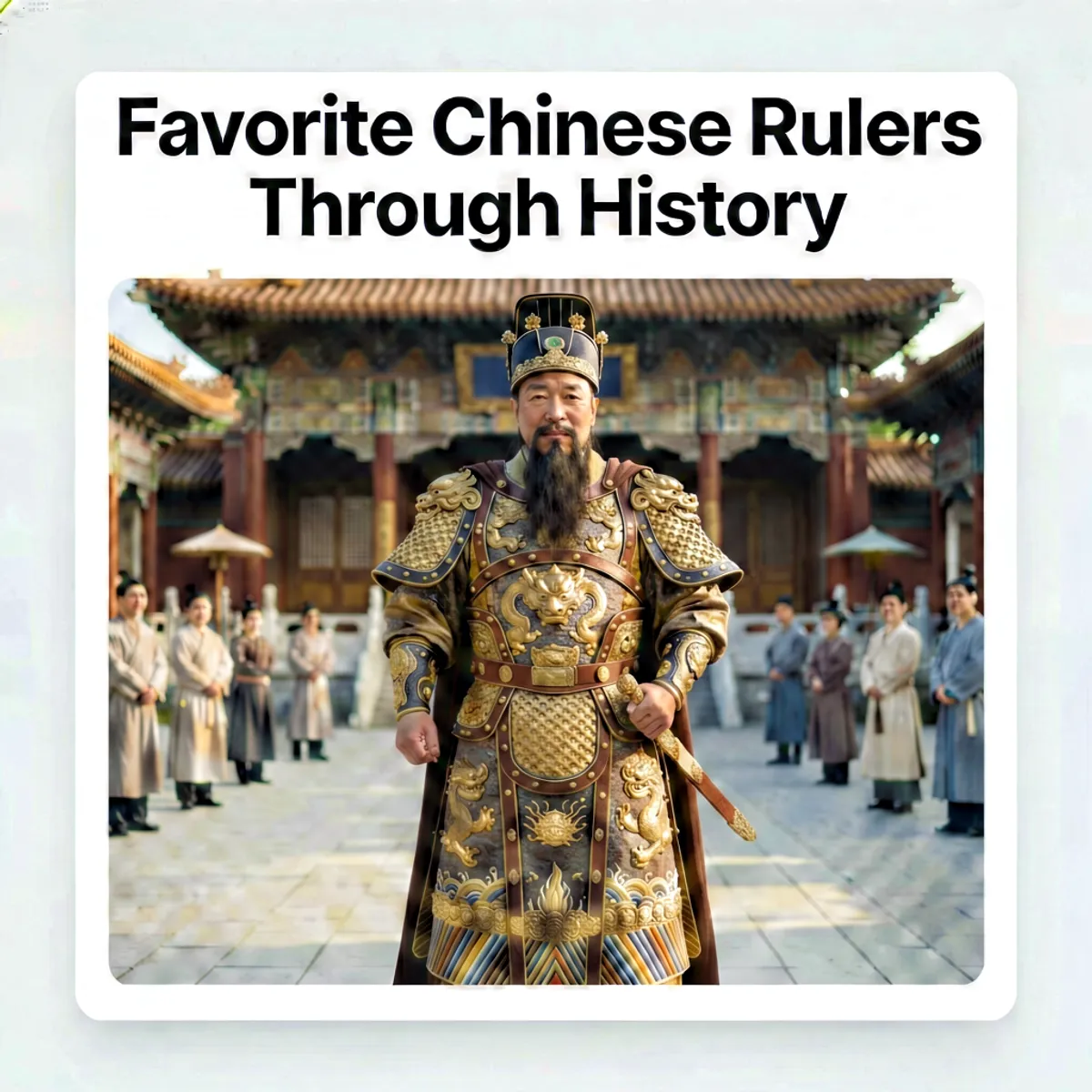
Choosing a favorite Chinese ruler: exploring subjective history from Zhou to Qin.
Introduction: Defining "Favorite"
The concept of a "favorite" ruler inherently personalizes history. Unlike metrics such as economic output, military conquest, or artistic output that offer objective benchmarks, choosing a preferred leader involves subjective appreciation. This could stem from admiration for their vision and reformist zeal, like Emperor Xiaowen of the Northern Wei; empathy for their struggle against powerful nobles or external threats, such as certain Tang emperors; or even a complex appreciation for controversial figures who, despite flaws, left an indelible mark.
The goal here is not historical accuracy in ranking rulers but exploring the varied ways individuals relate to and interpret the past. Each era, from the early Zhou dynasties establishing Confucian principles to the intricate court politics of the Qing, offers a rich tapestry of leadership styles and personalities to choose from. This article serves as a platform for sharing these personal historical connections.
The Western Zhou Dynasty (approx. 1046-771 BCE)
The Western Zhou period marks a crucial era for consolidating the Chinese identity and establishing foundational governance systems. While often remembered for its bronze age culture and the legendary Rebellion of the Commoners, the rulers of this era established principles of succession and governance that influenced later dynasties. Evaluating favorites from this early period requires navigating somewhat fragmented records, but figures like King Wen (r.
approx. 1050 BCE), credited with unifying the Chinese heartland and founding the Zhou dynasty, and King Wu (r. approx. 1043 BCE), who led the campaign against the preceding Shang, are pivotal. Later rulers, though details are less clear, governed the expanding Zhou territory.
Your choice might lean towards a ruler embodying the idea of the Zhou, a figure representing the dawn of a structured, agrarian society and the philosophical debates that shaped early Chinese thought. Which Western Zhou ruler resonates most with you?
The Qin Dynasty (221-207 BCE)
The Qin dynasty, though brief, left an unparalleled mark on Chinese history through unification. Emperor Qin Shi Huang, the first emperor to proclaim himself First Emperor of All China, stands as the most prominent figure, albeit a controversial one. He centralized power, standardized writing, measurements, and weights, and constructed the vast Great Wall.
His ambition led to immense burdens on the populace, culminating in rebellion and his own demise. While perhaps not a "favorite" for their personal character, rulers like Emperor Qin represent a monumental turning point in Chinese history through sheer force of will and ambition. Why might someone admire or be intrigued by such a demanding figure?
Was it his engineering feats, his unification of disparate lands, or the sheer audacity of his vision, even if its execution was flawed?
The Han Dynasty (206 BCE - 220 CE)
Following the Qin, the Han dynasty ushered in an era of significant cultural, philosophical, and political flourishing. This period saw the advent of Confucianism as the state ideology under Emperor Wudi, whose reign (141-87 BCE) is often considered the peak of Han power and influence. Generals like Hancock expanded the empire's borders, while scholars like Zhuangzi (though primarily a philosopher, his influence was profound) flourished.
Emperor Wendi (r. 11 CE) is credited with establishing the civil service examination system, a cornerstone of future Chinese governance. The Han also saw the first century of Silk Road trade, connecting China with the world.
Your favorite Han ruler might be Emperor Wudi for his patronage of culture and expansion, or Emperor Guangwu (r. 25-57 CE) who re-established the Han after the Xin dynasty interruption, or perhaps a ruler associated with specific technological or cultural advancements. What aspects of Han rule appeal most?
The Three Kingdoms Period (approx. 184-280 CE)
This turbulent era, famously chronicled in Romance of the Three Kingdoms, saw the fragmentation of the Han empire into Wei, Shu, and Wu kingdoms. Leadership during this time was characterized by brilliance, treachery, and ambition. Figures like Cao Cao of Wei, a complex figure admired for his strategic acumen but reviled for his ruthlessness; Liu Bei of Shu, the "Heavenly Khan" famed for his moral integrity and dream of restoring the Han; and Sun Quan of Wu, the pragmatic ruler who built upon the legacy of the Brave Sun family, provide rich ground for personal preference.
The legacy of Emperor Yang of Liuzhou (a title holder, not necessarily the founding emperor) is debated, but the period as a whole offers unforgettable characters. Your favorite ruler from this era might be defined by specific victories, philosophical alignment with their code of conduct, or the sheer drama of their lives as depicted in literature and legend. Which leader's path captured your imagination?
The Jin Dynasty (265-420 CE)
The Jin dynasty period is often viewed through the lens of the "Eight Princes' Rebellion" and the subsequent "Disaster of the Five Barbarians," marked by internal strife and invasions from non-Chinese groups. Yet, figures like Emperor Wu (r. 289-316 CE) of the Western Jin, who initially expanded the empire but later faced devastating defeats, remains a key figure.
The Jin court also fostered advanced scholarship, astronomy, and mathematics, though their rule ultimately led to the crisis that allowed nomadic groups to establish dominance. Emperor An (r. 323-342 CE) of the Eastern Jin saw relative stability and economic recovery.
Could your favorite Jin ruler be Emperor Huidi (r. 343-365 CE), often considered the zenith of Eastern Jin power under the Shi family influence? Or perhaps a ruler known for resilience amidst chaos?
Why does this particular Jin figure stand out in your historical consciousness?
The Sui Dynasty (581-618 CE)
A relatively short-lived but critically important dynasty, the Sui laid the groundwork for the subsequent Tang golden age. Emperor Yang of Liang (r. 581-618 CE), who also founded the Sui dynasty, is a figure of immense ambition and engineering prowess.
He constructed the Grand Canal, a feat still utilized today, and launched massive campaigns to reunify China after centuries of division. But, his extravagance and relentless campaigns are widely cited as contributing factors to the dynasty's collapse. Your favorite Sui ruler might be Emperor Wen (r.
581-604 CE), the founding emperor known for initiating reforms and promoting Buddhism, whose reign set the stage for his son's endeavors. The complexity of Emperor Yang's legacy – builder and tyrant – makes him a compelling, albeit controversial, choice for some. Which aspect of Sui governance or ambition appeals most?
The Tang Dynasty (618-907 CE)
one of China's most glorious and influential dynasties, the Tang is famed for its cosmopolitanism, cultural effervescence, and powerful poetry. Emperor Gaozu (Li Yuan, r. 618-626 CE) and Emperor Taizong (Li Shimin, r.
626-649 CE) presided over the dynasty's founding and golden age, latter establishing a period of enduring peace and prosperity known as the Zhen Guan era. Emperor Xuanzong (r. 712-756 CE) brought the Tang to its peak under the Eunuch An Lushan and Shi family influence before the devastating An Lushan Rebellion.
Figures like the formidable Empress Wu Zetian, the first reigning Empress in Chinese history, also stand out. Your favorite Tang ruler might be Emperor Taizong for his patronage of the arts and capable administration, or Empress Wu for her unprecedented achievement and ambition. Perhaps it's Emperor Suzong or Emperor Xianzong, known for their roles in restoring order after the An Lushan crisis?
Which Tang emperor embodies the dynasty's spirit of openness and achievement?
The Song Dynasty (960-1279 CE)
The Song dynasty represents a fascinating dichotomy: immense cultural and economic advancement, particularly in technology and arts, alongside vulnerability militarily against northern powers like the Jin and Mongol (later Yuan) tribes. Emperor Taizu (Zhao Kuangyin, r. 960-976 CE) founded the Bai Song dynasty after Canton reunified China following the Tang collapse.
He established the civil service examination system further and promoted Neo-Confucianism. Emperor Zhao (r. 1082-1100 CE) of the Northern Song saw the Song achieve great heights in culture but face the loss of northern territories to the Jin.
Rulers like Emperor Huizong (r. 1100-1126 CE), famous for his artistic patronage but criticized for military failures, and Emperor Gaozong (r. 1127-1162 CE) of the Southern Song, who continued resistance against the Jin, offer different perspectives.
Your favorite Song ruler might be one associated with a cultural renaissance, like Emperor Huizong despite his flaws, or perhaps a ruler embodying resilience against powerful enemies, such as during the Jin invasions or the Mongol threat? What attracts you to their story?
The Yuan Dynasty (1271-1368 CE)
Founded by the Mongol conqueror Kublai Khan (Temür Qaghan), the Yuan dynasty ruled China for nearly a century. Its capital, Daming (modern-day Beijing), was a cosmopolitan hub. Emperor Kublai Khan himself is the most famous ruler, overseeing the unification of China under Mongol rule and initiating grand construction projects.
But, his rule is also marked by extravagance and complex succession issues. Subsequent rulers like Emperor Wuzong (r. 1307-1311 CE) and Emperor Bing (r.
1332-1370 CE) saw administrative challenges and the impact of the Mongol legacy. The Yuan period facilitated trade along the Silk Road (including maritime routes) and fostered some unique cultural syntheses, but also faced criticism for governance and the Chinese status under Mongol rule. Your favorite Yuan ruler might be Kublai Khan for his ambition and patronage of the arts (as depicted in Samarcand, though primarily Mongol for the Yuan), or perhaps a later ruler associated with specific administrative reforms or artistic patronage?
What defines their appeal?
The Ming Dynasty (1368-1644 CE)
The Ming dynasty followed the Yuan and is celebrated for its artistic achievements, vibrant popular culture (including Peking Opera beginnings), and significant voyages under Zheng He. Emperor Hongwu (Zhu Yuanzhang, r. 1368-1398 CE) founded the Ming dynasty, emerging from Yuan rule with a mandate to restore Chinese traditions.
He was wary of powerful elites and established strict surveillance. Emperor Yongle (r. 1402-1424 CE) was a transformative ruler, commissioning the magnificent Forbidden City and funding the famous Zheng He expeditions that reached Africa.
Later Ming emperors, like Emperor Jiajing (r. 1505-1521 CE) or Emperor Wanli (r. 1573-1620 CE), saw increasing challenges from corruption, natural disasters, and the rising power of the Jesuits and firearms, leading to internal strife and the eventual Ming-Qing transition.
Your favorite Ming ruler might be Emperor Yongle for his massive building projects and global outreach, Emperor Chongzhen (r. 1627-1644 CE) for his later reformist efforts amidst crisis, or perhaps a ruler associated with specific technological or cultural developments, like Emperor Kangxi (r. 1661-1722 CE) of the succeeding Qing?
But wait, Emperor Kangxi is Qing, sorry. Ming rulers are Hongwu, Yongle, Xuanzong, Chongzhen, etc. Which Ming figure resonates most with your historical interests?
The Qing Dynasty (1644-1912 CE)
The final imperial dynasty, the Qing (or Manchu) ruled over a vast Chinese empire, incorporating diverse ethnic groups and exerting influence across Asia. Emperor Shizu (or Aisin Gioro Fuadong, r. 1643-1661 CE) established Qing rule, founding the Great Qing.
Emperor Kangxi (r. 1661-1722 CE) is arguably the most celebrated Qing emperor, consolidating Qing power, suppressing the Thirteen Banners influence, and expanding the empire's borders significantly. He is often seen as a model of an effective ruler.
Emperor Yongzheng (r. 1723-1735 CE) continued this consolidation, facing financial challenges and exerting immense control over the civil service. Emperor Qianlong (r.
1735-1796 CE) presided over the zenith of the Qing empire but also oversaw the seeds of its eventual decline. Later rulers faced internal rebellions and external pressures, leading to the dynasty's collapse in 1912. Your favorite Qing ruler might be Kangxi for his perceived wisdom and expansionist success, Qianlong for presiding over the peak of imperial power, or perhaps a ruler associated with specific cultural patronage or reforms, like Emperor Guangxu (r.
1875-1908 CE) during the tumultuous late nineteenth century? Which Qing emperor's reign captures your attention?
Beyond the Dynasties: A Call for Your Choice
From the foundational principles of the Western Zhou to the imperial twilight of the Qing, each era and its rulers offer unique facets of Chinese history to explore. We've touched upon potential favorites within each period, from the unifier Emperor Qin to the cultural giants of the Tang, and the complex figures of the Yuan and Ming-Qing transition. The beauty of this exercise lies in its subjectivity; your favorite ruler is likely shaped by your own interests, values, and perhaps even your birth year.
Do you gravitate towards reformers, warriors, builders, poets, or figures of enduring philosophical interest? We encourage you to pick one ruler from each of the eras discussed (or perhaps from a dynasty not covered here if you wish) and explain why they are your favorite. Was it their vision, their character, their specific policies, or the context of their rule?
Ming Dynasty (1368-1644 CE): A Dynasty of Contrasts
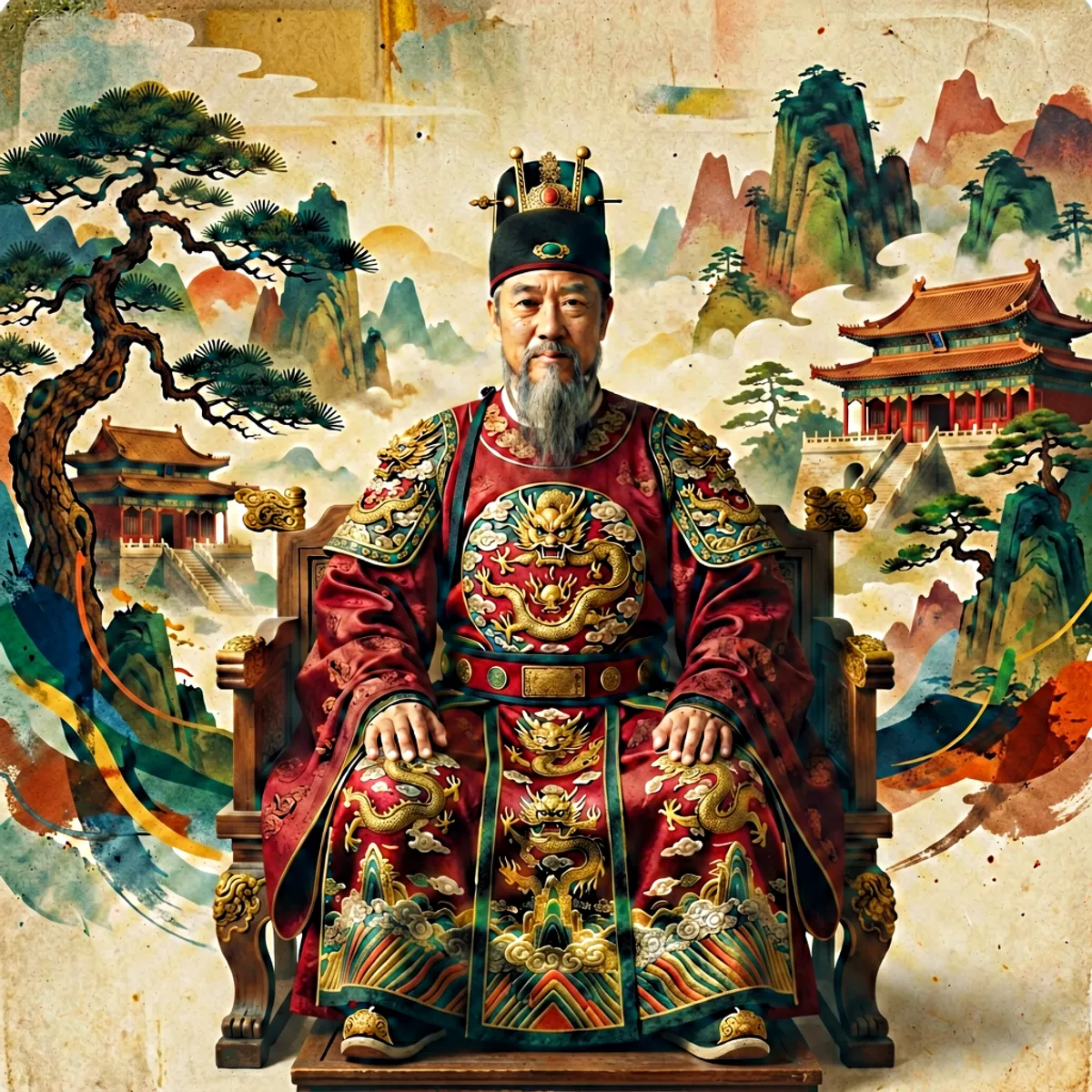
To continue our exploration, let's delve deeper into the Ming dynasty. Founded by Zhu Yuanzhang (Emperor Hongwu) after overthrowing the Yuan, the Ming period is often celebrated for its cultural vibrancy and technological innovations, yet shadowed by internal strife and external threats that ultimately led to its downfall.
Emperor Yongle: The Builder King
Perhaps no Ming ruler looms larger than Emperor Yongle (r. 1402-1424 CE). His reign represents a period of extraordinary ambition and achievement.
Following his accession, Emperor Yongle commissioned the construction of the Forbidden City in Beijing, transforming the capital into one of the most magnificent urban centers of the ancient world. He also sponsored the remarkable maritime expeditions led by Zheng He, which, unlike European voyages of the era, aimed to showcase Chinese power and foster trade across the Indian Ocean, reaching as far as Africa. These voyages were not just about exploration but about establishing Chinese influence and diplomatic relations on a global scale.
Beyond physical monuments, Emperor Yongle was a patron of learning and culture. He oversaw the compilation of the massive encyclopedia known as the Duanxi Zidian (a precursor to the modern Chinese dictionary) and commissioned the detailed manuscript Map of the World (Yun Nan Dizhi), reflecting his interest in geography and administration. He also moved the capital from Nanjing to Beijing to solidify Ming control over northern China.
But, his legacy is not without controversy. The immense cost of the construction projects and naval expeditions strained the empire's resources. In addition, Emperor Yongle was known for his autocratic nature and surveillance, establishing 厂卫 (Chang Wei), or Eastern Factory guards, which were secret police forces used to suppress dissent.
Was Emperor Yongle a visionary emperor whose ambition built lasting legacies, or a ruler whose methods overshadowed his achievements?
Emperor Jiajing and Wanli: The Decline Begins
While Emperor Yongle represents the high point of early Ming power, the latter part of the dynasty saw a gradual decline. Emperor Jiajing (r. 1505-1521 CE) is perhaps best remembered for his intense devotion to Taoist practices and alchemy, reportedly spending much of his time seeking immortality in the Huangshan mountains, often neglecting state affairs. This period saw the rise of powerful eunuch officials, including the notorious Wanqingsi, who effectively controlled the government, leading to widespread corruption and inefficiency.
His successor, Emperor Longqing (r. 1566-1572 CE), briefly revitalized governance but his short reign was followed by the even longer rule of Emperor Wanli (r. 1573-1620 CE).
Emperor Wanli's reign is often cited as a turning point towards decline. He became increasingly withdrawn, preferring seclusion and reportedly indulging in opium and wine, leaving administration to corrupt officials like Yan Song, the eunuch who manipulated court affairs. This neglect allowed internal corruption to fester and external threats from the Jesuits, increasing use of firearms by enemies, and ongoing unrest among ethnic minorities to grow.
The seeds sown during the reigns of Emperor Jiajing and Emperor Wanli contributed significantly to the Ming dynasty's vulnerability to the rising power of the Later Ming princes and the eventual conquest by the Qing.
Your favorite Ming ruler might be Emperor Yongle for his transformative projects, Emperor Chongzhen (r. 1627-1644 CE) for his final desperate attempts at reform amidst crisis, or perhaps a ruler associated with specific technological advancements, like Emperor Shenzong (r. 1587-1600 CE), who presided over the invention of the telescope in China? Which aspect of the Ming narrative does your chosen ruler represent?
Qing Dynasty (1644-1912 CE): The Last Imperial Dynasty
If we cast our net wider, we must consider the Qing dynasty, the last dynasty to govern all of China before the Republic was established. Founded by the Manchu Aisin Gioro clan, the Qing ruled for nearly three centuries, a period marked by immense territorial expansion, cultural exchange, and ultimately, decline in the face of modern pressures.
Emperor Kangxi: Consolidating the Empire
Emperor Kangxi (r. 1661-1722 CE) is frequently hailed as one of the greatest emperors in Chinese history. His long and active reign saw the consolidation of Qing power, the suppression of the Thirteen Banners (nomadic groups brought into China by the Qing) who often held significant power, and the expansion of the empire's borders, including the pacification of the Dzungar Khanate in the west. He personally led military campaigns, showcasing remarkable strategic acumen.
Beyond military consolidation, Emperor Kangxi was a great patron of the arts and learning. He collected countless calligraphy and painting works and promoted Neo-Confucianism as the state ideology. His court was cosmopolitan, reflecting the multi-ethnic character of the Qing empire.
But, his reign was not without challenges. He faced revolts, notably the Three Feudatories rebellion led by his sons, which required immense resources to crush. He also established the Imperial Astronomical Observatory to modernize Chinese calendar calculations and appointed Jesuit missionaries like Jean de Gémar to help reform the Chinese calendar, blending Western scientific knowledge with Chinese administrative structures.
Emperor Kangxi's reign is often seen as a model of effective governance, balancing military strength with cultural patronage and administrative reform. He set a high bar for subsequent Qing rulers. Did his blend of strength and sophistication make him not just a favorite, but a benchmark for effective imperial rule?
Emperor Qianlong: The Zenith and the Seeds of Decline
Emperor Qianlong (r. 1735-1796 CE) presided over the zenith of the Qing empire in terms of territory and resources. Often called the "enjoyer" due to his leisurely lifestyle, this label is somewhat reductive. He continued the policies of his grandfather, expanding the empire's borders, promoting culture through the creation of the massive Qianlong Encyclopedia, and engaging in significant foreign relations, notably the famous Macartney Mission in 1793 (though this occurred towards the end of his reign).
But, Emperor Qianlong's rule is also viewed critically by historians. His massive building projects, including the expansion of the Summer Palace, and his personal extravagances, like the construction of his elaborate Lung Cheng (Dragon City) retreat, placed enormous strain on the imperial finances. More importantly, while the empire reached its greatest extent during his reign, it was also during this time that serious problems began to manifest.
Corruption within the civil service increased, the Mandate System (a Qing innovation for governing frontier regions) proved costly and inefficient, and the Qing faced growing challenges from internal rebellions (like the White Lotus Rebellion) and external pressures from groups like the Gorkha Kingdom in Nepal. Emperor Qianlong inherited a strong empire but left it facing a future where maintaining control would become increasingly difficult. His reign represented both the peak of Qing power and the beginning of its decline.
Your favorite Qing ruler might be Kangxi for his foundational work, Qianlong for his imperial scale, or perhaps Emperor Daoguang (r. 1820-1850 CE) for his role (or lack thereof) during the Opium War, marking a different kind of turning point? What defines their enduring appeal or the complexity of their legacies?
Conclusion: The Personal Connection
Whether you champion a visionary reformer like Emperor Xiaowen of the Northern Wei, a unifier like Emperor Qin Shi Huang, a cultural icon like Empress Wu Zetian, or a resilient leader from the Song or Qing dynasties, the act of choosing a favorite ruler invites a deeper engagement with Chinese history. It moves beyond dry facts and dates to connect with the personalities, motivations, and challenges that shaped the Chinese world.
Each ruler, despite living centuries ago, presents us with questions about leadership, ambition, and the weight of responsibility. Their successes and failures offer valuable lessons for understanding not only the past but also the complexities of governance and human nature in the present. The story of Chinese history is vast, filled with thousands of figures worthy of attention, but choosing one favorite allows for a more focused and personal exploration.
We invite you to share your own favorite ruler in the comments below. Let's engage in a dialogue that celebrates the rich tapestry of Chinese history and the diverse ways we connect with the past. Perhaps by sharing your choice, you might also discover new favorites and deepen your appreciation for the remarkable journey of China.
Responses • 0
0/2000
ID: 1326
Chris
Offline
3 hr
Visited
From
Bakersfield, United States
Send Message