Expats' Shanghai Apartment Guide
AI Learn Chinese
4 hr • 0 read
Cut through Shanghai's housing market: compare service apartments and 1year rentals in key districts (Jing'an, French Concession, Pudong) for expats.
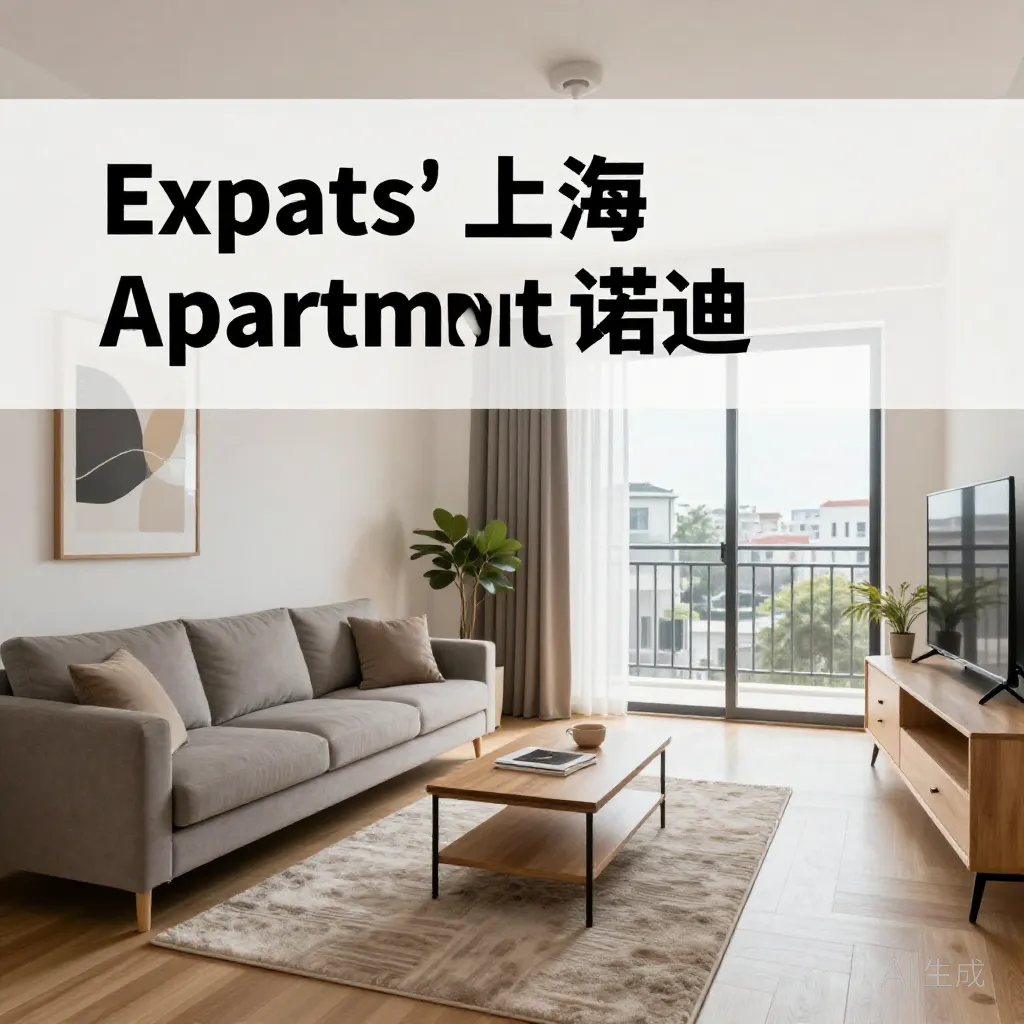
Introduction: Your First Step into Shanghai Living
Moving to Shanghai is an exciting leap into one of the world's most dynamic cities. For a professional in their 30s arriving for work, securing the right home is the critical first puzzle piece. The city's vast scale and unique rental landscape can feel overwhelming at first.
This guide cuts through the noise. We will map out the most suitable neighborhoods for your lifestyle and budget. Then, we will conduct a detailed, practical comparison between service apartments and standard one-year rentals.
The goal is to equip you with the knowledge to make a confident, informed decision. Your apartment is more than just a address; it is your base for experiencing Shanghai.
Understanding Your Core Needs
Before diving into specific streets, define your non-negotiables. You have specified a preference for a one-bedroom or two-bedroom apartment. For a two-bedroom, the desire for two separate bathrooms is a key detail.
This immediately impacts your search and budget. In Shanghai, many older, charming apartments have a single bathroom. Newer constructions and service apartments are far more likely to meet the two-bathroom requirement.
Your budget is an open question, which is perfectly normal. Rent varies dramatically by area, building age, and finish. We will provide clear price brackets to help you calibrate.
The Shanghai Map: A District-by-District Overview
Shanghai is a mosaic of distinct districts, each with its own character, price point, and convenience level. For a newcomer, focusing on a few expat-friendly and well-connected areas is the smartest strategy. We will explore the top contenders: the sophisticated French Concession, the central hub of Jing'an, the modern financial zone of Pudong, the trendy Xuhui, and the cultural Putuo. Each offers a different version of Shanghai life.
The Premier Neighborhoods for Expats
Jing'an District: Central Sophistication
Jing'an is a top-tier choice for its unbeatable central location. It straddles the line between old Shanghai and gleaming modernity. You are minutes from downtown business hubs like Jing'an Temple and Nanjing West Road.
The area is packed with international restaurants, boutique cafes, and high-end shopping. Apartment buildings range from historic shikumen lanes (rare, expensive) to ultra-modern high-rises. Expect premium prices.
A one-bedroom here typically starts from roughly USD 2,000 to USD 3,500+ per month. It is ideal if your work is in the center or you prioritize being at the city's heart. The vibe is polished, busy, and always connected.
The French Concession: Charm and Community
The French Concession (specifically Xuhui and parts of Changning) is the classic expat favorite. Its tree-lined avenues, European architecture, and vibrant cafe culture create a welcoming, walkable atmosphere. Areas like Wukang Road, Fuxing Road, and Tianzifang are iconic.
You find a mix of spacious older apartments in restored lilong compounds and modern buildings. It is slightly less frenetic than Jing'an but equally well-served by amenities. Rent for a good one-bedroom ranges from USD 1,800 to USD 3,000.
For your two-bedroom, two-bathroom need, you will be looking at the newer buildings or larger renovations, pushing costs toward the higher end. The community feel here is strong.
Pudong New District: Modern Skyline Living
If your workplace is in Pudong, living there makes perfect sense. This district is the symbol of Shanghai's future, with the Lujiazui financial skyline, the Oriental Pearl Tower, and vast, planned communities. Areas like Lujiazui are dense with service apartments catering to corporate tenants.
Further out in Jinqiao or Zhangjiang, you find more spacious, family-friendly compounds with parks, international schools, and lower prices relative to the core. A one-bedroom in Lujiazui can exceed USD 3,000, while in Jinqiao, USD 1,500 to USD 2,500 is common. The trade-off is space and modern facilities versus a distinct "downtown" cultural vibe.
Commuting to Puxi (the west bank) via metro or tunnel takes 30-50 minutes.
Xuhui District: Balanced and Established
Xuhui overlaps with the southern part of the French Concession but extends to areas like Hengshan Road and Kangjian Road. It is a more established, residential district with excellent international schools (like Xuhui High School), large hospitals, and quieter, leafy streets. The northern part near Jiaotong University is lively and younger.
Housing stock is varied. You can find elegant older apartments and very modern complexes. Prices are comparable to the French Concession, with one-bedrooms from USD 1,800 to USD 3,000.
It offers a great balance of convenience, greenery, and a slightly less touristic feel.
Putuo District: Value and Authenticity
For better value and a more local experience, look at Putuo. Centered around Zhongshan Park and Changshou Road, it is a massive, primarily residential area. It is less polished than the west-side districts but incredibly well-connected via metro lines 2, 3, 4, and 7.
The food scene is outstandingly authentic and cheap. You will find fewer Western-style cafes but an abundance of local life. Rent is significantly lower.
A decent one-bedroom can be found for USD 1,200 to USD 2,000. Finding a two-bedroom with two bathrooms will require careful hunting in newer buildings. This is a smart choice if budget is a primary concern and you want to immerse yourself more deeply in daily Shanghai life.
Service Apartments vs. Regular One-Year Rentals: A Detailed Comparison
This is your central decision point. Both options have distinct philosophies, advantages, and drawbacks.
What Exactly is a Service Apartment?
A service apartment in Shanghai is a fully furnished unit within a managed building or hotel complex. It is designed for medium to long-term stays, typically from one month to a year or more. The key differentiator is the all-inclusive rental model.
The monthly fee covers your rent, utilities (electricity, water, gas), high-speed internet, and often weekly or bi-weekly cleaning services. Some even include amenities like gym access, pool, and concierge. Think of it as a cross between a hotel room and a regular apartment.
Major operators include Ascott, Fraser Place, Somerset, and many local brands. They are abundant in business districts like Lujiazui, Jing'an, and near major corporate hubs.
The Regular One-Year Rental: The Traditional Lease
This is the standard residential apartment lease you would sign almost anywhere in the world. You find a vacant unit through a local real estate agent, view it, and sign a one-year contract directly with the landlord or their representative. The rent is the base price.
You are responsible for paying all utility bills (electricity, water, gas, internet) separately. The apartment comes as-is, usually with basic furniture if it is a "furnished" rental, but rarely with linens, kitchenware, or regular cleaning. You handle all maintenance requests through the landlord or a management committee.
This is the most common form of housing in Shanghai.
The Financial Breakdown: It's Not Just the Rent
The sticker price of a service apartment is higher. You pay a premium for convenience and bundled services. A regular apartment has a lower base rent, but you must budget for monthly utilities, a one-time agency fee (typically 35-50% of one month's rent), and a security deposit (usually one month's rent). To compare fairly, you must calculate the effective monthly cost.
Example Scenario: A Modern One-Bedroom in Jing'an
Service Apartment: Listed at USD 2,800/month. This includes rent, all utilities, internet, and twice-weekly cleaning. Regular Rental: Listed at USD 2,200/month. You pay a 35% agency fee (~USD 770) upfront. Monthly utilities (for a single person using AC, heating, etc.) might average USD 150-250. Internet is ~USD 40. Cleaning is your responsibility. Year 1 Cost Comparison: Service Apartment: 12 x USD 2,800 = USD 33,600 (no other fees).
* Regular Rental: (12 x USD 2,200) + USD 770 (fee) + (12 x ~USD 200 avg utilities) + (12 x USD 40 internet) = USD 26,400 + USD 770 + USD 2,400 + USD 480 = USD 30,050.
* The gap narrows significantly when all costs are considered. For a two-bedroom with higher utilities, the service apartment's all-inclusive model becomes even more competitive financially against a regular rental's accumulating bills.
The Convenience Spectrum: Time vs. Money
This is the true trade-off. A service apartment offers maximum convenience. The move-in is simple: your unit is fully equipped, sometimes even with toiletries and a starter kitchen pack.
Bills are a single payment. Maintenance is handled by a 24-hour front desk. Cleaning is included.
This is invaluable for someone new to the city, busy with work, or who simply does not want to deal with setting up utilities, buying furniture, or hunting for a cleaner. The regular rental path requires significant initial legwork: opening utility accounts, buying or renting furniture, sourcing a cleaner, and managing landlord relationships. It is a project.
Flexibility and Contract Terms
Service apartments generally offer more flexible lease terms. You can often find three-month, six-month, or monthly rolling contracts. This is perfect if your stay duration is uncertain or you want to test a neighborhood.
Breaking a lease usually involves less penalty. Regular one-year rentals are rigid. The standard contract is 12 months, locked in.
Early termination is difficult, often requiring you to forfeit your deposit or find a replacement tenant (with landlord approval). The security deposit is also higher, typically one month's rent held for potential damages.
Living Quality and Space
Here, regular rentals often win on space and authenticity for the price. For the same monthly outlay, you can frequently find a larger, more character-filled apartment in a local lilong or a spacious new build. You have full control over decorating, painting, and making it truly your own.
Service apartments tend to be efficiently designed, sometimes smaller, and uniformly decorated in a safe, corporate style. They feel like a high-end hotel suite. The "local flavor" is minimal.
But, the building amenities—pools, gyms, lounges, security—are superior and maintained to a high standard.
The All-Important Question: Two Bedrooms, Two Bathrooms
Your requirement for two full bathrooms is a major filter. In the regular rental market, this configuration is uncommon in older buildings and even in many newer ones. It is a premium feature that adds significantly to the rent and narrows your search to specific, newer developments.
You will be paying a substantial premium for this layout. In the service apartment sector, this layout is standard for their two-bedroom units. Their design philosophy prioritizes functional, hotel-style layouts where en-suite or separate bathrooms are the norm.
If this is a hard requirement, service apartments dramatically simplify your search.
Navigating the Search: Practical Steps
Using Agents and Online Platforms
For regular rentals, you will almost certainly need a local real estate agent. Platforms like Lianjia (链家) or Anjuke (安居客) are the dominant Chinese sites. They have English interfaces but listings are often translated poorly.
A reputable agent is free for tenants (their fee is paid by the landlord). They can filter for your "two bathrooms" need, which is hard to do online. For service apartments, you can often deal directly with the operator's sales office or use platforms like Airbnb (for longer stays) or Booking.com (filtered for monthly stays).
Their websites are fully in English and transparent.
The Viewing Process
often view an apartment in person before signing anything, for both options. For service apartments, you are viewing a model or specific unit that is exactly as it will be. For regular rentals, be vigilant.
Check water pressure in all bathrooms, test all appliances, look for mold, inspect windows, and ask about building management fees. The "two-bathroom" requirement means checking both thoroughly. In Shanghai, many apartments have a "master bath" and a smaller "guest bath." Confirm both are full bathrooms with shower/bath.
Understanding the Contract
Read every clause. For a regular lease, ensure the contract specifies the exact rent, deposit amount, payment dates, responsibility for repairs (landlord for structural, you for day-to-day), and the penalty for breaking the lease. Get receipts for all payments. For a service apartment contract, understand what is included in the rate, what triggers extra charges (e.g., deep cleaning after a party), the notice period for renewal or exit, and the policy on guests.
Making Your Decision: A Framework
Choose a Service Apartment If:
Your priority is convenience and speed. You are moving for a short-term project (1-6 months). You have a significant corporate housing allowance that covers the premium.
You absolutely require a two-bedroom, two-bathroom layout and want the easiest path to finding it. You dislike dealing with utility companies, maintenance, and furniture shopping. You value 24/7 security and building amenities.
Your budget is flexible enough to absorb the all-inclusive cost.
Choose a Regular One-Year Rental If:
Your priority is space and value for money. You are staying for a definite one-year or longer. You want a more authentic, local living experience and the freedom to personalize your space.
You have the time and inclination to handle the initial setup (utilities, furniture). You are willing to manage a relationship with a landlord or property management. You can find a building that meets your two-bathroom need, which may require more patience but can yield a larger apartment for less money annually.
You have a reliable local contact to help navigate the process.
A Hybrid Approach for Some
Consider a service apartment for your first 1-3 months. Use this time to arrive, settle in, explore neighborhoods without the pressure of a long lease, and learn the city. Then, once you know which area you prefer (e.g., you realize you love the French Concession's vibe but Putuo's value), transition to a regular rental for the remainder of your stay. This combines the best of both worlds: low-friction arrival with long-term savings and customization.
Final Recommendations by Profile
For the Corporate Relocation with Budget
If your company is providing a housing allowance, strongly consider a service apartment in Jing'an or Lujiazui (Pudong). The all-inclusive cost simplifies expense reporting. You get a hassle-free, comfortable base with all amenities. The location will be prestigious and central to business districts.
For the Cost-Conscious Adventurer
Target Putuo (around Zhongshan Park) or parts of Xuhui slightly away from the core. Use a good agent to hunt for a newer residential complex offering a two-bedroom, two-bathroom layout. The savings will be substantial, allowing for a larger space and more budget for traveling and exploring China. Embrace the local life.
For the Balance Seeker
The French Concession (south of Huaihai Road) or northern Xuhui near Hengshan Road offers the best blend. You can find both service apartments and quality regular rentals here. The walkable lifestyle, cafe culture, and green spaces are unparalleled. Be prepared for premium pricing, but it delivers a quintessential Shanghai experience.
For the Family or Long-Term Stay
Look at Jinqiao or Zhangjiang in Pudong, or the international school zones in Xuhui/Gubei. These areas have compounds specifically designed for expat families with security, playgrounds, and community feel.
Securing the apartment is just the beginning. The next phase involves navigating Shanghai's administrative requirements to establish your legal residence and everyday utilities. This process, while straightforward with preparation, contains unique local specifics that every expat should understand. Missing a step can lead to unnecessary fines or service disruptions.
Post-Lease Administration: Setting Up Your New Home
Mandatory Residence Registration
Within 24 hours of moving in, you must register your temporary residence with the local police station (paichusuo) in your district. This is a non-negotiable legal requirement for all newcomers, regardless of visa type. You will need your passport, the signed rental contract, and the property owner's fangchan zhengshu (property certificate) or a notarized authorization from them.
The police issue a zanzhuzheng (temporary residence permit), which is essential for future visa renewals, bank accounts, and driving licenses. Service apartment operators typically handle this entire process for you as part of their service, a significant hidden benefit. For a regular rental, your agent should facilitate introductions, but you will likely need to attend the station yourself with the landlord or their manager.
Utility and Service Connections
For a regular rental, you must independently activate utilities. Electricity is managed through the State Grid, often via their WeChat mini-program or app, requiring your passport and contract. Water and gas are usually billed through the building's management; you may need to visit their office to set up a payment method.
High-speed internet requires a contract with China Telecom or Unicom; the provider will request a copy of your business license if you are on a work visa, or your zanzhuzheng for a personal contract. Expect installation to take 1-2 weeks. Service apartments include all utilities in the monthly fee, activated before your arrival.
often confirm the exact billing cycle and payment methods for each utility to avoid late fees.
Protecting Your Deposit
Your security deposit (weidingjin), typically one month's rent, is only returned if the apartment is in the same condition as move-in, barring normal wear and tear. The key is a detailed, signed inventory list (fangwu qingdan) with timestamped photos or video of every room, fixture, and appliance, compiled jointly with the landlord or agent on day one. Document existing scratches, stains, or malfunctions meticulously.
Upon move-out, schedule a joint inspection. Any disputes over deduction items should be resolved then, with everything documented. Without this evidence, landlords frequently withhold deposits for vague "cleaning" or "damage" claims.
Service apartments conduct a standardized check-out and return deposits promptly if no major issues exist.
Communication and Conflict Resolution
Communication styles in Shanghai can be indirect. A landlord's verbal assurance may not be binding; always follow up with a WeChat message or email to create a written record. For maintenance issues in a regular rental, notify the landlord in writing first.
If they are unresponsive, your agent has leverage to intervene. For persistent problems like no hot water or pest infestations, you can report the issue to the local jie Dao (subdistrict office) housing management bureau, which mediates. Escalating to formal litigation is rare due to cost and time but is an option for severe breaches.
Service apartments have a 24-hour front desk and clear service-level agreements for response times, eliminating this friction entirely.
Strategic Timing and Market Dynamics
Seasonal Rent Fluctuations
Shanghai's rental market has pronounced seasonal peaks that affect both price and availability. The most intense period is January through March, driven by companies renewing corporate leases and families securing homes before the school year starting in September. Prices can be 10-20% higher, and choice is limited.
Chinese New Year, usually in January or February, causes a temporary market freeze as many locals travel. The best time for value is July through August, after the peak subsides but before the autumn rush. December can also yield deals as landlords seek to avoid empty units over the holiday.
Service apartment pricing is more stable year-round, though they may offer promotional discounts during these slower periods.
Recognizing Price Anomalies and Red Flags
Develop a critical eye for listings that seem too good to be true. For a regular rental, an unusually low price in a premium district like Jing'an often signals a fangyu (fraudulent listing) using stolen photos, or a landlord with severe hidden issues like structural problems or impending demolition. often verify the property title (fangchan zhengshu) matches the landlord's ID.
Be wary of agents who pressure you to pay a deposit immediately without a contract, or who refuse to meet at the actual apartment. Use multiple platforms—Lianjia, Anjuke, and even local WeChat groups—to cross-reference prices for identical unit types in the same building. A price significantly below the median for that specific complex is a major red flag requiring extreme due diligence.
Conclusion: Your Shanghai Home Awaits
There is no single "best" area or rental type. The right choice depends entirely on your budget, stay duration, personal tolerance for hassle, and lifestyle preference. Shanghai's housing market is robust and offers solutions for every profile.
Start by narrowing your district based on commute and vibe. Then, decide on the service vs. regular rental axis using the financial and lifestyle comparisons above. Arm yourself with a reputable agent, view multiple apartments, and read contracts meticulously.
Moving to Shanghai is a major life event. Taking the time to get your housing right will pay dividends in comfort, happiness, and your ability to thrive in this incredible city for the next year and beyond. Welcome home.
Responses • 0
0/2000
ID: 1326
Chris
Offline
1 hr
Visited
From
Bakersfield, United States
Send Message