Driving Chinas Length: Six Months, Endless Roads
AI Learn Chinese
3 hr • 0 read
A 6month road trip from Shenzhen to Xinjiang reveals Chinas true scale. Skip commercial towns, discover amazing people in villages. Full journey insights.
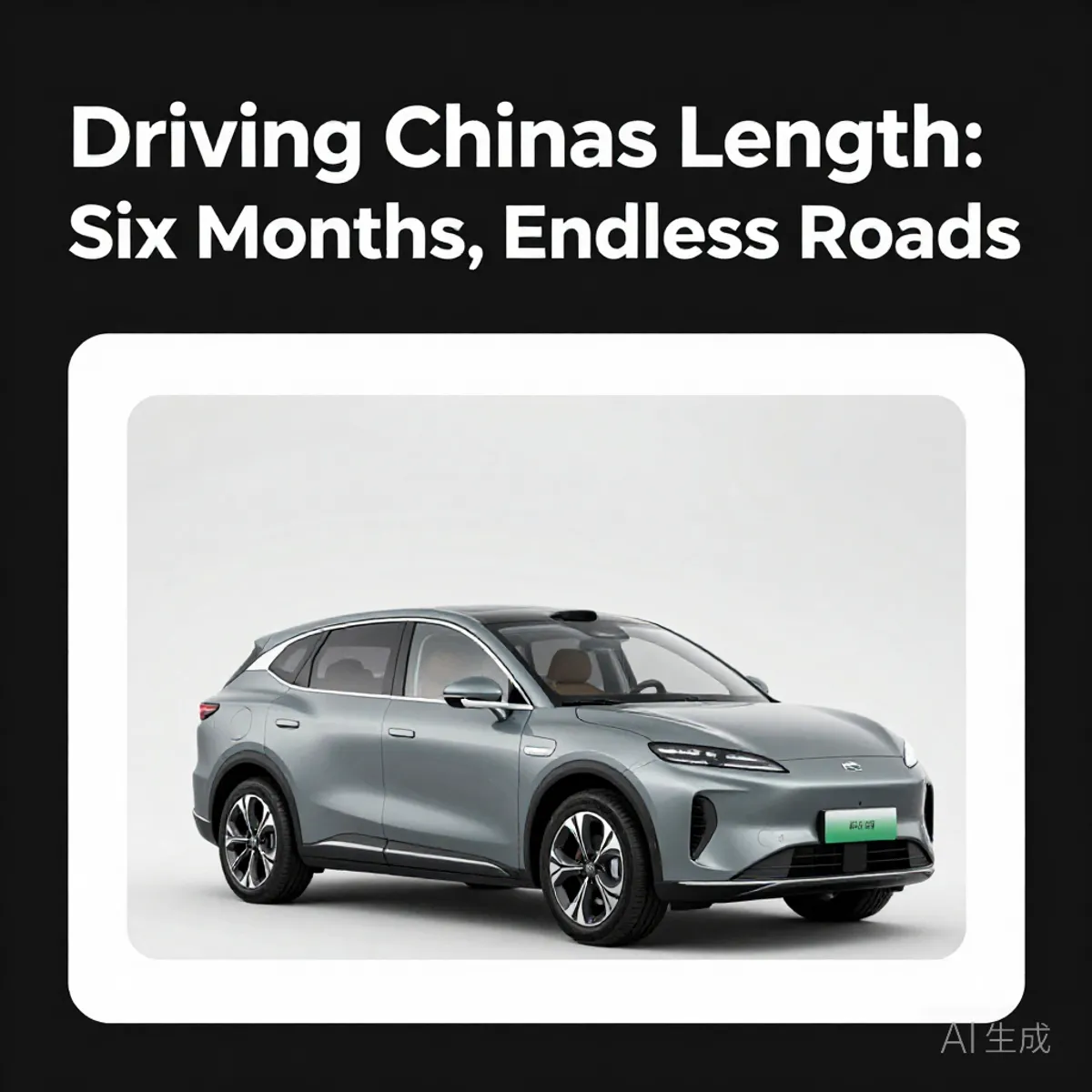
The Grand Expedition: Six Months Behind the Wheel Across China
The idea is deceptively simple: drive from the subtropical south to the far western frontiers and back. The reality is a profound immersion into a continent-sized nation. This is not a tour; it is a mobile life experiment conducted over roughly half a year.
The journey spans from the megacity of Shenzhen, across the mountainous spine of Sichuan and Yunnan, to the vast deserts of Xinjiang, and then retracing steps through Tibet’s high plateaus. The core revelation is that China’s essence is not found in its polished, commercialized "old towns" but in the quiet, unassuming communities nestled between the major routes. It is a story of distance, diversity, and the unexpected warmth encountered when you bypass the obvious.
This expedition was undertaken in early 2026, a deliberate choice to experience the country during a period of stable internal travel. The vehicle, a BYD 06 DMi plug-in hybrid, became both home and laboratory. Its selection was critical for a journey of this magnitude, balancing the need for range anxiety-free motoring in remote regions with urban efficiency.
The total distance covered approached 12,000 kilometers, a figure that underscores the sheer physical scale of the undertaking. Every kilometer told a story, from the smooth superhighways near Shenzhen to the bone-jarring gravel tracks leading to isolated villages in western Sichuan.
The sentiment of the journey is best described as neutrally observant. It neither romanticizes nor condemns. It documents.
The highs are the breathtaking landscapes and human connections. The lows are the bureaucratic friction and the omnipresent commercial veneer in tourist hubs. The balance, however, tips heavily toward the former.
The experience fundamentally reshapes one’s understanding of "China" from a monolithic concept into a tapestry of distinct regions, each with its own pace, dialect, and social customs. The road, in the end, was the true teacher.
Planning the Impossible: Licenses, Logistics, and a BYD
The dream of a cross-China drive requires a foundation of concrete logistics. It begins not with a map, but with paperwork. For a foreign national, obtaining a Chinese driving license is the first and most significant hurdle.
The process in Shenzhen was a month-long exercise in patience and precise document submission. It involved notarized translations, medical certificates, and written exams. This initial month, spent in administrative limbo, was a stark introduction to the procedural reality of operating within the system.
The car acquisition followed, a task that felt like a secondary victory after the license was secured.
The choice of the BYD 06 DMi was a calculated one. China’s automotive market is dominated by new energy vehicles, and for a long-haul expedition, a plug-in hybrid offered the best of both worlds. In the densely populated eastern corridors, charging infrastructure is abundant, allowing for electric-only operation and drastically reducing fuel costs.
In the remote west, where charging stations vanish for hundreds of kilometers, the gasoline engine provides an indispensable safety net. This vehicle became a trusted companion, its reliability never once faltering through extremes of altitude, temperature, and road condition. It was more than transport; it was a mobile base camp, storage unit, and sleeping quarters.
Budgeting extended far beyond fuel. It encompassed tolls on the extensive expressway network, which, while costly, saved immense time. It covered lodging, which ranged from minimalist truck-stop rooms to charming family-run guesthouses in minority regions.
A critical line item was a contingency fund for unforeseen repairs and the occasional "loss" to local entrepreneurial practices—a polite term for the inflated prices foreigners sometimes face. The financial model assumed a moderate daily spend, allowing for flexibility without luxury. This was not a wealthy person’s excursion but a deliberate, resource-conscious exploration.
Shenzhen’s Bureaucratic Hurdles
Shenzhen, as the starting point, represented the pinnacle of China’s modern, efficient, yet deeply formalized governance. The driving license process unfolded at a dedicated vehicle management office, a cavernous space humming with organized chaos. Queues were long, processes were rigid, and every stamp and signature had its designated place.
The language barrier was a constant, mitigated by translation apps and the occasional helpful clerk. This month was a test of resolve. It grounded the romantic notion of the open road in the mundane reality of stamps, photocopies, and official seals.
The lesson was clear: in China, formal permission is the prerequisite to freedom.
Choosing the 06 DMi: Why Electric Matters
Selecting the 06 DMi involved researching a market flooded with options. The decision hinged on two factors: technological adaptation and practical range. Domestic brands like BYD offer advanced, reliable EVs and PHEVs at competitive prices, often with superior in-car tech interfaces tailored for the Chinese market.
The DMi system’s electric-first philosophy meant silent, cheap city driving. For the expedition, the 100+ kilometer pure electric range covered most daily segments between towns. The gasoline engine’s role was purely for backup, a psychological comfort as much as a mechanical one on the desolate stretches of the G30 highway through the Taklamakan Desert.
The car was a statement of pragmatic adaptation, not just a tool.
From Pearl River Delta to the Taklamakan: The Route Unfolds
The first leg out of Shenzhen was a blur of concrete and steel. The Pearl River Delta’s megacities bleed into one another via eight-lane expressways. The transition from Guangdong to Guangxi and then into Yunnan was marked by a gradual softening of the landscape.
The industrial gray gave way to karst peaks shrouded in mist. The drive along the Nanning to Kunming corridor was a study in China’s infrastructural might—tunnels boring through mountains, viaducts spanning valleys, all testament to an engineering ambition that shrinks distance. Yet, the goal was always to exit this main artery, to find the smaller, numbered provincial highways where the real China whispers.
Entering Sichuan from Yunnan’s north was a vertical shift. The subtropical climate vanished, replaced by the cool, moist air of the Hengduan Mountains. The roads became a series of relentless switchbacks, clinging to cliffsides above roaring rivers.
This is where the 06 DMi’s handling and torque proved invaluable, navigating the tight bends with ease. The scenery was epic, but the driving was demanding, requiring absolute concentration. Towns here, like those in the Garzê Tibetan Autonomous Prefecture, were less about commerce and more about function—clusterings of stone houses with prayer flags fluttering, a stark contrast to the ordered chaos of Shenzhen.
The crossing into Xinjiang via the G0611 expressway over the Bayan Har Mountains was a geographical and cultural watershed. The lush, green hills of Sichuan abruptly ended at a pass, and beyond lay the vast, arid basin of the Tarim Desert. The air dried, the sky expanded to an impossible blue, and the roadside greenery disappeared.
This was the frontier. The scale became overwhelming. Distances between service areas stretched to over a hundred kilometers.
The journey’s rhythm changed from daily drives to epic stages, each one a conquest of space and monotony. Urumqi, the regional capital, was a shock to the system after the emptiness—a modern city that felt like a mirage, its Han Chinese culture and Uyghur influences creating a palpable, complex tension.
Guangdong’s Urban Sprawl to Yunnan’s Verdant Valleys
The initial 1,000 kilometers was about breaking free. The goal was to reach the less-trodden paths of Yunnan’s western frontier as quickly as the toll roads allowed. The expressways were smooth, fast, and soul-crushing in their uniformity.
The exit onto the G56 in western Yunnan, heading towards Dali and Lijiang, was the first true breath of fresh air. Here, the commercial pressure was already intense—the "old towns" of Dali and Lijiang are textbook examples of successful heritage commodification. They were beautiful but felt like open-air museums, their authentic life replaced by craft stalls, guesthouses, and tour groups.
The lesson learned early: the postcard image is a product, not a experience.
Sichuan’s Mountain Passes and Tibetan Plateaus
Sichuan west of Chengdu is a different beast. The province’s eastern basin, one of China’s most populous regions, gives way to a mountainous wilderness that forms part of the Tibetan Plateau’s eastern edge. The drive on the G318 from Ya’an to Batang is legendary, a pilgrimage route for motorcyclists and adventurers.
The altitude climbed steadily. Road conditions varied from perfect asphalt to gravel sections damaged by landslides. Traffic thinned dramatically.
The settlements were small, hardy, and often featured large monastic complexes. This was the first area where the "skip the big tourist towns" rule was applied with conviction. Instead of staying in the bustling, over-developed town of Litang, a simpler guesthouse in a smaller village provided a more authentic and peaceful base.
Xinjiang’s Deserts and Urumqi’s Contrasts
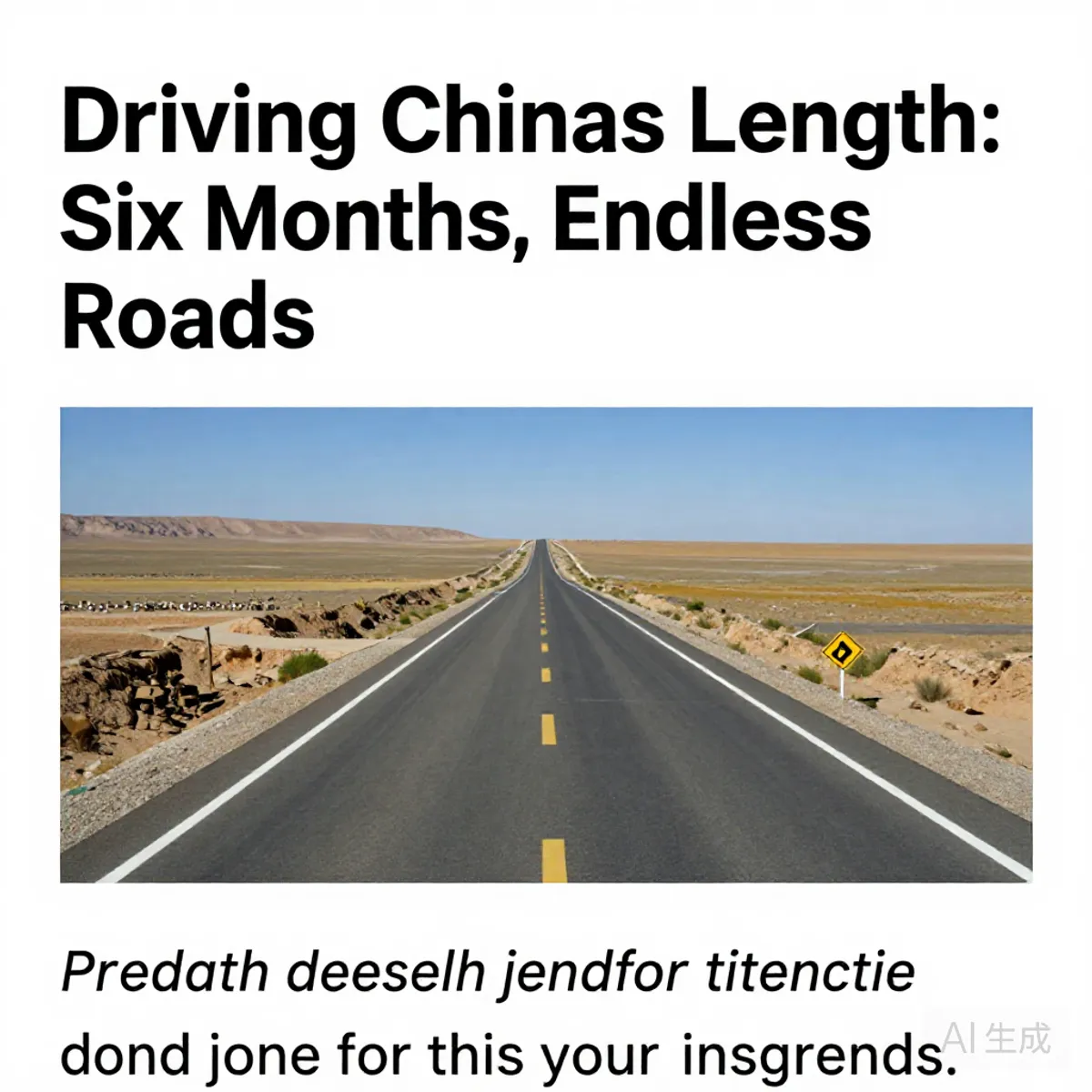
The G30 Lianyungang–Khorgas Expressway, crossing the Tarim Basin, is a monument to desolation. For hundreds of kilometers, the only views were of endless sand dunes, the occasional oasis town, and the skeletal remains of the ancient Silk Road. The heat in summer was a physical presence.
The drive required meticulous planning: full tank of fuel, ample water, and a check on tire pressure before each stage. Urumqi, upon arrival, was a necessary reprieve—a place to service the car, restock supplies, and recalibrate. Yet, it also represented the administrative heart of the region, a place where travel permits for deeper into Xinjiang (like the Pamir Plateau) could be obtained, another layer of bureaucracy to navigate.
The city’s grand boulevards and shopping malls felt like a return to "China Proper," a world away from the desert’s timelessness.
The Real China: Where the Old Towns Are Still Alive
The central thesis of this journey was the deliberate avoidance of places that have been fully "commercialized." A "commercial street" in this context is a historical urban core that has been entirely repurposed for tourism. The architecture may be old, but the soul is gone, replaced by a standardized menu of souvenirs, snacks, and photo opportunities. These places—like the reconstructed ancient streets of many popular towns—are not without value, but they present a curated, sanitized version of culture.
They are performances for an audience, not lived-in communities. The insight was that to see the "old town" one must look beyond the ticket gate, to the residential neighborhoods just a block away where life continues, unscripted.
The antidote was always the smaller town or the village off the main highway. These places had no tourist office, no entrance fee, and often no English signs. Their authenticity was not a product; it was a condition of their relative obscurity.
In a tiny village in the mountains of western Sichuan, a family invited a traveler in for butter tea simply because they had a spare stool. There was no transaction, only a moment of shared humanity. In a remote town in Xinjiang’s Ili Kazakh Autonomous Prefecture, an elder showed a home-made map of local grasslands, pointing out seasonal migration routes with a calloused finger.
These interactions were brief, unpolished, and infinitely more valuable than any staged cultural show.
The people in these places were "absolutely amazing," as the summary states, because their curiosity was genuine and their hospitality uncalculated. They were not desensitized to foreigners, having seen perhaps a handful in a year. Questions about where one was from, why one was there, and what one thought of their home were asked with a directness that felt refreshing.
The conversations often happened in a mix of Mandarin, gestures, and translation apps, but the warmth transcended language. This was the core reward of the journey: the accumulation of these small, human moments that collectively painted a picture of a vast country’s incredible diversity and shared decency.
Why Commercial Streets Aren’t the Answer
The commercialization process follows a recognizable pattern. A historically significant lane or cluster of buildings is identified. Facades are restored or rebuilt to a uniform "ancient" aesthetic.
All residents are relocated or their businesses priced out. The space is then leased to vendors selling mass-produced "handicrafts" and restaurants offering the same few regional dishes adapted for tourists. The result is a place that feels both historically fake and economically extractive.
It solves the problem of heritage preservation through Disneyfication. The traveler’s task, therefore, becomes an exercise in discernment: appreciating architectural beauty while mentally subtracting the commercial layer to imagine the life that once animated the space.
Village Hospitality in the Forgotten Corners
The village experience was the counterpoint. There were no souvenir stalls, only a small general store selling basic necessities. There were no tour groups, only farmers tending fields and children playing with makeshift toys.
An encounter in such a setting was a pure social interaction. It might involve sharing a simple meal of rice, vegetables, and perhaps some locally caught fish or meat. It might involve being shown around a family home, with its earthen floors and heated kang beds.
These were not "cultural exchanges" in the academic sense; they were just people being people. The gratitude felt for this unmediated access was profound. It required a traveler to be respectful, humble, and open—a stark contrast to the passive consumption expected in a commercial town.
Practical Realities: Scams, Roads, and Sustenance
A journey of this nature is not without its friction. The most commonly cited concern is "scams," particularly in tourist-heavy areas. This manifests as overcharging for taxis, meals, or souvenirs, and sometimes more elaborate schemes targeting foreigners.
Awareness is the primary defense. Researching approximate costs beforehand, using reputable ride-hailing apps like Didi where possible, and avoiding unsolicited "guides" are essential strategies. The reality is that most people are honest, but the few bad actors create a persistent background noise of wariness that one must learn to filter without becoming cynical.
The rule of thumb: if a deal feels too good or too pushy, it likely is.
Road conditions were a daily variable. The national expressway network (G-series highways) is world-class: smooth, well-marked, and with excellent service areas. The provincial and county roads (S-series and X-series) told a different story.
They were the veins connecting the real China. Some were newly paved, others were pockmarked with potholes or under constant repair. In Tibet and remote Xinjiang, gravel and dirt sections were common, requiring slower speeds and constant attention to washboard surfaces and sudden livestock on the road.
The 06 DMi’s higher ground clearance was a blessing here. Tire care became a weekly ritual, checking for cuts and embedded stones.
Sustenance on the road was a blend of practicality and adventure. On long, remote stretches, food options were limited to the small restaurants at service areas or in the few towns that existed. These meals were often simple, hearty, and cheap—a bowl of pulled noodles, a plate of stir-fried vegetables, a hunk of flatbread.
The culinary highlights came in regions with distinct food cultures: the spicy hot pots of Sichuan, the lamb and naan of Xinjiang, the yak meat andTsampa of Tibetan areas. Cooking for oneself was rarely an option, so eating out was a constant. This necessitated a strong stomach and a spirit of culinary adventure, as hygiene standards varied dramatically from the urban centers to the rural outskirts.
Navigating Tourist Traps and Safety
The "scam" landscape was most concentrated in the gateway towns to major attractions. In Lijiang, for instance, offers for "horseback riding to ancient villages" or "private tours to Jade Dragon Snow Mountain" from touts on the street were often wildly overpriced and could involve being taken to shops for commissions. The safer approach was to book through established guesthouses or official ticket offices.
Personal safety was generally high; violent crime against travelers is rare. The primary risks were traffic accidents on hazardous mountain roads and health issues from food or altitude. Travel insurance was non-negotiable.
A basic first-aid kit and a supply of any personal medications were always part of the vehicle’s inventory.
Vehicle Maintenance in Remote Areas
Breakdowns in the middle of nowhere were a constant low-grade fear. The BYD’s relative simplicity and the nationwide network of its dealerships provided some comfort. But, in the far west, authorized service centers were hundreds of kilometers apart.
The strategy was preventative: meticulous pre-departure servicing, carrying essential fluids and a basic tool kit, and learning to perform minor tasks like changing a tire (which was done once on a lonely stretch in Xinjiang). For major issues, the recourse was a tow truck to the nearest city, an expensive and time-consuming prospect. This reality enforced a slow, cautious driving style and a hyper-awareness of the car’s sounds and sensations.
The vehicle was not just a tool but a living entity that demanded respect and care.
Reflections on Distance, Diversity, and Human Connection
Six months and 12,000 kilometers on the road in a single country yield a perspective few ever achieve. The first lesson is the absolute, mind-bending scale of China. The geographical diversity is staggering.
One can leave a subtropical river delta in the morning, cross a high-altitude snowy pass in the afternoon, and descend into a desert basin at night. The changes in landscape are not gradual transitions but sometimes abrupt, jarring transformations. This physical diversity correlates directly with cultural and ethnic diversity.
The Han-majority east feels fundamentally different from the Tibetan, Uyghur, Kazakh, Yi, and Bai communities of the west. Language, dress, food, and social norms shift with the topography.
The second lesson is the profound disconnect between the national narrative of unity and the lived experience of regional difference. Traveling by car allows one to see the seams. You see the checkpoints, the signage in multiple scripts, the different architectural styles, and the varying levels of economic development.
You feel the subtle shifts in how you are perceived and treated. In some areas, being a foreigner was a novelty that opened doors. In others, particularly in more sensitive border regions, it triggered polite but firm questioning by authorities.
This journey was a continuous lesson in nuance, in avoiding simplistic binaries of "Chinese" versus "other."
The third and most important lesson is about value. The "big" commercial towns, for all their spectacle, offer a shallow, transactional experience. The true value was in the unplanned detours, the meals shared in a family kitchen, the waves from children in a mountain village, the quiet evening spent watching the sunset over a desert that has changed little in millennia.
These moments were not purchased; they were given. They represent a form of wealth that has nothing to do with GDP and everything to do with human connection. The journey was worth every kilometer not for the sights checked off a list, but for the cumulative weight of these small, generous interactions.
A Big Country, Bigger Lessons
The sheer size of China is its defining feature. It is not a country that can be understood from a single city or a high-speed rail line between two metropolises. It requires time and mobility.
The "big" in the keyword list refers to this geographic and demographic magnitude. The challenge is to see past the overwhelming scale to the individual stories within it. The car provided the necessary frame to do this—a movable frame that allowed for a slow, observational pace.
It revealed that beneath the monolithic state and the bustling economy, there are hundreds of millions of individual lives, each with its own rhythm, concern, and hospitality. The country’s bigness is not an obstacle to understanding but the very thing that makes understanding so richly layered and endlessly fascinating.
Would You Do It Again?
The answer is a qualified yes. The logistical hurdles, the driving fatigue, the occasional frustration with bureaucracy and commercial pressure—all of it would be faced again. The reason is simple: the alternative is a superficial understanding.
This method, for all its difficulties, yields a depth of insight that is otherwise inaccessible. It forges a connection to the land and its people that is tactile and real. The memories are not of landmarks, but of faces.
They are not of dishes ordered from a menu, but of a bowl handed over with a smile. The journey was a masterclass in the art of slow travel in a fast-paced nation. It confirmed that the most valuable parts of a vast country are often found far from the beaten path, in the quiet spaces between the signposts.
The road, ultimately, calls.
The Unseen China: Layers Beneath the Surface
The journey revealed a China that exists in the interstices of the official narrative and the commercial spectacle. It is a country of profound verticality—not just in its mountains, but in its social and historical strata. Driving through the Loess Plateau, the exposed earth walls of yaodong cave dwellings stood as a testament to ancient, sustainable living, a stark contrast to the concrete towers of the eastern cities. In these regions, time felt different, slower, anchored to agricultural cycles rather than economic targets.
This verticality extends to cultural identity. In Xinjiang’s Turpan Depression, below sea level and furnace-hot in summer, the Uyghur mazha (grape houses) created a microclimate of cool shade and drying fruit, a centuries-old adaptation to an extreme environment. The practices felt lived-in, functional, and deeply local. They were not performances for an outsider’s camera but solutions to a harsh reality, imbued with a quiet dignity that no tourist brochure could capture.
The route also exposed the raw edges of development. The G0611 expressway through the Bayan Har Mountains is a marvel of engineering, yet its exit ramps often led directly to villages where running water was a seasonal luxury. The juxtaposition was jarring: a world-class highway serving as a conduit to communities living with basic infrastructure challenges. This was not a critique, but an observation of a nation in simultaneous, contradictory motion—hurtling toward a high-tech future while portions of its population maintain traditions that require no technology at all.
The Hum of Off-Grid Life
In the remote corners of Yunnan’s Nu Jiang valley, where the road clung to the gorge, electricity was a recent arrival. The glow of a single solar panel on a bamboo hut was a declaration of modernity. The arrival of a 4G signal, often from a lone tower on a distant peak, was a community event.
These technological adoptions were not about consuming the latest apps but about practical connectivity: calling for medical help, checking weather for crops, or letting migrant workers know their families were safe. The digital divide was a tangible landscape feature, crossed in minutes by a vehicle but representing chasms in opportunity and access.
Echoes of History in the Present
The physical road itself was a palimpsest. The ancient Tea Horse Road, which once saw mule caravans trading tea for salt and wool between Sichuan and Tibet, often paralleled the modern G214. Where the modern road tunneled through a mountain, the old path switchbacked up and over the pass.
Standing on a high pass, looking down at a winding stone trail far below, the sheer human effort of pre-mechanized trade became viscerally apparent. The current expedition, for all its mechanical ease, was following a corridor of movement that has pulsed for millennia. The desert oases of the Silk Road, now serviced by gas stations and noodle shops, still function as vital nodes of rest and resupply.
The function persists; the form evolves.
The Vehicle as a Silent Companion
The relationship with the BYD 06 DMi evolved from tool to confidant. Its quiet electric mode in the mountains or at a remote campsite created a bubble of serenity, a mobile sanctuary. The hybrid system’s seamless switch between power sources became a metaphor for the journey’s own required adaptability.
There were moments of pure, unadulterated trust: navigating a washed-out river crossing on a dirt track in western Sichuan, the diesel generator kicking in as the battery depleted, the all-wheel grip pulling the vehicle from the muddy bank. It was a partnership forged in problem-solving.
Maintenance became a ritual of care. Washing the dust of the G30 from its body in a Urumqi suburb felt like tending to a loyal steed. Checking tire pressure in the thin air of the Tibetan plateau was a daily conversation with physics.
The car’s wear—a chip on the windshield from a flying stone, the fine scratches on the paint from sand-laden winds—was a map of the journey itself. It was a tangible record, far more honest than any journal entry, of the distances traversed and the elements endured. This mechanical companion had no judgment, only needs: fuel, charge, oil, vigilance.
Meeting those needs was the fundamental, grounding rhythm of the expedition.
The Psychology of Range and Refuge
The concept of "range anxiety" transformed from a technical concern into a philosophical one. In the Taklamakan, with 150 km to the next fuel station and a temperature gauge climbing, the vehicle's fuel readout was a direct measure of one's relationship with the environment. It fostered a hyper-awareness of consumption, a stark contrast to the casual refueling of a city commute.
The gas station became a citadel, a place of profound relief and simple gratitude. This anxiety was not a burden but a focus, a constant reminder of dependence on infrastructure and the preciousness of resources. It was the most direct way to feel the pulse of the land's harshness.
Leaving Traces, Taking Impressions
The vehicle also left its own subtle trace. In villages where cars were still a novelty, its arrival was a small event. Children would stop playing to stare.
Elders would approach, not for money, but to touch the fender, to ask about its origin, its power source. The BYD, a symbol of China's new energy boom, was itself a point of cultural exchange. Explaining, through an app, that it could run on electricity from a wall socket was met with nods of recognition and approval.
The car was not just an observer; it was a participant, a conversation starter that subtly shifted perspectives on what "Chinese-made" could mean.
The Road’s Enduring Echo
Returning to the Pearl River Delta six months later, the megacity’s neon blur felt both alien and familiar. The journey had recalibrated the senses. The hum of the expressway, once just noise, now carried the memory of desert wind.
The scent of spicy hot pot in a Shenzhen restaurant triggered a flash of the steam rising from a yak-butter tea pot in a Tibetan kitchen. The experience had not created a new person, but it had layered the psyche with a geography of sensations.
The greatest shift was in the understanding of distance. A map no longer showed empty spaces but potential encounters. A blank spot on the terrain between two towns was not a void but a landscape of possible villages, unnamed streams, and unseen lives. The 12,000 kilometers driven were not just a tally of kilometers but a conversion of abstract scale into intimate, human-scale knowledge.
The conclusion of such a journey is not a finish line but a new beginning. The endless roads of China are no longer a metaphor for overwhelming scale, but an invitation to continuous, humble discovery. The vehicle is parked, but the mental journey—the understanding that a nation's true length is measured in the depth of its quiet corners and the warmth of its uncalculated hospitality—continues indefinitely. The road, in the end, does not just lead through China; it leads to a forever-altered way of seeing.
Responses • 0
0/2000
ID: 1326
Chris
Offline
3 hr
Visited
From
Bakersfield, United States
Send Message