DIY Xinjiang: Yes, You Can
AI Learn Chinese
1 hr • 0 read
A foreigner's guide to independent travel in Xinjiang. Practical tips on logistics, language, permits, and experiencing the region's vast landscapes and cultures without a tour.

Introduction: Answering the Core Question
Can a foreigner really plan and execute a DIY trip to Xinjiang? The short answer is a definitive yes. While the region’s size, unique administrative requirements, and cultural diversity present specific challenges, they are not insurmountable barriers.
The key is moving from a general sense of uncertainty to a structured plan. This article directly addresses the core concerns of logistics, communication, and safety that arise for an independent traveler. It transforms the initial question "is it possible?" into a detailed roadmap of "how to do it well." The goal is to equip you with the confidence and practical knowledge to savor Xinjiang’s extraordinary landscapes and cultures on your own terms.
The sentiment behind the query is neutral, tinged with understandable hesitation. The fear of the unknown—particularly language barriers and complex local regulations—is a common hurdle for any destination, but it feels more pronounced for a region like Xinjiang. This guide will systematically dismantle those perceived problems.
We will explore the tangible steps for planning, the creative solutions for communication, and the profound rewards that await those who embrace the DIY approach. Your love for nature and landscapes is the perfect starting point, as Xinjiang is arguably China’s most geographically dramatic region.
The Allure of the Independent Journey
Choosing DIY travel is about more than just saving money. It is about curating your own experience. It means you can spend an extra morning watching the sunrise over the Taklamakan Desert or spontaneously join a family for a meal in a village you stumbled upon.
It grants the flexibility to change plans based on a new recommendation or your own energy levels. For a region as vast and varied as Xinjiang, this flexibility is not a luxury; it is a necessity. A pre-packaged tour will inevitably show you a fraction of what you could discover on your own.
This article is built on the premise that the effort of planning is part of the reward. The research you do beforehand—learning about the Uyghur history, the Kyrgyz nomadic traditions, the Silk Road cities—deepens your connection to the places you visit. When you finally stand in the Kanas Lake or the Flaming Mountains, your experience will be informed and enriched by your own study. This is the true value of a DIY approach: the journey begins long before you board your flight.
Understanding Xinjiang: Scale and Diversity
Before diving into logistics, you must internalize one fundamental fact: Xinjiang is enormous. It is a province-sized autonomous region that, if it were a country, would be larger than Iran and almost the size of the entire western United States. Its major cities—Urumqi, Kashgar, Hotan, Aksu—are often separated by hundreds or even thousands of kilometers of desert, mountain, and steppe.
This scale dictates every aspect of your planning, from transport choices to itinerary pacing. You cannot "do Xinjiang" in a week. You must select a region or a corridor to explore deeply.
This vastness creates distinct cultural and geographical zones. The northern Ili region is lush, green, and influenced by Kazakh nomadic culture, bordering Kazakhstan. The southern Tarim Basin is the heart of the Uyghur cultural sphere, with ancient oasis cities like Kashgar and Hotan surrounded by the Taklamakan Desert.
The eastern Turpan Depression is a bizarre, low-altitude basin famous for its grapes, underground irrigation systems (karez), and scorching summers. The western Tianshan mountains offer alpine meadows and high-altitude lakes like Kanas. Your first planning decision is which of these "mini-regions" aligns with your interests in nature and landscape.
A Tapestry of Cultures
Xinjiang is home to dozens of ethnic groups, with the Uyghur people forming the largest majority. Their culture, language (a Turkic language using a modified Arabic script), and Islamic faith are visibly present in the architecture, cuisine, and daily life of southern Xinjiang. In the north, you will encounter Kazakhs and Mongols, with a lifestyle more oriented toward pastoralism.
Hui people, who are Chinese-speaking Muslims, are found throughout. For a traveler, this diversity is a wonder. It means the food in Kashgar (plump samosa, laghman noodles) is different from the dairy-heavy cuisine of Nilka in the Ili grasslands.
Respecting local customs—such as modest dress in conservative areas and observing Ramadan if you visit during that time—is essential for positive interactions.
The region’s history as a Silk Road nexus is palpable. Kashgar’s Id Kah Mosque and the surrounding old quarter feel more Central Asian than Chinese. The ancient Jiaohe Ruins near Turpan are a testimony to the Tocharian and Buddhist civilizations that thrived here.
This history is not museum-bound; it is lived. When you sip tea in a teahouse in Kashgar’s Sunday Bazaar, you are participating in a tradition centuries old. Your DIY trip is an opportunity to move beyond a superficial view and engage with this living heritage, which requires a degree of openness and curiosity that packaged tours often lack.
Logistics Made Manageable: Transport and Routes
The logistical elephant in the room is transport. Given the distances, your primary options are domestic flights, the modern high-speed rail network, and long-distance buses. For a DIY traveler, the most efficient and scenic strategy is often a combination.
You can fly into Urumqi from major Chinese cities, then use the excellent Lanzhou-Xinjiang High-Speed Railway to reach Kashgar or Hami. This train journey across the northern edge of the Taklamakan is a highlight in itself, offering views of endless desert and distant snow-capped peaks. For the Ili region, buses or shared vans from Urumqi are common.
For maximum flexibility within a specific region, renting a car is the gold standard. Rental agencies in Urumqi and Kashgar offer vehicles for domestic and, in some cases, foreign drivers. You will need your Chinese driving license or a notarized translation of your home license, which must be arranged before arrival.
Four-wheel-drive vehicles are recommended for remote areas like the Karakoram Highway (Muztagh Ata) or the Kanas backcountry. The roads in Xinjiang are generally good, but conditions can change quickly in winter or after storms. Fuel stations are frequent on main routes but sparse in remote desert or mountain areas.
often carry extra fuel, water, and snacks for long drives.
Navigating by Bus and Hitchhiking
If renting a car is outside your budget or comfort zone, the bus system is your backbone. Long-distance buses connect all major cities and towns. They are affordable, reliable, and your primary link to smaller destinations.
The experience is part of the adventure—you’ll be traveling with locals, sharing food, and seeing the landscape unfold. Tickets can be bought at bus stations a day in advance for popular routes. For the truly adventurous and budget-conscious, hitchhiking is a viable, and often rewarding, method of transport in Xinjiang, especially in touristy areas like around Kanas or along the Karakoram Highway.
The culture is relatively safe for this, but use standard precautions: trust your gut, travel with a phrasebook app ready, and avoid isolated spots. a number of locals will be genuinely curious and helpful, offering rides and conversation.
Ferry services also exist across some of the larger lakes, like Kanas Lake, providing a different perspective and access to hiking trails on the far shore. Planning your route around these transport nodes is crucial. A sample DIY itinerary for a first-time visitor might be: Fly to Urumqi (1-2 days for the museum and Hong Shan), take the high-speed train to Kashgar (2-3 days for the old city, Id Kah, Sunday Bazaar, and a day trip to Karashahr or Yarkand), then fly or bus to Hotan for the polo (hat) workshops and jade market, before looping back via the Turpan oasis (2 days for the Grape Valley, Jiaohe Ruins, and karez system). This covers the southern cultural heartland efficiently.
The Language Question: Solving Communication
This is the most frequently voiced concern and, in practice, the least problematic. While learning a few Uyghur or Mandarin phrases is respectful and useful, technology has rendered the language barrier highly manageable. Your smartphone is your primary translation tool.
Download Google Translate and Pleco before you arrive. Ensure you have the offline language packs for Chinese (Simplified) and, if possible, Uyghur (written in Arabic script). The camera translation function in Google Translate is invaluable for reading menus, shop signs, and bus schedules.
It works impressively well with Chinese text.
For spoken conversations, the app’s conversation mode or typing phrases in English to be spoken in Chinese is your lifeline. In cities like Kashgar and Urumqi, many younger people and those in the tourism sector speak basic to good English. In remote villages, English will be rare, but communication through translation apps, pointing, and gestures is almost always successful.
People are generally patient and curious about foreigners. Carry a small notebook and pen to write down place names in Chinese characters for taxi drivers or ticket clerks. Having your hotel’s name and address written in Chinese is non-negotiable.
Key Phrases and Cultural Cues
Mastering a handful of phrases shows respect and dramatically improves interactions. Learn: "Nǐ hǎo" (Hello), "Xièxie" (Thank you), "Duōshuo qián?" (How much?), "Cèsuǒ zài nǎlǐ?" (Where is the toilet?). For Uyghur areas, "Yäximüsiz" (Hello - Uyghur) and "Rahmat" (Thank you - Uyghur) are appreciated.
Understanding non-verbal cues is also key. A slight nod or hand wave can mean "no" or "not interested." A firm handshake is common among men. When offered tea or food, it is polite to accept at least a small amount, as refusal can be seen as impolite.
Your translation app will help navigate more complex situations, like discussing hotel prices or asking for directions to a specific natural attraction.
The real "problem" is not language, but connectivity. Internet access in Xinjiang is subject to the same national restrictions as the rest of China. Western social media and many news sites are blocked.
To access your essential translation apps, Google Maps, and messaging services, you must have a reliable VPN installed and tested on your phone before you arrive. Purchase a local China Mobile or China Unicom SIM card upon arrival at Urumqi airport for data. This combination of a robust VPN and local data is your digital lifeline for maps, translation, and communication.
Plan your offline maps in Google Maps or Maps.me for areas with poor signal.
Permits, Paperwork, and Practicalities
The concept of needing special "permits" for Xinjiang is a common source of anxiety. The reality is nuanced. For standard tourist travel to major cities and popular scenic spots like Kanas, Heavenly Lake (Tianchi), or the Flaming Mountains, you do not need any special permit beyond your standard Chinese visa.
But, your passport details will be registered at hotels, and you may be asked to show your passport when purchasing certain bus or train tickets, especially for routes closer to sensitive border areas. often carry your passport with you.
The areas that do require special permits are strictly defined border zones. These include parts of the Karakoram Highway beyond Tashkurgan (though the main highway to the Khunjerab Pass is open to tourists without a permit, you will pass through police checkpoints where your ID is checked), some remote areas in the Kunlun Mountains, and specific sections of the Taklamakan Desert desert roads. As a general DIY rule: if a attraction or town is listed in standard Lonely Planet guides or major Chinese travel platforms like Qunar or Ctrip, you do not need a permit. If you are planning an expedition to extremely remote areas like the Aksai Chin region or the Kunlun Glacier, you would need to arrange permits through a local travel bureau, which effectively means joining a guided group for that segment.
Police Checkpoints and Security
Expect frequent police and security checkpoints on all major roads and when entering cities. This is a standard part of life in Xinjiang. Your vehicle will be stopped, and you and your passport will be checked.
The process is usually quick and polite. Have your passport and Chinese visa ready. For foreigners, these checks are largely procedural and focused on internal security.
Do not take photos of police stations, military vehicles, or checkpoints. If in doubt, ask. The presence of these checkpoints contributes to a heightened sense of security that, for most travelers, translates into a very low risk of violent crime.
Petty theft can occur in crowded bazaars, so use common sense with your belongings.
Another practical consideration is travel insurance. Ensure your policy covers you for travel within China, including Xinjiang. Medical facilities are decent in major cities like Urumqi and Kashgar but become very basic in rural areas.
Carry a small personal first-aid kit and any prescription medication you need. The hygiene standards in local restaurants vary. Eat where the crowds are, ensure food is cooked fresh and hot, and peel your own fruits.
Bottled water is widely available and recommended. Altitude sickness can be a factor in the Tianshan and Pamir mountains (e.g., Kanas is at ~1,300m, but hiking trails go higher; Tashkurgan is ~3,000m). Ascend slowly and hydrate.
Savoring the Flavors: A Culinary Journey
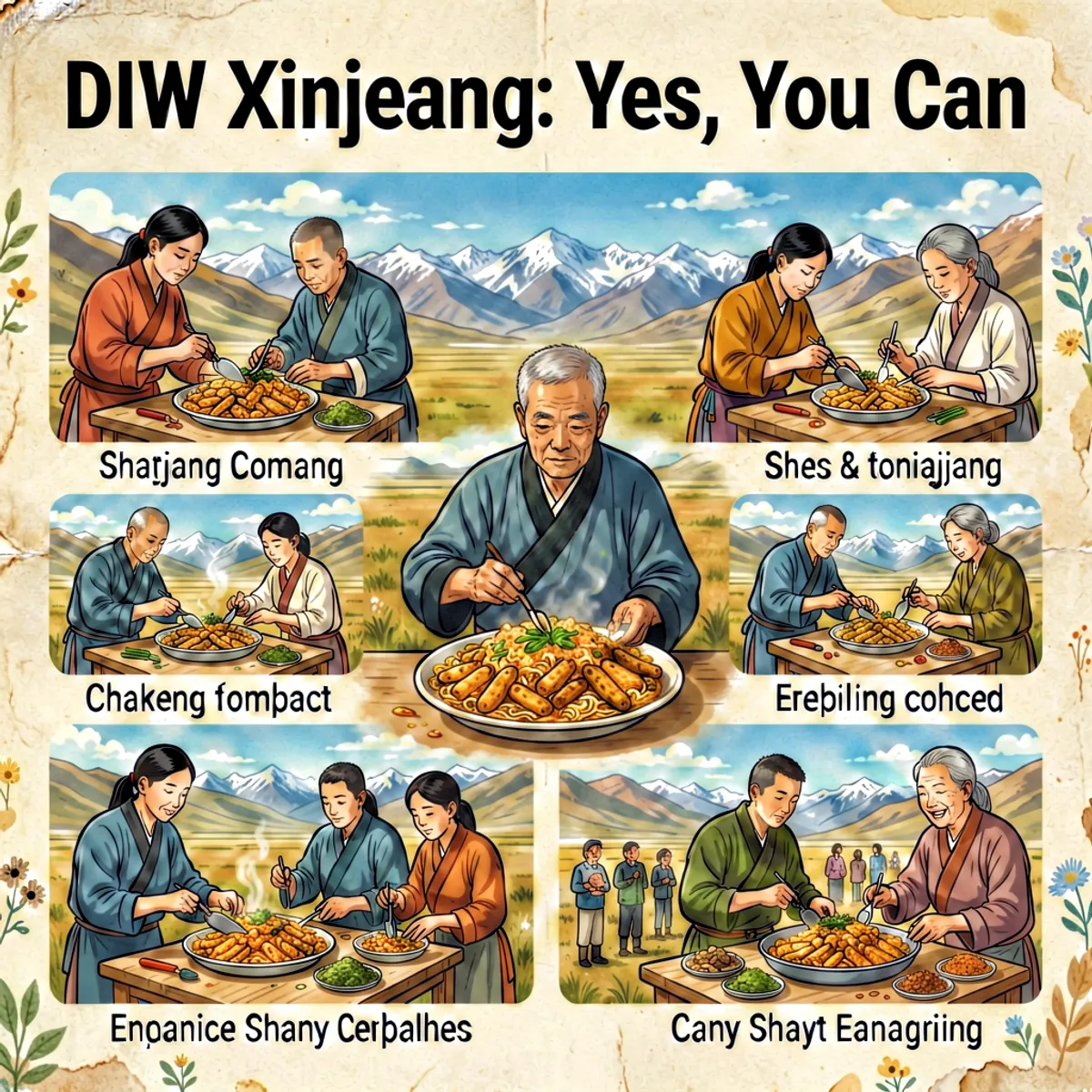
Food is one of the greatest joys of a Xinjiang DIY trip and a powerful bridge for cultural connection. Uyghur cuisine is distinct from Han Chinese food, featuring lamb, beef, wheat noodles, bread (nan), and vegetables like peppers and onions, flavored with cumin, chili, and garlic. The most famous dish is laghman—hand-pulled chewy noodles in a flavorful meat and vegetable sauce.
Kebab (yangrou chuan) is ubiquitous and delicious. Polu (pilaf) is a celebratory rice dish with carrots, raisins, and meat. Samsa (savory pastries) and mantow (steamed buns with meat filling) are perfect street food snacks.
As a DIY traveler, you have the freedom to eat where locals eat. Move away from the main tourist drags in Kashgar and find the small, family-run restaurants (restoran) filled with locals. Pointing at dishes other people are eating works wonders.
Breakfast is often a simple affair of nan, tea, and maybe a boiled egg. The Sunday Bazaar in Kashgar is a sensory and culinary overload, with sections for fresh produce, spices, and ready-to-eat food. Be adventurous but sensible.
If a stall looks clean and has a high turnover, it’s likely safe. The dairy products, like yogurt (mast) and kumis (fermented mare’s milk), are an acquired taste but a cultural staple.
The Tea Culture and Hospitality
Tea is central to social life. You will be offered tea constantly—in homes, shops, and even some museums. It is usually a black tea, sometimes with milk or sugar.
Accepting a cup is a sign of respect and opens the door to conversation. If you are invited into a home, it is a special honor. Remove your shoes if others are lined up, sit on the floor or low chairs, and accept the food and tea offered.
Your hosts will likely be thrilled by your presence and curiosity. Use your translation app to express your appreciation. These spontaneous moments of hospitality, facilitated by your independent presence, are the memories that will last a lifetime.
They are far more likely to happen when you are traveling on your own schedule than when you are on a tight group tour itinerary.
Connecting with People and Culture
Beyond food, human connection is the soul of travel. DIY travel puts you in the position to have genuine, unscripted interactions. In Kashgar’s old city, artisans still work in copper workshops, carpet weaving studios, and hat-making (doppa) ateliers.
Stopping to watch, and then asking (via app or gestures) if you can take a photo (often for a small fee) leads to brief but meaningful exchanges. In the villages around Kanas, you might encounter Tuvan or Mongol herders. A simple smile and a "hello" in their language (or Chinese) can lead to an invitation to see their yurt or share some kumis.
The key is to be respectful, patient, and not intrusive.
Visiting a mosque is a profound cultural experience. The Id Kah Mosque in Kashgar is open to visitors outside prayer times. Dress modestly (long pants/skirt, shoulders covered).
Women may be asked to cover their hair; a scarf is useful. Remove your shoes before entering the prayer hall if invited. Observe quietly.
These acts of cultural sensitivity are noticed and appreciated. Similarly, if you visit during Ramadan, be mindful not to eat, drink, or smoke in public during daylight hours out of respect for those fasting. Your awareness of these norms demonstrates a depth of engagement that transforms you from a mere spectator to a respectful guest.

The Role of Guides and Local Insights
While DIY means independence, it does not mean going it alone 100% of the time. Hiring a local guide for a day or two in a specific location can be a game-changer. In Kashgar, a guide can unlock the history and hidden lanes of the old city that you would miss alone.
Around Kanas, a guide can lead you to viewpoints and explain the ecology and Tuvan legends. Platforms like TripAdvisor or local hotel receptions can recommend reputable, independent guides. This hybrid approach—DIY transport and accommodation with curated local expertise for key sites—offers the best of both worlds: freedom and depth.
It also injects money directly into the local community.
Nature and Landscapes: The Primary Draw
Your stated love is for nature and landscapes, and Xinjiang delivers on a monumental scale. The region contains some of China’s most iconic and diverse scenery. The Kanas Nature Reserve in the Altai Mountains is the crown jewel.
Its glacial lake, surrounded by dense forest and snow-peaked mountains, changes color with the season. Hiking trails around the lake offer breathtaking vistas. The Ili Grasslands, especially around Nilka and Zhaosu, are endless seas of green in summer, dotted with yurts and herds of horses and cattle.
The Turpan Depression is a surreal, below-sea-level basin of vineyards, ancient karez irrigation channels, and the red sandstone Flaming Mountains.
The Taklamakan Desert is the ultimate desert experience. You can visit the Dunhuang-style Mogao Grottoes at Jiaohe or Bezeklik (near Turpan) carved into cliff faces. For the ultimate desert crossing, the Lop Nur area offers the "ghost city" of Yardang landforms.
The Karakoram Highway from Kashgar to Tashkurgan is one of the world’s highest and most scenic roads, flanked by 7,000-meter peaks like Muztagh Ata. Each of these areas requires different planning—pack warm layers for Kanas in summer, sun protection for the Turpan desert, and warm clothing for the high-altitude Karakoram. The DIY advantage is you can choose your landscape and linger as long as you wish.
Seasonal Considerations for the DIY Traveler
Timing your visit is critical for a nature-focused trip. Late spring (May-June) and early autumn (September-October) are ideal for most of Xinjiang. Summers (July-August) are brutally hot in the Turpan and Hotan basins (often exceeding 40°C/104°F) but pleasant in the mountains.
Winters (November-March) are severe, with heavy snow blocking mountain passes like the Khunjerab and making remote areas inaccessible. But, winter offers a stark, beautiful, and empty landscape, with the possibility of seeing the Ili grasslands under snow. The grape harvest in Turpan is in late August/September.
The Kanas forest turns gold in late September. Your specific interests will dictate your perfect travel window, which you can select freely with DIY planning.
Budgeting for Your Xinjiang Adventure
A common misconception is that Xinjiang is expensive. It can be, but it doesn't have to be. Your major costs will be internal transport (flights, train tickets, car rental) and accommodation.
Budget hotels and hostels in cities like Urumqi and Kashgar are affordable by Western standards, often costing 100-250 CNY per night. Mid-range hotels with private bathrooms are 300-600 CNY. Homestays in villages like those near Kanas offer a unique experience for a similar price.
Food is generally inexpensive, especially if you eat at local joints. A hearty meal of laghman and kebab might cost 30-50 CNY. Street snacks are even cheaper.
Renting a car with a driver (recommended for remote areas if you don’t want to drive yourself) costs roughly 600-1,000 CNY per day including fuel. A self-drive rental is cheaper (300-500 CNY/day) but requires the paperwork mentioned earlier. Entrance fees to major scenic spots can add up (Kanas ~160 CNY, Heavenly Lake ~60 CNY).
The key to budget control is balancing these splurges with savings on food and basic accommodation. Cooking for yourself in hostel kitchens is an option. The DIY model allows you to allocate your budget precisely where it matters most to you—whether that’s a scenic hotel room with a view or a multi-day 4x4 adventure.
Cost-Saving Strategies
1. Travel Off-Peak: Avoid the Chinese Golden Week (early October) and Spring Festival (January/February). Prices for flights and hotels skyrocket. The shoulder seasons of May-June and September offer better value and fewer crowds. 2. Use Local Transport: Buses and shared vans are vastly cheaper than private cars or flights for inter-city travel, though slower. 3. Eat Local: As emphasized, street food and small family restaurants are your friends for both experience and budget. 4. Book Direct: For hotels, use Chinese apps like Ctrip or Meituan which often have better rates than international platforms. Booking directly with a guesthouse via phone (use your translation app) can sometimes yield a discount. 5. Group Tours for Specific Activities: For a single day trip to a remote site (e.g., the Karakul Lake from Kashgar), joining a local group tour can be cheaper than hiring a private car, though less flexible.
Safety and Health: A Realistic Assessment
The news media often portrays Xinjiang with a focus on security concerns. For the independent traveler following standard precautions, the reality on the ground is a complex but generally safe environment. The visible security presence—checkpoints, armored vehicles, police stations—is a fact of daily life.
For tourists, this primarily means longer travel times due to checks and a slightly surreal atmosphere. Violent crime against foreigners is exceptionally rare. The main safety concerns are road safety (long, monotonous drives can lead to fatigue; driving standards vary) and petty theft (watch bags in crowded bazaars).
Health-wise, the dry climate is a blessing for most but can cause dehydration and chapped lips quickly. Sunscreen and lip balm are essential. The altitude in some areas can cause mild symptoms (headache, shortness of breath).
Ascend gradually, stay hydrated, and avoid alcohol initially. Traveler’s diarrhea is a possibility. Stick to bottled water, avoid raw vegetables you haven’t peeled yourself, and eat at busy establishments.
Pharmacies (yaofang) are common in cities and can supply basic over-the-counter remedies. For any serious issue, hospitals in Urumqi and Kashgar have international standards in major departments. Comprehensive travel insurance that covers medical evacuation is highly recommended.
Staying Informed and Connected
Your most powerful safety tool is information. Before and during your trip, consult government travel advisories from your home country for the latest regional assessments. While these often include broad warnings about Xinjiang, read them for specific, current concerns rather than a blanket "don't go" stance.
Connect with other travelers on forums like TripAdvisor or Reddit’s r/travelchina for recent, on-the-ground experiences. Locals are also a source of information; a taxi driver or hotel owner will know if a particular road is closed due to weather or construction. Your VPN is also critical for accessing news and communication tools without restriction.
Having a plan for regular check-ins with family back home is a basic but important safety net.
Conclusion: The Reward of the DIY Path
Returning to the original query: Is DIY travel in Xinjiang possible for a foreigner who doesn’t speak the local language? The evidence presented—from manageable logistics and powerful translation tech to the welcoming nature of the people—resoundingly says yes. The "problem" of language is a solvable puzzle with modern tools.
The "problem" of scale is an opportunity to focus deeply on one incredible region. The "problem" of permits is largely a myth for the standard tourist trail. The real challenge is the internal shift from seeing Xinjiang as a daunting, exotic "other" to viewing it as a series of accessible, interconnected human and natural landscapes.
The value of this DIY journey is immeasurable. You will savor the taste of a samosa bought from a stall where you pointed at a menu written in Arabic script. You will navigate a bus station using a handwritten Chinese ticket.
You will watch a sunset over the Taklamakan from a viewpoint you found on a map, with no tour group in sight. You will have a ten-minute conversation, mediated by an app, with a carpet weaver about his patterns. These are the moments of authentic connection and personal discovery that define travel.
They are earned through your own planning, your own navigation, and your own openness. The China Business Degree or any formal study provides a framework, but the profound understanding of a place like Xinjiang comes from the courage to go yourself, figure it out, and engage directly. Your trip to Xinjiang, planned by you, experienced by you, will be uniquely yours.
Start planning, embrace the process, and get ready to be amazed.
Responses • 0
0/2000
ID: 1326
Chris
Offline
1 hr
Visited
From
Bakersfield, United States
Send Message