Digital Youth Spark Grassroots Revival of Chinese Traditions
AI Learn Chinese
4 hr • 0 read
Young digital storytellers on Douyin and Bilibili are reviving vanishing Chinese traditions, sparking a widespread grassroots cultural revival.
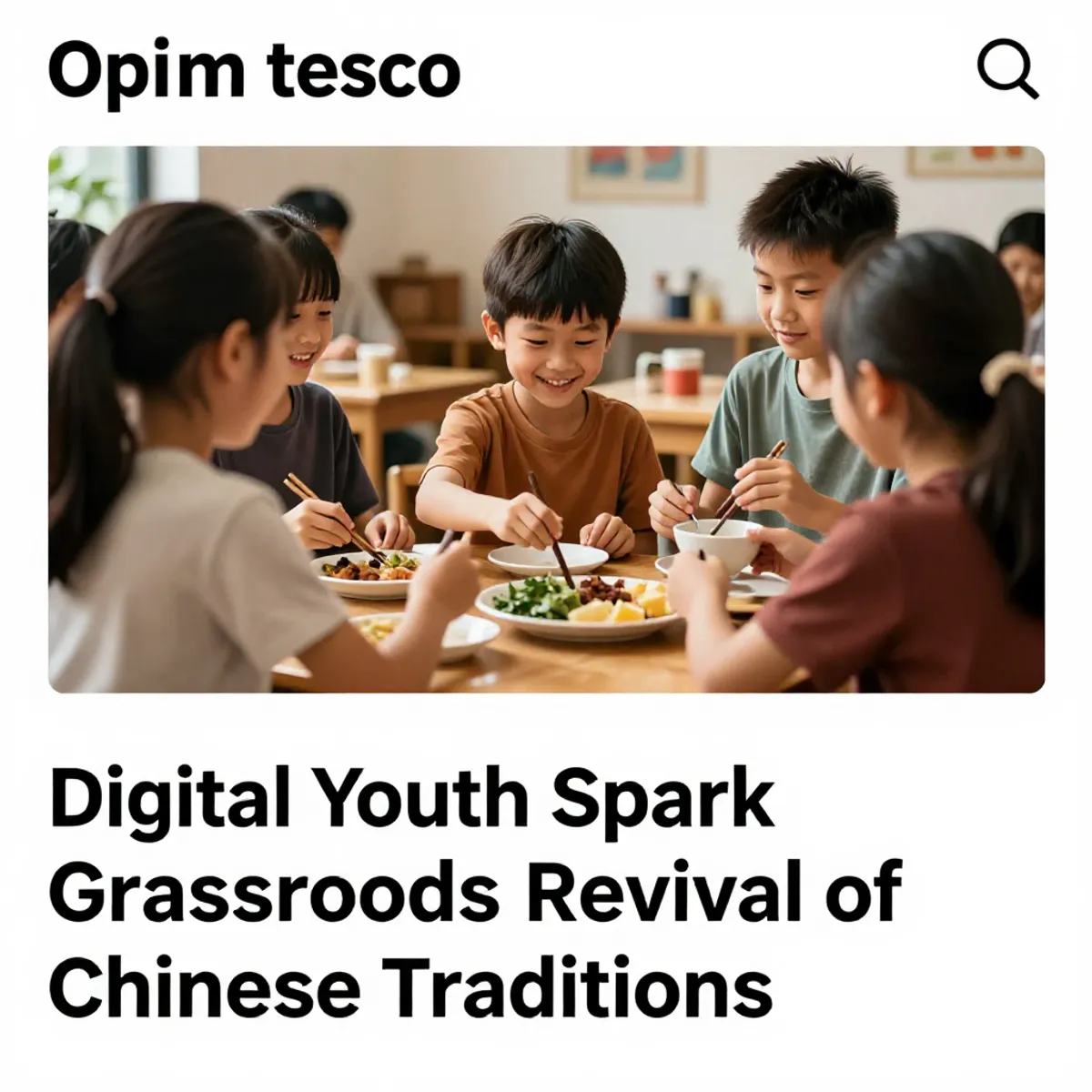
Introduction: A New Wave of Cultural Storytelling
China’s social media landscape is experiencing a profound cultural shift. For a generation raised on rapid-fire entertainment and algorithmically curated feeds, the most captivating content is not from pop idols or comedians, but from young creators meticulously documenting vanishing cultural practices. They travel to remote villages, learn ancient crafts from aging masters, and participate in rituals with solemn dedication.
This phenomenon represents a significant recalibration of digital culture, where viral virality becomes a vehicle for intangible heritage preservation. The content is raw, process-oriented, and deeply respectful, challenging notions that traditional culture is irrelevant to China’s modern youth.
Figures like Shi Haifeng and Liu Yaqing are at the forefront of this movement. Their work moves beyond simple documentation or exoticism. They frame traditional culture not as a museum exhibit locked behind glass, but as a living, breathing, and often spectacular practice embedded in daily life and communal identity.
This approach resonates deeply, generating views in the tens of millions and igniting nationwide conversations about identity, modernity, and what it means to be Chinese in the 21st century. It is a genuinely grassroots movement, powered by platform algorithms and a powerful aesthetic that finds drama in diligence.
This article explores this significant cultural moment in depth. We will examine the creators and their distinct methodologies, the platforms enabling them, and the complex, multifaceted impact they have on heritage preservation, local economies, and national identity discourse. The central question is how a generation often stereotyped as disconnected from its roots is now becoming its most passionate and effective ambassadors. The answers reveal a intricate dance between digital spectacle and deep cultural practice, between economic opportunity and spiritual integrity, and between individual storytelling and national narrative.
The Pioneers: Shi Haifeng and Liu Yaqing
Shi Haifeng: The Ritualistic Spectacle
Shi Haifeng, known online as “Nanxiang doesn’t like to eat,” has built a massive following through his intense, almost devotional engagement with tradition. His content is characterized by a stark, minimalist aesthetic, often shot in muted tones with a static camera that focuses entirely on process and performance. One of his landmark videos features him learning the craft of lacquer plate making in a remote workshop in Hubei province.
The video is a slow, meditative journey from collecting raw tree sap to the final, meticulous polishing of a lustrous, durable plate. There is no upbeat music, no jump cuts—just the sounds of scraping, polishing, and Shi’s occasional, breathless narration.
His work is not instructional but experiential and immersive. He absorbs the knowledge, presenting it as a sacred practice, a term he often echoes from his masters. Another viral hit shows him performing a folk dance while carrying burning charcoal buckets, a display of physical endurance and cultural symbolism that blurs the line between documentary and performance art.
The tension is palpable; the risk is real. Shi’s genius lies in transforming a niche, localized ritual into a gripping visual narrative that transcends language. His youth and modern, slender appearance create a powerful juxtaposition against the ancient, physically demanding practices he embodies, directly challenging stereotypes about who can be a legitimate cultural bearer.
He is not an anthropologist observing from a distance; he is a participant proving that the tradition can be inhabited by anyone with the will to learn.
Liu Yaqing: The Gentle Archivist
Liu Yaqing offers a complementary, yet profoundly distinct, approach. Her style is softer, more intimate, and often focused on the domestic, culinary, and textile aspects of heritage. Where Shi presents spectacle, Liu presents daily practice—the quiet, repetitive labor that sustains culture.
She explores regional cuisines, traditional wedding rituals, folk crafts, and seasonal customs with a gentle, curious demeanor. Her videos feel less like performances and more like shared discoveries, shot with a warm, natural light that feels inviting rather than intimidating.
Liu’s work emphasizes the transmission of knowledge through everyday life and intergenerational bonding. She might spend days learning to make a specific type of shi (a traditional fermented food), documenting the precise timing, the feel of the ingredients, and the advice of the elderly woman teaching her. Her appeal is in the authenticity of her learning process—the mistakes, the patience, the eventual small mastery.
She positions herself not as an expert, but as a respectful, sometimes clumsy student, explicitly inviting viewers along on her educational journey. This humility makes the cultural knowledge she presents feel accessible, precious, and non-intimidating. The focus is on the how and the why of ordinary actions that carry extraordinary cultural weight.
The Li Ziqi Precedent: The Poetic Foundation
To fully understand Shi and Liu’s rise, one must acknowledge the pioneer who paved their way: Li Ziqi. Her ultra-aesthetic, almost fantastical videos of rural life and traditional crafts—from growing wheat to making silk—became a global sensation on YouTube and domestic platforms. She presented an idealized, poetic, and visually sumptuous vision of Chinese countryside living that resonated with a romanticized international audience.
But, Li Ziqi’s work is frequently criticized by cultural scholars and domestic viewers for its constructed perfection and lack of explicit historical or cultural context. Her videos are beautiful tableaus with minimal explanation, prioritizing visual feast over substantive transmission. Shi and Liu, in contrast, integrate more direct explanation, on-screen text with historical notes, and a focus on the specific, often challenging, realities of keeping these practices alive in a modern economy.
They build on her foundation of aesthetic appeal but inject a layer of documentary rigor, pedagogical intent, and contemporary relevance. Where Li Ziqi showed a timeless China, Shi and Liu show a China actively engaged in the difficult, conscious work of preservation.
The Digital Catalyst: Platforms as Modern Agoras
Douyin: The Engine of Mass Virality
Douyin, China’s version of TikTok, is the primary engine for this trend. Its algorithm is exceptionally adept at identifying niche interests and amplifying them to massive, mainstream audiences. A well-crafted 60-second clip of a charcoal dance or a lacquer plate emerging from raw sap has an immediate, visceral impact.
The platform’s preference for high-quality visuals, emotional hooks, and satisfying processes aligns perfectly with the inherent drama, beauty, and tactile nature of traditional practices. For creators, Douyin offers unparalleled reach and the chance for a single video to enter the national consciousness overnight, triggering a cascade of shares, stitches, and duets that spread the content far beyond the creator’s immediate followers.
The platform’s mechanics—the short format, the full-screen immersion, the endless scroll—create a unique environment for cultural snippets. It forces distillation to the most visually arresting moments, which can be a blessing (highlighting pure craft) and a curse (losing context). Yet, for sparking initial interest, it is unparalleled. A viral Douyin video can turn an obscure village festival into a trending topic within hours, demonstrating the sheer power of algorithmic curation in shaping cultural awareness.
Bilibili: The Community of Depth
While Douyin provides the spotlight and the initial burst of fame, Bilibili provides the sanctuary and the space for depth. Known for its longer-form video format (from 5 to over 30 minutes), its highly engaged, knowledgeable user base, and its unique “bullet comment” (danmu) system, Bilibili is where creators can dive deeper into the nuances. A 15-minute video on Shi’s channel might unpack the historical origins of a specific ritual, include full, unedited interviews with masters, and show the complete, un-speed-ramped process.
The comment sections become vibrant forums for discussion, correction, shared nostalgia, and supplementary knowledge. Users often add their own family stories, geographical details, or technical clarifications. This platform fosters a community of cultural enthusiasts who value accuracy, context, and academic rigor as much as aesthetic pleasure.
It transforms passive viewership into active participation and collective learning, creating a digital archive of sorts that accompanies the video content. Bilibili is where the spark from Douyin is fanned into a sustained flame of inquiry.
Xiaohongshu: The Lifestyle Integration
Xiaohongshu (Little Red Book) operates as a hybrid social media and e-commerce lifestyle platform. Here, cultural heritage content is often seamlessly intertwined with travel planning, fashion, home decor, and consumer recommendations. A video on traditional indigo dyeing techniques might be followed by posts detailing where to buy the fabrics, how to incorporate the patterns into modern interior design, or which artisan villages offer workshops. This platform bridges the critical gap between cultural appreciation and tangible consumer action, directly linking heritage to local tourism, artisan economies, and personal identity expression through consumption.
Xiaohongshu’s user base, predominantly urban, educated women, sees heritage not as distant folklore but as a source of authentic aesthetic and lifestyle choices. This integration makes tradition commercially relevant and personally applicable. It turns cultural curiosity into a planned vacation, a home renovation project, or a wardrobe choice, thereby creating a direct economic pipeline from digital engagement to real-world support for heritage communities.
The Formula: Why This Content Captivates Now
The Allure of the Authentic in a Synthetic Age
In an era dominated by deepfakes, algorithmically generated influencers, and polished, performative social media, audiences are increasingly fatigued and crave tangible authenticity. Shi and Liu offer a grounded, unforgiving counter-narrative. Their hands get dirty; their faces show strain; their efforts are visibly strenuous and time-consuming.
The crafts they learn take days, weeks, or longer to master even a basic step. This slowness and physicality stand in stark, compelling contrast to the instantaneous, weightless digital world they inhabit and their viewers scroll through daily.
The authenticity is not in being “real” in a casual, unfiltered sense, but in demonstrating real effort toward a real, difficult skill. The sweat, the patience, the visible risk (like handling burning charcoal or a sharp tool) serve as proof of genuine engagement. Viewers perceive this as an antidote to digital artifice.
It satisfies a deep psychological need for substance, for a connection to the material world and to processes that cannot be faked or rushed. This “proof of labor” has become a powerful currency in an attention economy saturated with easy tricks.
Youth as the New Cultural Vanguard
The creators’ age—typically late 20s to early 30s—is a critical, non-accidental factor. They dismantle the pervasive stereotype that cultural heritage is the domain of the elderly, the austere, and the academically inclined. Their modern appearance, contemporary speech patterns, and mastery of viral platform aesthetics make tradition feel cool, relevant, and accessible to younger demographics who might otherwise see it as boring or outdated. They are peers, not distant authorities in Traditional Chinese Clothing or museum curators.
This generational bridge is essential for intergenerational transmission. When a viewer sees someone who looks and talks like them mastering a “grandfather’s craft,” the perceived barrier to entry—whether of age, social class, or inherent talent—lowers dramatically. It suggests that heritage is not a relic to be observed from a distance, but a skill set to be acquired, a form of knowledge that is practical and attainable. They model a modern identity that is not in opposition to tradition, but is enriched and deepened by it.
Spectacle as an Educational Tool
Shi and Liu masterfully turn cultural practice into compelling spectacle. The lacquer plate isn’t just made; it is polished until it gleams with a hypnotic, rhythmic repetition. The charcoal dance isn’t just performed; it is a tense, dangerous-looking feat of balance and endurance that holds the viewer in suspense. The making of a complex fermented food becomes a lesson in microbial patience and regional terroir.
This use of spectacle does not dilute the cultural meaning; it strategically amplifies it. It captures the fickle attention of the digital audience first, then holds it for the underlying story—the history, the technique, the community context. The spectacle is the hook that reels in an audience that would undoubtedly scroll past a dry, academic documentary.
It makes the invisible value of heritage—patience, precision, spiritual focus, communal coordination—visibly dramatic and emotionally resonant. The aesthetic experience becomes the gateway to cognitive and emotional engagement.
The Ripple Effect: Impact and Engagement
Driving Local Tourism and Economies
The most immediately tangible impact of this trend is on local tourism. A single viral video about a specific craft technique in a remote county or a little-known festival can trigger an immediate, measurable surge in visitor numbers. Local government tourism bureaus and small business owners report seeing crowds of young fans, often from distant cities, arriving with screenshots, wanting to see the exact workshop, meet the featured master, or attend the same festival. This creates direct economic opportunities not just for the master artisans, but for local guides, guesthouses, family restaurants, and vendors selling related goods.
It transforms intangible heritage into a sustainable livelihood, providing a powerful financial incentive for communities to preserve rather than abandon their traditions. In villages where young people had been migrating to cities for factory jobs, a sudden influx of tourism revenue can make staying to learn a craft viable again. This economic dimension is crucial; it moves heritage from the realm of abstract value into concrete household income, directly linking cultural pride to economic survival.
Creating New Pathways for Masters
For the aging masters of these traditions—often in their 60s, 70s, or beyond—these influencers become unexpected and powerful patrons and promoters. Where government transmission programs or academic research projects may have failed to bring them widespread recognition or attract serious students, a single 60-second feature from a popular creator can flood them with requests for workshops, interviews, and orders. They gain a platform to share their knowledge with a massive, nationwide audience, often for the first time in their lives.
Some masters become minor celebrities themselves, invited to speak at events, collaborate on commercial projects, or have their life stories documented. This public validation of their life’s work in the modern marketplace is profoundly meaningful. It restores a sense of dignity and relevance.
Critically, it can attract younger apprentices who now see a viable, respected future in the craft, not just a life of poverty and obscurity. The influencer acts as a crucial translator and amplifier between the traditional world and the modern market.
Fostering a National Conversation on Heritage
Beyond economics, these videos fuel a broader, more nuanced societal conversation about what heritage means. Social media platforms are filled with debates: What constitutes authentic practice versus staged performance? How much adaptation or “modernization” is acceptable before a tradition loses its soul?
Which traditions are most at risk of being lost, and why? This digital discourse, driven by millions of engaged viewers, significantly raises the public literacy around intangible cultural heritage.
Terms like “national intangible cultural heritage” (国家级非物质文化遗产) enter common parlance. People begin to recognize the value not just in the object produced (a lacquer plate, a woven textile) but in the process, the knowledge system, the community cohesion, and the spiritual beliefs it represents. The conversation shifts from “Is this pretty?” to “What does this do?
What does it mean? Who keeps it alive?” This democratization of heritage discourse is a significant cultural shift in itself.
The Preservation Paradox: Viral Fame vs. Deep Roots
The Risk of Commodification and Simplification
The model is not without significant peril. The drive for views, shares, and engagement metrics can lead to commodification—the reduction of a complex, sacred, community-based ritual to a catchy visual gimmick or aesthetic trope. Nuance is almost inevitably lost in the edit.
The spiritual dimensions, historical traumas, social hierarchies, and deep ecological knowledge embedded in a practice can be flattened into a beautiful, decontextualized spectacle. There is a fine, often-blurred line between respectful appreciation and exoticizing consumption.
Critics argue that this “hertainment” creates a Disneyfied version of culture, satisfying a superficial curiosity for novelty without fostering deep understanding or long-term commitment to preservation. The tradition becomes a consumable product, a backdrop for the creator’s personal brand, rather than a living system with its own integrity and demands. This risk is particularly acute when rituals are performed out of their sacred context for the camera, potentially offending the very communities the creators aim to celebrate.
Unsustainable Pressure on Fragile Practices
Sudden, massive popularity can also overwhelm the very fragile communities and practices it aims to help. A small village temple festival, meant for local participation and quiet devotion, can be inundated with hundreds or thousands of tourists disrupting its solemnity, generating trash, and demanding performances. A lone master artisan, perhaps the last keeper of a technique, may be unable to meet a sudden flood of orders for a painstakingly handmade item, leading to quality decline, burnout, or the abandonment of the practice altogether due to pressure.
The local infrastructure—roads, hospitality, sanitation, waste management—may simply not exist to handle the influx, causing environmental degradation and social strain within the community. The virality is often short-lived, a flash in the pan of the algorithmic feed, but the damage to a fragile cultural ecosystem—from resource depletion to the corruption of ritual meaning—can be long-term and difficult to repair. The “success” of the video becomes a curse for the tradition’s sustainability.
The Question of Longevity and Depth
The fundamental, unresolved challenge is sustainability of engagement. Does a 15-minute video on Bilibili inspire a lifelong practice, a career choice, or a deep, ongoing study? Or is it a fleeting moment of wonder, a passive consumption event that satisfies curiosity without prompting action? The business model for these creators is inherently based on constant new content and ever-growing view counts, not on ensuring a specific tradition survives for another century with its full complexity intact.
There is a real risk of creating a extractive cycle where heritage is mined for viral moments until the practice is exhausted, its meaning completely eroded by overexposure and misrepresentation, or until the community itself rejects the attention as harmful. True, deep preservation requires embedding traditions in formal education systems, community life, policy, and economic structures—a depth and durability that a single video, however beautiful and widely seen, cannot alone achieve. The algorithm rewards the new; heritage requires the old.
The Broader Context: China’s Cultural Policy and National Identity
Aligning with National Heritage Campaigns
This influencer phenomenon does not occur in a vacuum. It aligns closely, sometimes intentionally, with the Chinese government’s decades-long, large-scale campaign to identify, document, and promote intangible cultural heritage (ICH). Since the early 2000s, China has built one of the world’s most extensive national ICH lists, with multiple tiers (national, provincial, city, county), and has invested in transmission bases, master-apprentice stipend programs, and heritage festivals.
The government’s overarching narrative emphasizes the rejuvenation of the Chinese nation through cultural confidence (文化自信)—the idea that a strong modern China must be rooted in its glorious civilizational past. The organic, youth-driven viral trend provides a powerful, bottom-up, globally marketable complement to these top-down policies. It demonstrates genuine, enthusiastic public appetite for heritage, validating state efforts while often achieving a reach and emotional resonance that official media struggle to match. In many cases, local cultural bureaus now actively court these creators, seeing them as effective tools for their own mandates.
Soft Power and the “Chinese Story”
On the international stage, this content also serves a potent soft power function. Li Ziqi’s global fame presented a serene, aestheticized, almost utopian China that resonated with international audiences weary of geopolitical news. Shi and Liu’s work, while also popular abroad (especially among diaspora communities and China-watchers), offers a more complex narrative—one of diligent preservation, cultural depth, intergenerational responsibility, and the gritty reality of sustaining tradition.
It counters simplistic stereotypes of China as either an ancient, static museum or a soulless, copycat manufacturing hub. It showcases a China that is both hyper-modern in its digital adoption and deeply historical in its practice. State media has actively celebrated such creators, framing them as exemplars of the “Chinese story” (中国故事) told by a new, confident generation. This creates a synergistic relationship where the state provides legitimacy and occasional resources, and the creators provide authentic, appealing content that serves national image-building goals.
Navigating Regional and Ethnic Diversity
China is home to 56 officially recognized ethnic groups and immense regional diversity in customs, languages, and arts. This trend, however, predominantly highlights Han Chinese traditions from rural heartlands, particularly in central and southern provinces. There is a palpable risk of creating a monolithic “Chinese culture” narrative that marginalizes the rich, distinct heritage of ethnic minorities like the Tibetans, Uyghurs, Miao, Dai, and Mongols, as well as the unique sub-cultures of regions like Fujian, Shanxi, or Jiangsu.
The most successful videos often feature visually striking, solo-craftsmanship traditions (a master weaving, a dancer performing) that are easily framed as individual mastery. More communal, oral, performative, or ritual-based traditions—especially those of minorities—that are less “Instagrammable” or require complex group participation may receive less attention. This creates an imbalance in what is deemed visually valuable and therefore preservable, potentially reinforcing a Han-centric view of Chinese civilization. The movement’s future credibility depends on consciously diversifying its subjects and collaborators.
The Future: Evolving Models and Lasting Legacy
From Solo Documentarians to Collaborative Hubs
The next logical evolution for top influencers is a shift from solo documentarians to curators, connectors, and incubators. They can leverage their massive platforms and earned trust to establish more formal, equitable collaborative models. This could include directly connecting their audiences to artisan workshops for virtual or in-person learning sessions, creating subscription-based access to masterclass series, or partnering with cultural NGOs and local governments to fund specific preservation projects.
The move is from merely raising awareness to facilitating direct, sustainable investment. Some creators are already launching their own brands, selling tools, materials, or finished products with transparent revenue sharing that ensures the featured artisans receive a fair, often above-market, cut.
Integration with Formal and Informal Education
For lasting impact, the raw curiosity generated online must be channeled into structured learning pathways. These videos are already being used by innovative teachers in classrooms to introduce cultural topics. The next step is more deliberate partnerships: creators helping develop curriculum materials aligned with educational standards, hosting live virtual workshops for schools, or creating companion study guides for their videos.
This bridges the gap between viral entertainment and structured knowledge transmission. It ensures the spark of curiosity can be nurtured into deeper understanding, potentially inspiring students to seek out local masters or pursue studies in related fields like anthropology, design, or conservation.
The Challenge of Depth in a Shallow Feed
The core, persistent tension is: can the algorithms of Douyin and Bilibili, which inherently reward novelty, high engagement, and rapid consumption, support the slow, repetitive, and often unglamorous work of true cultural transmission? The future legacy of this trend will be measured not in cumulative view counts, but in concrete outcomes: a measurable increase in young apprentices formally learning the featured crafts, stronger community cultural institutions with youth participation, and a more nuanced public understanding of heritage that moves beyond aesthetics. The platforms may still favor the new and sensational, but the most savvy stewards are learning to “hack” the algorithm for the ancient, using serialized content to show long-term progress and building communities that sustain interest beyond a single viral hit.
Innovating for Longevity: From Viral Moments to Living Traditions
The central dilemma remains: how to transform a 60-second burst of fascination into a century-long tradition. A new wave of creators and collaborators is actively engineering solutions, moving beyond documentation to build sustainable cultural ecosystems. They are experimenting with models that directly channel digital attention and revenue into tangible, long-term support for the practices and communities they showcase. This shift from passive viewership to active participation—from clicking “like” to clicking “buy” or “join”—is where the true test of this movement’s legacy will be decided.
Forging Direct Artisan-Creator Partnerships
The most promising and concrete evolution is the transition from observer to direct patron and business partner. Influencers are leveraging their platforms and marketing savvy to establish transparent, equitable commercial relationships that bypass exploitative middlemen. Instead of merely featuring a master’s work for free exposure, they now facilitate pre-order campaigns for handmade items, ensuring the artisan receives fair payment upfront and can plan production without financial strain. Some creators have established formal cooperatives or brand partnerships where a fixed percentage of all revenue funds a community welfare pot for the village, supporting things like workshop restoration or children’s education.
Some creators, like Shi Haifeng, have begun quietly mentoring the children of the masters they feature, providing them with modern media skills—video editing, storytelling, social media management—so they can eventually take over their family’s digital storytelling and business outreach. This creates a dual inheritance: the craft itself and the means to sustain its economic viability in the 21st century. It addresses the critical problem of succession.
The Rise of the Cultural Steward
A new archetype is emerging from this trend: the cultural steward. These are not just documentarians or even entrepreneurs; they are active participants in the preservation logistics and community development of the heritage sites they feature. They use a portion of their earnings to fund small-scale restoration projects for village temples or community workshop spaces.
They organize annual gatherings, bringing together dispersed fans, the featured masters, and local youth for immersive, multi-day learning experiences that move far beyond the screen. This model treats the influencer’s channel not as a final destination for content consumption, but as a hub for a physical network of supporters and practitioners, deeply embedding the digital trend into the geographic and social fabric of the heritage site itself.
Technology for Depth, Not Just Display
Forward-thinking creators are employing technology not just for display, but to enable deep practice. While Douyin offers the spectacular hook, some are using complementary platforms and tools to build structured, long-term learning pathways. A popular lacquerware video might be followed by a link to a dedicated Bilibili playlist featuring a master’s full, unedited workshop series, or a QR code in the video description leading to a digital archive of historical patterns, tool specifications, and regional variations.
Experimental pilot projects use augmented reality (AR) filters that allow users to “try on” a traditional textile pattern or see a virtual reconstruction of a ruined ritual site on their phone screen. The goal is to use tech to lower barriers to entry and provide rich context, transforming a moment of awe into a gateway for sustained study.
Institutional Symbiosis: Navigating Government Partnerships
The relationship with state cultural bodies is complex but increasingly collaborative and symbiotic. Some local cultural bureaus, recognizing the authentic reach and youth appeal of these creators, are now proactively seeking formal partnerships. They offer official recognition (awarding titles like “Cultural Heritage Promoter”), provide access to restricted heritage sites or archival materials, and sometimes offer small grants for projects that align with national intangible cultural heritage (ICH) goals.
In return, creators offer their massive audiences, credible connection to youth culture, and professional content creation skills that state media often lack. This symbiosis can provide crucial resources and legitimacy for larger-scale projects. But, creators must navigate carefully to maintain their independent, grassroots credibility and avoid being perceived as mere mouthpieces for official narratives, which could alienate their core audience.
Cultivating the Next Generation of Bearers
The ultimate, long-term metric of success is the number of young people who choose to become formal apprentices or dedicate their careers to these crafts. Leading creators are now explicitly designing content and calls to action with this goal in mind. Videos often conclude with direct appeals: “If this resonated with you, seek out a master in your own region,” or “The real lesson begins when you put down the phone.” Some have collaborated with vocational schools and craft institutes to create scholarship funds specifically for heritage crafts, using their influence to destigmatize manual arts careers and rebrand them as noble, skilled, and modern professions. They document not just the beauty of the end product, but the viable, dignified, and fulfilling life of the practitioner, directly countering the pervasive narrative that tradition equals poverty and backwardness.
Ethical Frameworks and the Anti-Commodification Pact
To combat the ever-present risk of Disneyfied commodification and cultural appropriation, a loose but influential set of ethical guidelines is circulating among the top tier of creators. These self-imposed principles, often shared in private creator groups, include: always name the specific master and village featured; never stage or re-enact sacred rituals for views if the community does not approve; disclose any commercial partnerships or affiliate links transparently in the video or description; and allocate a fixed percentage (e.g., 5-10%) of channel revenue to a community fund for local projects. While not universal,
Responses • 0
0/2000
ID: 1326
Chris
Offline
4 hr
Visited
From
Bakersfield, United States
Send Message