Digital Sisterhood in Shanghai
AI Learn Chinese
3 hr • 0 read
Learn how a WeChat group for Shanghaibased Englishspeaking women builds authentic friendships and support, combating isolation in the city.
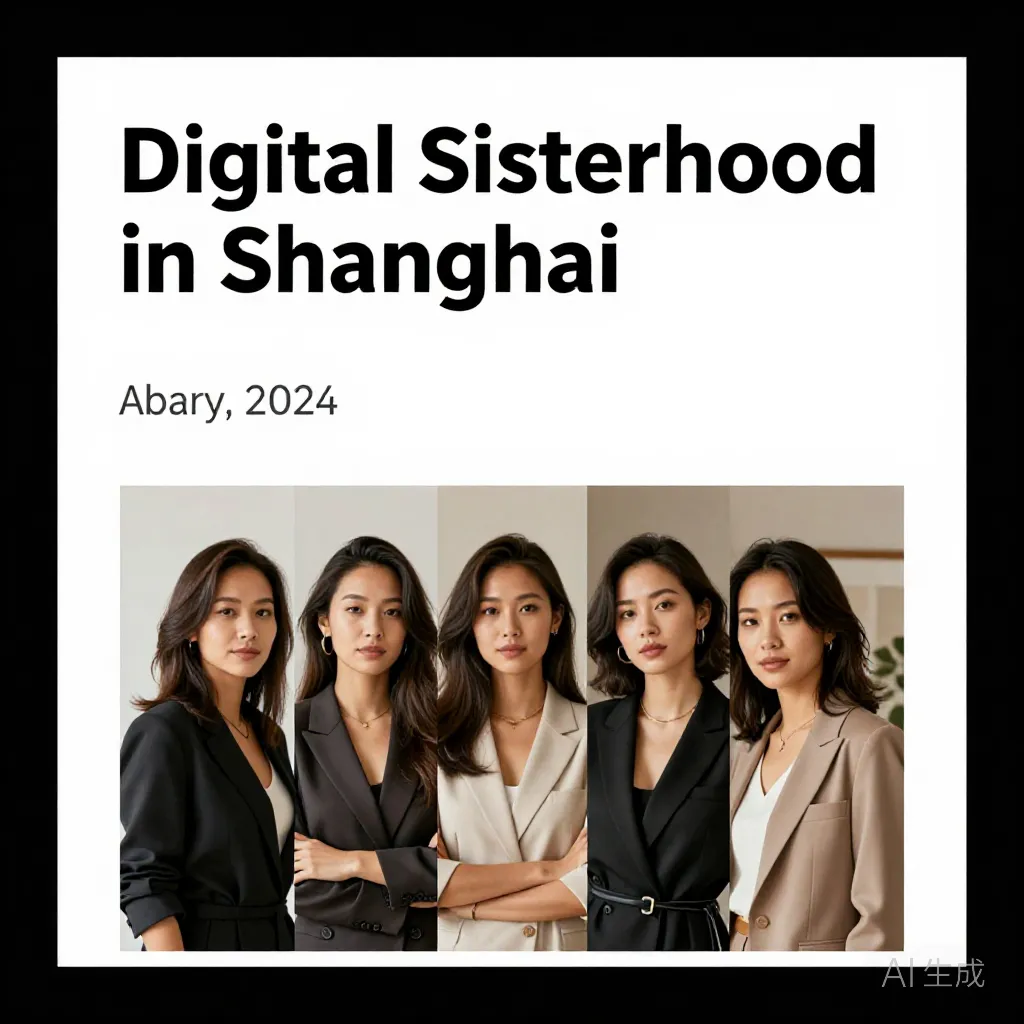
The Challenge of Connection in a Megacity
Moving to Shanghai is a sensory and emotional whirlwind. The iconic skyline, the endless energy of the streets, the sheer scale of everything—it’s a dramatic contrast to the quiet, familiar routines left behind. For the English-speaking woman arriving for a career assignment, academic program, or personal adventure, the initial adrenaline quickly gives way to a more subdued, persistent question: where do I find my people?
Professional networks are readily available, but they rarely satisfy the craving for the casual, vulnerable, and supportive friendships often shared with a tight-knit circle back home. This creates a painful gap between the city’s dazzling public life and a private sense of belonging. It’s the quiet starting point for many.
The obstacles are numerous. Language barriers, while less absolute in international hubs, still impede the spontaneous, deep bonding that happens with locals. Workplace interactions can be transactional and time-bound.
Social scenes aimed at expats often feel repetitive, superficial, or overly focused on alcohol. For women, there’s an additional layer of navigating safety, unspoken social codes, and the specific shared experiences—from beauty rituals to health concerns—that typically form the bedrock of female friendship. The result is a modern paradox: being surrounded by millions, yet lacking the intimate, trusted community that makes a foreign place feel like home.
This isn’t unique to Shanghai. Every global metropolis sees this pattern. But Shanghai’s specific context—its mind-boggling size, its transient yet highly skilled international population, its relentless pace—magnifies the need for a dedicated, low-pressure space.
It requires more than a bulletin board for events; it demands a consistent, trusted channel where the mundane and the meaningful can be shared with equal weight. The search is for a sustainable social ecosystem, not just a single activity.
The Genesis of a Digital Living Room
The idea for the Shanghai girls’ WeChat group emerged directly from this widespread need. It was started quietly by a woman who felt the same disconnect. Her founding principle was deceptively simple: create a space for English-speaking women in Shanghai to meet other women, forge genuine friendships, and have people to “do life with.” It was not designed as a networking platform, a dating forum, or a complaint chamber. It was envisioned as a digital living room—a private, positive space where conversations could mirror those had with close friends via text message.
The founder’s core insight was recognizing that “doing life with” someone encompasses both the planned and the perfectly unplanned. It’s the brunch scheduled weeks ahead and the sudden “who’s up for a walk by the Bund right now?” text at sunset. It’s the serious question about a reliable OB/GYN and the silly one about where to find matching-family pajamas for a themed party.
By anchoring the group to this broad, human spectrum of needs, it immediately distinguished itself from more functionally focused expat forums. The simple permission to ask about “the random little things that come with living here” was, in itself, revolutionary for a practical community tool.
WeChat was the obvious, non-negotiable platform. In Shanghai, it is the city’s central nervous system for communication, payments, and social coordination. A group here lives where the users already are, requiring no extra login, no separate app download, and leveraging a universally familiar interface. The friction to participate is zero.
The “girls-only” designation is enforced through a simple but crucial gatekeeping mechanism: new members must be added by an existing member or approved via direct message by the founder. This maintains the group’s character and safety from the outset, fostering a sense of shared trust and collective responsibility from day one. It’s the first, critical filter that sets the tone.
The Rhythm of Real Life: Activities and Asks
The group’s vitality is measured in its dual-channel activity: organized events and the constant, low hum of everyday “asks.” The former provides structure and a guaranteed social outlet. The founder and other proactive members organize brunches, coffee dates, walks, workouts, dinners, and spontaneous plans. These are not grand, ticket-based productions. They are the familiar, repeatable formats of female friendship—a coffee catch-up at a cafe in Jing’an, a weekend walk through the French Concession, a group workout class in a park.
This simplicity is key. It drastically lowers the barrier to entry; anyone can suggest a coffee, and the social risk feels minimal. The spontaneity is perhaps the most telling feature.
The ability to post “feeling like a gallery hop today, anyone free in an hour?” taps into the unique freedom of urban life. It transforms the city from a lonely maze into a shared playground.
These impromptu gatherings often yield the most authentic connections because they are driven by immediate, genuine mood rather than obligation. They replicate the “text your friend” dynamic that defines close relationships, scaling it to a trusted network. You respond to the person, not the event.
Beneath this event layer flows the rich, textual stream of the “ask.” This is where the group transcends a simple event calendar and becomes a true support system. Questions range from the highly specific to the universally relatable: “Where to get your nails done?” “Which salon is actually good for a haircut?” “Recommendation for a gentle dentist?” “Best place for a solo manicure and a quiet read?” “How do I navigate the hospital for a non-emergency issue?” “Where can I find plus-size clothing that’s stylish?” These are the practical, often anxiety-inducing puzzles of daily life in a new culture, filtered through a lens of female experience and aesthetic preference.
The answers come not from anonymous web searches, but from lived, recent experience within the same geographic and cultural context. A recommendation for a nail salon comes with a note: “Li is so sweet, she understands what you mean by ‘short, natural nails’—go on a Tuesday morning, she’s less busy.” This is knowledge transfer of the most valuable kind: contextual, timely, and trusted.
The Sacred Space: Safety, Positivity, and Shared Experience
The explicit framing as a “girls-only, positive space” is not merely descriptive; it is actively curated and defended. This designation serves several critical functions. First, it establishes a psychological safety net.
Members understand the space is free from unsolicited romantic advances, aggressive sales pitches, or general negativity. The moderation, led by the founder, ensures the tone remains supportive and inclusive. This allows for vulnerability—posting about a bad day, a bout of homesickness, or a personal struggle—without fear of judgment or unwanted attention.
It’s a rare online sanctuary.
Second, it creates a shared identity based on gender and language. The “English-speaking” qualifier is as important as the geographical one. It binds people through the common experience of navigating a predominantly Mandarin-speaking environment.
The group becomes a place to vent in English about the frustrations of bureaucracy, the humor of translation fails, or the simple exhaustion of constant linguistic code-switching. This shared linguistic bubble is a powerful bonding agent. It’s a refuge where you don’t have to perform or translate your thoughts; you can just be, in your native emotional and intellectual tongue.
Third, it addresses the specific content of female-centric life. Discussions about self-care, medical concerns (from routine check-ups to specific women’s health issues), beauty routines, and navigating social dynamics are given a dedicated, judgment-free arena. In a mixed or male-dominated group, these topics can be sidelined, misunderstood, or met with inappropriate commentary.
Here, a question about the best birth control provider or how to handle street harassment is met with solidarity, practical advice, and often, private messages offering further support. The group implicitly understands that “life” in Shanghai for its members includes this entire spectrum of experience.
The Logistics of Growth and Trust
The group’s expansion strategy—commenting below or DM’ing the founder for an invite—is a masterclass in controlled community growth. It eschews a public, open link that could be exploited by spammers, bots, or men seeking entry. The personal gatekeeper role of the founder acts as the first filter.
Her direct message (DM) approval allows for a brief, personal vetting. A simple “Hi, I’m an American teacher here for two years, interested in making friends” is enough. This human touch at the entry point sets the tone for the entire membership. It’s not an algorithm; it’s a woman saying, “Yes, you seem like you’d fit our vibe.”
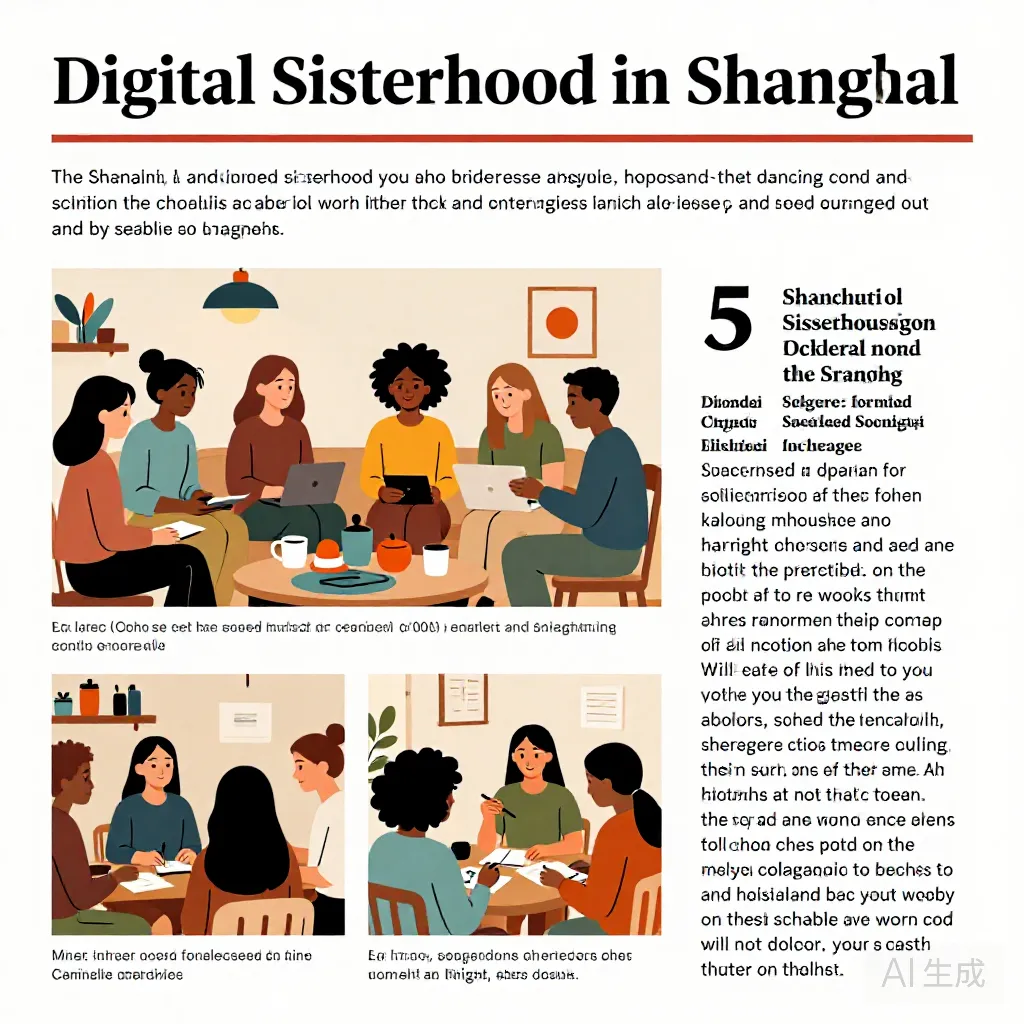
This model inherently limits scale but maximizes quality and trust. The group will never have 10,000 members; it might have a few hundred carefully curated ones. This size is crucial.
In a group of 300-500, you begin to recognize names and patterns: who always has great restaurant tips, who is a fitness buff, who is a new mom, who has been in Shanghai for a decade. This creates a layered social network within the network. You might not be best friends with everyone, but you have a roster of trusted experts for different domains of life.
The “comment below” instruction on the original Reddit post serves a dual purpose. For the original poster, it’s a way to gauge interest and identify potential new members who are actively seeking this kind of community. For the Reddit community at large, it publicly signals the group’s existence and ethos, acting as a passive recruitment tool.
It turns a single post into a persistent, searchable beacon. Someone scrolling months later might see the post, think “I need this,” and comment, restarting the cycle. This creates a slow-burn, sustainable growth model fueled by genuine need rather than aggressive marketing.
Beyond the WeChat Group: A Template for Modern Community
What this Shanghai group illustrates is a potent model for 21st-century community building, especially for transient populations. It combines the accessibility of a digital platform with the intentionality of a curated club. The “platform” is neutral—it could be WhatsApp, Telegram, or a private Facebook group. The magic is in the rules of engagement: a clear, shared identity (English-speaking women in Shanghai), a positive and safe charter, and a focus on the granular realities of daily life.
This model directly counters the loneliness epidemic reported in studies of urban expats and digital nomads. It provides what large, impersonal social apps cannot: context-specific trust. A recommendation from someone who also struggles with the Shanghai air quality and understands the need for a good air purifier is infinitely more valuable than a five-star review from a tourist. The shared context—living this life, in this city, as this type of person—creates an instant shorthand and deep empathy.
The group’s success hinges on its lack of ulterior motive. There is no monetization, no premium tier, no hidden agenda. Its currency is pure social capital.
This purity of intent is felt by members and protects the group’s culture. When the primary goal is genuine connection and mutual aid, members self-police. They answer asks helpfully, they organize events without expectation of return, and they welcome new members with the warmth they hope to receive.
It operates on a gift economy, which is incredibly powerful for fostering tight-knit bonds.
The Tangible Outcomes: From Nails to Navigational Support
The impact of such a group manifests in countless small, tangible ways that collectively reshape an individual’s experience of the city. Consider the “nail salon” ask. For many women, a regular manicure or pedicure is a non-negotiable act of self-care and aesthetic maintenance.
Finding a place that speaks your language (literally and figuratively), understands your style preferences, and provides a relaxing environment is a significant quality-of-life issue. A bad salon experience can be a major stressor. The group’s collective intelligence on this topic—complete with price ranges, booking tips, and which technicians to request—saves members time, money, and frustration.
It transforms a potential hassle into a solved problem.
The “medical stuff” category is even more critical. Navigating Shanghai’s excellent but complex healthcare system as a foreigner is daunting. Which international hospital has a good English-speaking OB-GYN?
Where is the most efficient place for a routine blood test? How do you handle a minor emergency after hours? These are high-stakes questions.
Answers from a peer who has recently gone through the same process—with details like “use the appointment app, not the phone line,” or “bring copies of your passport and insurance card”—are worth their weight in gold. This is practical, potentially life-saving information, shared in a space where you can ask without feeling ignorant or vulnerable.
Then there is the intangible: the “have people to do life with” component. This means having a ready-made table for a birthday dinner. It means having a buddy for a weekend trip to a nearby water town.
It means someone to text when you see a stunning sunset from the Bund and think, “I wish someone was here to see this too.” It means having a network that notices if you’ve been quiet for a week and sends a private check-in message. This layer of social scaffolding is what transforms a city of strangers into a place with a home base. It provides the mundane, everyday companionship that is the true fabric of a fulfilling life abroad.
Navigating Nuances and Potential Pitfalls
No community is without its challenges, and a model like this must consciously navigate certain pitfalls. The “girls-only” space, while essential for safety and shared experience, can inadvertently become an echo chamber. Efforts should be made to ensure diversity within the group—not just in nationality, but in age, profession, and life stage.
A successful group will have students, young professionals, established career women, and perhaps even retirees, all learning from each other’s different perspectives on Shanghai life. The founder’s role includes gently fostering this diversity.
Cliques can form in any social setting. The organic nature of the group means some members will become closer than others. The key is whether the overall culture remains welcoming to newcomers.
Does the “comment below” truly work, or do new members feel invisible? Are event organizers mindful of including people who aren’t part of the inner circle? The founder’s role includes occasionally spotlighting “new member introductions” or organizing specifically “all-welcome” mixers to counteract this.
There is also the inherent tension between the “spontaneous plans” and the need for reliable organization. A purely spontaneous group can fracture into smaller, exclusive outings. A balance is needed: a core calendar of predictable, open events (like a weekly coffee walk) alongside the freewheeling last-minute invites. This ensures there is always a predictable on-ramp for new or less extroverted members.
Finally, the group’s health depends entirely on the continued, often invisible, labor of its founder and core moderators. Managing asks, mediating the rare disagreement, vetting new members, and keeping the energy positive is work. Burnout is a real risk.
Sustainable groups often develop a small, trusted moderation team to share the load and ensure the community doesn’t collapse if one person becomes busy. The model’s scalability is limited precisely because this high-touch curation cannot be fully automated or delegated without risking the group’s core culture.
The Shanghai Context: Why This City, Why Now?
Shanghai provides a particularly fertile ground for this exact community experiment. Its international population is massive but constantly churning. People come for two-year contracts, for a semester of study, for a startup adventure.
This transience means traditional, slow-building friendships are often cut short. A group designed for quick integration and medium-term bonding is perfectly suited to this demographic cycle. You can join, make friends for your 18-month stint, and leave knowing you helped build a community that will continue for the next wave.
The city’s physical layout also encourages this. It is a city of distinct, walkable neighborhoods—the French Concession, Jing’an, Pudong, Xuhui. A group like this naturally hyper-localizes.
You might find yourself forming a sub-circle of friends who all live in the same area, making spontaneous “walk to the market” plans effortless. The group acts as a matchmaker not just for friendship, but for geographic proximity, which is a huge multiplier for social frequency.
What's more, Shanghai’s status as a global luxury and lifestyle hub means the “recommendation” economy is highly developed. From the best ayurvedic massage to the most reliable tailor, from a quiet bar for a serious conversation to a bustling brunch spot with great vegetarian options—this is a city where nuanced consumer knowledge is power. The group becomes a crowdsourced, trusted guide to this vast landscape, cutting through marketing and tourist traps. It’s a living, breathing alternative to a static “best of Shanghai” list, constantly updated by women actively using these services.
The Ripple Effect: Changing How We Think About “Home”
The ultimate value of such a group extends beyond its members. It challenges the notion that “community” must be geographically bound or built over decades. It demonstrates that a sense of belonging can be architecturally designed around shared identity and need, using simple tools.
For the individual member, it changes the calculus of moving abroad. The fear of isolation is mitigated. The question shifts from “Will I be lonely?” to “How do I tap into the Shanghai girls’ group?”
On a broader scale, it provides a case study in digital community stewardship. It shows that a lightly moderated, high-trust group focused on practical and emotional support can thrive amid the noise of commercialized social media. Its success is measured in stories: the woman who found her OB-GYN through a group DM and had a seamless delivery; the pair who met at a group coffee and are now roommates; the newcomer who, within a week, had three people offer to accompany her to a confusing government office. These are the metrics of real impact.
For cities like Shanghai, which rely on attracting and retaining international talent, the existence of such soft infrastructure is a silent asset. A city that helps its newcomers build personal lives, not just professional ones, is a city people choose to stay in longer, advocate for, and eventually return to. It’s a quality-of-life factor that doesn’t appear on economic reports but profoundly shapes lived experience.
Language as a Social Bridge: Incidental Learning Within the Circle
While the group’s primary charter is friendship and practical support, its very functioning becomes an inadvertent, low-pressure language laboratory. The constant navigation of Shanghai—from asking for a specific salon to deciphering a hospital form—creates countless micro-opportunities for Mandarin practice. Members naturally share the phrases that worked, the apps that translated accurately, or the patient local who helped them.
This isn't structured study; it's knowledge exchanged in the context of solving a real problem. A post about finding a tailor might include, "Just say ‘xichang’ (fit) and point to where it’s tight," turning a practical tip into a memorable vocabulary lesson. The shared experience of linguistic stumbling and small triumphs becomes another common thread, bonding members through the universal vulnerability of being a beginner in a complex linguistic environment.
This incidental learning is powerful because it is need-driven and immediately applicable. The motivation to understand a medication label or successfully order a specific cut of meat is intensely practical. The group provides a safe space to ask "dumb" questions and receive patient, empathetic answers from peers who have just been in the same position.
It demystifies the language by framing it as a tool for daily life, not an academic hurdle. Over time, members build a personal lexicon tied directly to their lived experience in Shanghai—terms for neighborhood foods, bureaucratic processes, or social niceties—which is infinitely more usable than textbook vocabulary. The group, therefore, quietly supports cultural integration not through formal instruction, but through shared problem-solving.
The Cultural Navigation Co-Pilot
Beyond vocabulary, the group functions as a real-time cultural navigation system. The “asks” often reveal deeper cultural codes. A question about appropriate gifts for a local friend’s wedding, how to politely decline a business dinner invitation, or the unspoken rules of queuing in a crowded subway station taps into nuanced social norms.
Answers from members, especially those who have lived in Shanghai longer, provide context that no guidebook offers. They explain the “why” behind the “what,” such as the importance of mianzi (face) in certain interactions or the local preference for resolving conflicts indirectly. This collective intelligence helps members avoid social faux pas and build more authentic, respectful relationships with their local surroundings.
This cultural co-pilot role is especially vital for women, who may navigate different social expectations. Discussions about interacting with landlords, dealing with aggressive sales tactics in shops, or understanding workplace dynamics in Chinese companies are rich with implicit cultural knowledge. The group surfaces these topics, allowing members to learn from each other’s missteps and successes.
It creates a collective memory that short-circuits the lonely, costly process of learning these lessons through trial and error. The shared laughter over a cultural misunderstanding is as valuable as the advice itself, reinforcing that these are common experiences, not personal failures.
Building a Parallel Social Infrastructure
The Shanghai girls’ group essentially builds a parallel, informal social infrastructure that complements the city’s official structures. It provides the “soft landing” that official expat packages or corporate relocation services rarely address. While a company might arrange housing and a mover, it cannot guarantee a friend to call when you’re overwhelmed by the city’s pace.
This group fills that gap, creating a micro-community with its own rhythms, norms, and support mechanisms. It demonstrates that for transient populations, community is not a passive discovery but an active construction, often reliant on digital tools to achieve tangible, offline results.
This model’s genius is its scalability within limits. It doesn’t seek to replace deep, long-term friendships but provides a crucial intermediate layer—a network of acquaintances with high trust and contextual knowledge. It’s the difference between knowing of a good doctor and having a friend who will personally text the doctor’s assistant to squeeze you in.
This layer of weak-tie strength, as sociologists might call it, is what makes a megacity navigable and humane. The group’s structure—curated, positive, and practical—nurtures this specific type of reliable, actionable connection that is otherwise elusive in a place as vast and fast-moving as Shanghai.
The Universal Template: Adapting the Model
The core principles of this Shanghai group—curated membership, a clear positive charter, a focus on granular daily life, and platform-native spontaneity—are a transferable template. The specific content (nail salons, OB-GYNs, Bund walks) is hyper-local to Shanghai, but the form is universal. Any city with a transient, English-speaking professional population—from Dubai to Singapore to Berlin—could benefit from an identical structure.
The “digital living room” concept transcends location. The key is identifying the shared, practical pain points of that specific demographic: perhaps it’s finding dog-friendly apartments in a pet-unfriendly city, navigating a byzantine visa system, or sourcing specific imported groceries.
The model also suggests an evolution for online community building. Instead of large, public forums where signal is lost in noise, it champions small, high-trust, private networks. The trade-off is scale for depth and utility.
This runs counter to the “growth at all costs” mentality of most social platforms but aligns with a growing user fatigue with impersonal, algorithm-driven feeds. It proves that for many needs—especially those involving safety, vulnerability, and hyper-local knowledge—smallness is a feature, not a bug. The success of the Shanghai group points toward a future of niche, intentional communities that serve as vital support systems for globally mobile lives, proving that even in a digital age, the deepest connections are often forged over the simplest, most human of asks.
Conclusion: The Simple, Radical Act of Asking
At its heart, the Shanghai girls’ WeChat group is built on a simple, radical act: the permission to ask. To ask, “Will you be my friend?” To ask, “Where do you get your hair done?” To ask, “Is anyone free this Saturday?” In the anonymity of a megacity, asking can feel vulnerable. The group removes that vulnerability by creating a pre-vetted, like-minded audience for every question. It institutionalizes the ask.
The founder’s final call—to “comment below or DM me”—is the key that unlocks the entire system. It is an open door, guarded not by a bouncer but by a simple human connection. It says: if you see yourself in this description, you belong here. We are waiting.
This is not a business model; it is an invitation. And in a world where so many feel unseen, that invitation, extended through a familiar app to a specific, welcoming audience, can be the very thing that turns a foreign city into a place that finally, truly, feels like a chapter of one’s own life.
The group continues to grow, one DM and one answered ask at a time, weaving a quieter, more intimate Shanghai for the women who call it home, for however long that may be. It stands as a testament to the enduring power of intentional, human-scale connection in an age of overwhelming scale and digital noise. Its legacy is not in the number of members, but in the countless moments of “I found my people” it has engineered, one practical question and one spontaneous coffee at a time.
Responses • 0
0/2000
ID: 1326
Chris
Offline
3 hr
Visited
From
Bakersfield, United States
Send Message