Cultural Clash and the Fall of StarsWar
AI Learn Chinese
7 hr • 1 read
The troubled story of China's StarsWar esports tournament, IGE's involvement, and the clash of cultures that undermined early competitive gaming.
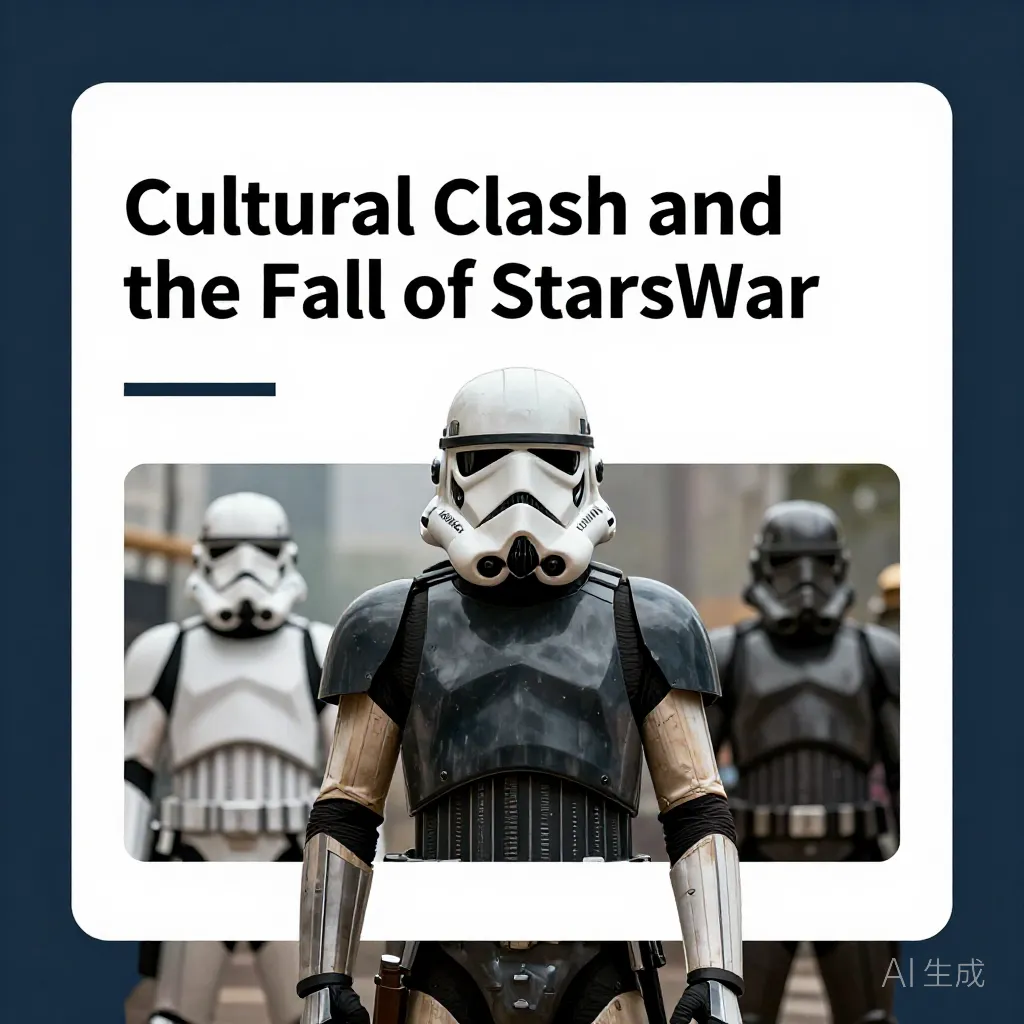
The Birth of a Digital Arena
The early 2000s witnessed a peculiar convergence. In basements and internet cafes across China, a new form of competition was taking root. It was not fought with physical prowess but with rapid clicks and strategic minds.
The battlefield was Warcraft III, Blizzard’s fantasy real-time strategy game. The spectators were a generation coming online for the first time, their passion channeled through forums and nascent websites. This was the raw, unrefined soil from which organized esports would eventually grow, and one man saw a chance to build a monument.
That man was Zax. Operating in the shadows of a rapidly changing digital landscape, he was not a stereotypical entrepreneur. He was a pragmatist navigating a space where formal business structures were rare and passion often outpaced profit.
His platform was Replays.net, a website that began as a humble repository for game replays but evolved into something far more significant. It became the central nervous system for the Chinese Warcraft III community, a place to analyze pro-level plays and discuss meta-strategies. For a time, it was the undisputed hub.
The leap from archive to event organizer was bold. Zax envisioned more than just a website; he wanted a stage. He wanted to crown champions in front of a live audience, to create the spectacle that the game's intensity deserved.
This vision crystallized into the StarsWar tournament. The name itself carried weight, implying a clash of titans. The first iteration was a modest, almost experimental affair.
Yet, it tapped into a deep, unserved demand. The idea of an international invitational, held in China, was revolutionary. It signaled that this digital pastime was maturing into something that could command global attention and local pride.
The inaugural success created a dangerous momentum. StarsWar was no longer just a tournament; it was a brand, an assertion of China's place in the emerging global esports order. This new status demanded greater resources, larger venues, and bigger prize pools.
It also demanded a partner with deeper pockets. That partner arrived from an unexpected quarter: the world of virtual currency and gold farming. The alliance between Replays.net's grassroots credibility and IGE's financial muscle would define the tournament's next chapter and, ultimately, seal its fate.
Replays.net: From Archive to Authority
Replays.net (often abbreviated as RN) was more than a website; it was a cultural institution for Chinese Warcraft III players. Its value lay in its utility and its community. Before streaming was viable, a replay file was the only way to study a top player’s build order or micro-management.
RN curated these files, added commentary, and fostered discussion. This gave Zax and his small team an unparalleled understanding of the domestic scene—who the rising stars were, which strategies were dominant, and what the audience craved.
This intimate knowledge was the foundation of StarsWar. Zax knew which Chinese players had the charisma and skill to draw a crowd. He understood the logistical nightmares of getting foreign teams to Shanghai.
The website’s forums served as a de facto scouting network and hype machine. When StarsWar announced an international field, the Chinese community rallied behind their own, turning the tournament into a nationalist endeavor. The team WE (World Elite), composed entirely of Chinese players, became the de facto home squad.
Their participation wasn't just sporting; it was symbolic.
July 22, 2003: A Pivotal Date
The site's influence was cemented on a specific day: July 22, 2003. On this date, Replays.net underwent a significant redesign or a major content push (historical records vary in precise detail, but the date is mythologized). It marked a transition from a simple repository to a polished media portal.
This professionalization coincided with Warcraft III's peak popularity and China's explosive growth in internet cafes. The timing was perfect, locking RN into its position as the default destination for serious players. This authority directly translated into the perceived legitimacy of StarsWar.
The Warcraft III Phenomenon
To understand the stakes, one must understand Warcraft III. It was not merely a game; it was a cultural touchstone. Its balance of economy management, unit production, and hero control created a skill ceiling that was fascinating to both play and watch.
The "metagame" evolved constantly. Leagues like Korea's WCG qualifiers and Europe's various ladders were the standard-bearers. China’s scene was hungry for its own marquee event.
StarsWar aimed to fill that void, but its identity was inextricably linked to Warcraft III. When the game's popularity waned in the West, the tournament’s lifeblood began to thin, a problem its organizers could not solve.
Enter the Players: Zax and Xu Yunbo
The human drama of StarsWar is best understood through its two central, yet contrasting, figures: Zax and Xu Yunbo. They represent two different Chinas and two different approaches to the nascent esports industry. Zax was the本土 (local) visionary, building from the ground up with an innate feel for the community. Xu Yunbo was the cosmopolitan operator, fluent in the language of Western venture capital and global expansion, but perhaps disconnected from the very soul of the Chinese scene he sought to monetize.
Zax embodied the "one-man band" ethos common in China's early internet. He was likely the founder, primary organizer, and de facto leader of the StarsWar project through Replays.net. His motivation seemed less about pure profit and more about legacy and proving a point.
He knew his audience intimately. His confidence in the 2005 StarsWar—stating his all-Chinese team had an advantage and that he could buy in-game gold more cheaply than IGE—reveals a pragmatic, almost cheeky, understanding of the ecosystem. He was playing a different game, one with local knowledge as his ultimate cheat code.
Xu Yunbo’s story is one of global ambition. He was part of the leadership at IGE, the American company dominating the virtual currency market. IGE's business model was predicated on the massive, time-intensive labor of Chinese gold farmers.
Xu served as a bridge, a Chinese national working for an American firm, tasked with managing operations in Shanghai. His perspective was shaped by IGE's need for marketing and brand legitimacy. Esports sponsorship was a tool for that.
His approach was corporate, focused on ROI, brand exposure, and high-level partnerships. This created an immediate friction with Zax's community-first, tournament-first mentality.
Their relationship was symbiotic yet strained. IGE provided the capital Zax needed to scale. Zax provided the tournament, audience, and credibility IGE needed.
But their core objectives diverged. Zax wanted to build a lasting Chinese esports institution. IGE, through Xu Yunbo, wanted a cost-effective marketing vehicle.
When the financial returns from StarsWar were questioned internally at IGE, the partnership’s fragility was exposed. Xu was caught between his employer’s demands and the operational realities Zax faced.
Zax: The Reluctant Pioneer
Zax was not a natural businessman in the Silicon Valley mold. He was a gamer who stumbled into organization. His famous quote about buying gold cheaply highlights his mindset: he understood the underlying economics of the Warcraft III world better than most.
He saw the tournament not as a standalone venture but as part of a larger ecosystem. His team being "all Chinese" was both a patriotic selling point and a logistical advantage—no visa hurdles, shared language, and aligned training schedules. This practical genius was his greatest strength but also his weakness; he may have lacked the aggressive financial acumen and global networking skills to secure stable, long-term funding beyond a single, complicated sponsor.
Xu Yunbo: The American-Chinese Bridge
Xu Yunbo represents the complex identity of China's tech diaspora in the mid-2000s. Educated or working in the US, he returned to Shanghai with IGE. He operated in a liminal space, never fully American in the eyes of his Shanghai colleagues, and never fully Chinese in the eyes of his Hollywood-based bosses like Brock Pierce.
His challenge was immense: to translate the chaotic, passionate world of Chinese esports into metrics that satisfied American investors. The StarsWar tournament was his project, a tangible output to show for IGE's China investment. When it underperformed relative to expectations, his position, and the project's funding, became precarious.
StarsWar 2005: Ambition Meets Reality
The second StarsWar, held in 2005, was the moment ambition crashed into reality. It was the tournament that had everything: a prime venue in Shanghai, international star power, and the backing of a flush IGE. Yet, it also had everything against it: immense pressure, cultural misalignment, and a business model that was fundamentally misunderstood by its primary benefactor. The event was a spectacular production that exposed the deep cracks in the foundation of early Chinese esports.
The scale was undeniable. Moving from a smaller venue to the Luwan Stadium in Shanghai was a statement. It signaled that StarsWar was no longer a niche gathering.
For the first time, the tournament occupied a massive, multi-day space, featuring multiple games like Warcraft III and King of Fighters. The organizers aimed for a festival atmosphere, from afternoon sessions stretching into midnight. This created a grueling schedule for players, staff, and the small Replays.net team.
The sheer logistics—managing foreign teams, broadcasting, live production, and audience flow—were monumental for a group that had never operated at this scale.
The financial model was opaque. IGE's sponsorship was likely a lump sum, but the costs of a stadium, prize money, travel, and production quickly ballooned. Xu Yunbo had likely promised a certain brand impact to his bosses.
The "more than 300" attendees mentioned might refer to press, VIPs, or dedicated fans, but in a stadium holding thousands, it would have been a sea of empty seats, a visible and demoralizing sign of overreach. The disconnect between the hype generated online and the actual turnstile count was a critical failure. For a business like IGE, which measured success in direct customer acquisition, empty seats were a catastrophic ROI.
June 19, 2005: A Day of Contrasts
June 19, 2005, was the flagship day. The Luwan Stadium pulsed with energy from the die-hard fans who came. They witnessed high-level play, the roar of the crowd for Chinese favorites.
For them, it was a triumph. But for the organizers and sponsors, the surrounding context told a different story. The venue's vastness emphasized the lack of mainstream penetration.
The financial burn rate was steep. The pressure from IGE management, watching from the United States, was likely palpable. This day was the peak of the dream, but the shadows of financial and strategic failure were already lengthening across the field.
Financial Frictions and Cultural Clashes
The core issue was a fundamental mismatch. Zax and his team at Replays.net thought in terms of tournament integrity, community growth, and long-term brand building. IGE thought in terms of immediate customer leads and brand safety.
Every decision was filtered through this dichotomy. Should the stage design prioritize player visibility or IGE's logo placement? Should prize money be increased to attract top-tier Korean stars (a major expense) or kept lower to protect margins?
These tensions simmered below the surface.
The "easy to say, hard to do" sentiment in the summary captures this perfectly. Building a sustainable esports ecosystem requires capital, patience, and a unified vision. IGE provided capital but lacked patience and a unified vision with its local operator.
Zax had the vision and patience but was starved of stable, unconditional capital. The result was a tournament that was too big for its operational budget and too niche for its commercial ambitions. It was a spectacular showcase that failed to convert its spectacle into a viable business model, leaving all parties frustrated.
IGE's Shadow: Investment and Interference
IGE was not a benevolent patron. It was a venture-backed company in the highly controversial business of selling virtual currency for games like World of Warcraft and Lineage II. Its involvement in StarsWar was a calculated PR move to soften its image and directly access the young, male demographic that populated online games.
This context is crucial. IGE's money came with strings attached—strings that were often at odds with the organic growth of a competitive scene.
The leadership, notably Brock Pierce (a former child actor turned crypto/tech entrepreneur), represented a certain Hollywood-inflected, hype-driven American tech culture. They likely viewed StarsWar as a marketing campaign, not an investment in a sport. Their expectations for immediate, measurable returns were unrealistic for an event in a market they barely understood.
When those returns didn't materialize, the purse strings tightened. The boss who "had never said he would cover all of it" embodied this conditional support. The funding was a tap that could be turned off at any moment, creating perpetual instability for Zax.
Brock Pierce's Hollywood Vision
Brock Pierce's involvement brought a layer of glamour and speculation. His background in entertainment meant he likely envisioned StarsWar as a media property, something that could be packaged and sold. This clashed with the gritty, community-driven reality of Chinese esports.
The Hollywood vision demanded polish, star narratives, and broad appeal. The StarsWar reality was a passionate but niche event, deeply embedded in the specific culture of Warcraft III fans. This cultural chasm meant IGE's leadership often saw a flawed product, while Zax saw a labor of love being undermined by outsiders who didn't get it.
The Steep Decline of Sponsorship
The financial data tells a brutal story. By the autumn of 2004, just months after the first StarsWar, IGE's own business was reportedly in flux. The summary notes that IGE's revenue from China was "more than half" of its total, but this dependency made it vulnerable.
The "steeply day after day" decline suggests a rapid collapse in the virtual currency market or a severe tightening of credit. For IGE, StarsWar became a luxury it could no longer afford. The sponsorship, once a tool for growth, became a cost to be cut.
This external business crisis directly strangled the tournament's lifeline, proving how precarious the entire edifice was.
The Aftermath: Lessons from a Faltering Tournament
StarsWar did not end with a single catastrophic failure. It bled out over "about these eight years" of operation, a testament to Zax's stubborn commitment. The 2005 event was the high-water mark of IGE's involvement and also the beginning of its end.
The following years saw attempts to continue with reduced scale, different partners, or a shift in focus. The tournament became a recurring, but increasingly beleaguered, event on the Chinese esports calendar, a ghost of its former ambition.
The partnership with IGE formally soured. Xu Yunbo, the bridge, was likely recalled to the US or sidelined as IGE's China strategy changed. Zax was left to salvage what he could with Replays.net and the StarsWar brand, now tarnished by association with a failing sponsor.
The team WE, the pride of the first tournament, continued as a top Chinese Warcraft III squad, but the tournament that was meant to showcase them had become a cautionary tale. The "one" great Chinese-run international event had shown the world what was possible, but also revealed the commercial and operational chasm that stood in the way of sustainability.
From Shanghai to Obscurity
The later StarsWar events (like StarsWar 7) likely struggled with diminished prestige, smaller venues, and a Warcraft III scene in global decline. The game itself was being eclipsed by StarCraft in Korea and the rising tide of League of Legends and Dota 2. The original magic—the feeling of China hosting the world in its favorite game—had dissipated.
The tournament became a nostalgia act, a relic. The final iterations probably relied on the loyalty of a core fanbase and the perseverance of Zax, but without the deep pockets and global marketing push of a partner like IGE, it could never recapture the 2005 zenith. The dream of a perennial Chinese esports festival faded.
The Legacy of StarsWar
The legacy of StarsWar is bittersweet and deeply instructive. It proved that a Chinese audience would flock to a high-quality, locally-produced esports event. It created stars and memorable moments.
But, it also served as a brutal case study in the perils of misaligned sponsorship. The tournament’s story is a microcosm of the early 2010s Chinese esports struggle: immense passion and talent, but a lack of sophisticated, patient capital and business infrastructure. The failure was not in the concept, but in its execution under the shadow of a sponsor whose core business and strategic goals were fundamentally at odds with the long-term health of the sport it was trying to promote.
The "negative" sentiment pervades this history not as a simple complaint, but as a recognition of a profound mismatch. Zax’s local, community-based model was correct for building a scene but insufficient for scaling. IGE’s capital was necessary for scaling but was applied with a short-term, extractive mindset that poisoned the well.
The players, like the members of WE, were caught in the middle, their careers advanced by the exposure but their tournament destabilized by the corporate turmoil.
The Structural Flaws Exposed
The fundamental issue was a mismatch of time horizons. Zax and the Replays.net community operated on the generational timeline of a sport’s growth—building a loyal audience, refining production, and cultivating domestic talent over years. IGE, as a venture-backed company in the volatile gold-farming business, operated on the quarterly timeline of investor returns.
StarsWar was expected to generate marketing leads and brand goodwill immediately, not nurture a scene for a decade. This temporal misalignment meant that when the 2005 event failed to produce a flood of new IGE customers, the rationale for sponsorship evaporated overnight. The tournament was never given the runway to mature into a sustainable property.
The Ripple Effect on Chinese Esports Infrastructure
The fallout from the IGE withdrawal created a cautionary tale that reverberated through the nascent Chinese esports investment community. For a period, it made external corporate sponsors deeply wary of esports events. Why pour money into a spectacle with unclear ROI, fraught with operational headaches, and tied to a single game’s lifecycle?
This skepticism slowed the influx of serious, long-term capital that Zax’s vision required. Instead, the ecosystem relied for years on a patchwork of hardware manufacturers, energy drink brands with limited budgets, and the continued, strained efforts of organizers like Zax who wore too many hats. The professionalization of team management, league operations, and broadcast standards was delayed, leaving a vacuum that would only be filled later by the monumental success of games like League of Legends and the rise of platform-backed leagues like the LPL.
WE: The Team That Outlived Its Tournament
While the StarsWar tournament faltered, the WE (World Elite) team it championed endured. Composed entirely of Chinese Warcraft III players, WE became the standard-bearer for Chinese hope in a game dominated by Korean supremacy. Their success in international competition, often against overwhelming odds, provided a vital narrative of national capability that the tournament itself struggled to monetize.
WE’s longevity—transitioning successfully into StarCraft II and later League of Legends—showcased the resilience of the player-centric model. They were the tangible product of the community Replays.net served, a legacy that outlasted the commercial ambitions of IGE. The team’s journey underscores a key lesson: in esports, the athletes and their competitive narratives often have more staying power than the tournaments that first showcase them.
The Ghost in the Machine: A Template for Future Success and Failure
Paradoxically, StarsWar’s blueprint became the template for everything that followed in Chinese esports, both its triumphs and its recurring pitfalls. The formula of a major international invitational in a premier Chinese city, leveraging national pride and local star power, was later perfected by the LPL and events like The International (when hosted in China). The desire to create a "home soil" spectacle to inspire a generation remains a powerful motivator.
But, the StarsWar fiasco also codified the danger of the "sponsor from the wrong industry." Future eras would see similar cultural and strategic clashes with sponsors from gambling, real estate, or other sectors whose core business models and public images were at odds with the values and long-term needs of the gaming community. The story became a benchmark for evaluating sponsor compatibility, a lesson learned through bitter experience.
The Unseen Catalyst: The Decline of Warcraft III Itself
No post-mortem on StarsWar is complete without acknowledging the external, uncontrollable force that sealed its fate: the decline of Warcraft III as a global esports title. While the game maintained a fiercely dedicated core audience in China, its peak had passed in the West by 2006. The great Korean Warcraft III scene, a primary draw for international legitimacy, began to wane as StarCraft: Brood War and later StarCraft II consumed the professional ecosystem.
StarsWar was intrinsically linked to a specific game’s lifecycle. When that lifecycle entered its autumn, the tournament’s core product lost its universal relevance. Zax was trying to build a cathedral in a town whose population was gradually moving to a new city.
This technological obsolescence was an existential threat no amount of local passion or corporate funding could permanently overcome. It highlighted a brutal truth of esports: organizers are often tenants in a landlord’s (the game developer’s) world, subject to the developer’s updates, sequels, and shifting support.
Conclusion: The Bitter Seed of a Future Harvest
The story of StarsWar is not one of simple failure, but of a painful, necessary germination. It proved that China could host a world-class, culturally resonant esports event. It identified the fatal incompatibility between short-term, extractive venture capital and the long-term cultivation of a sport.
It exposed the vulnerabilities of an ecosystem dependent on a single game’s popularity and the perils of sponsor misalignment. Zax’s stubborn vision, though commercially compromised, kept the flame alive long enough for a more mature, infrastructure-rich era to eventually dawn. The ghosts of StarsWar—its ambitions, its clashes, its empty seats at Luwan Stadium—haunted the strategic decisions of the next generation of Chinese esports leaders.
They learned to demand patience from partners, to diversify beyond a single title, and to build business models that valued community health as much as immediate activation. The tournament’s legacy is a complex inheritance: a cautionary tale wrapped in a pioneering spirit, a bitter seed that would, in time, help grow a much hardier tree. The clash of cultures at StarsWar was the painful birth pang of a Chinese esports industry that would eventually learn to reconcile its local soul with global capital on its own terms.
Responses • 0
0/2000
ID: 1326
Chris
Offline
35 min
Visited
From
Bakersfield, United States
Send Message