Choosing a Chinese Program in China
AI Learn Chinese
4 hr • 0 read
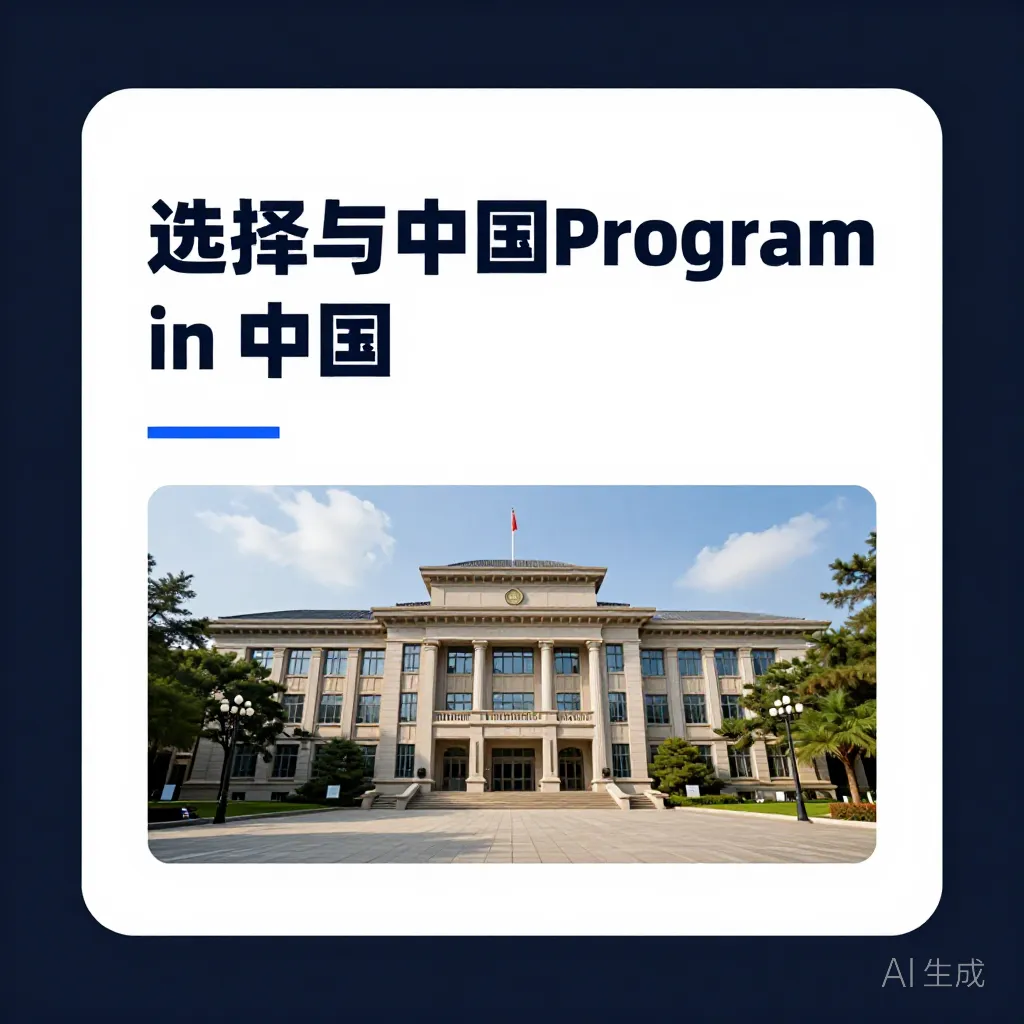
An Indonesian student on a gap year seeks an affordable, onesemester Chinese program in China near HSK 45 level. Explore options beyond C9 universities.
Introduction: A Gap Year for Language Immersion
You are an Indonesian student currently on a gap year, planning to begin university studies in autumn 2026. Your goal is clear and commendable: to spend one semester in China before starting your degree, with the primary objective of significantly enriching your Chinese language fluency. You assess your current level as likely close to HSK 5, if not HSK 4.
This places you in a strong intermediate to upper-intermediate position, ready for intensive immersion but still with considerable room for growth in authentic, spontaneous communication. The central question is where to enroll for this pivotal semester.
Your initial thought was to target the prestigious C9 universities like Tsinghua and Peking University. But, you quickly learned these elite institutions typically do not accept students without an existing undergraduate background and often have minimum age requirements, such as being 20 years old. This common barrier redirects the search toward other excellent, accessible options.
A frequent recommendation you've encountered is the Beijing Language and Culture University (BLCU), though you've also heard dissenting opinions. A critical factor for you is affordability, as you have heard Shanghai can be quite pricey. This article will systematically navigate these considerations to help you identify the optimal program for your specific gap-year goals.
We will structure this exploration logically. First, we must precisely understand your starting point: what HSK 4 and 5 truly mean in practical terms. Second, we will clarify the landscape of available program types in China, distinguishing between university-affiliated programs and standalone language institutions.
Third, we will evaluate the key selection criteria—cost, location, facilities, and academic rigor—against your personal priorities. Fourth, we will analyze major cities for language study, weighing their unique pros and cons. Finally, we will synthesize this information into concrete program recommendations and a practical action plan for enrollment in the 2026 academic cycle.
Assessing Your Starting Point: The HSK Framework
The Hanyu Shuiping Kaoshi (HSK) is the official standardized test of Chinese proficiency. Understanding its levels is crucial for placing yourself correctly. HSK 4 signifies a solid intermediate level.
A test-taker can discuss a wide range of topics with native speakers, read Chinese newspapers and magazines, and write essays on general subjects. The vocabulary requirement is 1200 words. HSK 5 represents a solid upper-intermediate level.
At this stage, you can read Chinese literature, watch Chinese films and television, and give lengthy, coherent speeches. The vocabulary requirement jumps to 2500 words. The gap between HSK 4 and 5 is substantial; it is not merely a matter of vocabulary size but of fluency, speed, and cultural nuance.
Your self-assessment as "close to HSK 5 if not HSK 4" suggests you are likely at the higher end of HSK 4 or just breaking into HSK 5. This is an excellent position for a one-semester intensive program. A good program will not simply review HSK 4 material but will use your existing foundation to propel you toward genuine HSK 5 competence, focusing on spoken fluency, idiomatic language, and complex grammatical structures.
You should seek a program that offers a placement test upon arrival, ensuring you are placed in a class that matches your actual ability, not just your test certificate. a number of institutions have multiple tracks within a single HSK level (e.g., "HSK 4 Advanced" or "HSK 5 Preparation").
It is also vital to remember that HSK is a written and listening test. Your spoken ability may lag behind your reading/listening score if your previous study was exam-focused. Conversely, you might have stronger conversational skills from practice but struggle with formal writing.
A one-semester immersion is the perfect remedy for this imbalance. Look for programs that emphasize all four skills (listening, speaking, reading, writing) but with a particular strength in interactive speaking. Class sizes are important; smaller classes (12-15 students) typically offer far more speaking opportunities than large lecture-style courses.
Understanding the Program Landscape in China
The ecosystem for studying Chinese in China is diverse. Generally, programs fall into two main categories: University-Affiliated Programs and Specialized Language Institutions. Each has distinct characteristics, advantages, and target audiences.
University-Affiliated Programs
These are intensive Chinese language programs operated as part of a comprehensive university. Examples include the programs at Beijing Normal University, Nankai University, or Fudan University. Students are typically "visiting students" or "non-degree students" for a semester.
The primary advantage is integration. You will have access, to varying degrees, to the university's broader campus facilities—libraries, sports centers, gyms, student clubs, and sometimes even cafeteria meals. This is a major point for you, as you mentioned wanting access to running tracks and gyms.
University campuses are vibrant microcosms of student life. The academic culture is also more traditional, with a focus on structured curriculum, homework, and tests. The student body in these programs is often a mix of international students preparing for degree studies and exchange students from partner universities.
Specialized Language Institutions
These are institutions whose sole or primary mission is teaching Chinese as a foreign language. The most famous example is BLCU in Beijing. Other notable ones include the Mandarin Training Center (MTC) at National Taiwan Normal University (in Taipei, which has different visa rules), and various private academies in cities like Shanghai and Kunming.
The advantage here is singular focus. Every resource is dedicated to language teaching. The pedagogical methods are often highly refined for foreign learners, with experienced teachers, dedicated materials, and a curriculum designed purely for language acquisition, not for integrating students into a degree program.
The environment can feel more like a dedicated "language camp," with a high concentration of international students all on the same journey. Access to large-scale university sports facilities is usually not included, though they may have partnerships with local gyms.
Key Selection Criteria: Aligning with Your Goals
With the landscape understood, we must filter options based on your stated priorities: affordability, program quality for your level, and access to recreational facilities. Let's break these down.
Cost Considerations: Beyond Tuition
Affordability is not just about tuition fees. It encompasses the total cost of attendance: tuition, accommodation, food, local transportation, and personal expenses. Tuition for a one-semester (approx. 4-5 month) intensive program at a reputable university typically ranges from $2,000 to $4,500 USD, depending on the institution's prestige and city.
BLCU is often in the mid-to-upper part of that range. Specialized private schools can be similar or slightly higher.
The biggest variable is living costs, which are dramatically different by city. * Beijing: A global megacity. Accommodation (a shared apartment room or university dorm) can cost $300-$600/month.
Food is relatively affordable if you eat local ($200-$300/month). All things considered monthly budget: $600-$1000. * Shanghai: Generally 15-30% more expensive than Beijing, especially for housing in central areas.
A tight budget might require living in suburbs. All things considered monthly budget: $700-$1200. * Secondary Cities (e.g., Xi'an, Chengdu, Kunming, Hangzhou): These offer significantly lower living costs.
Rent for a decent room can be $200-$400/month. Food and services are cheaper. All things considered monthly budget: $500-$800.
For a gap-year student conscious of budget, secondary cities present the strongest value proposition. You get a high quality of life and immersion for less money.
Academic Quality for Your Level
You need a program with a strong HSK 4/5 track. Not all universities offer separate classes for these levels; some may combine HSK 4 and 5 students. Research is key.
Look for program brochures that detail the curriculum for "Intermediate" or "Upper-Intermediate" Chinese. Do they include: News Analysis: Using current media to discuss complex topics. Academic Writing: Structuring essays, using formal vocabulary.
Debate and Presentation: Building fluency and argumentation skills. Cultural Components: Calligraphy, history, film studies integrated with language. A program that simply uses a textbook like "Integrated Chinese" Volume 3 or 4 may not be challenging enough for a strong HSK 4 student.
Seek programs that mention "authentic materials," "current events," or "thematic units."
Facilities: The Gym and Running Factor
This is a specific and important need. Access to good sports facilities is not guaranteed with all language programs. * Large Comprehensive Universities (especially C9 and other "Project 985/211" schools): These almost always have extensive sports complexes with indoor/outdoor tracks, swimming pools, weight rooms, and basketball courts.
As a visiting language student, you would typically pay a small semester fee (e.g., $50-$100) for a sports center pass, gaining full access. This is your best bet for top-tier facilities. * Universities without a strong sports tradition or smaller colleges: May have basic gyms or outdoor courts, but nothing on the scale of a Tsinghua or Peking University.
Specialized Language Schools like BLCU: BLCU has a sports center, but its scale and accessibility for short-term language students are not equivalent to a giant comprehensive university. You would need to verify current policies. Private Gyms: In any city, you can join a commercial gym (e.g., a local equivalent of Fitness First or a cheaper domestic chain).
This costs $30-$60/month. It's a reliable but separate expense.
So, if campus facilities are a high priority, your search should be weighted toward large, comprehensive universities that explicitly allow language program students to use their sports centers.
City-by-City Analysis: Finding Your Balance
The city you choose will shape your entire experience. Let's evaluate the top contenders through your lens.
Beijing: The Academic & Cultural Capital
Pros: Unmatched access to historical sites (Forbidden City, Great Wall), museums, and political/cultural institutions. Home to the highest concentration of top-tier universities (Peking, Tsinghua, Renmin, Beijing Normal, etc.), meaning more options for programs with great facilities. The "standard" Mandarin pronunciation is based on the Beijing dialect, offering a pure linguistic model. BLCU is here, a specialist giant. Cons: Highest living costs in northern China. Severe air pollution, though improved, is still a seasonal factor. Can feel overwhelming and less "human-scale" than smaller cities. * Verdict: Best if your priority is academic prestige and facility access. You can find affordable programs here, especially at universities slightly outside the city center, but overall costs are higher.
Shanghai: The Modern Metropolis
Pros: A dynamic, international, and modern city. Excellent public transportation. More "global" feel, which can be easier for initial adjustment. Home to top universities like Fudan, Shanghai Jiao Tong, and East China Normal University. These schools have excellent facilities. Cons: Significantly higher cost of living, especially housing. The local Shanghainese dialect is strong, and while Mandarin is universal, you will hear more non-Mandarin Chinese in daily life than in Beijing. Some find it less "traditionally Chinese" than Beijing or secondary cities. * Verdict: Best if you want a cosmopolitan, modern environment and can stretch your budget. Facility access at major universities is excellent.
Secondary Cities: The Value & Immersion Sweet Spot
Cities like Xi'an (ancient capital), Chengdu (Sichuan cuisine, panda bears), Kunming (eternal spring, gateway to Yunnan), Hangzhou (scenic, tech hub near Shanghai), and Nanjing (historical former capital) deserve serious consideration. * Pros: Dramatically lower cost of living. Often less internationalized, forcing you to use Chinese more in daily life—a huge advantage for immersion.
Still host excellent, large universities (e.g., Xi'an Jiaotong University, Sichuan University, Zhejiang University in Hangzhou, Nanjing University) with comprehensive facilities. Quality of life can be higher with less stress and pollution. * Cons: Fewer "big city" amenities and international expat communities.
International flight connections may be less convenient. The local dialect (Sichuanese, Shaanxi, etc.) will be prevalent and differs significantly from standard Mandarin. * Verdict: Best for maximizing immersion on a budget.
You will live more like a local, and your language will progress faster out of necessity. Facility access at the major local university will be excellent.
Program Recommendations: Matching Profile to Place
Based on your profile—Indonesian, gap year, near HSK 5, seeking affordability and good facilities—here are synthesized recommendations, moving from most to least aligned.
Tier 1: Optimal Matches
1. Large University Programs in Secondary Cities: Target the international Chinese language program at a top "Project 985" university in a secondary city. * Example: Sichuan University (Chengdu) or Xi'an Jiaotong University (Xi'an). Both are C9-adjacent in prestige (they are "Project 985" universities), have massive, beautiful campuses with Olympic-level sports complexes, and offer intensive semester programs. The cost of living in Chengdu or Xi'an is 30-40% lower than in Shanghai. You will get a world-class academic environment, superb facilities for running/gym, and deep cultural immersion. This ticks every box except "Beijing/Shanghai location." 2. Beijing Normal University (BNU) Program, Beijing: BNU is a top-tier comprehensive university (Project 985), located in Beijing's Haidian district. Its Chinese language program for international students is highly regarded and often seen as a more "balanced" alternative to the sheer size of Peking University or the specialist focus of BLCU. As a student here, you would almost certainly have access to BNU's excellent sports facilities. Tuition is competitive, and while Beijing is expensive, you can find more affordable housing options than in the city's most prime districts.
Tier 2: Strong Contenders with Caveats
3. Beijing Language and Culture University (BLCU), Beijing: The specialist powerhouse. The academic quality for language learning is arguably the best in China. You will be surrounded by thousands of international students, creating a unique multicultural bubble. The curriculum is optimized for your exact goal. But, you must independently verify current policy on sports center access for short-term program students. It may be limited or require a separate, full membership fee. The cost is on the higher end. If pure language pedagogy is your absolute top priority and you can solve the gym question, BLCU is excellent. 4. Fudan University or East China Normal University, Shanghai: Both are elite Shanghai universities with comprehensive facilities. The academic environment will be superb. The primary drawback is the high cost of living. If your budget can accommodate Shanghai, these are fantastic choices. ECNU is particularly known for its Chinese teaching program.
Tier 3: The "C9" Dream (Reality Check)
You mentioned C9 universities like Tsinghua and Peking University. For a non-degree, one-semester language student without an existing undergraduate degree, direct enrollment in their regular visiting student programs is, as you noted, typically not possible due to age and degree requirements. There is, however, a potential workaround: their summer/winter intensive language programs.
These are often open to a wider audience. You could theoretically combine a summer program at, say, Peking University's Chinese Language Summer School (which is very prestigious) with a semester at another institution. But for a full semester, you should direct your focus to the excellent "Project 985" universities listed above, which are academically their peers and are open to you.
Practical Steps for Enrollment in 2026
Now that you have a framework, here is your action plan. Timing is critical for a 2026 start.
1. Finalize Your Level (Now - Early 2025): Take a full, timed HSK 4 and HSK 5 practice test online. Be honest about your score. This will tell you if you are solidly HSK 4 or on the cusp of HSK 5. This determines which program level to target. 2. Shortlist 5-7 Programs (Mid-2025): Based on the city analysis above, select 2-3 universities in secondary cities, 1-2 in Beijing, and 1 in Shanghai. Visit their official "International Students" or "Chinese Language Program" websites. Look for: "Non-degree Study" or "Chinese Language Program" (not degree programs). Semester dates (Spring: Feb/Mar - Jun/Jul; Autumn: Sep - Jan). Tuition and fee schedules. Detailed curriculum for "Intermediate" or "Upper-Intermediate" levels. Accommodation options (on-campus dorm is usually cheapest and easiest). Explicit mention of sports facility access for language students. If unclear, find a "Contact Us" email. 3. Contact Programs Directly (Late 2025): Email the admissions office of your top 3 choices. Ask specific questions: "What is the typical class size for HSK Level 4/5 classes?" "Do students in the one-semester Chinese language program have access to the university's main sports center/gym? Is there an additional fee?" "Can you provide a breakdown of estimated living costs for a semester?" "What is the application deadline for the Spring 2026 semester?" 4. Prepare Application Materials (Early 2026): Standard requirements usually include: Completed application form (online). Copy of passport. Highest educational transcript (your high school diploma). Proof of financial capability (usually a bank statement showing sufficient funds for one semester). HSK certificate (if you have it; not always mandatory if you take their placement test). Application fee (typically $50-$100). 5. Visa Application (Upon Acceptance): Once accepted, the university will send you a "JW202" form and an admission letter. You will take these to the Chinese Visa Application Service Center in Indonesia to apply for an X1 visa (long-term study visa, for stays >180 days). You will need to do a medical check-up. Start this process as soon as you receive documents, as it can take 4-6 weeks.
Conclusion: The Path Forward
Your plan is sound. A dedicated semester in China is arguably the single most effective step you can take to bridge the gap between HSK 4 and true, functional HSK 5 fluency. The rejection from C9 universities for degree study is a common hurdle, but it opens the door to a wider, equally excellent world of "Project 985" universities that are actively seeking students like you.
Your priorities—affordability and facilities—are perfectly compatible. By looking beyond Beijing and Shanghai to major universities in thriving secondary cities, you can achieve both. You will gain access to Olympic-scale sports complexes, immerse yourself in a more authentic local environment where English is less prevalent, and significantly stretch your budget.
Begin with that practice HSK test. Let the result guide your program level. Then, research the international offices of Sichuan University, Xi'an Jiaotong University, and Beijing Normal University with the specific questions outlined.
Their websites are in English and provide clear application guides. The autumn 2026 semester enrollment will open around March-May 2026. Being organized and contacting them early will ensure you secure a spot and your preferred on-campus accommodation.
This gap year can be a transformative foundation for your university studies, not just in Chinese, but in cross-cultural understanding and personal independence. The right program is out there, waiting for you to find it.
Responses • 0
0/2000
ID: 1326
Chris
Offline
4 hr
Visited
From
Bakersfield, United States
Send Message