Chinese Music: Your Gateway to Language and Culture
AI Learn Chinese
4 hr • 0 read
Unlock Chinese language and culture through music. Overcome access barriers with 2026's top artist recommendations and learning strategies.
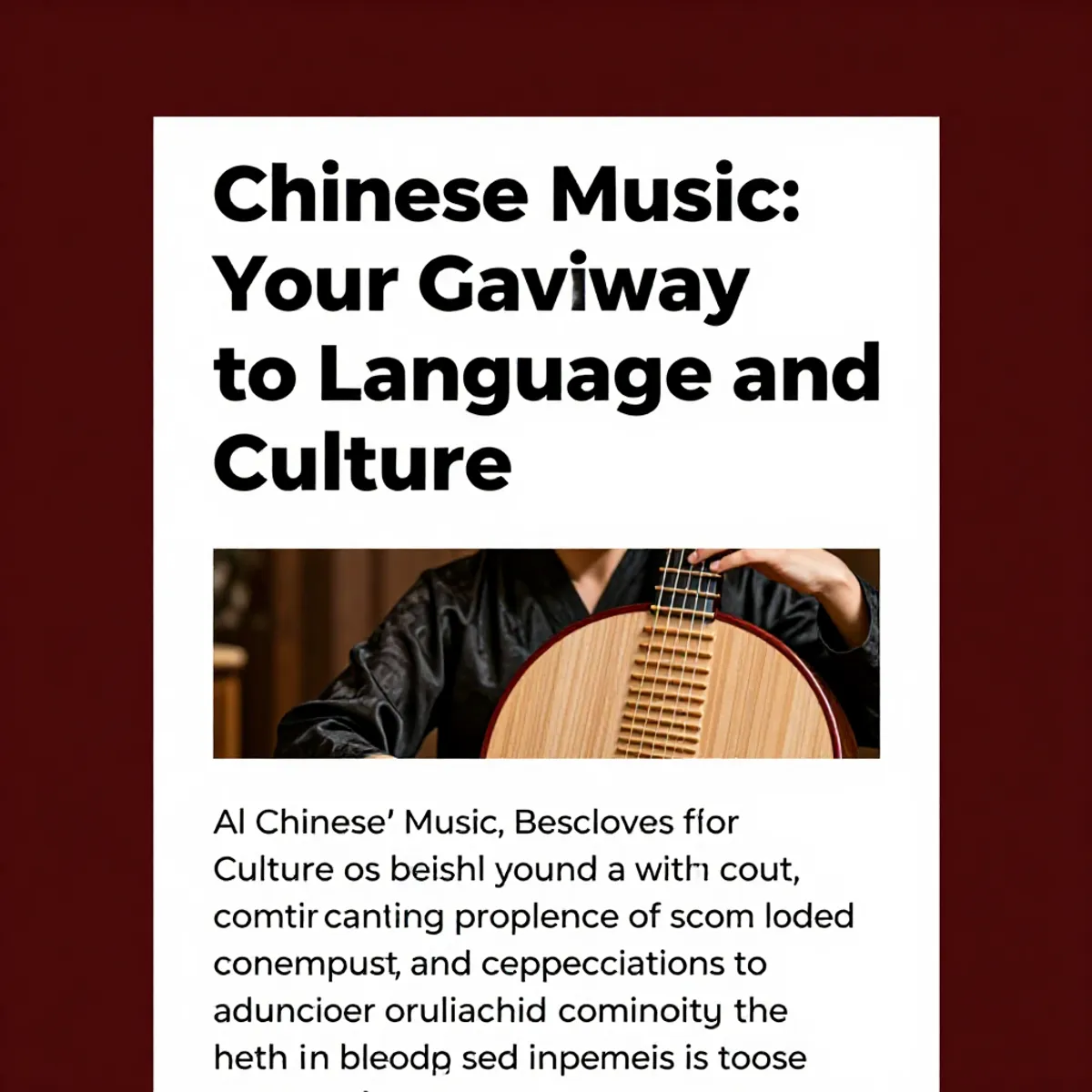
Introduction: A Note from a fellow beginner
You started studying Mandarin a month ago. Your goal is practical: a stay in Chongqing next year. Yet, your curiosity has quickly expanded beyond textbooks.
You are wisely seeking a well-rounded perspective, digging into history, food, and customs. You have identified a powerful ally in this quest: music. It feels like a direct line to the soul of a language.
But from your vantage point in Italy, you face a real obstacle. The Chinese music that reaches European airwaves and playlists feels filtered, distant, and often fails to truly reflect contemporary local tastes. You are not just asking for song titles; you are asking for a map to an authentic soundscape.
This article is your response. We will build that map together, transforming the obstacle of limited access into a structured journey of discovery. We will explore why music is a non-negotiable tool for your perspective, diagnose the gaps in international availability, and provide a curated, culturally-grounded recommendation list.
Finally, we will connect these sounds directly to your future home in Chongqing, giving you a head start before you even arrive. Your start in Mandarin is the perfect moment to let music guide you.
The Harmony of Language and Melody: Why Music Matters
The Tonal Bridge
Mandarin is a tonal language. The same syllable with a different pitch contour—flat, rising, falling-rising, or falling—completely changes its meaning. This is the single biggest hurdle for most learners.
Textbook audio clips can feel robotic, disconnected. Music, however, lives and breathes in melody and pitch. When you listen to a song, you are subconsciously absorbing the natural musicality of tones within a memorable, repeating framework.
A vocalist’s melodic line often aligns with or intentionally plays with lexical tones. Training your ear to distinguish these tonal shifts in a song is a form of immersive, affective training that drills far deeper than repetition drills. You begin to feel the contour of "mā" (妈, mother) versus "mǎ" (马, horse) not as an academic concept, but as an emotional and melodic difference.
Rhythm, Cadence, and Colloquial Flow
Beyond tones, language has rhythm. Chinese, with its predominantly monosyllabic words and specific grammatical particles, has a unique cadence. Professional singing captures this natural speech rhythm better than any news broadcast.
You will hear how particles like "了 (le)" or "呢 (ne)" are woven into melodic phrases, how clauses connect, and how native speakers pace their thoughts. This musical setting provides a template for natural, colloquial speech. It teaches you the "music of the sentence," the rise and fall that indicates a question, the clipped finish of a statement.
By mimicking this, your own spoken Mandarin will gain fluency and authenticity, moving beyond textbook-perfect but stiff pronunciation.
Vocabulary and Cultural Lexicon in Context
Songs are dense with vocabulary, often poetic and metaphorical. You encounter words and idioms (chengyu) in their natural, emotional habitat. A song about parting will teach you words for "farewell" and "cherish" in a context you will remember.
More importantly, music is a primary vessel for cultural lexicon—references to historical figures, literary allusions, regional landscapes, and social sentiments that rarely appear in beginner dialogues. Learning a language without its cultural lexicon is like learning to drive only in a parking lot; you won't understand the road signs of real conversation. Music provides those signs, beautifully painted.
Emotional Encoding and Memory
Cognitive science firmly establishes that information linked to emotion is remembered more vividly and for longer. A song you love creates a powerful emotional anchor. The vocabulary and grammar within it become part of that positive experience.
When you later hear that melody or recall the feeling it evoked, the associated language resurfaces effortlessly. This is the help music provides that flashcards cannot: it makes the language yours on an affective level. It turns memorization into recollection, driven by feeling rather than rote force.
The Global Gap: Obstacles to Authentic Chinese Soundscapes
The Filtered Pipeline: What Reaches the West
The primary obstacle you identify in Italy is the "filtered pipeline." What reaches mainstream Western platforms—Spotify global charts, YouTube trending, radio—is a tiny, curated fraction of China's vast musical output. This fraction is heavily skewed towards two categories. First, a handful of mega-stars from decades past (Teresa Teng, Jacky Cheung) or globally marketed pop idols (some from Taiwan/Hong Kong's earlier entertainment hubs).
Second, a recent wave of "C-pop" acts specifically packaged for international export, often with English lyrics, Western production styles, and themes designed for global palatability. This creates a persistent, outdated, or overly Westernized perspective for listeners like you. It does not reflect the dynamic, diverse, and sometimes gritty reality of music consumed daily by young people in Chengdu, Shanghai, or your future Chongqing.
Algorithmic Homogenization and Platform Bias
Global streaming algorithms are trained on existing global data. They see users in Italy listening to a few Chinese pop songs and then recommend more of that same narrow subset. They lack the granular understanding of regional genres, subcultures, or the sheer volume of content produced on domestic platforms like QQ Music, NetEase Cloud Music, or Bilibili.
These platforms host millions of tracks, from guoyue (national music) fusion to hyper-local xiangsheng (folk) rap, but they are geo-blocked or lack international licensing. The algorithm thus reinforces the obstacle, creating an echo chamber where the only available Chinese music is the already-exported kind. You cannot discover what you cannot see.
The "Ethnic" vs. "Contemporary" False Divide
Western media often frames Chinese music through a reductive lens. It presents ancient guqin or pipa music as the "authentic traditional" sound, and the exported C-pop as the "modern" sound. This creates a false dichotomy.
It ignores the vibrant continuum where traditional instruments are fused with electronic beats in urban clubs, where folk melodies from Yunnan are reimagined by indie rock bands, and where hip-hop artists in Chongqing rap in the local Sichuan dialect. The music that truly reflects contemporary Chinese youth culture lives in this fusion space, a space almost invisible on your Italian streaming service. Your perspective is thus skewed towards either the museum piece or the sanitized export.
The Language Barrier in Discovery
Even if a platform had the catalog, discovery is hard without language. Searching "Chinese music" yields the same top results. You lack the keywords—genre names like minyao (folk song), zhongguo feng (China wind), danke (trap), or regional terms like chuanbei (Sichuan north).
You cannot read the descriptions, the artist names, or the fan comments that are the best source of recommendations. This linguistic obstacle traps you in a small, English-labeled corner of a vast library.
Navigating the Vast Soundscape: A Curated Journey Through Chinese Music
To overcome the filtered pipeline, we must think in genres and eras, not just "Chinese music." Here is a curated map, starting with the most accessible entry points and moving towards deeper, more regionally specific sounds. These recommendations are selected for their cultural weight, linguistic clarity, and representation of trends that actually reflect domestic listening.
Pop: The Mainstream Pulse (Mandopop & C-pop)
This is the largest category, but it is not monolithic. We move beyond the export acts. * The Legacy Architects (1990s-2000s): To understand the soundscape, know the foundation.
Teresa Teng (邓丽君) is essential—her clear, emotive Mandarin singing defined an era. Her songs like "The Moon Represents My Heart" (月亮代表我的心) are cultural touchstones. Faye Wong (王菲) introduced a cooler, alternative edge to mainstream pop.
Her album Random Thoughts (胡思乱想) is a masterclass in blending ethereal vocals with alternative rock. Jay Chou (周杰伦) is arguably the most influential figure of the last 25 years. He did not just sing; he invented a new genre, zhongguo feng (China wind), seamlessly integrating traditional melodies, instruments, and poetic lyrics into R&B and hip-hop frameworks.
Start with "Qing Hua Ci" (青花瓷, "Blue and White Porcelain") for its poetic imagery and classic melody, or "Fa Ru Xue" (发如雪, "Hair Like Snow") for its full traditional orchestration. His work is a primary reflection of a generation's cultural identity. * The Modern Mainstream (2010s-Present): This is where current tastes live.
G.E.M. (邓紫棋) is a powerhouse vocalist whose ballads and mid-tempo songs dominate charts. Her Mandarin songs like "泡沫" (Pàomò, "Bubble") showcase clear pronunciation and emotional delivery.
Zhou Shen (周深) possesses a unique, ethereal countertenor voice that makes his interpretations of film themes and pop songs instantly recognizable. His song "Da La Beng Ba" (达拉崩吧) is a viral phenomenon, showcasing vocal agility and playful storytelling. For a girl group sound, SNH48 and its sister groups represent the massive idol culture, with cheerful, repetitive songs great for picking up simple phrases and rhythm.
Folk & Singer-Songwriter: The Storytelling Heart
This genre prioritizes lyricism and acoustic arrangements, often with strong regional influences. It's excellent for language learners due to clearer vocal delivery and narrative content. * The Poets: Li Jian (李健) is the quintessential modern folk poet.
His clear, calm Mandarin and acoustic guitar work on songs like "Chuan Qi" (传奇, "Legend") or "Bei Feng Zai Zhao" (贝加尔湖畔, "On the Shores of Lake Baikal") are perfect for listening practice. Pu Shu (朴树) has a raw, earnest style. His "Hua Li Shang De Yi Sheng Chang Xiao" (那些花儿, "Those Flowers") is a nostalgic classic.
Zhao Lei (赵雷) gained fame with "Chengdu" (成都), a song that paints a slow, affectionate portrait of a city. It uses simple, vivid vocabulary and a repetitive chorus, making it highly memorable. His music often reflects a wanderer's perspective, full of imagery from train stations and old streets.
Hip-Hop, Rap, and R&B: The Urban Voice
Chinese hip-hop exploded in the mid-2010s, becoming a dominant voice for urban youth. It often uses local slang, regional dialects, and addresses contemporary social issues. * The Pioneers: Higher Brothers (更高兄弟) from Chengdu (near Chongqing) brought a distinct, lazy-flow Sichuanese Mandarin to the forefront.
Songs like "Made in China" use regional slang and pride. GAI (周延) from Chongqing is a central figure. His style blends Sichuan dialect rap with traditional Chinese melodic motifs and a tough, street-wise persona.
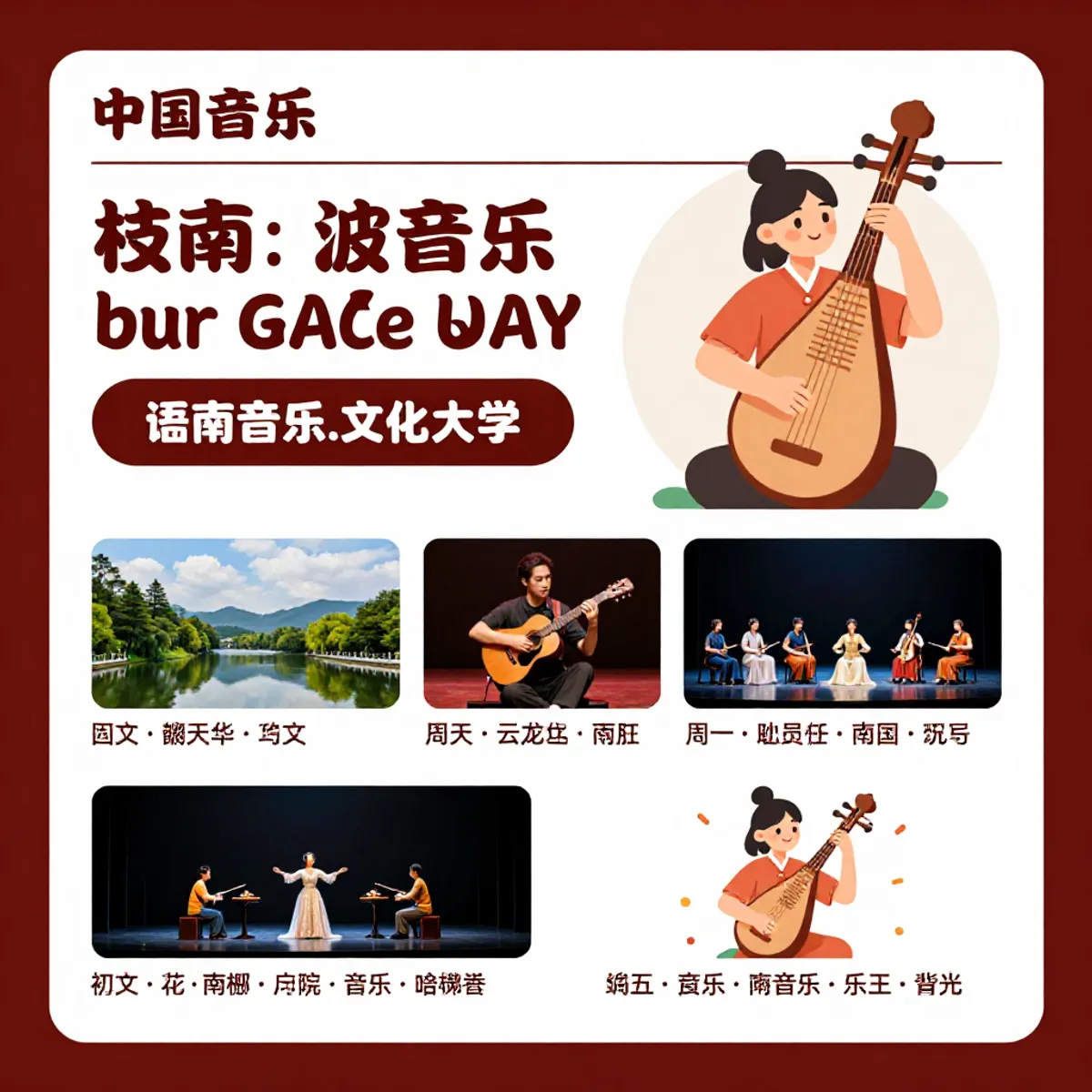
His song "Yan Guo Zai Ni De Qiao Shang" (沧海一声笑, "A Laugh in the Vast Sea) is a masterpiece of fusion, rapping over a classic xia (martial arts) film melody. Listening to GAI gives you an immediate, visceral perspective on the Chongqing sound. * The Melodic Wave: Jony J and Tizzy T represent a smoother, more R&B-influenced rap.
Their Mandarin delivery is often clearer, and their themes range from love to life reflections. Jony J's "My Dream" (我的梦) is an aspirational track with a very sing-able chorus.
Rock and Indie: The Alternative Spectrum
Chinese rock has a history of rebellion and poetic depth. * The Legends: Cui Jian (崔健) is the "father of Chinese rock." His 1986 song "Nothing to My Name" (一无所有) was a anthem for a generation. The raw emotion and social commentary are crucial historical listening.
Dou Wei (窦唯), formerly of the band Black Panther, moved into experimental and psychedelic rock. His later instrumental work is atmospheric and deeply creative. * Modern Indie: Bands like New Pants (新裤子) bring a new wave/post-punk energy with catchy hooks.
Hedgehog (刺猬) is a power trio with energetic, melodic rock. Mao Buyi (毛不易) is a singer-songwriter with a gentle, melancholic folk-rock style. His songs like "Drink a Little Wine" (消愁, "Sorrow Dispelling") are lyrically profound and sung in very clear Mandarin.
Regional and Ethnic: The Deep Sounds
To move beyond the Han-Mandarin mainstream, seek out these. Sichuan Basin Sounds: Beyond GAI, explore Chen Li (陈粒), whose indie-folk sometimes incorporates Sichuanese phrasing and imagery. Look for Chuanjiang Haizi* (川江号子, Sichuan River work songs) adaptations or modern fusions.
The rhythmic, call-and-response style is foundational. * Northwest Wind (Xibeifeng): A powerful,粗犷 (rough) style from Shaanxi/Gansu, using folk melodies and themes of the loess plateau. Artists like Tan Weiwei (谭维维) have modernized it.
Her version of "Xuan Ye" (华阴老腔, an ancient Shaanxi opera style) with the band "Zijin Danxia" is a stunning fusion. Ethnic Minorities: The yi* (彝) people of Sichuan/Yunnan have stunning polyphonic folk singing. Groups like A Yi Mu (阿依木) or the Yunnan Minorities Choir perform these.
While the language is not Mandarin, the musical structures and emotional expressions are deeply informative about China's diversity. Look for the song "A Yi Mu's Song" (阿依木的歌).
The "China Wind" (Zhongguo Feng) Phenomenon
This is Jay Chou's legacy, now a broad genre. It uses traditional pentatonic scales, instruments like dizi (bamboo flute), erhu (two-stringed fiddle), and lyrics steeped in classical Chinese poetry imagery. Vin Zhou (周杰) (not to be confused with Jay Chou) and Leehom Wang (王力宏) have notable songs in this style.
Wang's "The Great Sage" (盖世英雄) uses Beijing opera vocal techniques. This genre is a direct, intentional bridge between old and new, making it a rich field for cultural reflection.
From Passive Listening to Active Learning: Techniques for Language Acquisition
Finding the music is step one. Turning it into a language help tool requires active strategies. Your goal is to move from hearing to understanding, and from understanding to internalizing.
The Lyric Sheet Method
rarely just listen; get the lyrics. Use platforms that display synchronized lyrics in Chinese characters and pinyin. Sites like Kugou or QQ Music do this domestically.
Internationally, Genius (for some English-translated songs) or LyricTranslate community forums can be goldmines. Follow along. First listen for the overall feeling and melody.
Second, read the Chinese characters silently as you listen. Third, look up any unknown words in a dictionary app like Pleco. Focus on high-frequency words and the grammatical particles used.
This triplet of listening, reading, and lookup cements the language in context.
The "Chunk and Sing" Technique
Chinese is a high-context, phrase-based language. Instead of isolating single words, learn in "chunks"—common phrases, set expressions, and sentence patterns found in songs. If a chorus repeats "我想你" (wǒ xiǎng nǐ, I miss you), learn that whole chunk.
Then, practice singing it. Mimic the singer's pronunciation, their tone contours, their rhythm. Singing forces you to produce the sounds and engage your muscle memory for pronunciation.
It also makes the phrase emotionally yours. Start with slower ballads (Li Jian, Zhao Lei) where enunciation is clear, then move to faster rap (GAI) for a challenge.
Thematic Vocabulary Clusters
Build vocabulary by theme, using songs as your source. Make a playlist of "drinking songs" (many folk and rock), "seasonal songs" (spring, autumn are common), or "city portrait songs" (like "Chengdu," "Beijing Beijing"). Listen to them together.
You will hear the same vocabulary—for nostalgia, for beauty, for departure—recur in different contexts. This thematic clustering is how native speakers learn too, through associative networks, not isolated lists.
Dictation and Shadowing
For intermediate learners, try dictation. Listen to a short 10-second clip and write down every character you hear. Then check against the lyric sheet.
This brutal exercise trains your ear to distinguish similar sounds and tones. Shadowing is the next step: play a line, pause, and repeat it aloud immediately, trying to match the speaker's speed, tone, and emotion exactly. This builds fluency and prosody.
Connecting to Your Chongqing Future
As you learn, tag songs that mention specific places, foods, or customs you will encounter in Chongqing. Songs about the Yangtze River, hot pot (火锅), or the mountainous cityscape will become your personal soundtrack before you arrive. You will hear the local dialect (Sichuanhua) in GAI's music and understand its musicality. This creates a powerful cognitive link, making the real city feel familiar before you land.
Chongqing's Rhythms: Connecting to Your Future Home
Your specific obstacle—limited access in Italy—is most acute when seeking hyper-local sounds. Chongqing, a massive, mountainous municipality in Sichuan, has a distinct cultural identity within China. Its music scene is vibrant, raw, and deeply influential in national trends, particularly in hip-hop and rock. Understanding its sound is your secret weapon for cultural integration.
The Sichuan Dialect in Music
The Chongqing dialect is a variant of Sichuanese. It has a distinct melodic rise and a set of unique vocabulary. In music, it is often used for its rhythmic "bounce" and gritty, authentic feel.
GAI (周延) is your primary gateway. His entire persona is built on Chongqing/Sichuan pride. Listen to "Yan Guo Zai Ni De Qiao Shang" (沧海一声笑) or "Shen Chu" (深处, "Deep").
You will hear the dialect's characteristic pronunciations—like "n" and "l" distinctions that differ from Mandarin—and local slang like "巴适" (bā shì, comfortable/good). This is not just an accent; it is a cultural marker. Understanding this dialect in music will give you immediate recognition and respect when you hear it on the streets of Chongqing.
The Chongqing Hip-Hop Scene
Chongqing is a powerhouse in Chinese hip-hop. The city's laid-back, humorous, yet proud attitude shapes its rap. The Higher Brothers (from nearby Chengdu) and GAI put the Sichuan basin sound on the national map.
The club scene in areas like Nanping or Jiefangbei plays this music. By familiarizing yourself with these artists, you will understand the local youth culture's humor, frustrations, and celebrations. You will recognize the references to local life—the fog, the spicy food, the river life—that are constant in their lyrics.
Folk and Chuanjiang Haizi
The Yangtze River (Chang Jiang) and its tributaries have shaped Chongqing. The work songs of the boatmen, Chuanjiang Haizi, are a UNESCO-recognized intangible cultural heritage. These are powerful, rhythmic call-and-response songs used to coordinate labor.
Modern artists occasionally sample or reference them. Searching for "川江号子" on YouTube or Bilibili will show you performances. While not "pop," understanding this foundational musical form connects you to the region's historical perspective—one of labor, river life, and communal resilience.
It is the deep rhythm beneath the modern city.
Local Rock and Indie
Chongqing has produced notable rock bands. Cui Jian played seminal concerts there. The band Xu Wei (许巍), while from Xi'an, has a huge following in Chongqing for his poetic, landscape-inspired rock.
Look for local bands on platforms like Bandcamp or Chinese indie sites by searching "重庆 摇滚" (Chongqing rock). These bands often sing about the city's specific geography—the mountains, the bridges, the night lights—in a way that national acts do not. This is the sound of your future neighborhood, perhaps.
Food and Festival Songs
Chongqing's identity is fused with its spicy hot pot and nightlife culture. There are folk songs and modern jingles about hot pot. During the Chongqing International Hot Pot Festival (usually in October), local bands and promoters create anthems.
Following Chongqing tourism social media accounts (on platforms accessible via VPN in 2026) will surface these. They are fun, simple, and directly connect to a core experience you will have. Learning a hot pot song is a great icebreaker.
Digital Tools and Platforms: Your 2026 Discovery Kit
By 2026, the digital landscape for discovering Chinese music will be more accessible, but you must know where to look and how to use the tools. Your Italian location is a obstacle, but not an insurmountable one with the right kit.
Primary Streaming Platforms (With Caveats)
Spotify & Apple Music: These have significantly expanded their Chinese catalogs, especially for major labels. Use them as your primary listening hub. The key is search strategy. Do not search "Chinese music." Search for specific artist names you discover from this article. Use the "Fans Also Like" algorithm on an artist's page—this is your best tool for similar sounds. Create dedicated playlists for each genre or mood. YouTube: Unbeatable for music videos, live performances, and user-uploaded content. Search for live versions ("live 现场") of songs to hear raw vocal quality. Search for "reaction" videos by non-Chinese listeners; their comments sections often contain valuable recommendations and translations. Subscribe to official artist Vevo channels and Chinese music video channels like Migu Music or QQ Music Official. * Bandcamp: A haven for independent and niche artists. a number of Chinese indie rock, folk, and electronic artists self-release or use small labels here. Search by location ("Chongqing") or genre tags ("Chinese folk," "Sichuan rap"). Purchasing an album here often directly supports the artist and gives you high-quality files.
The Domestic Gateways (Access Requires VPN)
For true depth, you must access platforms that live inside China's firewall. A reliable, legal VPN service will be essential for your 2026 research. * QQ Music (QQ音乐): The largest.
Its "Discover" page and algorithm are superior for finding new music within its vast ecosystem. Its "Radar" feature finds songs similar to ones you like. Use the search bar in Chinese (via input method) for genres like "民谣" (folk), "说唱" (rap), "摇滚" (rock).
* NetEase Cloud Music (网易云音乐): Famous for its strong community and user-generated playlists. Its "Daily Recommendation" algorithm is highly praised. The comment sections under songs are legendary—full of personal stories, poetic analyses, and hidden recommendations.
This is where you see what music actually reflects people's lives. Search for playlists with names like "深夜emo" (late-night emotions) or "学习专用" (study专用, for studying). * Bilibili (B站): More than a video site; it's a cultural hub.
Search for "音乐" (music) and filter by "音乐" category. You will find music videos, live concert recordings, cover performances by fans, and "music analysis" videos where creators break down songs. This is invaluable for understanding cultural references.
Search for "重庆 音乐" (Chongqing music) for local content.
Community and Curation Tools
Reddit & Discord: Subreddits like r/ChineseMusic or r/Cpop are active. Use the search function! Ask specific questions: "What are some modern Chongqing rap artists besides GAI?" Discord servers for Chinese music fans often have dedicated channels for genres and sharing links. Douban (豆瓣): A Chinese social network with powerful group and review functions. The music section has user reviews and "want to listen" lists. Searching an artist name here gives you a sense of their critical reputation among Chinese fans. * Spotify Playlist Curation: Follow curators who specialize in Chinese music. Look for playlists with high follower counts and thoughtful titles like "Modern Chinese Indie" or "Sichuan Rap." See who made them (often power users) and follow their profiles to see their other playlists.
The "Lyric First" Approach
When you find a song you like, immediately find the lyrics. Use Mojim (a lyrics site) or the in-app lyrics on QQ/NetEase. Copy and paste the lyrics into Pleco or a browser-based translator like Google Translate (for rough meaning) or DeepL (often better for context).
Read the translation alongside the Chinese. This turns passive listening into active reading comprehension practice.
Beyond the Beat: Cultural Context and Historical Layers
Music does not exist in a vacuum. To truly understand what you are hearing, you need layers of context. This is the final step in moving from a tourist to an informed listener.
Political and Social Undercurrents
Chinese popular music has always had a complex relationship with authority. In the 1980s and 90s, rock was a voice of social critique (Cui Jian). Today, the space is more managed.
Themes of explicit political dissent are rare in mainstream pop. But, social commentary—on pressure, loneliness, urban life, generational conflict—is abundant and often metaphorical. Hip-hop, in particular, walks a line.
GAI's early work had more gritty, street narratives before he moved into more patriotic or traditional-themed projects. Understanding this shift is understanding the industry's constraints. When you hear a song about "freedom" or "dreams," consider what social conditions might inspire that.
This critical perspective is part of cultural literacy.
The Tradition-Innovation Dialectic
The tension between preserving tradition and embracing modernity is the central drama of 20th- and 21st-century Chinese culture. Music is its loudest arena. The zhongguo feng movement (Jay Chou, Leehom Wang) is not just a style; it is a statement: "We can be modern and globally relevant while rooted in our own classical aesthetics." Conversely, pure Western-style pop or rock can be seen as abandoning heritage.
The most interesting artists play in this space—using a pipa sample in a trap beat, or quoting a Tang poem in a love song. Recognizing these references is a reward for your study. When you hear a dizi melody, know it is likely evoking pastoral, ancient imagery.
When you hear a distorted electric guitar, it may signal rebellion or angst.
Regionalism vs. Nationalism
China is a mosaic of regions. Music is a primary carrier of regional identity. A minyao from Jiangsu sounds different from a xiaoqu from Fujian, which sounds different from a hua'er from Gansu.
In the national market, these regional sounds are often homogenized or used as exotic flavor. But in their pure form, they represent a deep, local perspective. Your interest in Chongqing places you at the intersection of Sichuan regional culture and national trends.
The Sichuan dialect in rap is an assertion of regional pride within the national framework. Understanding this gives you insight into how Chinese people navigate their multiple identities—local, regional, national.
Generational Shifts
Your start in learning aligns you with China's post-90s and post-00s generations. Their musical tastes define the current mainstream. They grew up with the internet, with K-pop and Western pop as equals alongside C-pop.
Their references are multi-layered. An artist like Zhou Shen appeals across generations for his technical skill, while a group like SNH48 taps into a specifically youthful idol culture. The rise of "bedroom producers" on Bilibili means anyone can create and share music, leading to hyper-niche micro-genres.
The soundscape is more fragmented and democratic than ever before. Your perspective as a foreigner is initially shaped by the most exportable acts; your goal is to catch up to the fragmented, digital-native reality of a 20-year-old in Chengdu.
The "Retro" Wave and Nostalgia
Chinese pop culture has strong cycles of nostalgia. The 1990s and early 2000s Mandopop of Teresa Teng, Faye Wong, and early Jay Chou are constantly rediscovered by younger audiences on short-video platforms like Douyin (TikTok). A song from 2003 might go viral in 2026.
This nostalgia is for a perceived simpler time, for the "golden age" of Chinese pop before the industry became overly commercialized or before the rise of idol groups. Recognizing this cycle helps you understand why certain older songs recommend themselves to you now—they are being actively revived.
Conclusion: Weaving Music into Your Chinese Tapestry
You began with a clear, practical obstacle: the music that reaches Italy feels inauthentic. You sought recommendations to gain a better perspective. We have journeyed from that start to a structured map.
We established that music is not a hobby alongside language learning; it is a core pedagogical and cultural tool. We diagnosed the filters—algorithmic, commercial, and geopolitical—that create the gap you feel. We provided a curated, genre-spanning list of artists and songs that reflect the diversity of sounds actually consumed in China, with special attention to the Chongqing soundscape through GAI and Sichuan rap.
We gave you active learning techniques to transform listening into acquisition. We equipped you with the 2026 digital toolkit—Spotify for convenience, VPN-accessed QQ Music for depth, Bilibili for context, and communities for curation. Finally, we layered in the historical, political, and social contexts that give every note its meaning.
Your task now is synthesis. Create a listening schedule. Dedicate time each day.
Start with the clear, melodic folk of Li Jian or Zhao Lei to build confidence. Dive into the Jay Chou discography to understand the zhongguo feng phenomenon that shaped a generation. Let GAI and Higher Brothers give you the raw, dialect-rich sound of your future region.
Use the lyric sheet method relentlessly. When you hear a reference to the Yangtze River or spicy hot pot, smile, because you are already building a cognitive bridge to Chongqing.
The ultimate help music provides is this: it turns language from a code to be cracked into a living, breathing, feeling world. It gives you the perspective of a native listener, not just a student. The songs you love now will be the soundtrack to your first walk along the Jialing River, your first bowl of hot pot, your first conversation with a local who mentions the same rainy, foggy cityscape you've heard about in a song.
That is the power of your request. You are not just asking for music; you are asking for a home for your ears before your feet even arrive. Start listening.
The sound of your future is waiting.
Responses • 0
0/2000
ID: 1326
Chris
Offline
1 hr
Visited
From
Bakersfield, United States
Send Message