China's Hidden Linguistic Mosaic
AI Learn Chinese
4 hr • 0 read
Explore China's languages beyond Mandarin, from Cantonese to Zhuang, with cultural, historical, and personal insights.
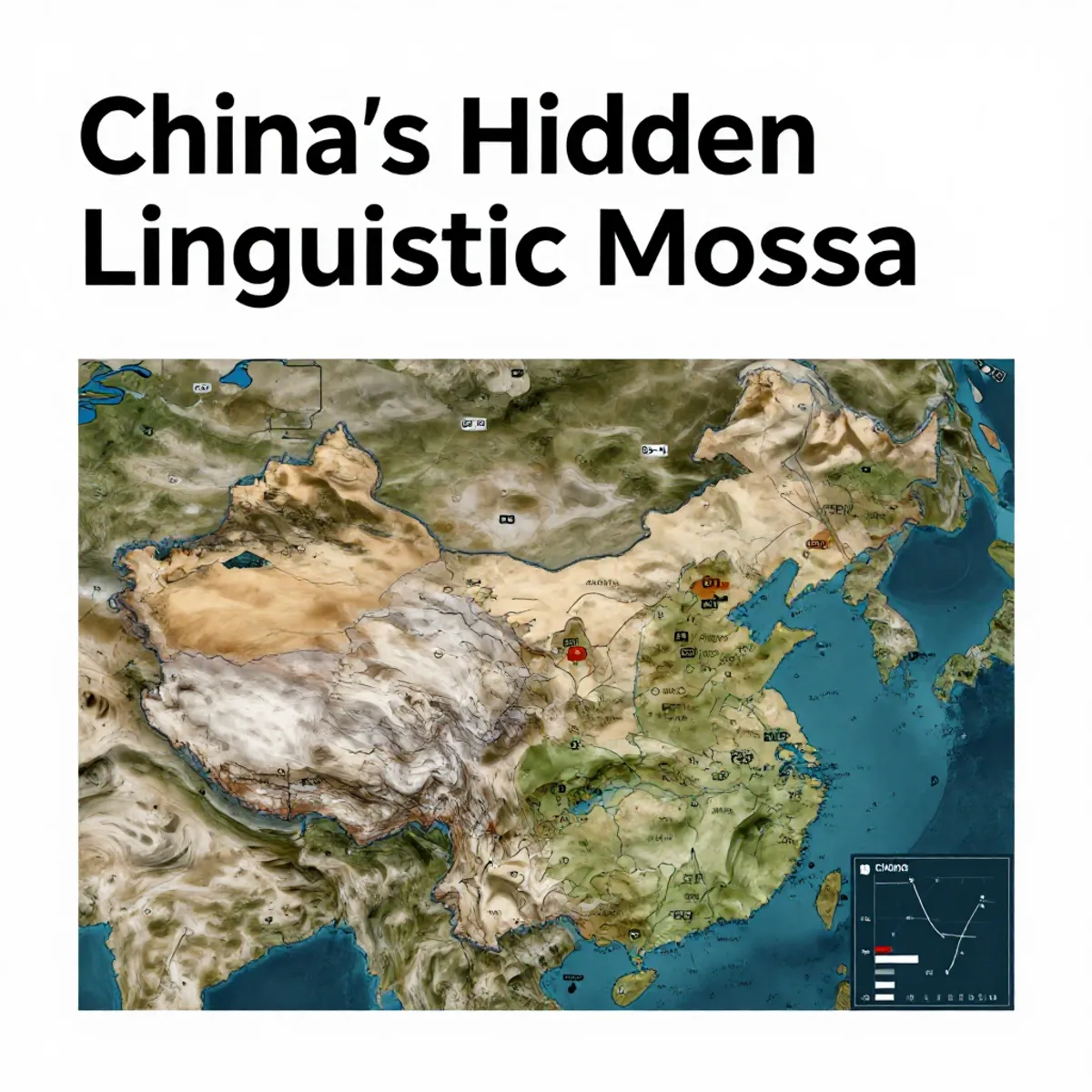
Introduction: The Mandarin Mountain and the Whisper of Other Tongues
To dedicate oneself to learning Mandarin Chinese is to embark on a monumental, lifelong journey. It is a path marked by the intricate dance of four distinct tones, the formidable wall of thousands of logographic characters, and the deep, often subtle, currents of cultural context that give the language its life. The commitment is absolute; the rewards, profound.
One gains not just a tool for communication, but a direct conduit to one of the world's oldest continuous civilizations, its literature, its philosophy, and its modern dynamism. This focus, this intense beam of attention on 普通话 (Pǔtōnghuà), the "common speech," inevitably casts a long shadow. It illuminates a vast landscape, but in doing so, it renders the incredible diversity lying just beyond its edges less visible, sometimes even forgotten.
My own journey with Mandarin has been the defining intellectual pursuit of my adult life. Yet, alongside the daily struggle and triumph of mastering this complex tongue, there has persisted a quiet, compelling curiosity about the other languages that share China's soil. This curiosity was not born of a desire to abandon Mandarin, but from a profound awe at the sheer scale of China's linguistic heritage.
It was sparked, in part, by a fleeting, half-conscious memory—the sound of a language, unlike any I was studying, flowing from a friend's phone. A language of sharp, intriguing phonetics, a rhythm completely foreign to the measured cadence of Mandarin. That sound was Zhuang, and it became a symbol of an entire world of linguistic beauty that exists parallel to, and often outside the orbit of, the Mandarin-centric view most learners adopt.
This article is an exploration of that world. It is a reflection on the forces that made Mandarin dominant, a guided tour of some of China's most fascinating non-Mandarin languages like Cantonese and Zhuang, and a personal meditation on the joy, the challenge, and the poignant beauty of being aware of a magnificent mosaic while choosing to study only one of its countless tiles.
The Mandarin Paradigm: Why It Dominates and What It Leaves Unexplored
To understand the allure of China's other languages, one must first grapple with the titanic reality of Mandarin's dominance. This is not an accident of history but the result of deliberate, powerful forces that have shaped the nation for over a century.
Historical and Political Forces Shaping China's Linguistic Landscape
The story of modern Mandarin's supremacy is intrinsically linked to the story of modern China itself. The fall of the Qing Dynasty in 1912 unleashed a period of intense national soul-searching. Leaders and intellectuals, facing a fragmented nation vulnerable to foreign incursion, rallied around the idea of a unified national language as a fundamental prerequisite for strength.
They looked to the speech of the political and cultural center, Beijing, as the logical basis. This was formalized as 国语 (Guóyǔ), "National Language," and later 普通话 (Pǔtōnghuà), "Common Speech." The project was not merely linguistic; it was nation-building. A single language was seen as the glue to bind a continent-sized population with dozens of major ethnic groups and hundreds of mutually unintelligible speech forms.
The subsequent decades—the Republican era, the upheaval of the Second Sino-Japanese War, and the establishment of the People's Republic of China—saw this policy implemented with increasing rigor. Mandarin was enshrined in the constitution, mandated in education, and broadcast ubiquitously via radio and, later, television. The economic reforms and opening-up that began in the late 1970s supercharged this process.
Mandarin became the absolute prerequisite for social mobility, for business across provincial lines, for accessing the best universities and government jobs. The message was clear, repeated in a million ways: to participate in modern China, you needed Mandarin. This historical and political journey explains why a learner in London or Lagos or Jakarta will almost invariably choose Mandarin.
Its utility is unparalleled. It is the language of the central state, of the economic miracle, of the global diaspora's connection to the homeland. It is the key that opens the most doors.
The Cognitive and Practical Realities of Mandarin Mastery
The choice to focus on Mandarin is also driven by its own monumental internal demands. Learning Mandarin is not like adding a new language to one's repertoire; it is more akin to acquiring a new cognitive operating system. The tonal system is the first and most famous hurdle.
A single syllable, like "ma," can mean "mother," "hemp," "horse," or "scold" depending on its pitch contour. This means the learner must develop auditory discrimination and motor control for tone that is simply not required in non-tonal languages. It rewires the brain's processing of speech.
Then there are the characters. Unlike alphabetic systems where symbols represent sounds, Chinese characters are primarily logographic—they represent morphemes and meanings. To read a newspaper, one must recognize several thousand of them.
The memorization burden is staggering, requiring years of consistent, focused practice. The grammar, while often praised for its relative lack of verb conjugations and noun cases, presents its own complexities in aspect particles, serial verb constructions, and the often-tacit nature of subjects and objects. The time investment to reach a functional level of literacy and conversational fluency is measured in thousands of hours.
This sheer cognitive and temporal load naturally focuses the learner's energy. The path to Mandarin proficiency is so long and steep that there is little mental or practical bandwidth left for another language of comparable depth, unless one has a specific, powerful motivation—like a family heritage, a business need in Guangdong, or an academic focus on a particular ethnic group. For the general enthusiast, Mandarin is the project.
The other languages, however alluring, become distant lights on the horizon, visible but ultimately inaccessible within the confines of a single lifetime of dedicated study.
Cantonese: A Living Legacy of Southern China
If any non-Mandarin Chinese language has achieved global recognition, it is Cantonese. Its influence extends far beyond the borders of Guangdong and Guangxi, carried by waves of migration and the explosive cultural output of Hong Kong.
Linguistic Features That Set It Apart
Linguistically, Cantonese (粤语, Yuèyǔ) is a member of the Yue branch of the Sinitic family. Its most immediately noticeable feature is its sound system. It boasts six to nine tones, depending on the specific dialect, compared to Mandarin's four.
This creates a denser, more intricate melodic landscape where even more distinctions are packed into the same syllable structures. In addition, Cantonese preserves a wealth of final consonant sounds—like -p, -t, k—that have been lost in most Mandarin dialects. These "checked tones" give the language a crisp, percussive quality that many describe as more "musical" or "rapid-fire" than Mandarin.
The vocabulary also diverges significantly. While there is a shared classical literary layer, everyday speech is filled with distinct words. For a Mandarin speaker, listening to casual Cantonese conversation is often like trying to decipher a familiar but heavily altered dialect, with only a fraction of words immediately comprehensible.
The grammar has its own nuances, such as different sentence-final particles that convey subtle shades of meaning and emotion. This linguistic distance means that mutual intelligibility is essentially zero without study. Cantonese is not a "dialect" of Mandarin in any practical sense; it is a separate, fully-fledged language with its own internal logic and history.
Cultural Corners: Opera, Cinema, and Culinary Identity
Cantonese's power lies not just in its sounds, but in the vibrant, world-renowned cultures it carries. Cantonese opera (粤剧, Yuèjù) is a dazzling, acrobatic, and musically rich tradition that preserves performance styles and linguistic pronunciations from centuries past, offering a living window into pre-modern Chinese theatre. The golden age of Hong Kong cinema from the 1980s and 1990s—the films of Wong Kar-wai, John Woo, and the comedies of Stephen Chow—was almost exclusively produced in Cantonese.
These films defined Asian cool for a global generation and are deeply tied to the linguistic and rhythmic identity of the language. To watch them dubbed in Mandarin is to lose a significant part of their soul. In addition, the global fame of Cantonese cuisine—from dim sum and roast meats to the intricate soups of Guangdong—is inextricably linked to the language of the region.
The names of dishes, the slang of the kitchen, the poetry of the menu—all are in Cantonese. Learning it is to gain a direct, unmediated connection to this culinary world, understanding the etymology and cultural stories behind the food. The language is the vessel for this entire cultural package.
For anyone drawn to these aspects, Cantonese isn't just a language; it's an access key.
The Writing Conundrum: Traditional Characters and Vernacular Script
The written form of Cantonese presents a fascinating and complex picture. Historically, written Chinese was based on Literary Chinese, a formal, classical medium. Modern written Mandarin is a standardized form of vernacular speech.
In Hong Kong and Macau, however, written communication largely follows this Mandarin-based standard in formal contexts, using traditional Chinese characters. But in informal contexts—newspaper headlines, advertisements, comic books, social media, and especially in scripts for Cantonese opera and films—a distinct written Cantonese emerges. This written form attempts to capture the unique vocabulary, grammar, and even colloquial pronunciations of the spoken language using Chinese characters, often employing characters in non-standard ways or coining new ones.
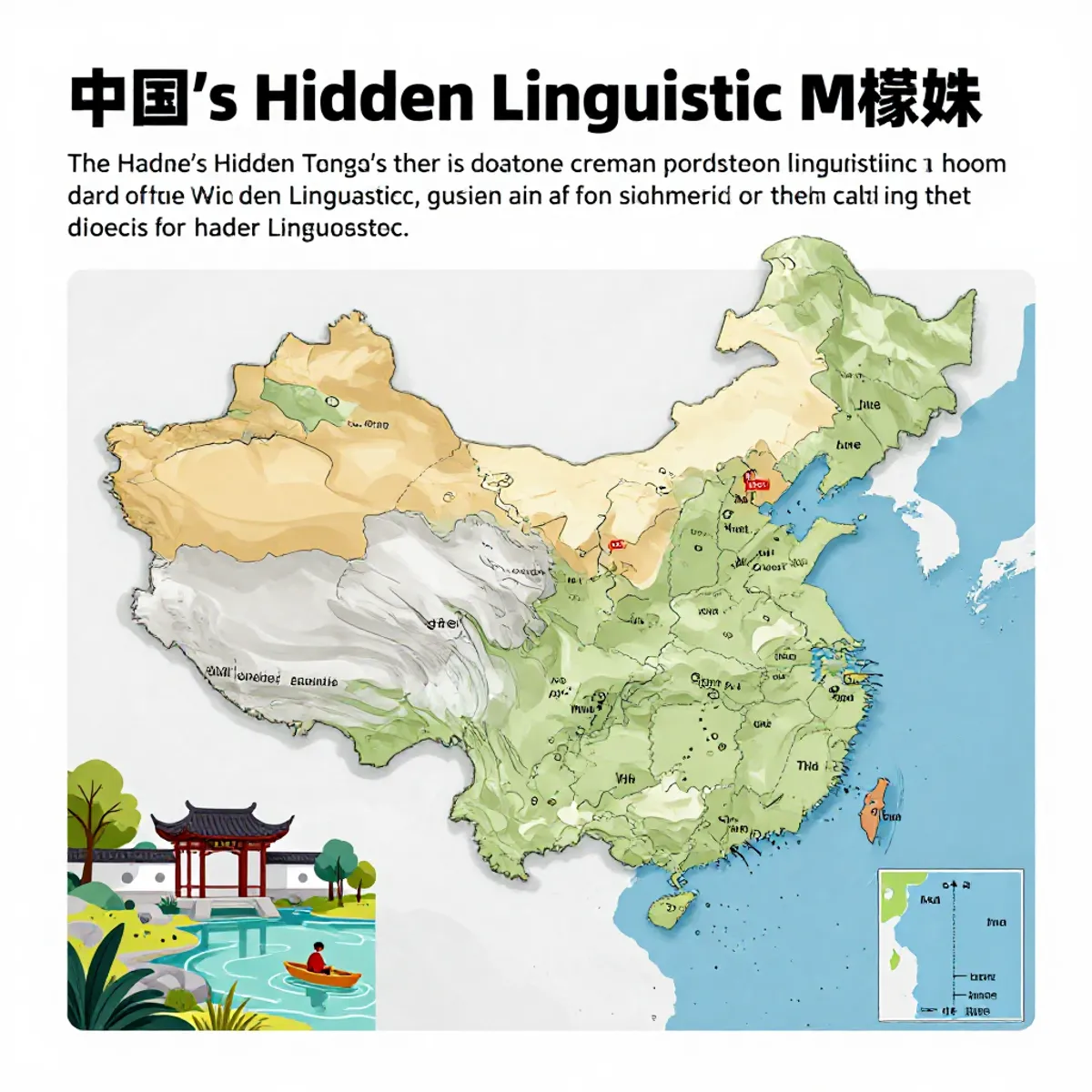
It is a vibrant, living script that stands in a diglossic relationship with the formal written standard. For a learner, this creates a unique challenge: one must navigate two written registers. Learning to read formal texts (which will be in standard written Chinese) is essential for literacy, but to engage with the authentic, grassroots culture—the jokes, the slang, the local news—one must learn to decipher written Cantonese.
It is a linguistic landscape that mirrors the cultural duality of the region itself: a traditional, formal core with a lively, innovative popular expression.
Zhuang and the Tai-Kadai Tapestry: China's Largest Minority Language
If Cantonese represents a major, globally-known Sinitic language, Zhuang (壮语, Zhuàngyǔ) opens a door to an entirely different linguistic universe within China's borders. It is the language of the Zhuang people, China's largest ethnic minority group, numbering over 18 million, primarily concentrated in the Guangxi Zhuang Autonomous Region.
Beyond Sino-Tibetan: The Tai-Kadai Family Connection
This is the crucial, mind-expanding fact: Zhuang is not a Chinese language in the linguistic sense. It does not belong to the Sino-Tibetan family that includes Mandarin, Cantonese, Tibetan, and Burmese. Instead, it is a member of the Tai-Kadai language family.
This family stretches from southern China down through Laos, Thailand, and into northeastern India. Its most famous members are Thai and Lao. The genetic relationship means that Zhuang shares a common ancestor with Thai, not with Mandarin.
Its core vocabulary, its grammatical structures, and its phonological system are fundamentally different. For a learner coming from a Sino-Tibetan background, studying Zhuang is not like learning a cousin; it is like learning the language of a neighboring, but entirely separate, civilization that has interacted with and influenced Chinese culture for millennia. This classification explains why the phonetics that caught my attention sounded so "interesting" and unlike anything in the Sinitic sphere.
The sound inventory includes features like clear vowel distinctions and consonant clusters that are alien to Mandarin. It places Zhuang within a vast, ancient network of languages that tells a story of migration, trade, and cultural exchange across Southeast Asia that is complementary to, but distinct from, the story of the Chinese heartland.
The Sawndip Script: A Writing System Forged in Isolation
One of the most extraordinary aspects of Zhuang is its traditional writing system, known as Sawndip (古壮字, "old Zhuang characters"). This is not an alphabet or a syllabary like Thai. It is a logographic system, inspired by and adapting Chinese characters, but used to write a non-Sinitic language.
Created centuries ago by Zhuang scholars and scribes, Sawndip is a masterpiece of linguistic ingenuity. Characters are borrowed from Chinese for their sound (to represent Zhuang syllables) or for their meaning (to represent native Zhuang words), and entirely new characters are invented for concepts unique to Zhuang culture. The result is a vast, heterogeneous corpus of characters that looks familiar to a Chinese reader but functions according to Zhuang grammar and phonology.
It was used for folk songs, religious texts, contracts, and poetry, creating a rich, localized literary tradition. In the 20th century, like many minority languages, Zhuang was assigned an official Romanized alphabet based on the Latin script for official and educational use. But, Sawndip remains a powerful symbol of Zhuang intellectual history and cultural resilience.
To learn Sawndip is to engage with a unique, grassroots writing tradition that stands as one of the world's great examples of a non-state, community-developed script. It represents a parallel development to the Chinese character tradition, born from the need to record a distinctly Tai language.
Guangxi's Cultural Heartland: Festivals, Folklore, and Identity
The language is inseparable from the land and the people of Guangxi. The region's famed karst landscapes, its rice terraces, and its river valleys are the physical stage for Zhuang culture. The most important festival is the Sanyuesan (三月三) or "Third Day of the Third Lunar Month" festival, a multi-day event of singing, dancing, ritual, and communal feasting.
At its core is the song—the Zhuang epic songs and folk ballads, often performed in a call-and-response style. These songs are not merely entertainment; they are repositories of history, mythology, agricultural knowledge, and social norms. They are frequently sung in the Zhuang language, and their poetic structures and idioms are deeply tied to it.
The iconic bronze drum (铜鼓), a ancient ceremonial instrument and symbol of Zhuang identity, is often featured in these festivals. To understand this world—the meaning of the songs, the symbolism of the drums, the structure of the village festivals—one must engage with the Zhuang language. It is the vessel for a worldview shaped by a different linguistic and historical trajectory than the Han Chinese mainstream.
Learning Zhuang, therefore, is an act of accessing a major, living tradition of China that operates on its own terms. It is a profound counterpoint to the Mandarin narrative, offering a glimpse into the soul of China's largest minority group on its own linguistic and cultural grounds.
The Broader Spectrum: Other Major Chinese Language Families
While Cantonese and Zhuang represent two major poles—a huge Sinitic language and a major non-Sinitic one—China's linguistic map is infinitely more detailed. The Sino-Tibetan family itself is incredibly diverse, and other families add further layers.
Wu Chinese: The Melodic Tongue of Shanghai and Zhejiang
Wu Chinese (吴语, Wúyǔ) is the language family of Shanghai, Suzhou, Hangzhou, and much of Zhejiang and southern Jiangsu. For many, its most famous representative is Shanghainese. Wu is often described as having a "soft" or "melodic" quality, with a complex and rich tone system (some varieties have 7 or 8 tones) and a characteristic set of voiced initials that give it a breathy, murmuring sound absent in Mandarin.
Its vocabulary contains many ancient Chinese words lost in Mandarin, preserved like linguistic fossils. Shanghainese, in particular, became a symbol of modern, cosmopolitan China in the early 20th century, the language of the bustling port, the commercial class, and the early film industry. But, like all non-Mandarin languages, it has faced immense pressure since 1949.
Strict language policies in schools and media, coupled with massive internal migration into Shanghai, have drastically reduced the number of fluent speakers among the younger generation. It is now a language of the home and the street for many older residents, but its public use is waning. Learning Wu is to connect with the historical heartland of China's commercial modernity and to hear echoes of Middle Chinese that have faded elsewhere.
Min Chinese: A Maritime Legacy from Fujian to Taiwan
The Min (闽语, Mǐnyǔ) group is perhaps the most geographically dispersed and internally varied. Spoken in Fujian, parts of Guangdong, Hainan, and by the vast majority of the Taiwanese population (where it is often called Taiwanese Hokkien), Min languages are believed to have split from other Chinese varieties very early, perhaps preserving features from the time of the Han Dynasty's southward expansion. This makes them some of the most archaic-sounding Sinitic languages.
Hokkien (a major Min branch) is famous for its complex tone sandhi rules (where tones change in sequence), its rich supply of vowels and consonants, and a vocabulary full of words not found in Mandarin. Its historical role as the language of the Hoklo people, who dominated maritime trade across the South China Sea and Southeast Asia for centuries, is immense. It is the native tongue of the majority in Taiwan and a crucial part of identity there, distinct from the Mandarin brought by the post-1949 KMT government.
In Southeast Asian Chinese communities from Singapore to Indonesia to the Philippines, Hokkien was long the common Chinese lingua franca. To learn a Min language is to tap into the history of China's seafaring merchants, the settlement of Taiwan, and the complex linguistic tapestry of the Chinese diaspora.
Hakka: The Guest Family Language of Resilience
The Hakka (客家话, Kèjiāhuà) people, whose name means "guest families," are a historically migratory, often marginalized Han Chinese subgroup scattered across Guangdong, Fujian, Jiangxi, and Taiwan, with diaspora communities worldwide. Their language is a unique branch of Sinitic, with its own distinct phonological and lexical features. It is often noted for having a full set of final consonants (-p, -t, -k) like Cantonese, and a complex tone system.
Hakka culture is famed for its communal tulou (earthen roundhouses) in Fujian, a unique architectural form born of defense and communal living. The language, born of migration and a sense of being perpetual "guests," fostered a strong, cohesive identity. In Taiwan, Hakka is one of the official languages, a recognition of its distinct heritage alongside Mandarin and Hokkien.
Like all these languages, it faces severe generational decline. Learning Hakka is to connect with a narrative of perseverance, of a people who maintained their distinct speech and customs while integrating into new regions, and to understand an alternative model of Han Chinese identity that is not centered on the north or the Beijing norm.
The Practical and Philosophical Dilemma: Choosing a Linguistic Path
Having surveyed this stunning diversity, the learner faces a profound dilemma. The rational, utilitarian choice is overwhelmingly Mandarin. The emotional, intellectual, and cultural pull of the other languages is powerful, yet the barriers to pursuing them seem insurmountable. This tension defines the modern Chinese language enthusiast's experience.
Utility vs. Passion: Weighing Career, Travel, and Personal Fulfillment
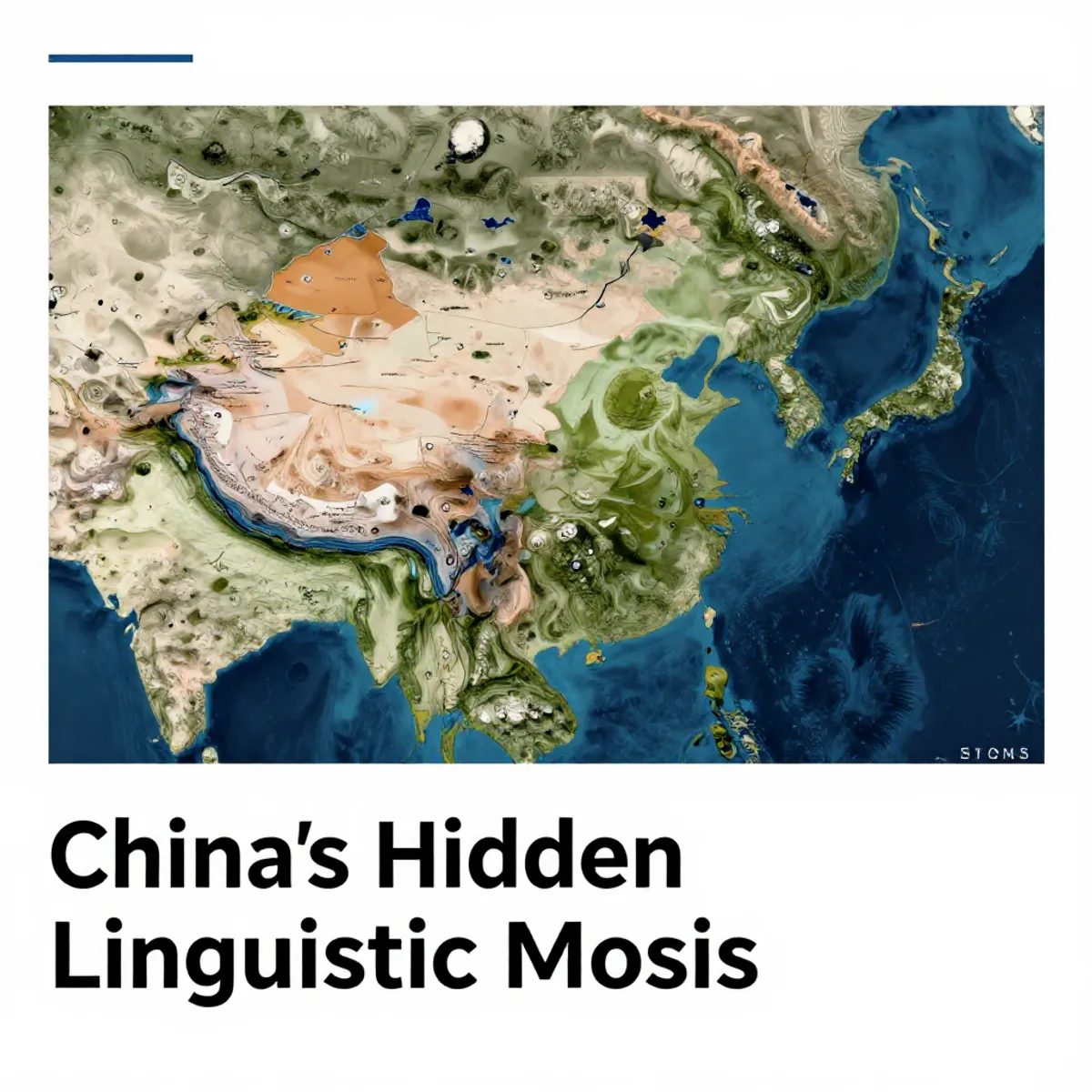
The calculus is straightforward. For career advancement in international business, diplomacy, or academia focused on China, Mandarin is the undisputed requirement. For travel within mainland China, Mandarin is the universal key that unlocks communication from Beijing to Kashgar.
The return on investment for Mandarin study is measurable and vast. The other languages offer different, often more niche, returns. Cantonese is invaluable for business and culture specifically in Hong Kong, Macau, and Guangdong.
It is a mark of deep respect and cultural fluency in those regions. Zhuang, Wu, Min, Hakka—their utility is largely confined to specific geographic areas and cultural interactions. The career incentive is minimal for most.
Yet, the personal fulfillment factor can be immense. For someone with roots in Guangdong, learning Cantonese is a reconnection with heritage. For a scholar of ethnic minorities, Zhuang is a professional necessity.
For a cultural connoisseur of Hong Kong film or a foodie obsessed with Cantonese cuisine, the language is the ultimate insider key. The passion for a specific regional culture, for the unique sound of a language like Zhuang with its Tai-Kadai roots, can provide a motivation that outweighs pure utility. It becomes a project of the heart, not just the head.
The dilemma is whether to follow the path of widest practical application or the path of deepest personal resonance.
The Scarcity of Resources: A Major Hurdle for Non-Mandarin Languages
This is the brutal, practical wall. The ecosystem for learning Mandarin is vast and mature. There are textbooks at every level, graded readers, podcasts, YouTube channels, apps, university programs worldwide, exchange opportunities, and a global community of learners.
For Cantonese, the resources are thinner but still substantial, especially for the Hong Kong variant, driven by the region's economic status and diaspora. There are textbooks, some online courses, dictionaries, and a growing amount of media (though often still overshadowed by Mandarin content). For a language like Zhuang, the situation is drastically different.
High-quality, accessible learning materials for foreigners are extremely rare. There may be a basic textbook or two produced by a Chinese university press, often in Chinese, aimed at domestic minority students. There are few, if any, dedicated apps, podcasts, or online communities for international learners.
The same is true for Wu, Min, and Hakka outside of their home regions. One is largely dependent on: 1) Finding a native speaker tutor, which can be difficult even within China if you are not in the region; 2) Academic descriptive grammars and linguistic papers, which are dense and not designed for language acquisition; 3) Archival or folk materials in the language, which are authentic but extremely challenging for a beginner. This resource gap is a massive deterrent.
It means that learning these languages requires tremendous self-direction, patience, and often, a physical move to the region—a step far beyond the commitment required for Mandarin, which can be started from anywhere with a laptop.
Immersion as the Ultimate Classroom: Geography and Community
This leads to the inescapable conclusion: for any non-Mandarin Chinese language, true progress is almost impossible without deep, sustained immersion in the region where it is spoken. One must go to Guangxi to hear and practice Zhuang in its natural habitat, to Guangdong to absorb Cantonese from the street signs and market chatter, to Shanghai or Wenzhou to be surrounded by Wu. This is a profound logistical and life commitment.
It means relocating, integrating into a community where the language is the default, and navigating a society where the national lingua franca (Mandarin) is also always present. In such an environment, the language is not a "subject" but a daily necessity for shopping, socializing, and dealing with local authorities. This is the golden path, but it is a path of significant life restructuring.
For those who cannot make this move, progress will be slow, sporadic, and often frustrating, reliant on the occasional meeting with a tutor or the difficult study of recorded materials. The immersion experience also highlights the sociolinguistic reality: even in these regions, Mandarin is encroaching. A young person in Nanning (Guangxi) may understand Zhuang but prefer to speak Mandarin.
The intergenerational transmission of these languages is weakening. Immersion, therefore, is also a race against time to engage with fluent, native-speaking elders before the living knowledge diminishes.
Conclusion: Embracing the Mosaic – A Personal Resolution
The journey through China's linguistic landscape, from the towering peak of Mandarin to the distant, captivating hills of Cantonese, Zhuang, and beyond, leaves one with a mixture of awe, humility, and a clarified sense of purpose. The initial, almost wistful, curiosity sparked by the sound of an unknown tongue resolves not into a plan to abandon one's current path, but into a deeper appreciation for it. Understanding the historical forces that made Mandarin the national lingua franca—the political will, the economic necessity, the sheer scale of its speaker base—does not diminish its value.
It explains why it is the rational choice, the gateway to a civilization in its modern, unified expression. Mastering it is an achievement of immense significance.
Yet, to stop there is to see only part of the picture. The existence of Cantonese, with its six tones and cinematic soul, reminds us that a single "Chinese" culture is a simplification. It is a distinct civilization with its own history of trade, art, and identity.
The discovery of Zhuang, a Tai language with its own logographic script and mountain festivals, shatters the assumption that all of China's languages are merely "dialects" of a single root. It reveals China as a continent of overlapping linguistic spheres, a true mosaic where Sino-Tibetan and Tai-Kadai (and other families like Hmong-Mien) have coexisted, clashed, and influenced one another for millennia. The other languages—Wu, Min, Hakka—each tell a story of migration, isolation, and resilience that enriches the grand narrative.
The personal resolution, then, is this: to study Mandarin with the same dedication as before, but to do so with a new consciousness. It is to hold two ideas simultaneously. First, that Mandarin is an indispensable key, a profound intellectual and cultural pursuit in its own right.
Second, that it is a key, not the only key. The beauty, the history, the very soul of places like Hong Kong, Guangxi, or Fujian is partially locked away in other linguistic forms. While the reality of time, energy, and scarce resources means I will likely never achieve fluency in more than one, the awareness itself is transformative.
It changes how one reads a map of China, how one watches a film from Hong Kong, how one listens to a folk song from Guangxi. It fosters respect for the communities that keep these languages alive against the tide of linguistic homogenization. The journey does not end with choosing one path over the others.
It ends with understanding that the true richness lies in the entire landscape. The sound of Zhuang, that initial spark, now represents not a language I must learn, but a world I must acknowledge—a world that coexists with the one I am building through Mandarin, making my own linguistic garden, however small, part of a vastly larger, more magnificent, and more diverse forest.
Conclusion: The Mosaic in the Mind
The exploration of China’s linguistic landscape ultimately circles back to a fundamental question of perspective. Is China a civilization defined by a single, unifying language, or is it a continent of voices, each carving its own distinct space in the collective story? The historical and political forces that elevated Mandarin were not merely administrative; they were an act of profound simplification, necessary for forging a modern nation-state from a tapestry of ancient, often rival, cultural polities.
In that light, Mandarin’s dominance is less a negation of other languages and more a testament to a specific, powerful vision of unity. To learn it is to plug directly into that vision, to understand the language of the central narrative.
But to be aware of the mosaic is to understand that the central narrative is not the only one. It is to recognize that the "Chinese" experience is not monolithic. The melancholic, flowing melodies of a Wu folk song from Suzhou, the percussive, rapid-fire dialogue of a Hong Kong crime thriller, the epic, metaphorical verses of a Zhuang mountain song—each carries a worldview shaped by a different linguistic cosmos.
These are not regional accents of a single thought; they are parallel processors of culture, history, and identity. The tonal differences, the lost consonants, the unique vocabularies, are not just phonetic curiosities. They are the audible architecture of different ways of being in the world, of relating to family, to land, to time, and to the divine.
This awareness transforms the learner’s relationship with their primary pursuit. Studying Mandarin ceases to be an exercise in absorbing the Chinese language and becomes an immersion into a Chinese language—the one that serves as the continent’s lingua franca. The tones and characters take on new resonance when one knows they are the chosen vessel for a project of national integration, a tool that has enabled unprecedented mobility and shared discourse.
Simultaneously, the learner develops a quiet respect for the linguistic fortresses that have resisted this gravitational pull: the communities that nurture Cantonese at home, the Zhuang villages where Sawndip script still appears on temple walls, the Hakka families preserving their tongue across diaspora. These are not failures of assimilation but acts of cultural preservation, each a quiet rebellion against the flattening tide.
The personal resolution, then, is not about achieving polyglot status—a practical impossibility for most. It is about cultivating a linguistic conscience. It is the decision to carry the knowledge of the mosaic within one’s mind, to let it color one’s perception.
It means that when one hears the rapid, tonal chatter of a Guangdong market, one does not just hear "Cantonese," a dialect of Chinese; one hears a language with its own poetic forms, its own cinematic tradition, its own historical trajectory from the Tang court to the global city. When one reads about China’s ethnic minorities, one understands that "Zhuang" is not just an administrative category but the name of a people whose language ties them to the Tai worlds of Southeast Asia, with a script born of their own ingenuity.
This consciousness is the true reward beyond the utility of Mandarin. It fosters a humility that comes from recognizing the limits of any single perspective. It builds a bridge of respect to those who speak from a different linguistic shore within the same vast country.
The learner’s journey, therefore, finds its completion not in adding another language to the resume, but in expanding the map of their intellectual and emotional China. The sound of that unknown tongue from my friend’s phone is no longer a mere spark of curiosity. It is a permanent reminder—a mental note that for every tile in the mosaic I study, there are countless others, shimmering with their own light, composing a picture far more vast and beautiful than I could ever hope to hold in my hands.
The mosaic is in the mind, and in that mental space, it is whole.
Responses • 0
0/2000
ID: 1326
Chris
Offline
2 hr
Visited
From
Bakersfield, United States
Send Message