China's EDM Explosion: When Clubs Went Wild
AI Learn Chinese
2 hr • 0 read
Revisit China's legendary 20132017 EDM club era. Discover the key DJs, iconic venues like Shanghai's M2, and how the scene's unique frenzy evolved.
The Sonic Boom: Setting the Scene
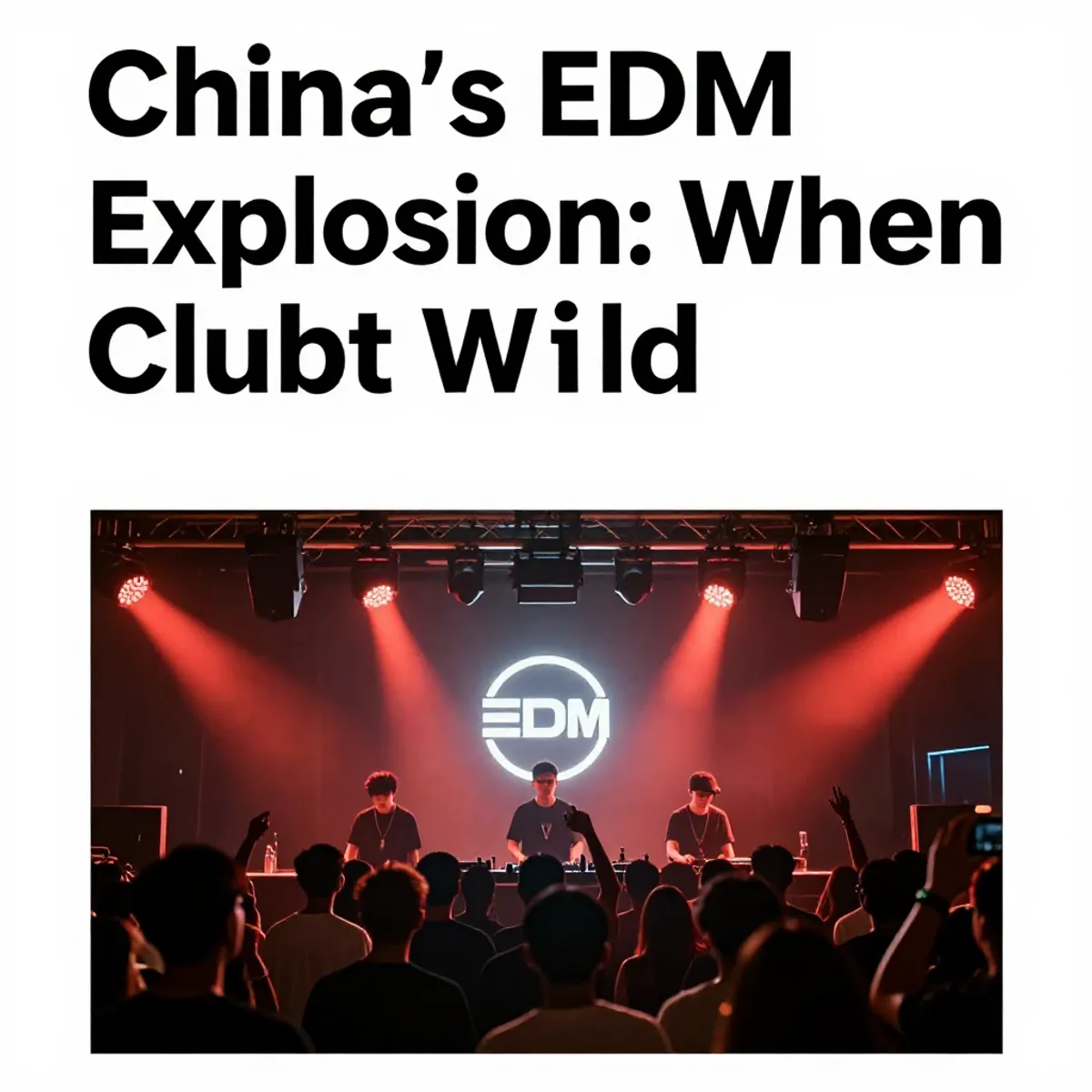
The memory is sharp. A packed club in Shanghai or Beijing, circa 2015. The air isn't just thick with heat and sweat; it vibrates with a physical, almost violent bassline.
Lasers cut through a haze of fog and smoke, illuminating a sea of hands in the air. This was the peak of a particular kind of electronic dance music, or EDM, in China. It wasn't just about the beat; it was about a collective, unhinged release.
For many expatriates and locals alike, this period from roughly 2013 to 2017 felt distinct, a golden era where the music and the crowd's reaction reached a fever pitch that seemed uniquely Chinese.
The core feeling, as recalled, was one of translation and transformation. This was the music of Western superclubs—the progressive house of Swedish House Mafia, the big room anthems of Martin Garrix, the electro house of Benny Benassi. But in Chinese venues, it was processed through a different cultural amplifier.
The energy was dialed up. The drops hit harder. The crowd's euphoria was less about cool, detached dancing and more about raw, communal catharsis.
It was the same genre skeleton, but the flesh and blood were entirely local, creating a sensation that felt both familiar and radically new.
This article is a deep dive into that specific moment. It’s an attempt to map the terrain of that scene, identify its architects, and trace what happened to that particular energy. We will explore the cultural and social conditions that allowed this frenzy to flourish, spotlight the venues and DJs who became its torchbearers, and analyze whether that specific "craziness" still exists in China's vast and ever-mutating nightlife ecosystem today. It’s a journey back to a sonic landscape that defined a generation's nightlife, and an investigation into its legacy.
A Personal Lens: Memory and Music
Nostalgia is a powerful filter. Looking back at any scene, especially one tied so closely to youth and hedonism, risks romanticizing the past. The goal here isn't to claim the music was objectively "better," but to accurately document a perceived shift in intensity and crowd dynamics.
The recollection points to a time when the primary function of the club was total, uncomplicated abandon. The music was the engine, and it was a specific, high-BPM, melody-driven, drop-centric engine.
The user's query cuts to the heart of this: was the music still the same type? And who were the names behind it? These are the practical questions that anchor the nostalgic reflection.
To answer them, we must separate the myth from the documented history of China's club culture during those years. We need to look at the playlists, the resident DJs, the touring international acts that resonated most, and the local producers who began to synthesize the Western sound with本土 (local) sensibilities. It’s a detective story where the clues are basslines and memories.
The Perfect Storm: Why 2013-2017 Was Different
Understanding this era requires context. China in the early 2010s was a nation in hyper-accelerated motion. Economically booming, socially transforming, and digitally connecting at lightning speed, the country’s major cities were pressure cookers of ambition, stress, and newfound disposable income.
Nightlife, particularly the imported concept of the Western-style "superclub," became a primary outlet. It wasn't just drinking; it was a statement, a release valve, and a social necessity all in one.
Demographic and Economic Catalysts
A key factor was the demographic. The first generation of only children, now young adults with spending power, were flocking to cities like Shanghai and Beijing. They were often white-collar workers in high-stress jobs in finance, tech, and consulting.
Their lives were regimented, competitive, and intensely public on emerging social platforms. The club offered a sanctioned space for anti-regulation. The louder, more chaotic the music and atmosphere, the more potent the contrast with their daily lives.
This created a perfect audience for high-energy, peak-time EDM that demanded nothing but surrender.
Simultaneously, the business model of clubs was solidifying. Venues like Shanghai's M2 and Mint, and Beijing's One Third (often stylized as OT) and Element, were not just bars; they were destinations. They invested heavily in international DJ bookings, Funktion-One sound systems, and spectacular production.
Their profitability depended on bottle service, VIP tables, and high cover charges. The music that filled these palaces had to be reliably anthemic, universally understood, and capable of driving the highest possible spend—the kind of music where a drop coincides with a shower of confetti and a round of expensive champagne.
The Digital Amplifier
The rise of domestic music streaming platforms like NetEase Cloud Music and QQ Music, and the continued use of international services like SoundCloud (often via VPN), was crucial. These platforms allowed for the rapid dissemination of tracks. A hit song from Ultra Music Festival could be on a Shanghai DJ's playlist within days. More importantly, they created communities and "playlist culture." A curated EDM playlist on NetEase could have millions of followers, cementing certain sounds as the "club standard." This digital infrastructure homogenized taste in a way that favored the big, melodic, and immediately gratifying sounds of the era.
The Venues: Cathedrals of Chaos
The physical spaces were as much a part of the experience as the music. These were not intimate basement parties. They were often multi-level, professionally managed, and designed for spectacle.
The sound system was a religion, the lighting rig a deity. The layout encouraged, even forced, a certain kind of dancing—packed dance floors with little room for subtlety, where a raised hand could be a signal to the DJ.
Shanghai's Fortress: M2 and Mint
In Shanghai, M2 (often associated with the M group) was arguably the epicenter. Located in a former industrial space, its main room was a cathedral of concrete and steel, with a Funktion-One system that was both revered and feared for its physical impact. The crowd was a mix of expats, affluent locals, and tourists, all there for the same relentless four-on-the-floor assault.
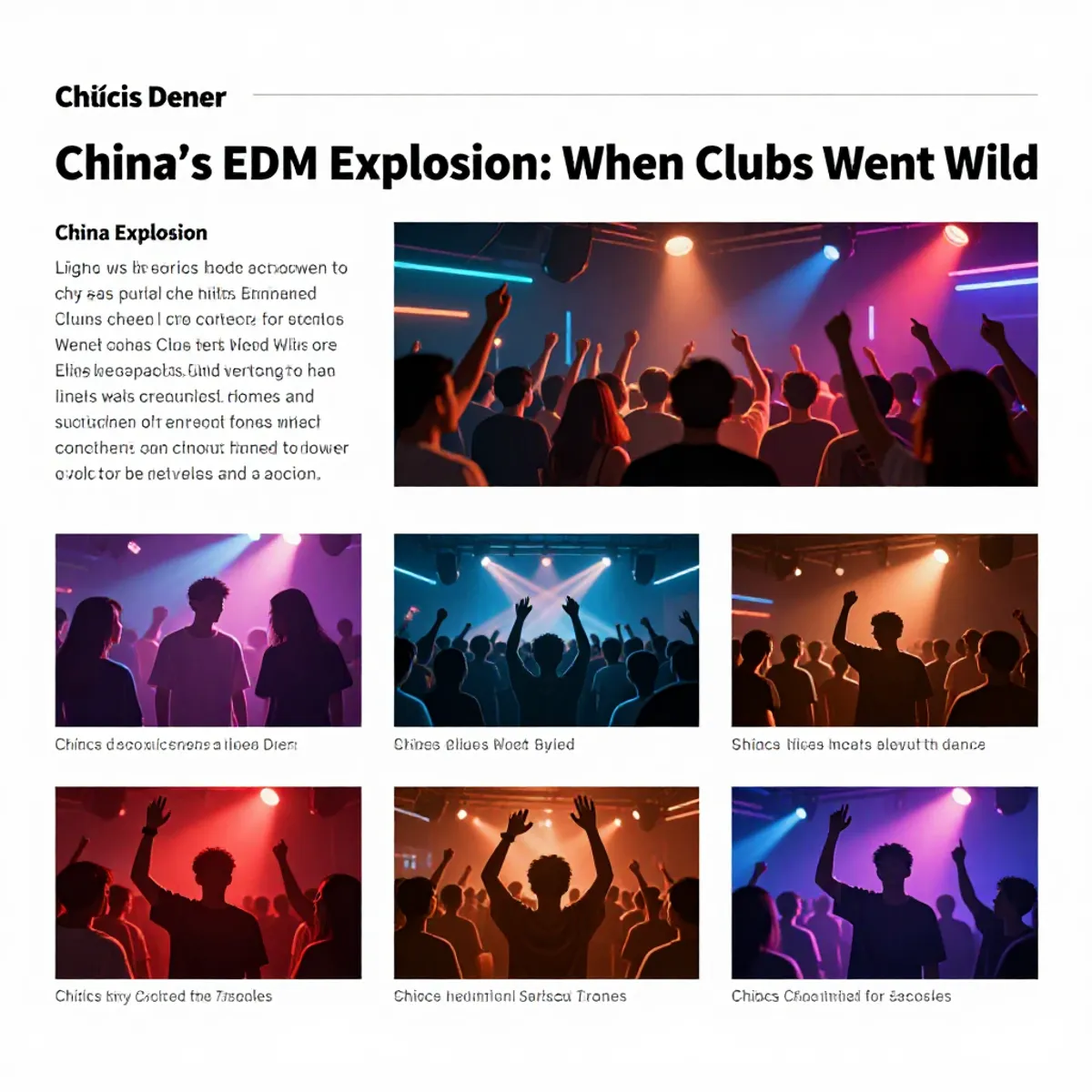
Mint, another giant, offered a slightly more upscale but equally powerful experience. Both venues booked the same roster of international big-room DJs and housed resident DJs who played that style with ruthless efficiency. The memory of leaving these places with ears ringing and a dazed, euphoric numbness was a badge of honor.
Beijing's Powerhouses: One Third and Elements
Beijing’s scene had a different, slightly grittier energy. One Third (OT), situated in the 798 art district, was known for its industrial aesthetic and a crowd that felt more "in the know." It cultivated a reputation for booking cutting-edge, albeit still mainstage, international acts. Element was another cornerstone, famous for its immersive, often themed, parties and its commitment to that powerful, clean sound.
The Beijing crowd was perhaps more selective, but when the right track hit, the reaction was just as primal. These venues created the physical container for the "craziness" to unfold.
The DJs: Architects of the Frenzy
The music didn't play itself. It was curated, mixed, and amplified by a cadre of DJs and promoters who understood the assignment. They fell into two clear categories: the international imports who provided the blueprint and the local heroes who executed it with local flair.
The International Blueprint
The sound was defined by a wave of European and American producers. Names like Avicii, Swedish House Mafia, Hardwell, Armin van Buuren (in his more upbeat, "Blah Blah Blah" phase), Dimitri Vegas & Like Mike, and Martin Garrix were not just popular; they were foundational. Their tracks—"Levels," "Don't You Worry Child," "Spaceman," "Animals"—were the anthems.
When a DJ, local or foreign, dropped one of these, the room collectively recognized it and responded with a surge of energy. These tracks were the common language, the proven crowd-rakers. Booking a DJ who could expertly mix these anthems was the primary job requirement for residents during this period.
The Local Torchbearers
This is where the user's question about specific names becomes critical. Who were the Chinese DJs embodying this "different level of craziness"? They were the residents and regional stars who played these anthems but injected a local tempo and urgency.
Names from the entity list like M2 (likely referring to the venue's residents or a specific DJ alias), Teen, and collectives like Elements (which also functioned as a promoter/label) were central. One Third as a venue had its own stable of residents.
DJ Chace (though his sound evolved rapidly) was a prominent figure in Shanghai, known for high-energy, technical sets that could span the big-room spectrum. Howie Lee, whilelater known for more experimental bass music, was part of the earlier wave of producers/DJs who understood the power of a heavy kick drum. Promoters like DJS (likely a major promoter entity) were the logistical backbone, bringing the international acts and creating the event brands that drew the crowds.
These were the figures on the ground, night after night, reading the crowd and deciding when to drop that one track to ignite the room. Their skill was in maintaining that relentless, euphoric pace for hours.
The Sound: Deconstructing the "Crazy"
What did this "craziness" actually sound like? It was a specific subset of the broader EDM boom. It was not the deep, hypnotic techno of Berlin nor the melodic trance of the 90s.
It was the peak-time, festival-oriented, big-room house and progressive house of the early 2010s. Its characteristics were unmistakable:
High BPM: Often 128-130 beats per minute, creating a sense of urgent propulsion. Anthemic Melodies: Simple, soaring synth leads that were instantly hummable and emotionally direct. The "Drop": The structure was predictably explosive: a long, tension-building build-up with rising synths and drum rolls, culminating in a moment where the main melody and kick drum hit simultaneously. This was the moment of collective release. Minimal Vocals: Vocals, when present, were usually chopped, repeated phrases ("I just wanna dance!") or simple, empowering choruses. The voice was another instrument in the wall of sound, not a narrative focus. * Production Polish: The sound was clean, powerful, and massive, designed for large, professional sound systems. It was the audio equivalent of a stadium light show.
The Chinese interpretation, as felt, amplified these traits. The DJs might play the same tracks, but the mixing was often faster, with shorter intros/outros, creating a more continuous, less reflective flow. The crowd's reaction was less about appreciating a clever mix and more about the uninterrupted, cumulative effect of the music's emotional payload. The "crazy" was in the endurance and the total lack of restraint in the response.
The Cultural Translation: Why It Felt Different
The same song played in Ibiza and in Shanghai would elicit different energies. Why? The cultural context of the listener is everything.
For the young Chinese clubber of 2013-2017, this music was doubly foreign—it was Western and it was a subculture. There was no deep historical connection to house or techno music as there is in Europe or parts of the US. It was a fresh, modern, globally imported phenomenon.
This lack of baggage meant there were fewer pretensions. The music was judged purely on its immediate physical and emotional impact: did it make you want to move and feel euphoric?
In addition, the social dynamics in the club differed. The concept of "saving face" and rigid social hierarchy in daily life could be temporarily suspended on the dance floor. The dark, loud, anonymous space allowed for a release of emotion and physicality that was less common in other social settings.
The collective, almost ritualistic jumping and hand-raising during a drop was a shared, uncomplicated joy. There was a palpable sense of "we are all here, together, for this same feeling." That communal catharsis, amplified by the sheer volume and the pressure of the crowd, created the perception of a "different level" of intensity.
The Shift: What Changed After 2017?
No scene remains static. By the late 2010s, a noticeable evolution occurred. The question "Is the current music still the same type?" requires a nuanced answer: the core genre of big-room EDM declined globally, and China was not immune. a few interconnected factors drove the change.
The Global Genre Fatigue
By 2016-2017, the "EDM boom" was widely declared over in the West. The sound had become formulaic, overplayed, and creatively stagnant. The same synth leads and cookie-cutter drops were heard at every major festival.
A new wave of sounds began to dominate international playlists: melodic techno, future bass, trap, and a resurgence of deep house and tech house. These genres were slower, more atmospheric, and often more focused on subtle production details than on explosive, simple drops. The global DJ elite shifted their focus, and the bookings in Chinese clubs followed suit.
The Rise of the Chinese Producer
Concurrently, a homegrown production scene matured. Young Chinese producers, having absorbed the Western EDM playbook, began to experiment. They started fusing the powerful sound design they’d learned with traditional Chinese instruments (the erhu, pipa), pentatonic scales, and local vocal samples.
Artists like Chace (whose sound moved into darker, more complex territories), Howie Lee, Mickey Zhang, and collectives like SVBKVLT began to gain international recognition for a sound that was unmistakably global but rooted in a Chinese sonic identity. This was no longer a translation of Western music; it was original creation. The "crazy" evolved from a shared, simple euphoria to a more complex, sometimes darker, and intellectually engaging experience.
Market Maturation and Fragmentation
The club market itself matured. The one-size-fits-all superclub model faced competition from more specialized venues: techno basements, hip-hop clubs, live music bars, and high-end cocktail lounges. The audience fragmented.
The massive, monocultural crowd seeking only big-room anthems dissipated into subcultures with more specific tastes. The "craziness" didn't disappear; it was redistributed into niche scenes where the intensity was different—more hypnotic and sustained in a techno dungeon, more aggressive in a bass music room, but less universally shared across a single, cavernous main room.
The Current Soundscape: A Multiverse of Scenes
To answer directly: No, the current dominant music in major Chinese clubs is not the same type as the 2013-2017 peak-time big-room EDM. That specific sound is now a genre niche, often played at retro-themed parties or by a small set of DJs catering to a nostalgic expat crowd. The mainstream in 2026 is more diverse.
In Shanghai and Beijing today, you will find: * Tech House / Melodic Techno: The dominant sound in many "cool" clubs. Slower, groovier, with a focus on hypnotic rhythms and atmospheric layers. Think artists like Black Coffee, Bedouin, or the Afterlife label roster.
Bass Music: A strong scene for dubstep, drum & bass, and riddim. The energy is high but different—more about complex, wobbling basslines and breakbeats than melodic euphoria. Hip-Hop & Trap: Hugely popular, especially in clubs targeting a younger, streetwear-influenced crowd.
The energy is aggressive and rhythmic, but not built around the "drop" structure of old EDM. * Local Fusion: The most exciting development. Producers blend electronic structures with Chinese folk melodies, opera vocals, or local poetic rhythms.
This music plays in both underground spaces and at major festivals like STORM or Midi Modern Music Festival, which now have dedicated stages for this hybrid sound. * The Nostalgia Niche: There are still events, often promoted on platforms like Dianping or WeChat, explicitly themed around "2010s EDM" or "Golden Age Club." These are where one can reliably hear the anthems of the 2013-2017 era. The crowd at these is often a mix of original fans and younger people discovering it as "retro."
Rediscovering the Sound: A Listener's Guide
For the user wanting to "revisit some of the music to dive back into the memories," the path is clear but requires some digital archaeology. The specific playlists and DJ mixes from that era are not always front-page on streaming services, but they exist.
Search Strategies
On NetEase Cloud Music (Wangyiyun) and QQ Music, use specific Chinese keywords: "2015 上海 俱乐部 音乐" (2015 Shanghai club music), "大空间 EDM" (big room EDM), "电音 怀旧" (electronic music nostalgia). Search for the DJ names mentioned. Look for mixes from the era on SoundCloud. a number of international DJs who toured China posted their live sets from venues like M2 or OT. Search "Live at M2 Shanghai 2015" or "One Third Beijing DJ set." The entity "Elements" likely refers to a promoter or label. Searching "Elements China" or "Elements Shanghai" may uncover archived events and associated artist pages. YouTube is a treasure trove for old festival sets (Ultra, Tomorrowland) from 2012-2016, which formed the backbone of those club nights. The anthems are all there. * Weibo (Sina Weibo) archives: Searching for the venue names (M2, Mint, One Third) from 2013-2017 can pull up old promotional posts with artist lineups and sometimes even short video clips.
Key Anthems to Start With
To capture the essence, begin with these globally huge tracks that were the staples: Avicii - "Levels" Swedish House Mafia - "Don't You Worry Child" Martin Garrix - "Animals" Hardwell - "Spaceman" Dimitri Vegas & Like Mike - "Mammoth" Nicky Romero - "I Could Be The One" Alesso - "Years" W&W - "Bigfoot" or "Rampage"
The local DJs of the era would have built their sets around these pillars, mixing them with other tracks from labels like Spinnin' Records, Revealed Recordings, and Ultra Music.
The Legacy: More Than Just Nostalgia
The 2013-2017 Chinese EDM boom was not an isolated bubble. It was a crucial developmental stage. It built the physical infrastructure (clubs, sound systems), business models (bottle service, international booking agencies), and, most importantly, a mass audience for electronic music. That audience did not vanish; it matured and splintered.
The "craziness" of that era can be seen as the adolescent phase of Chinese club culture—loud, simple, and exuberant. The current scene is its young adulthood: more sophisticated, diverse, and creatively confident. The global recognition of Chinese producers working in electronic music is a direct legacy of that boom. They learned the language of international dance music in those very clubs and now speak it with a native accent.
The desire to revisit that sound is natural. It was the soundtrack to a specific time of personal and national discovery. The music's power then was in its universality and its sheer, undemanding joy.
It was a shared, physical experience in an increasingly digital and fragmented world. Recapturing that feeling through a playlist is an act of time travel, a way to reconnect with a version of oneself and a version of a city that felt relentlessly, beautifully alive.
Conclusion: The Echo in the Bass
The clubs of 2013-2017 in Shanghai and Beijing created a unique cultural moment. They took a Western genre—peak-time, big-room EDM—and through a combination of demographic pressure, commercial ambition, and a crowd hungry for uncomplicated release, amplified its most ecstatic qualities into something that felt novel and overwhelming. The DJs, both international and local, were the conduits. The venues were the amplifiers.
That specific sound and its associated frenzy have undeniably evolved. The global music cycle moved on, and China's own creative voices grew louder and more distinct. The contemporary scene is a vibrant mosaic, not a monolith.
Yet, the DNA of that era persists. It lives in the continued importance of the drop, in the expectation of communal euphoria on the dance floor, and in the foundational business of playing music that makes people forget, for a few hours, everything else.
For those seeking to relive it, the digital archives are rich. The anthems are a search away. Putting on "Animals" or "Don't You Worry Child" today will not perfectly reconstruct the sweat-drenched, laser-scanned reality of a Shanghai club in 2015.
But it will trigger the core memory of that feeling—the pure, bass-driven, collective "crazy" that defined a golden age of Chinese nightlife. The music remains a time capsule, and the impulse to mix it, to play it again, is the highest compliment to its enduring power. The echo of that bass is still felt, not just in nostalgia, but in the very structure of how China dances now.
Responses • 0
0/2000
ID: 1326
Chris
Offline
2 hr
Visited
From
Bakersfield, United States
Send Message