China's Driver Training on Camera: Rules and Realities
AI Learn Chinese
3 hr • 0 read
Navigating legal and cultural hurdles for filming driver training content in China. Key regulations, practical tips for 2026.
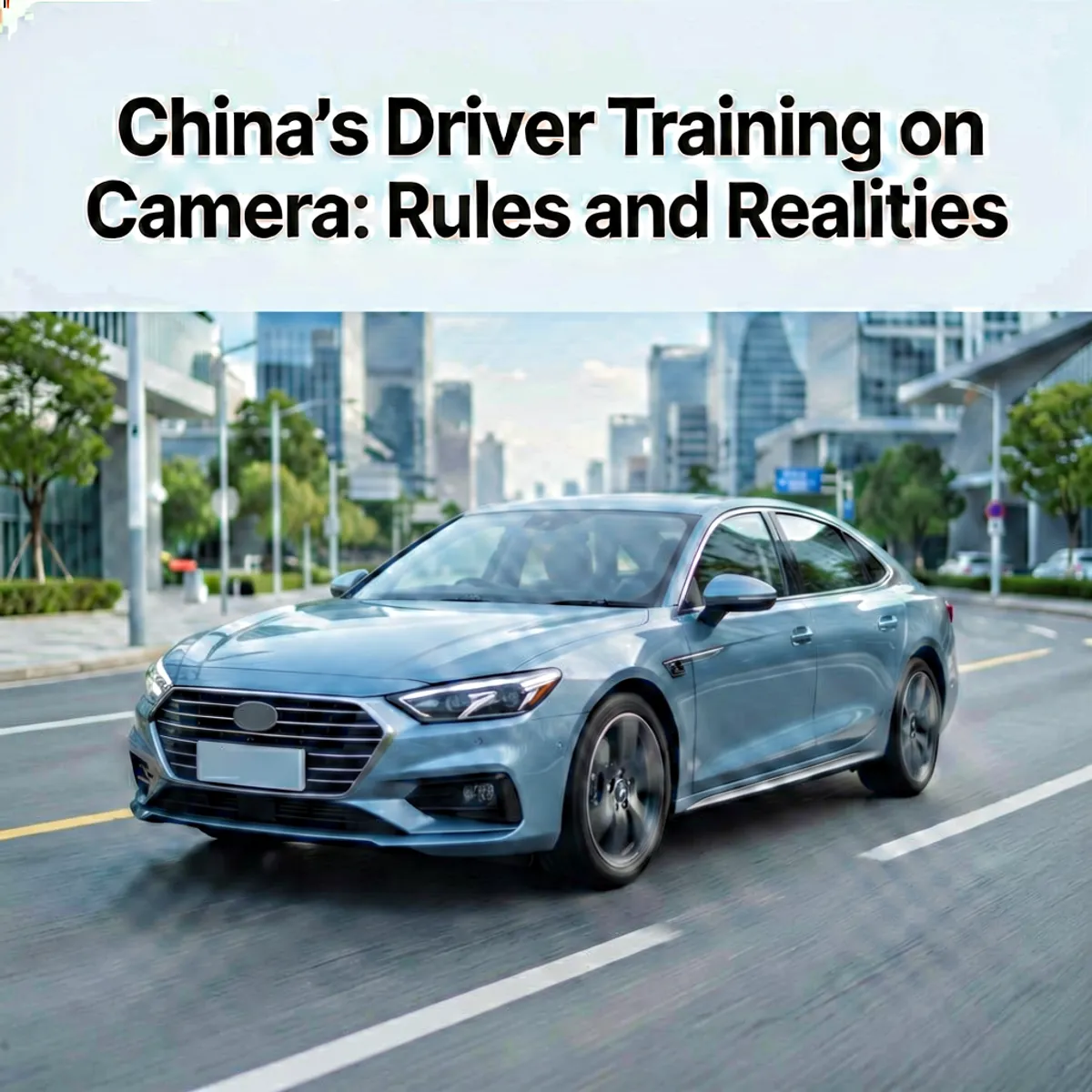
Introduction
For over a decade, our Canadian production company has specialized in creating practical driver training content for a global audience. Our signature method involves mounting discreet action cameras on the front and rear of a vehicle, then driving through various countries to capture authentic, real-world driving scenarios. This footage forms the core of our educational modules, showing learners the genuine challenges of roads from Bangkok to Berlin. The approach is simple, mobile, and designed to feel immersive.
We are now planning a significant refresh of our library and have identified China as a prime target. The country's road networks are among the most extensive and dynamic in the world, offering unparalleled diversity—from the chaotic merges of Shanghai ring roads to the mountainous hairpin turns of Yunnan. Capturing this environment would provide immense value to our customers. But, our initial online research has revealed a landscape that is far more complex than we encountered on previous trips, even just five years ago.
The recurring theme in forums, legal briefs, and filmmaker blogs is one of caution, often bordering on prohibition. The central questions are clear: Is it legally permissible to mount cameras on a vehicle and drive through Chinese cities to film public roads for commercial educational purposes? And if footage is obtained, what are the tangible risks of exporting that data out of the country? This article synthesizes the current regulatory, practical, and cultural realities we must navigate, moving beyond simple online warnings to a actionable framework for 2026.
The Evolving Legal Landscape
Understanding the legal parameters is the non-negotiable first step. The assumption that public spaces in any country are automatically fair game for filming is a dangerous oversimplification, and China's legal framework has evolved rapidly in the last decade, particularly concerning data and surveillance.
National Laws on Public Filming
China's primary legal reference for this activity is the Road Traffic Safety Law and its implementing regulations. These statutes focus on driver behavior and vehicle operation, not on incidental filming. There is no explicit national law that forbids a driver from having a camera mounted on their own vehicle for personal documentation, such as a dashcam. In fact, dashcams are widely commercially available and used in China for accident evidence.
The critical legal distinction lies in the purpose and scale. Personal, non-commercial use for private dispute resolution generally falls into a grey area tolerated by authorities. Commercial production, however, transforms the activity.
Your project involves systematic filming across multiple locations with the intent to distribute the footage globally for profit. This shifts the activity from personal documentation to a form of media production that may require permits. The key concern for authorities is not the camera itself, but the project's nature: is it journalism, tourism, surveillance, or commercial stock footage?
Each category has different regulatory touchpoints.
In addition, China's Public Security Administration Punishment Law grants police broad discretion to maintain public order. An officer could theoretically deem your conspicuous filming—especially if involving multiple vehicles or crew—as "disturbing public order" or "gathering to cause trouble," particularly if local residents complain. The lack of a specific "filming permit" law means enforcement can be subjective and localized, heavily dependent on the disposition of the local public security bureau (PSB) you encounter.
The Surveillance State Factor
Any discussion of filming in China must contextualize it within the world's most extensive public surveillance network. An estimated 200 million+ CCTV cameras monitor streets, plazas, and buildings. Citizens are highly aware of being recorded by the state. Your action cameras, mounted on a moving vehicle, could be misidentified by onlookers or even local police as unauthorized surveillance equipment.
This perception is the single greatest practical risk. A concerned citizen might report your vehicle as "suspicious," leading to a stop by PSB officers. The officers' primary concern will be national security and social stability.
You must be prepared to instantly and clearly articulate your benign, commercial educational purpose. Having official-looking documentation, even if not legally mandatory, becomes a crucial tool for de-escalation. The psychological environment is one where recording is normal, but private recording for foreign commercial purposes is not.
Data Sovereignty and Export Controls
This is the most legally perilous aspect identified in your research and is absolutely critical. China's Cybersecurity Law (effective 2017) and the subsequent Data Security Law (2021) and Personal Information Protection Law (PIPL, 2021) create a formidable regime around data. The core principle is data localization: important data and personal information collected within China must be stored on servers within China.
Your footage, especially if it inadvertently captures recognizable faces, vehicle license plates (a major personal identifier in China), or even specific locations of infrastructure, can be classified as "personal information" or "important data." Exporting this data—whether physically on a hard drive or digitally via the internet—triggers these laws. The PIPL, in particular, requires a separate, explicit consent from individuals whose personal information is being transferred abroad, a practical impossibility for street filming.
The penalties for violations are severe, including hefty fines, confiscation of equipment, and potential criminal liability for company representatives. The phrase "huge problem for the exporter" is not an exaggeration. Chinese customs and the Cyberspace Administration of China (CAC) have the authority to inspect digital media leaving the country.
A flagged file containing un-cleared footage could be seized, and your local contact or fixer could face serious repercussions. This risk exists even if the filming itself went unnoticed, as the export checkpoint is a separate legal barrier.
Case Studies: Precedents and Penalties
While direct publicized cases of foreign filmmakers being prosecuted for dashcam-style street footage are rare (due to the sensitive nature of such cases), the legal framework is actively enforced. We see clear precedents in other sectors: Journalism: Foreign journalists regularly face harassment and denial of entry for "engaging in activities not in accordance with their visa," which often includes unsanctioned filming. Tech Companies: Major international firms have been fined under the PIPL for data transfer violations. * Documentary crews: Numerous accounts exist of crews being detained, forced to delete footage, or denied permits for projects deemed sensitive.
The message is consistent: the state asserts comprehensive control over data that originates within its borders. Your project's data is a commodity the state asserts a right to control. The assumption that you can film and freely ship the footage out is arguably the most significant misconception to correct.
Practical Considerations on the Ground
Assuming you decide to proceed with a permit-seeking approach, the operational realities are daunting. This is not a "drive and shoot" endeavor as it might be in Canada or much of Europe.
Equipment and Conspicuousness
The sleek, small action cameras that work elsewhere become a liability. In a country where professional video equipment is often associated with state-approved media or foreign intelligence, simplicity is key. You must use the most consumer-grade, non-descript cameras possible.
Mounts should be as隐蔽 (yǐnbì - concealed) as standard aftermarket dashcam mounts. Avoid any rigging that looks professionally engineered or involves additional wiring visible from outside the vehicle.
The vehicle itself is part of the equipment. A standard, common Chinese-market sedan or SUV is preferable to a foreign luxury vehicle or a clearly marked production van. You must blend into traffic completely.
This means no external branding, no additional antennas, and no crew members visibly operating cameras from windows. The entire operation must look like an ordinary tourist or business traveler using a dashcam.
Permits: The Paper Trail
There is no single "filming permit" application. The process is a multi-layered bureaucratic navigation that must start months in advance. The primary pathway for commercial filming involving public spaces typically involves:
1.
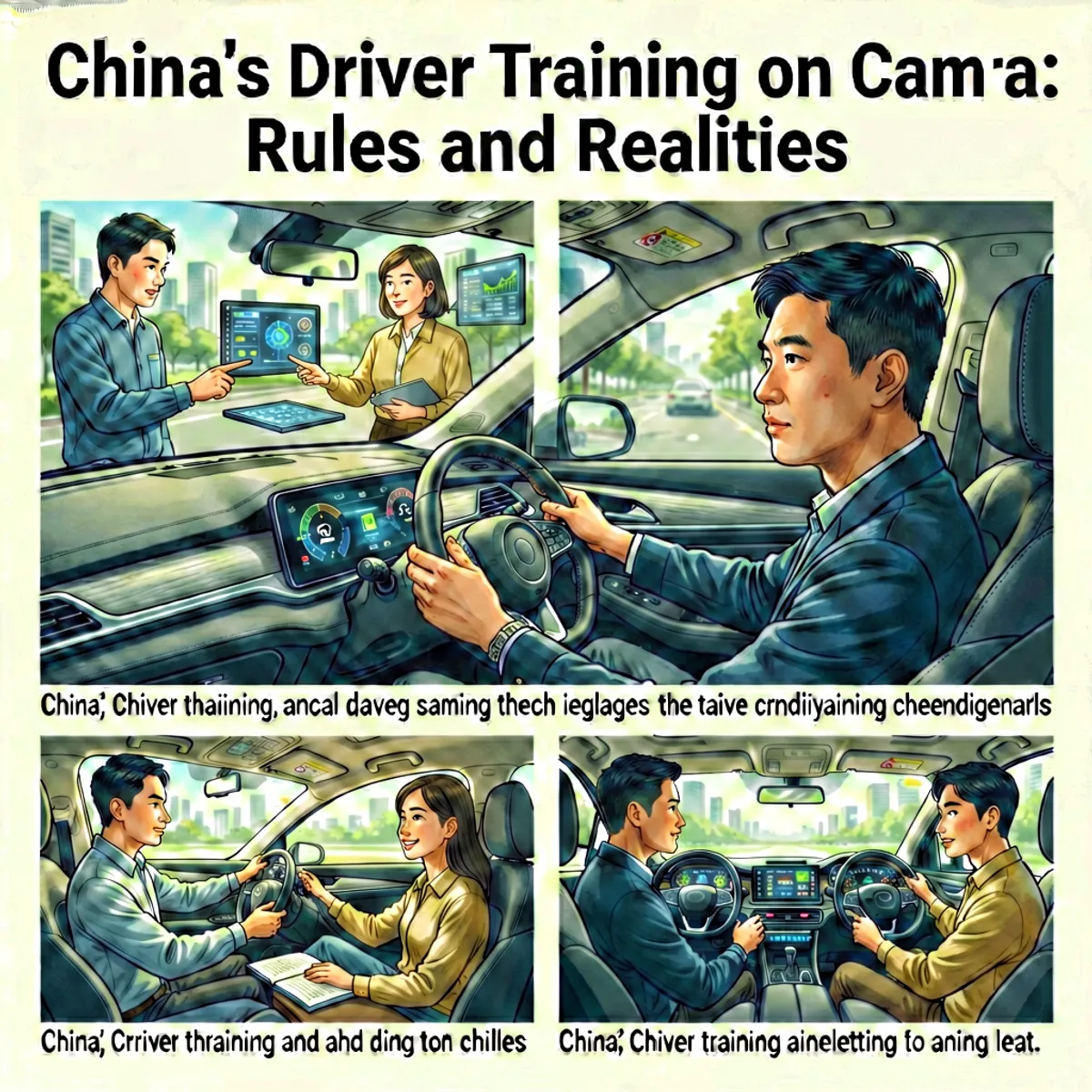
Local Film Administration: You must apply through the provincial or municipal Film Administration Bureau (电影管理局). This requires a detailed proposal, script or shooting plan, crew list with passport copies, and vehicle details. 2.
Public Security Bureau (PSB): Concurrently or subsequently, you need approval from the local PSB, specifically the department overseeing foreign nationals and public order. They will assess the security implications. 3.
Transportation Authorities: If you plan to film on specific highways, tunnels, or near major transport hubs, separate notifications or permits from the local Traffic Management Bureau (交通管理局) may be required.
Each step requires a Chinese-speaking legal or production representative. The paperwork is extensive, and rejections are common without a compelling, "positive" narrative for your project. A project about "safe driving practices" is more palatable than one about "road chaos." The process is slow, expensive, and offers no guarantees. For a 2026 shoot, beginning this process by early 2025 is imperative.
The Local Partner Imperative
Attempting this without a established, reputable Chinese production fixer or legal partner is virtually impossible. This partner performs several non-negotiable functions: Official Navigation: They know the correct departments, the right officials to approach, and the unspoken protocols for submissions. Cultural Bridge: They can phrase your project's purpose in ways that align with official sensibilities, emphasizing safety, education, and positive international exchange.
Ground Truth: They provide real-time intelligence on local PSB attitudes, recent enforcement trends, and which locations are considered sensitive (e.g., near military installations, government buildings, or in Xinjiang/Tibet). Liaison: They become the official Chinese entity responsible for the project, shielding your foreign team from direct, potentially confrontational, bureaucratic interaction.
Finding this partner requires due diligence. They must have a proven track record with foreign media, understand data laws, and be willing to assume legal responsibility for the permit process. Their fees are substantial but are a cost of doing business, not an optional expense.
Cultural Context: Beyond the Legal Text
Even with perfect permits and a compliant export plan, cultural understanding is vital for smooth operation and avoiding unintended incidents.
Privacy in a Collective Society
Concepts of privacy in public differ. While the state conducts mass surveillance, individual citizens often have a heightened sense of being watched by fellow citizens and a strong aversion to "losing face" (丢脸, diū liǎn). Filming someone without their explicit consent, even in a crowd, can cause significant distress and lead to immediate confrontation. The social reaction is a major hazard, independent of legal risk.
Your crew must be trained in de-escalation. The protocol is: if approached, stop filming immediately, apologize profusely, and if requested, delete the specific footage on the spot. Offering a business card (from your Chinese partner) can help.
Arguing about "public space rights" is culturally ignorant and legally risky. The goal is to be unobtrusive to the point of invisibility. Long lenses, lingering shots on individuals, or focusing on traffic violations involving specific drivers are absolute prohibitions.
The Social Credit System's Shadow
While the national Social Credit System is still nascent in its comprehensive form, its local iterations and associated blacklists are very real. A complaint from a citizen about "suspicious foreign filming" could be logged. If your local partner or vehicle driver is deemed to have caused a "social dispute," they could face local blacklisting, affecting their own travel, business licenses, or access to services.
This creates a powerful incentive for your local team to avoid any situation that generates a complaint. It means your operational mandate must include being a "good guest" that causes zero local friction, not just a legal one.
Alternative Approaches: Achieving Goals Without the Hassle
Given the high barriers, a reassessment of the core objective—"authentic Chinese driving footage"—is prudent. a few alternative strategies can achieve similar educational outcomes with dramatically lower risk.
Animation and Simulation
The global driver training industry increasingly uses high-fidelity CGI and game-engine simulations (like Unity or Unreal Engine) to create scenarios. Investing in a partnership with a Chinese animation studio could yield custom, hyper-realistic driving scenarios for Chinese roads. This approach offers complete control, no legal risk, and the ability to highlight specific hazards (e.g., the unique behavior at a Chinese four-way stop) without ethical concerns. The downside is the loss of genuine, unpredictable human behavior, but for foundational training, it may be sufficient and future-proof.
Stock Footage and Local Libraries
China has a growing ecosystem of licensed stock footage providers (e.g., 视觉中国 - VCGFilm). These companies have already navigated the legalities of capturing and licensing footage of Chinese cities and roads. Purchasing licenses from them is a clean, legal solution.
The footage may be less "raw" than your usual style, but it is pre-cleared for commercial export. This is the lowest-risk path to obtaining usable Chinese road visuals.
Collaborative Productions
A more sophisticated alternative is a co-production with a legitimate Chinese media or educational entity. Your Canadian company provides the pedagogical framework and global distribution; your Chinese partner provides the filming crew, local permits, and data handling within China. The final product is a co-created work, with the Chinese entity holding the necessary domestic rights to the footage and exporting only the final, approved edited product under a specific agreement.
Ethical Representation and Cultural Sensitivity
Choosing an alternative approach does not absolve the project from ethical responsibilities. Whether using animation, stock footage, or a co-production, the portrayal of Chinese driving culture must avoid reinforcing stereotypes or presenting a sensationalized view. The "chaos" of Shanghai ring roads, for instance, is a complex adaptive system, not mere anarchy.
A responsible training module should contextualize behaviors within China's rapid motorization history, urban density, and differing traffic etiquette norms. Collaborating with Chinese driving instructors or traffic psychologists to script scenarios ensures authenticity and cultural respect. The goal is to educate global drivers about differences, not to depict a "primitive" or "inferior" system.
This ethical framing is crucial for market acceptance in China itself and for maintaining your brand's integrity as a culturally aware educator.
Technical Adaptation for Chinese Road Realities
A significant portion of your library's value lies in its unvarnished realism. To replicate this for the Chinese context—whether through simulation or curated footage—requires deep technical study. Chinese roads present unique hazards: the prevalence of e-bikes and scooters weaving through traffic, sudden lane changes without signaling on multi-lane highways, complex pedestrian flows at unmarked crossings, and the specific dynamics of "queue jumping" at toll plazas.
Your technical team must analyze hundreds of hours of existing (legally obtained) footage to catalog these patterns. For a simulation partner, this means programming AI drivers with these specific behavioral algorithms. For stock footage selection, it means creating a rigorous shot list that prioritizes these nuanced moments over generic highway scenes.
The vehicle dynamics also differ; many Chinese domestic cars have different sightlines, power delivery, and braking characteristics than Western models, which affects the viewer's learning transfer.
The "Localization" of Training Modules
Directly translating your existing modules with Chinese footage is insufficient. The pedagogical approach itself may need localization. Chinese learner drivers often have different foundational knowledge; for example, the concept of "right-of-way" (优先通行权) is taught with specific, rule-based hierarchies that differ from the more discretionary "yield" culture in places like Canada.
Your module explanations, voiceovers, and on-screen text must be adapted by a bilingual driving education expert. Key terms like "merge" (并线), "lane discipline" (车道保持), and "defensive driving" (防御性驾驶) have specific connotations in Chinese driver education. Partnering with a Chinese driving school to review and endorse the final content adds tremendous credibility and ensures the lessons resonate rather than confuse.
This is a content adaptation challenge as significant as the filming one.
Navigating the "Sensitive Location" Matrix
Even with permits, a granular location risk assessment is mandatory. Certain areas are effectively off-limits for your project, regardless of paperwork. These include: * Political Centers: Any street with a direct view of government buildings, party headquarters, or military installations.
Ethnic Minority Regions: Filming in Xinjiang, Tibet, and parts of Inner Mongolia carries heightened scrutiny and often requires additional, nearly impossible-to-obtain approvals from state security apparatus. Critical Infrastructure: Bridges, tunnels, ports, and major power stations are considered "key national security sites." Their surrounding roads are monitored intensely. * "Special Administrative Zones": Areas like Beijing's central business district during major political meetings or Shanghai during large international summits become temporary no-filming zones.
Your local partner must provide a dynamic, regularly updated map of these zones. The operational rule must be: when in doubt, do not film. The risk of a single incident in a sensitive location jeopardizes the entire project and your team's future ability to operate in China.
Building a Long-Term China Strategy
Given the immense entry cost, a one-off project is hard to justify. The permit process, partner vetting, and cultural learning curve suggest a multi-year commitment. Frame your 2026 shoot not as a single expedition but as Phase One of a three-year plan.
Phase One focuses on building the partnership, securing a limited set of "clean" location permits (perhaps in second-tier cities like Chengdu or Hangzhou initially), and producing a pilot module. Phase Two, in 2027, expands to more complex urban environments based on lessons learned. Phase Three explores the co-production model for a full series.
This staged approach spreads cost, builds trust with authorities through a proven track record, and allows for iterative refinement of your cultural and technical approach. It signals to Chinese partners that you are serious about a sustainable, respectful presence, not just extracting a novelty asset.
The Unavoidable Reality of Data Handling On-Site
Regardless of the final production model, the moment data is captured on Chinese soil, your data handling protocol is activated. This is non-negotiable. Your local partner must establish a compliant, China-based data storage workflow from day one.
This means: 1. All footage is ingested daily onto encrypted hard drives stored physically at the partner's secure, China-based office. 2.
No footage is uploaded to foreign cloud services (Google Drive, Dropbox, etc.) from within China. 3. Preliminary editing and logging, if done on-site, uses software with licenses valid for China and saves only to local, encrypted servers.
4. The transfer of any data out of China for post-production must follow a pre-agreed, documented process. This typically involves the Chinese partner reviewing all footage, flagging any problematic segments (clear faces, license plates, sensitive locations), and then transferring only the "cleared" material via a secure, CAC-compliant channel to your foreign team.
The raw footage remains in China under the partner's control. This separation is a legal safeguard and a practical necessity. Your contract with the partner must explicitly define this data stewardship role and their liability for any breach.
Contingency Planning: When Things Go Wrong
No matter how thorough the preparation, encounters with authorities or citizens can occur. Your team's contingency plan must be drilled. * For a PSB Stop: The local partner's designated liaison must be the primary interlocutor.
The foreign crew should remain silent, polite, and non-confrontational. Have a single, laminated "Project Overview" card in Chinese, stating the permit number (if obtained), partner company name, and contact number. Do not volunteer information.
Ask politely if you may contact your partner. rarely resist a request to view or delete footage. For a Citizen Confrontation: The crew member approached must immediately cease filming, apologize sincerely ("对不起,打扰了" - Duìbuqǐ, dǎrǎo le* - "Sorry to bother you"), and offer to delete the specific shot if requested.
Do not engage in debate. Defer to the local driver/partner to handle the social interaction. Equipment Seizure: Have a pre-packed, separate bag containing all personal electronics (phones, laptops) that are not* project-related.
Be prepared to surrender project drives if demanded, knowing your partner's legal team will work to recover them. Do not have personal backups of project data on personal devices. The financial and operational impact of a seizure or shutdown must be budgeted for as a potential total loss.
Insurance for such political/confiscation risk is available but expensive and complex.
The Final Risk Calculus: A Decision Matrix
By 2026, the landscape will not be simpler. The decision to pursue Chinese footage must rest on a clear matrix weighing: 1. Strategic Value: How critical is authentic Chinese footage to your product's market differentiation versus using simulation/stock?
2. Resource Commitment: Can you allocate $150,000+ for permits, partner fees, legal counsel, and contingency over two years, with no guarantee of success? 3.
Risk Appetite: Is your company prepared for potential detention, deportation of staff, permanent denial of entry for key personnel, and reputational damage from a publicized incident? 4. Market Access: Does producing this content significantly improve your ability to sell into the Chinese domestic market itself, creating a longer-term revenue stream that justifies the risk?
If the answer to several of these is "no" or "uncertain," the alternative approaches—particularly the co-production or high-end stock footage routes—emerge not as compromises, but as the only strategically sound paths forward. The era of the intrepid foreign filmmaker casually capturing public roads for global sale is definitively over in China. The new paradigm is one of structured partnership, absolute data compliance, and cultural humility.
Your 2026 plan must be built on this new reality.
Conclusion
The landscape for filming driver training content in China has irrevocably changed. The old model of a foreign crew driving with cameras is no longer viable under the current regime of data sovereignty and pervasive surveillance. The online warnings you found are not myths; they reflect a sober legal reality where data export controls are the paramount concern, not just the act of filming.
Our path forward must be one of extreme diligence and strategic adaptation. The recommended sequence for 2026 is: first, engage a top-tier Chinese legal consultant specializing in data and media to get a definitive opinion on your specific project scope. Second, based on that advice, decide between a full permit application (with a premium local partner) or pivoting to one of the alternative models—stock licensing or a co-production. Third, if proceeding, design the shoot around maximum inconspicuousness and zero local complaints, treating cultural sensitivity as a operational requirement equal to legal compliance.
The value of authentic Chinese driving footage remains high. But the cost of acquisition has shifted from primarily logistical to primarily legal and cultural. Success will not come from a rugged, independent approach, but from meticulous partnership, deep respect for local norms, and a willingness to structure the project within China's regulatory framework from the very first planning stage. The goal is not to film despite China's rules, but to film with China's rules as the foundational blueprint.
Responses • 0
0/2000
ID: 1326
Chris
Offline
3 hr
Visited
From
Bakersfield, United States
Send Message