China Travel Budget Stroller: Sturdy, TallPusher Friendly?
AI Learn Chinese
3 hr • 0 read
Ideal 20day China travel stroller: budgetfriendly, sturdy, holds 25kg child 5kg bag, suits tall pushers, and briefly supports 65kg adult.
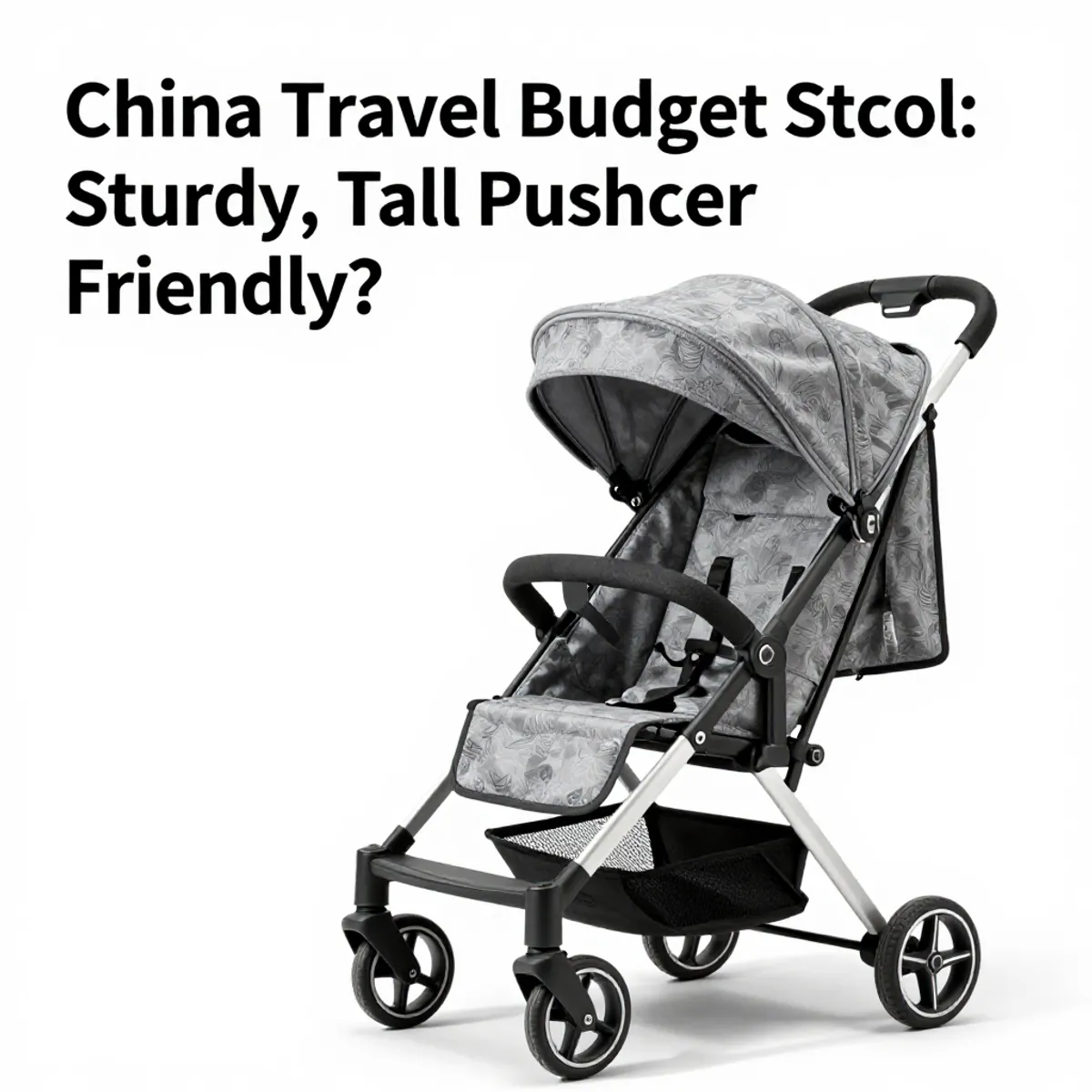
The 20-Day China Stroller Challenge
Planning a three-week family trip to China is an exciting adventure. For many parents, the logistics of navigating crowded cities, ancient sites, and varied terrain with a young child are a top concern. A reliable stroller becomes a critical piece of gear.
This article addresses a very specific and common parental dilemma: finding a cheap, tough, and tall-friendly stroller for a temporary, intensive 20-day journey. The goal is not a long-term investment but a short-term workhorse that can be left behind or given away without financial regret. We will dissect the precise weight, height, and durability requirements, then explore practical solutions available within China itself.
The core constraint is budget. Since the stroller’s service life is planned to be exactly the trip’s duration, spending on a premium long-term model is hard to justify. This shifts the focus from brand reputation to immediate, tangible specifications: weight capacity, frame stability, handle height, and wheel design.
The environment is China: a mix of modern sidewalks, historic stone paths, bustling metro stations, and sometimes uneven rural lanes. A stroller that fails on any of these fronts can turn a cultural exploration into a stressful ordeal.
We must also consider the human factors. The primary pusher is a tall husband, meaning handle height is non-negotiable. The secondary user is a mother who wants the occasional, brief option to sit on the frame.
The load includes a 25kg child and a consistently carried 5kg daily backpack. The central engineering question is whether a budget stroller’s wheel layout and center of gravity can safely manage this combined weight without tipping backward when parked or pushed. This analysis will move from general principles to specific, actionable recommendations for procurement within China in 2026.
Defining the Exact Specifications
Before discussing stroller types, we must crystallize the numerical and physical requirements. Every decision will reference these baseline numbers. Clarity here prevents overspending on unnecessary features or, worse, purchasing a stroller that fails under load.
The primary load is a child weighing approximately 25 kilograms. This is a typical weight for a 4-6 year old. The stroller’s rated capacity must significantly exceed this.
A safe rule is a minimum 30kg total capacity for the seat and frame, providing a margin for dynamic shifting and the additional backpack. The secondary load is a daily backpack weighing about 5kg (11 lbs). This bag will hang from the stroller’s handle or frame for most of the day.
Its placement is crucial; a high handle hang increases the risk of backward tipping.
The user height is a major ergonomic factor. A tall pusher (assuming over 180cm / 5'11") will experience significant lower back strain if forced to stoop. Handles must ideally extend to at least 105-110cm from the ground.
a number of standard umbrella strollers max out around 95-100cm, making them unsuitable without painful bending. The “Mom Bonus” introduces a unique structural test: the frame must be robust enough that a 65kg (143 lb) adult can briefly sit on it without risk of collapse or permanent deformation. This is not a standard design spec, so we must infer strength from materials and construction.
The stability equation is physics. With a 25kg child seated and a 5kg bag suspended on the handle, the combined weight’s center of gravity shifts upward and backward. The stroller’s wheelbase (distance between front and rear axles) and weight distribution become critical.
A longer wheelbase and rear-wheel bias improve stability against tipping. We will evaluate models based on these inherent design traits, not just marketing claims.
The Stability & Tipping Calculus
Understanding why a stroller might tip is essential for safe selection. Tipping occurs when the line of the combined center of gravity falls outside the stroller’s wheelbase. Hanging weight on the handle is the primary risk vector.
A 5kg bag on a handle 90cm high, with a seat 30cm off the ground, creates a significant moment arm. The force pulling the stroller backward is the bag’s weight multiplied by its height from the rear axle.
A stroller with a single front wheel (common on joggers) is generally more stable in a straight line but can be less stable when turning or on slopes with a rear load. A three-wheel design (two rear, one front) offers good maneuverability but requires careful weight management. A traditional four-wheel layout (two front, two rear) often has a shorter turning radius but a more balanced weight distribution, making it less prone to sudden backward tipping if the front wheels are locked or if the stroller is pushed down a slope.
The “Mom Sitting” requirement adds a static load test. When an adult sits on the frame, typically over the rear axle area, the load is concentrated on the rear wheels and the hinge/fold mechanism. This tests the tensile strength of the frame tubes and the sheer strength of the folding lock.
Cheap aluminum alloys can bend permanently under a 65kg static load, especially at stress points like the fold joint. Steel frames are heavier but far more resistant to this kind of deformation. We must prioritize models with robust, often over-engineered, folding mechanisms.
Stroller Type Analysis for the China Trip
Not all strollers are created equal for this specific mission. We will eliminate unsuitable categories first.
Traditional Full-Size Strollers: These are out. They are heavy, bulky, and expensive. Their advantage is comfort and features, but for a 20-day trip where the stroller will be hoisted into taxis, folded on subways, and possibly abandoned, their weight (often 10kg+) and size are disqualifiers.
Umbrella Strollers: The classic travel stroller. They are lightweight (5-8kg), compact when folded, and cheap. But, they often have low handles (80-95cm), limited weight capacity (12-15kg child max), and flimsy frames.
A 25kg child exceeds almost all umbrella stroller specs. They are also notoriously unstable with rear loads due to short wheelbases. They are a non-starter for this weight requirement.
Jogger Strollers (Three-Wheel): These have a longer wheelbase, larger rear wheels, and often fixed fronts or steering locks, offering excellent stability at speed and with rear loads. They frequently have higher weight capacities (up to 34kg). The major drawback is handle height; many are designed for running posture, not tall standing pushers.
Some premium models have adjustable handles, but they inflate cost. We must hunt for jogger-style models with telescoping handles.
“Travel System” Strollers: These consist of a baby seat that clicks onto a wheeled base. The base is usually robust, with good weight capacity. But, for a 25kg child, the baby seat component is long past its intended use.
The base alone might be usable if the seat is removed, but this leaves a bare, potentially uncomfortable seat back. This is a clunky, suboptimal solution.
Heavy-Duty / “All-Terrain” Strollers: This category is our prime target. Brands like Britax B-Ready, Thule Urban Glide, or Baby Jogger City Mini GT offer high weight capacities (up to 27-34kg), sturdy frames, and often adjustable handles. The downside is price and weight (9-14kg). For a cheap, temporary solution, we must find Chinese-market equivalents that mimic this robust construction at a fraction of the cost.
The Chinese Market Advantage: Local Brands
Buying the stroller in China is the single most effective way to save money and ensure parts/service availability. International brands carry a significant import markup. China has a massive, competitive domestic stroller manufacturing industry.
Brands you’ve never heard of in the West are engineering marvels for the local market, often exceeding Western specs for price. The key is knowing what to look for and where to look.
Major e-commerce platforms like Taobao and JD.com are your primary hunting grounds. Search terms are critical. Use: “大容量婴儿车” (large capacity stroller), “可坐可躺 高景观” (sit & lie, high-view), “加厚钢管 婴儿车” (thickened steel tube stroller), “承重30公斤” (30kg load capacity).
Filter for price range: 300-800 RMB (approx. $40-110 USD). In this bracket, you will find models with steel frames, EVA foam tires, and five-point harnesses.
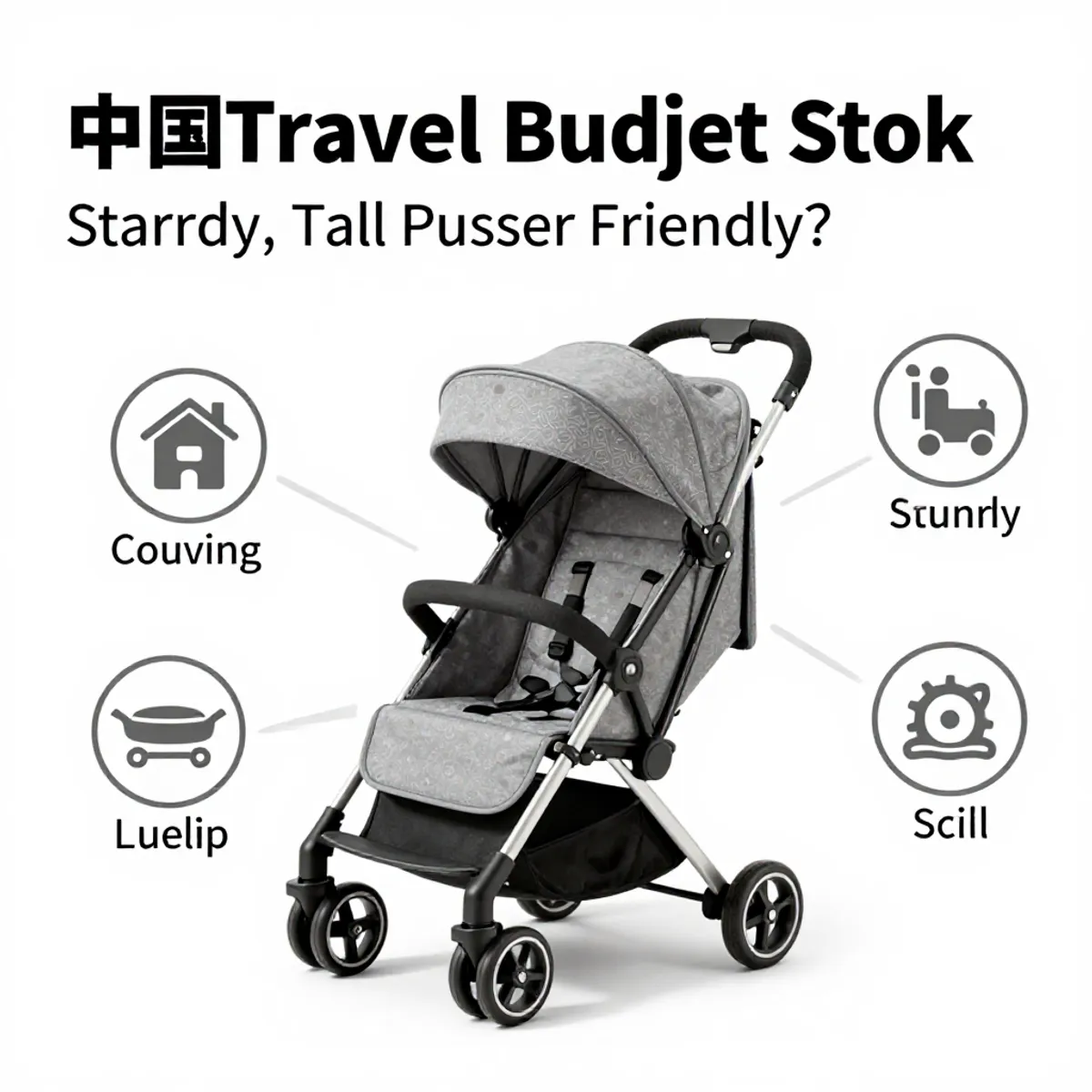
Specific Chinese brands to investigate include Xiao Hu Zi (小虎子), Bobdog (宝宝狗), Maruya (玛利亚), and Goodbaby (好孩子). Goodbaby is the most internationally recognized, but even its domestic models are cheaper than exported versions. Look for model numbers like T28, T2 Traveler, or Kids Edition series.
These often feature all-terrain wheels, one-hand fold, and adjustable handles. The Xiao Hu Zi T28 is frequently cited in parent forums for its robust steel frame and 35kg capacity, often priced around 500 RMB.
Where to Buy Physically: If you prefer to see and test before buying, visit large department stores in major cities like Beijing (e.g., Wangfujing), Shanghai (e.g., Nanjing Road), or Guangzhou. Stores like Aeon (Jusco) or RT-Mart have extensive baby sections. Expect to pay slightly more than online (10-20%) but gain immediate possession and the ability to test fold mechanism and handle height. This is recommended if you arrive a day early in a city like Beijing before your tour begins.
Critical Feature Checklist: What to Inspect
When you have a shortlist of 3-5 models from Taobao, scrutinize the product images and descriptions with a critical eye. Marketing photos are optimistic. You need to decode the specs.
1. Frame Material & Construction: Look for explicit mentions of “加厚碳钢” (thickened carbon steel) or “高碳钢” (high-carbon steel). Aluminum is lighter but less rigid for sitting.
Steel is your friend for the Mom Bonus. Inspect images for weld quality. Poor welds are a failure point.
The fold hinge should look massive, with large plastic bushings or metal pins. A flimsy plastic clip is a red flag.
2. Weight Capacity: Find the 最大承重 (max load) spec. It must be ≥30kg.
Be wary of models listing only a child weight limit (e.g., 25kg) without a total system limit. The total includes the child plus any attached bag. A 30kg total capacity with a 25kg child leaves only 5kg for the stroller itself and a bag—too tight.
Aim for 35kg total to be safe.
3. Handle Height & Adjustability: The product description should list “把手高度可调节” (handle height adjustable). The range is key.
Minimum height should be no more than 90cm, maximum at least 110cm. Look for a telescoping tube design with a sturdy locking mechanism (a push-button or twist-lock). A single-position handle is useless for a tall user.
4. Wheel Configuration & Size: For stability, prefer a four-wheel layout with rear wheels significantly larger than the front (e.g., 12-inch rear, 8-inch front). Larger rear wheels roll over obstacles better and provide a stable platform.
EVA foam tires are puncture-proof and common on good budget models. Air-filled tubes are lighter but flat-prone—a risk in rural China. Avoid tiny, hard plastic wheels.
5. Seat Back & Frame Rigidity: The seat back must be a solid, non-flexing panel. Press on it in photos; if it bends, it’s weak.
The frame rails running alongside the seat should be thick (≥2cm diameter). This is what you’ll be testing for the Mom Bonus. The area above the rear axle is the sitting zone; ensure there are no sharp edges or fragile components there.
6. Fold Mechanism & Size: A one-hand fold is ideal but rare in this price range. A two-hand fold is acceptable.
The folded dimensions must be checked. It needs to fit in a taxi trunk (approx. 60x40x30cm). Measure your largest anticipated vehicle (maybe a tourist bus storage compartment).
A bulky folded stroller is a daily nuisance.
The 5kg Backpack Attachment Problem
This is a practical detail with major stability implications. How and where you hang the bag determines the stroller’s behavior. Most strollers have a handlebar basket or parent tray.
This is the intended attachment point. But, a 5kg bag placed here hangs directly above the front axle, maximizing the tipping moment. Some strollers have a rear rack or frame hooks behind the seat.
This is vastly superior, as it places weight over or behind the rear axle, increasing stability.
Solution A: If your chosen stroller only has a front handle attachment, you must pack light. Use a small, soft daypack that can be compressed. When hanging it, ensure it sits as low as possible on the handle, and consider strapping its bottom to the stroller’s frame with a bungee cord to lower its center of gravity. rarely let it dangle high.
Solution B: Modify the stroller. Purchase a simple carabiner or S-hook in China (cheap at any hardware market). Use it to clip the backpack’s top handle to a rear frame strut or the fold lock housing.
This moves the weight back. Test this carefully with the child in the stroller on a flat surface: push it, then let go. It should not tip backward onto its top wheel.
Solution C: Buy a stroller with a built-in rear storage pocket or under-seat basket and place the bag there. This is the safest configuration but less common. The Goodbaby Aura and some Xiao Hu Zi models have substantial under-seat baskets that can hold a 5kg bag low and centered.
Test Protocol: At the store or upon delivery, conduct this test immediately. Place a 25kg weight (or a willing older child) in the seat. Hang a 5kg bag from the intended attachment point.
On a level surface, gently push the stroller forward, then apply the brake and release. Observe if the front wheels lift. Then, from a standstill, try to lift the handle to pivot on the rear wheels.
If it pivots easily, the bag’s position is dangerously destabilizing. Re-evaluate the attachment point.
The “Mom Bonus”: Can You Sit on It?
This is the most unconventional but potentially most valuable requirement. For a mother carrying 65kg, the ability to perch on the stroller frame for 5 minutes during a long walk in the Forbidden City or along the Great Wall is a huge quality-of-life boost. It turns the stroller from a child-carrying tool into a mobile stool. This demands a frame built like a small bridge.
What to Look For
1. Main Rail Thickness: The two parallel tubes that form the main chassis, running from the front wheel assembly to the rear wheel axle. They should be visibly thick steel, at least 2cm in diameter. Tap them; they should sound solid, not hollow. 2. Rear Axle Strength: The rear axle is a solid metal bar. It should be at least 1.5cm thick. This is a primary load-bearing point for sitting. 3. Fold Lock Robustness: When the stroller is unfolded and locked, the lock mechanism (usually a clasp or lever) bears immense shear stress if someone sits on the rear frame. It must be metal, not plastic, and engage deeply. 4. No Central Flex: With the stroller unfolded and empty, stand to the side and try to twist the frame by pushing the front and rear in opposite directions. There should be zero perceptible twist. Any flex means the frame is too light-gauge.
How to Test (Discreetly): In the store, with permission, have a tall person (the dad) sit on the frame precisely over the rear axle. His weight is similar to the mom’s 65kg. He should sit gently, then shift weight.
Listen for creaking. Look for any bending in the main rails. Get off and inspect the frame for any permanent deformation.
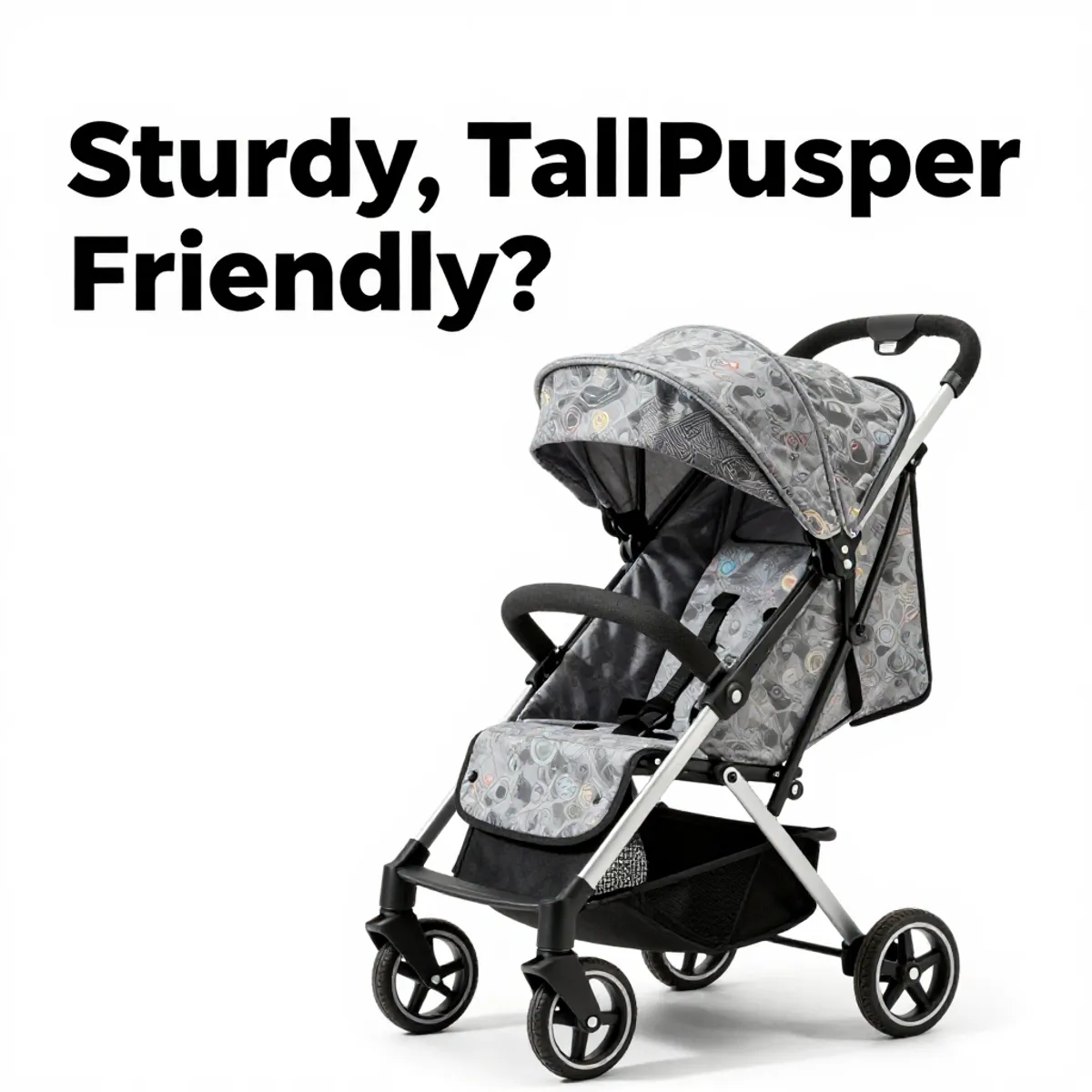
A good frame will spring back. A bad one will show a slight, permanent bend. This is the ultimate stress test for your “tank.”
Realistic Expectations: Even a robust stroller frame is not designed as a seat. Sitting on it will put stress on components not intended for it (like the fabric seat back or the harness buckles). The goal is occasional, brief use (5 minutes), not hours.
A proper stool would be better, but the stroller’s frame is your only mobile option. So, the stroller must survive this abuse without failing during your trip. This requirement alone will eliminate 90% of cheap umbrella strollers.
Reconciling Tall Husband & Compact Fold
The tall husband’s comfort is a day-long, repetitive factor. A low handle causes immediate hunching, leading to back and shoulder pain after 30 minutes. Over 20 days of daily use, this is a major health risk.
The challenge is that strollers with the highest, most adjustable handles are often the same heavy-duty models we are considering. Their folded size can be a consequence of that long, telescoping handle tube.
The Trade-Off: You must accept a slightly larger folded dimension for an adjustable handle. A stroller with a fixed 105cm handle might fold to 50x35x20cm. The same model with a telescoping handle that extends to 115cm might fold to 55x40x25cm.
This 5cm increase in one dimension could be the difference between fitting in a compact rental car trunk or not. You must measure your primary transport’s cargo space.
Adjustable Handle Mechanism: Not all adjustments are equal. The best is a two-position telescoping tube with a sturdy pin lock. Cheaper models use a twist-lock that can loosen over time.
The adjustment mechanism must feel solid, not wobbly. When extended, there should be no play in the handle. A wobbly handle at full extension is dangerous and uncomfortable for a tall user.
Ergonomic Grip: Also check the handle grip material. Soft foam or rubber is better than bare metal or hard plastic for long pushes. Some models have an angled handle that is more natural for a tall person’s arm position. This is a subtle but valuable feature.
Pushing Posture Test: In the store, fully extend the handle to its maximum. Have the tall person stand behind it, hands at his sides, and grasp the handle without bending. His elbows should be slightly bent (20-30 degrees).
If he has to reach down significantly, the max height is insufficient. His knuckles should not be above his shoulders when pushing.
The Chinese Purchase & Abandonment Plan
Since the plan is to acquire the stroller in China and discard it, the procurement strategy is straightforward but requires execution.
Step 1: Pre-Trip Research (From Home). Two months before departure, spend 2-3 evenings on Taobao. Use the search terms and brand names listed earlier. Sort by price ascending.
Open 20-30 product pages. Create a spreadsheet with columns: Model, Price (RMB), Weight Capacity, Handle Height Range, Folded Size (LxWxH), Wheel Type, Frame Material, Wheelbase Length (if listed), Seller Rating, Estimated Shipping Weight. This data crunch will narrow the field to 3-5 viable candidates.
Step 2: Final Selection & Communication. Choose the top 2 models. Use Taobao’s chat function to ask the seller direct questions in Chinese (use Google Translate if needed): “Can the handle be adjusted to 115cm?” “What is the exact thickness of the main frame tube?” “Does the 30kg capacity include the basket weight?” “Can you provide photos of the rear axle and fold lock?” Reputable sellers will answer. Avoid sellers with vague responses.
Step 3: Purchase & Shipping. You have two options: Ship to Your First Hotel: Use Taobao’s international shipping (available for some sellers) or a freight forwarder. This is complex and may not arrive on time. Buy Upon Arrival: This is simpler.
Fly into Beijing or Shanghai. Take a taxi to your hotel. Use your hotel’s address on your phone to order the stroller on Meituan or Ele.me (food delivery apps that also deliver goods) or a local courier service.
It can often be delivered to your hotel within 24 hours. This guarantees timing.
Step 4: The In-Country Test. When the stroller arrives, immediately perform all tests: weight capacity with a known weight (ask at a supermarket for a 25kg bag of rice), handle height, fold mechanism, and the critical Mom Sit Test and Backpack Tipping Test. If it fails any, return it immediately (most sellers offer 7-day returns) and order the next model on your list. Have a backup model ready.
Step 5: The Endgame. After 20 days, you have a used stroller. Options: 1) Give it to your hotel concierge for donation to a local family. 2) Sell it on a local expat Facebook group for 20% of what you paid.
3) Leave it with your tour guide (with permission) for their family or community. 4) Simply discard it if it’s truly beaten. The low initial cost makes this a painless decision.
A Concrete Recommendation: The “Xiao Hu Zi T28 Profile”
Based on the aggregated requirements, let’s profile a hypothetical but realistic model that fits the bill. This is not a specific endorsement but a template for what to find.
Model: Xiao Hu Zi (Little Tiger) T28 or equivalent. Price: 450-600 RMB ($60-85 USD). Frame: High-carbon steel, main tubes 2.2cm diameter. Fold lock is a massive metal clasp. Weight Capacity: 35kg total (child + cargo). Handle: Telescoping aluminum tube, adjustment range 95cm to 115cm. Locked with a sturdy push-pin. Wheels: Four-wheel layout. Rear wheels 12-inch EVA foam, front wheels 9-inch swivel with front-wheel lock lever. Wheelbase: 75cm. Seat: Wide, with a rigid plastic back panel. Harness is a five-point, but you’ll only use the waist strap for a 25kg child. Folded Size: 58cm (L) x 42cm (W) x 28cm (H). Fits in most taxi trunks. Key Feature: Large under-seat basket that can hold a 5kg bag low. Why It Works: The steel frame meets the Mom Bonus. The long wheelbase and rear-wheel bias manage the backpack load. The handle height accommodates a tall pusher. The price is disposable. The brand is ubiquitous in China, so parts/service are conceptually available.
Final Synthesis & Action Plan
Your quest is not for the “best” stroller in the world, but for the most adequate stroller for a defined, brutal 20-day scenario. The criteria are rigid: under 800 RMB, >30kg capacity, handle >110cm, frame rigid enough for a 65kg sit, stable with 5kg rear load. The solution exists in the Chinese domestic market. It will be a heavy, no-frills steel tank.
Your action plan is: 1. Research on Taobao/JD.com now using the specific search terms. 2.
Shortlist 3 models matching the steel frame, high handle, and 35kg capacity specs. 3. Arrive in your first Chinese city (Beijing/Shanghai) a day early.
4. Order your top choice for delivery to your hotel. 5.
Test it rigorously upon arrival using the weight, handle, tipping, and sit tests described. 6. Return and re-order if it fails.
7. Use it confidently for 20 days, knowing its limits. 8.
Donate/Sell it at the end.
This approach turns a potential travel headache into a manageable, almost engineering-like project. The stroller becomes a solved logistical problem, freeing you to focus on the wonders of China. The peace of mind from a 300 RMB “tank” that survives the trip is worth the upfront research.
You will not have the lightest gear, but you will have the most reliable gear for your specific, weighty needs. Enjoy the journey, from the seat of your sturdy, temporary Chinese stroller.
Responses • 0
0/2000
ID: 1326
Chris
Offline
2 hr
Visited
From
Bakersfield, United States
Send Message