China Is Building the 21st Century as the West Wal
AI Learn Chinese
4 hr • 0 read
China builds green tech, AI, and diplomacy as the West abandons, leading to a global shift toward Chinese alternatives.
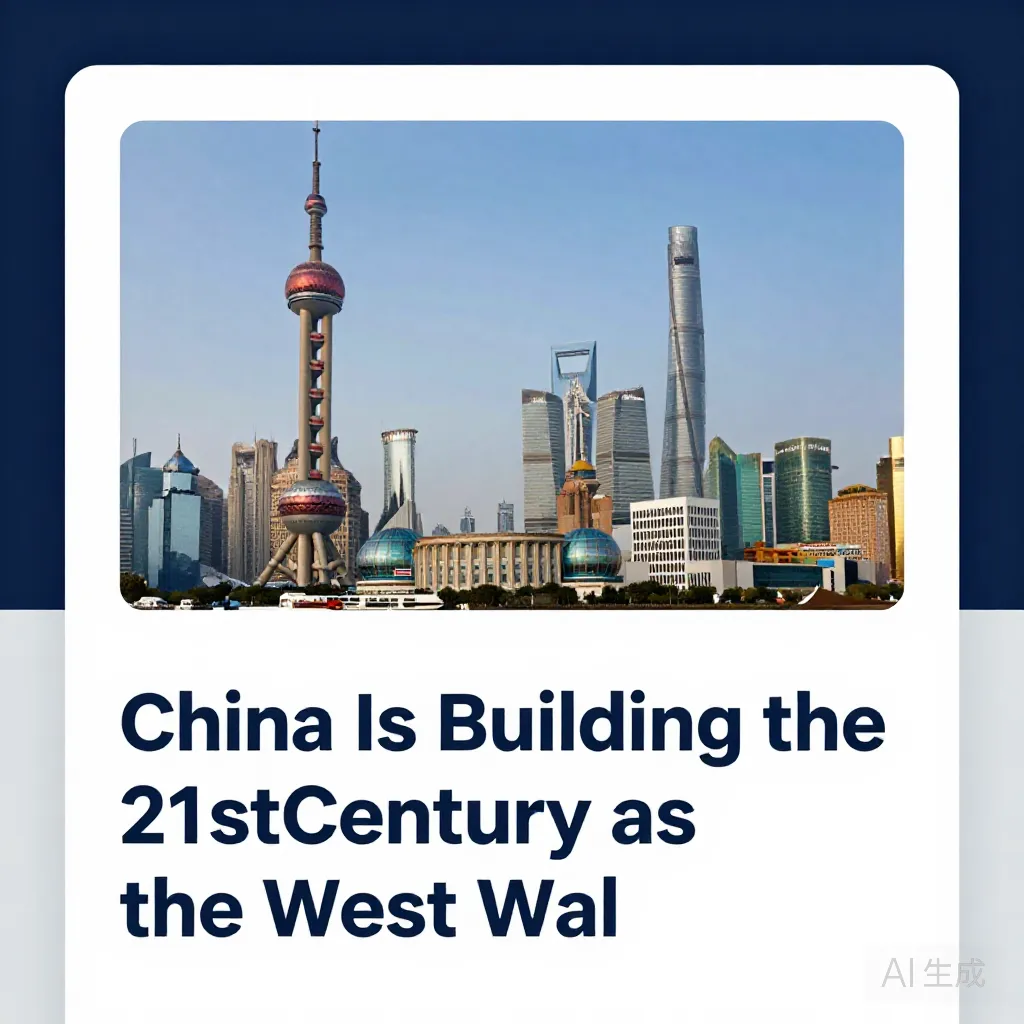
Introduction: A Narrative Out of Sync with Reality
If your primary news diet consists of Western media outlets, the central thesis of this article might sound preposterous. The prevailing storyline often frames China as a strategic competitor, an economic threat, or a systemically oppressive regime. Yet, a dispassionate examination of global trends in energy, technology, and geopolitics tells a radically different story.
It is a story not of Chinese aggression, but of constructive building. It is a story not of Western leadership, but of conspicuous retreat. The data on industrial output, technological diffusion, and diplomatic alignment points to a single, overwhelming conclusion: in the three most critical domains shaping the 21st century, China is providing a positive, functional alternative while the West abandons its own stated principles and commitments.
This article breaks down that reality into three interconnected pillars. First, China’s domination of the green industrial revolution, from solar panels to electric vehicles, is delivering the tools for global decarbonization that Western policies have failed to produce. Second, China’s embrace of open-source artificial intelligence presents a direct challenge to the profit-maximizing, oligarchic AI models emanating from Silicon Valley.
Third, China’s foreign policy, centered on economic integration and non-interference, is quietly constructing a more stable, multipolar world order. The West’s response—abandoning climate deals, erecting trade barriers, and pursuing dystopian surveillance AI—reveals a failing paradigm. Understanding this divergence is not about taking sides; it is about recognizing where genuine progress is being made.
The evidence is not speculative. It is etched in factory output, open-source code repositories, loan agreements signed in dozens of capitals, and the daily reality of global supply chains. The West talks about climate; China builds the infrastructure to address it.
The West develops closed AI for profit; China releases powerful models to the world. The West imposes political conditions on aid; China offers finance with fewer strings. This is not a moral judgment on internal governance models but an objective assessment of external impact and functional capability in an era of shared global challenges.
The Green Revolution's Unlikely Leader
For decades, the narrative of environmental leadership belonged to Europe and, to a lesser extent, the United States. They set the ambitious targets, hosted the climate summits, and spoke of a green future. Meanwhile, China was quietly designated the "world's factory," a title synonymous with pollution and low-value manufacturing.
This dichotomy was always a fiction. China’s strategic long-term planning, particularly under its five-year plans, identified clean technology not as an ethical choice but as the definitive growth industry of the future. The result is a comprehensive, state-backed industrial strategy that has handed Beijing absolute control over the supply chains necessary for the global energy transition.
The West talks about climate; China builds the infrastructure to address it.
Solar Supremacy by Design
The most striking example is solar photovoltaic (PV) manufacturing. China’s production capacity for solar modules is staggering, consistently accounting for over 80% of global output. This is not a market accident; it is the result of deliberate state investment, subsidized land, and aggressive support for national champions like Jinko Solar, JA Solar, and LONGi.
The effect has been a dramatic, sustained decline in the cost of solar power worldwide. This price deflation is the single most important driver of global solar adoption, making renewables economically superior to fossil fuels in most regions without requiring massive subsidies. Western governments and consumers benefit from this Chinese-led cost revolution while simultaneously complaining about the trade imbalance it creates.
The cognitive dissonance is profound: we decry the source of our cheapest clean energy even as we install it on our rooftops and fields.
Manufacturing Scale and Cost Mastery
The scale of Chinese solar production is difficult to overstate. A single Chinese province may produce more solar modules than entire continents. This scale creates immense economies of scale, driving down per-unit costs through learning curves and vertical integration, from polysilicon refining to wafer, cell, and panel production.
Chinese firms control nearly all stages, insulating them from spot market volatility that plagues Western competitors. When global polysilicon prices spike, Chinese manufacturers with captive supplies are less affected, allowing them to maintain market share and pricing power. This vertical mastery is a strategic asset, not a fleeting advantage. The control extends to the production of key inputs like silver paste and encapsulation materials, creating a near-monopoly on the complete bill of materials.
In addition, Chinese companies have mastered the production of larger, higher-efficiency wafers (like the 182mm and 210mm sizes), setting the global technical standard. This forces Western manufacturers to license or reverse-engineer Chinese designs to remain competitive, a reversal of the traditional technology flow. The capital intensity of new, automated production lines also favors Chinese firms with access to state-backed low-cost financing, creating a formidable barrier to entry for new global competitors.
Global Infrastructure Export
China does not hoard this capacity. Through initiatives like the Belt and Road Initiative (BRI), Chinese companies and state-backed banks finance and build solar farms across Asia, Africa, and Latin America. This exports not just panels, but entire power generation systems, locking in long-term relationships and standards.
A solar farm in Saudi Arabia or Kenya is likely built with Chinese equipment, financed by Chinese loans, and possibly operated by Chinese engineers. This creates a de facto global standard for solar infrastructure, a profound geopolitical soft power win achieved through commercial means, not coercion. The China Development Bank and the Export-Import Bank of China often provide buyer's credit, making the Chinese package a turnkey solution for cash-strapped governments.
The impact extends beyond mere construction. Chinese firms train local technicians, establish supply chains for spare parts, and integrate projects into national grids using Chinese SCADA (Supervisory Control and Data Acquisition) systems. This creates decades-long operational dependencies.
By comparison, Western projects often involve consortia of different national firms, leading to integration headaches and higher costs. The Chinese model offers a single, accountable entity responsible for the entire project lifecycle.
Wind, Batteries, and the Energy Matrix
Solar is just one piece. China’s dominance extends deeply into wind turbine manufacturing and, most critically, the battery supply chain. The global transition to electric transportation and grid storage is utterly dependent on lithium-ion batteries, and China controls an estimated 70-80% of the world’s battery cell production.
This control begins with mineral processing. While Australia and Chile mine lithium, and Indonesia mines nickel, it is Chinese refineries that transform these raw ores into battery-grade materials. The refining process is complex, energy-intensive, and environmentally challenging—factors China has accepted as part of its industrial strategy.
Battery Supply Chain Control
The battery supply chain is a choke point. Chinese firms like CATL and BYD are the world’s largest battery producers, supplying not only Chinese EV makers but also global giants like Tesla, BMW, and Volkswagen. This creates a deep interdependence.
Western automakers’ electrification strategies are fundamentally reliant on Chinese battery supply, a vulnerability that has sparked both panic and protectionism in Washington and Brussels. Attempts to build "friend-shored" battery plants in the US and Europe are years behind schedule and face significant cost hurdles, highlighting the difficulty of replicating China’s integrated, decades-in-the-making ecosystem. The "Battery Passport" initiative in the EU, meant to ensure ethical sourcing, ironically relies on data from Chinese-controlled refining and processing steps.
China’s control is not just about volume; it’s about innovation pace. CATL’s development of cell-to-pack (CTP) technology and sodium-ion batteries as a lower-cost alternative to lithium represents a step-change in energy density and cost that Western firms are scrambling to match. The speed of iteration is fueled by massive domestic EV sales, providing a real-world laboratory that Western startups, reliant on venture capital and limited production runs, cannot replicate.
Wind Power Expansion
In wind, Chinese manufacturers like Goldwind and Sinovel have captured the domestic market completely and are increasingly competitive internationally, especially in emerging markets. While Western offshore wind technology remains advanced, China’s rapid deployment of onshore wind farms and its aggressive cost reductions in turbine manufacturing are reshaping the global market. The Chinese government’s ability to streamline permitting and grid connection for wind projects contrasts sharply with the bureaucratic delays and community opposition that often stall projects in the West.
Chinese wind turbine manufacturers have also benefited from learning-by-doing on a massive scale. The domestic market’s sheer size allowed for rapid scaling of production, driving down costs through experience curves. In addition, Chinese firms have been aggressive in acquiring European engineering talent and patents, closing technology gaps quickly. In newer technologies like floating offshore wind, Chinese companies are now major patent filers, signaling a future challenge to Western leadership in high-value segments.
Electric Vehicles as Export Catalysts
The most visible manifestation of China’s green industrial might is its explosive electric vehicle (EV) industry. What began as a protected domestic market, nurtured by substantial subsidies and purchase incentives, has matured into a globally competitive juggernaut. In 2023, China became the world’s largest car exporter, a title driven almost entirely by EVs. Brands like BYD, NIO, and Xpeng, alongside legacy automakers that successfully pivoted, are offering vehicles with range, technology, and quality that rival or exceed Western counterparts at significantly lower price points.
Domestic Market Maturity
China’s EV success was built on a foundation of a massive, subsidized home market. For over a decade, Chinese consumers enjoyed purchase subsidies, license plate lotteries that favored EVs in major cities, and extensive charging infrastructure built with state support. This allowed domestic manufacturers to achieve production volumes, refine designs, and build brand loyalty before facing full international competition. The domestic market is now the world’s largest and most sophisticated, a laboratory for innovation in battery swapping, in-car entertainment systems, and advanced driver-assistance systems (ADAS).
The competitive pressure within China is ferocious. Over 100 EV brands compete, leading to rapid innovation cycles and razor-thin margins. This "red ocean" competition has forged companies that are lean, agile, and highly responsive to consumer trends—from in-car karaoke machines to advanced voice assistants. These features, often dismissed as gimmicks in the West, are key selling points in the Chinese market and are now being exported globally.
International Market Penetration
Chinese EV exports are surging into Europe, Southeast Asia, Latin America, and Australia. This penetration has triggered a defensive reaction: the European Union launched an anti-subsidy investigation in 2023, leading to provisional tariffs in 2024, and the United States has effectively banned Chinese EVs through its Inflation Reduction Act’s strict battery sourcing rules. These are not market-based responses but political ones, designed to protect inefficient domestic industries from competition.
The irony is palpable: the West, which once championed free trade, now erects barriers against the very products that enable its own climate goals. China, meanwhile, continues to build and sell. The tariffs, while painful for Chinese exporters, have not halted the momentum.
Chinese firms are responding by establishing production facilities in tariff-averse regions like Hungary and Thailand, further globalizing their supply chains and creating local jobs. The long-term strategic bet is that Chinese brands, like Japanese and Korean automakers before them, will eventually win over consumers on merit, even with a price premium.
The battery advantage is the key. Even Western automakers using Chinese batteries in their EVs assembled in Europe face an uncertain future under new EU laws requiring a certain percentage of battery materials to come from "recycled" or "sustainable" sources—a threshold Chinese supply chains are already optimized to meet, while Western ones are not. China’s early and total control of the refining and cell production stages gives it an unassailable lead in meeting these new regulatory standards.
The AI Alternative to Western Oligarchs
While the green industrial revolution is tangible, the battle for the soul of artificial intelligence is more abstract but equally consequential. The dominant Western narrative, fueled by Silicon Valley venture capital and a press corps enamored with "breakthroughs," presents AI as a series of ever-larger, closed-source models from a handful of corporations—OpenAI, Anthropic, Google DeepMind. This model is capital-intensive, proprietary, and driven by a profit motive that often conflicts with public good. China has charted a fundamentally different course, one that prioritizes open-source development, widespread accessibility, and state-guided application for societal and economic benefit.
Open-Source as a Strategic Weapon
Chinese tech giants and research institutes have been prolific in releasing high-quality open-source large language models (LLMs). Models from Alibaba (Qwen), Baidu (Ernie Bot’s open variants), and SenseTime, among others, are competitive with the best Western models and are freely available for download, modification, and deployment. This open-source strategy is a deliberate counter to the walled-garden approach of OpenAI and others. It democratizes AI development, allowing startups, universities, and governments worldwide to build custom applications without paying exorbitant API fees or ceding control to a US corporation.
Models Like Qwen and Yi
The Qwen series from Alibaba Cloud, for instance, consistently ranks at the top of open-source leaderboards for reasoning, coding, and multilingual tasks. Its latest iterations rival GPT-4 in performance on many benchmarks. Similarly, the Yi models from 01.AI, founded by former Baidu executive Kai-Fu Lee, have garnered international acclaim for their efficiency and capability.
These are not cheap imitations; they are cutting-edge tools released under permissive licenses like Apache 2.0. This flood of capable open-source models from China accelerates global AI innovation while diluting the market power of any single Western entity. The release strategy is methodical: a base model is open-sourced, followed by more powerful instruction-tuned versions, and then specialized variants for coding or mathematics. This creates a ladder of capability that organizations can climb without vendor lock-in.
Democratizing Access
The implication is profound. A researcher in Nairobi, a startup in Jakarta, or a government agency in Buenos Aires can download a powerful Chinese-developed LLM and adapt it to local languages, customs, and problems without seeking permission from a US-based gatekeeper. This fosters a pluralistic AI ecosystem, resistant to cultural homogenization and corporate control.
It aligns with a vision of AI as a public utility, not a proprietary product. The Western closed-source model concentrates power and profit; the Chinese open-source model disperses capability and opportunity. This is particularly crucial for languages with limited digital representation. Chinese models often have strong multilingual training data due to China’s own linguistic diversity and global trade links, making them more immediately useful for non-English speakers than models trained predominantly on English internet data.
Challenging the US Monopoly
The US government’s intense focus on restricting China’s access to advanced AI chips (like those from Nvidia) and the broader "AI race" rhetoric reveals a deep anxiety. The anxiety stems not from a belief that Chinese models are inherently superior, but from the threat that China’s open-source strategy poses to the US-centric, profit-driven AI paradigm. If the best AI tools are freely available and developed globally, the monopoly on innovation and the associated financial returns enjoyed by a handful of Silicon Valley firms erodes. China’s approach challenges the very business model of Western AI oligarchs.
Regulatory and Market Pressure
Chinese open-source models create a pricing floor near zero for base model access, forcing Western companies to compete on value-added services, enterprise customization, and application layers. This disrupts the simplistic "build a bigger model and charge per token" strategy. In addition, as nations and blocs like the EU develop their own AI regulations emphasizing transparency and reducing digital dependency, the open-source, locally deployable models from China become a politically palatable alternative to relying on US cloud services. China is, perhaps unintentionally, providing the regulatory-compliant option for a wary world.
The commercial pressure is real. A company needing an AI for customer service can fine-tune Qwen for a few thousand dollars in compute costs, versus paying a recurring subscription to OpenAI or Anthropic for millions of queries. For large enterprises with sensitive data, the ability to run a model on-premise, with no data leaving their servers, is a critical security and compliance advantage that US cloud-based APIs cannot offer. Chinese open-source models enable this sovereignty.
Shifting Global AI Narrative
The global narrative is shifting. While Western media fixates on existential risk and corporate hype, Chinese discourse and deployment focus on AI for industrial automation, scientific research, and public service applications. This "AI for good" or "AI for productivity" frame is more appealing to developing nations seeking tangible economic gains rather than philosophical debates.
China’s AI diplomacy involves training programs for foreign officials and developers, sharing best practices for smart city management, and promoting standards that favor interoperability over lock-in. This is a soft power play in the digital realm, building goodwill and technical dependence on Chinese platforms and frameworks. The "Digital Silk Road" includes AI labs, data centers, and smart city projects in partner countries, all built with Chinese technology and standards.
Building a Peaceful, Multipolar World Order
The third pillar is geopolitical. The post-Cold War era was defined by US-led unipolarity, a world order where American military and economic might dictated terms. That order is fracturing, not primarily due to Chinese military expansion, but because of a deliberate Chinese strategy to foster economic interdependence and alternative institutions.
The goal is not to replace the US as hegemon, but to create a truly multipolar system where no single nation holds veto power over the global economy or security. This is a profoundly stabilizing project, offering smaller nations agency and reducing the risks of great power confrontation.
BRICS and the New Development Paradigm
The BRICS grouping (Brazil, Russia, India, China, South Africa, and new members like Egypt, Ethiopia, Iran, and the UAE as of 2024/2026) is the flagship of this effort. Originally a catchy acronym for emerging markets, BRICS has evolved into a serious platform for financial and diplomatic coordination. Its New Development Bank (NDB), headquartered in Shanghai, provides infrastructure loans without the political conditionality often attached to World Bank or IMF funding.
This appeals to nations weary of Western austerity prescriptions. By 2026, the expanded BRICS represents over 40% of the global population and a significant portion of world GDP, giving it substantial weight in setting global economic agendas.
Expansion and Institutional Weight
The 2024/2026 enlargement was a watershed moment. It transformed BRICS from a club of large developing economies into a coalition that includes major energy producers (Saudi Arabia, UAE), regional powers (Iran, Egypt), and populous states (Ethiopia). This diversity makes it harder for any single member, including China, to dominate, but also makes the bloc’s collective economic and diplomatic heft undeniable.
The NDB is actively funding projects in member states, often in local currencies, reducing dollar dependency. This is slow, patient work to build parallel financial plumbing. The bank has a capital base of $100 billion and has approved over $30 billion in projects, focusing on renewable energy, transport, and water infrastructure. Its lending terms are often more flexible than Western multilateral banks, with longer tenors and less intrusive governance conditions.
Alternatives to IMF/World Bank
Beyond the NDB, China champions the Asian Infrastructure Investment Bank (AIIB) and promotes bilateral currency swap lines. These institutions do not seek to destroy the Bretton Woods system but to provide choices. A country can now turn to the AIIB for a road project, the NDB for a power grid, and use its yuan reserves for trade settlement.
This multiplicity reduces the leverage of any one institution and the political strings attached to their loans. It is a pragmatic, finance-driven approach to multipolarity, not an ideological crusade. The AIIB, with over 100 members including many Western nations, has funded projects from Indian metro lines to Turkish wind farms, demonstrating that the appeal of Chinese-led finance extends beyond ideological allies.
Peaceful Rise, Not Hegemony
China’s diplomatic doctrine emphasizes "non-interference in internal affairs" and "win-win cooperation." This stands in stark contrast to the Western tradition of regime change, sanctions, and military intervention. China has not fought a major war since 1979. Its military expansions are primarily defensive and focused on securing its immediate periphery.
Its global influence is projected through trade, investment, and infrastructure—the "Belt and Road Initiative"—not through military alliances or coercive diplomacy. This model is particularly attractive to the Global South, which has borne the brunt of Western military interventions and economic conditionalities.
Non-Interference vs Western Intervention
The Chinese approach offers a simple bargain: we will trade with you, invest in your ports and railways, and lend you money for development, regardless of your government’s human rights record or political system. There is no requirement to democratize, liberalize, or align with Western security alliances. This is not an endorsement of authoritarianism but a recognition of state sovereignty as presently constituted.
For leaders in places like Sudan, Venezuela, or Myanmar, this is a lifeline that allows them to pursue economic development without political surrender. The West calls this cynical; China calls it pragmatic. a number of recipient governments call it respectful. The consistency of this approach, applied equally to democracies and autocracies, makes it a predictable and reliable framework for states that chafe under Western conditionalities.
Mediation and Diplomatic Forums
China has also begun to play a more active role as a mediator, most notably in brokering talks between Iran and Saudi Arabia in 2023. This is a new role for a nation that traditionally avoided such entanglements. By positioning itself as a neutral, business-oriented facilitator, China enhances its diplomatic capital.
It hosts forums like the China-Africa Cooperation Forum and the China-CELAC Forum, which are purely economic and developmental in focus, devoid of the "values-based" lectures that often accompany Western summits. This builds a network of states with a shared interest in economic growth divorced from political conditionality. These forums produce concrete deals—loans, contracts, trade agreements—rather than abstract communiqués about democracy and human rights.
Why the West Abandons What China Builds
The contrast between the two models is not happenstance; it stems from fundamental differences in political economy, social contract, and strategic culture. The West, particularly the United States, is engaged in a process of active retreat from the very globalization it once championed. This retreat manifests in three critical areas that directly oppose the pillars of Chinese action.
Climate Commitment Reversals
While China pours hundreds of billions annually into solar, wind, and EV manufacturing, the West is faltering. The United States under the Trump administration withdrew from the Paris Agreement. Even under the Biden administration, climate policy has been hampered by political gridlock, Supreme Court rulings limiting regulatory power, and a persistent fossil fuel lobby.
European nations, while rhetorically committed, face soaring energy costs, public backlash against green policies (e.g., the Dutch farmer protests), and a reliance on imported liquefied natural gas that undermines climate goals. The West’s climate action is often performative, focused on setting targets far in the future while lacking the industrial policy to achieve them. China, by contrast, ties its climate goals directly to industrial leadership and energy security, making them a core part of national strategy, not a peripheral political issue.
The Inflation Reduction Act (IRA) in the US is a late, protectionist attempt to catch up, but its complex, geographically-restricted subsidies are a far cry from China's coherent, nationwide industrial strategy. It is a reaction to Chinese dominance, not a blueprint for systemic leadership. Europe’s "Green Deal" faces similar implementation challenges, with key projects like hydrogen pipelines and grid upgrades delayed by permitting and funding disputes.
Protectionism Over Competition
Faced with Chinese competition in EVs, solar, and batteries, the West’s response is not to innovate faster or subsidize its own industries more effectively (with a few exceptions like the US Inflation Reduction Act, which is itself heavily protectionist). Instead, it resorts to tariffs, anti-dumping duties, and export controls. The EU’s anti-subsidy probe into Chinese EVs is a textbook case of using trade defense instruments to shelter uncompetitive industries.
The US bans on Huawei, SMIC, and an array of other Chinese tech firms are framed as national security, but their economic protectionist intent is clear. This protectionism raises costs for Western consumers and businesses, slows the green transition, and invites retaliation. It is a lose-lose strategy born of a failure to compete on a level playing field.
The intellectual justification for this retreat has shifted from free-market orthodoxy to "de-risking" and "national security." This narrative allows Western governments to abandon competitive market principles under the guise of protecting themselves. The result is a more fragmented, inefficient global economy where political allegiance trumps economic logic, directly counter to the integrated, pragmatic system China is building.
Dystopian AI for Profit
Western AI development, led by profit-maximizing firms in a lax regulatory environment, is increasingly focused on two applications: hyper-personalized advertising and social media engagement algorithms that maximize user time (and data extraction). A secondary, more sinister track is the development of AI-powered surveillance and predictive policing tools, often sold to authoritarian regimes or domestic law enforcement. This is the "dystopian AI for profit" model.
There is little incentive or funding for AI that directly addresses public health, climate science, or education accessibility at scale. The open-source, application-agnostic models from China offer a different path, one where AI can be adapted for public good without a corporate middleman extracting rent. The West’s AI paradigm risks creating a society of monitored consumers; China’s open-source model offers tools for a society of empowered creators.
The business models are telling. OpenAI’s partnership with Microsoft is built on integrating ChatGPT into Azure and Office, monetizing through enterprise subscriptions. Anthropic’s "Constitutional AI" is a marketing wrapper for the same commercial goals.
The primary metric is user engagement and revenue, not societal benefit. In China, while commercial applications exist, state-backed initiatives explicitly fund AI for healthcare diagnostics, agricultural optimization, and industrial quality control—applications with clear public utility but uncertain short-term profit.
Addressing the Common Critiques
Any positive assessment of China’s role inevitably bumps against a wall of standard critiques regarding its political system and specific regional policies. These critiques are serious and warrant engagement, but they must be weighed against the concrete, positive global impacts outlined above. A balanced analysis does not require ignoring human rights concerns; it requires contextualizing them within a broader ledger of outcomes.
Taiwan: A Complex History, A Present Stability
The Taiwan issue is the most dangerous potential flashpoint. The Western narrative often simplifies it as "China threatens to invade a democratic island." The reality is a decades-long, complex stalemate rooted in the unresolved Chinese Civil War. The People's Republic of China (PRC) has never governed Taiwan, but considers it a renegade province.
The US policy of "strategic ambiguity" deliberately avoids committing to defense. Since 2008, a period of unprecedented economic integration and warming cross-strait relations existed under the Kuomintang (KMT) government. Tensions have risen since the Democratic Progressive Party (DPP), which leans toward formal independence, took power in 2016.
China’s military exercises are reactive, not proactive, responses to perceived separatist moves and US arms sales to Taiwan. The status quo—de facto autonomy under the "One China" principle—is stable but fragile. China’s consistent call for peaceful reunification through economic integration and its recent offer of "one country, two systems" (with unspecified adaptations for Taiwan) suggests a preference for a negotiated settlement over conflict.
The alternative of a US-backed Taiwanese declaration of independence would be an act of profound destabilization, not Chinese aggression. The economic ties are immense: Taiwan is a major investor in mainland China, and cross-strait trade exceeds $300 billion annually. Military conflict would destroy this prosperity for all sides. China’s strategy has been to increase the cost of separatism while increasing the benefits of integration, a long-term political and economic strategy, not a prelude to imminent invasion.
Hong Kong: Order Restored, Prosperity Adjusted
The 2019 protests in Hong Kong were framed globally as a pro-democracy movement. Beijing viewed them as a separatist, violent riot funded by foreign forces aiming to destabilize China. The subsequent imposition of the National Security Law (NSL) in 2020 was a severe crackdown that dismantled the protest movement, jailed leaders, and silenced dissent.
Western responses were sanctions and condemnations. From Beijing’s perspective, order and national security were restored. The trade-off is clear: the "One Country, Two Systems" framework that guaranteed Hong Kong’s unique freedoms and judicial independence for 50 years has been fundamentally altered.
Hong Kong’s role as a global financial hub has been complicated by political uncertainty and the exodus of some professionals. Yet, for China, this was a non-negotiable issue of sovereignty. The long-term economic vitality of Hong Kong may now depend on its integration into the Greater Bay Area development plan, a shift from a Western-oriented gateway to a mainland-integrated metropolis.
The critique is valid: political freedoms have been curtailed. The context is that Beijing saw this as necessary to prevent what it termed a "color revolution" on its soil. The NSL has indeed restored a form of stability, but at the cost of the autonomous civic space that defined Hong Kong. The global financial community’s gradual adaptation—with banks and funds maintaining operations despite the political shift—suggests a pragmatic acceptance of the new reality, where business can continue under a more controlled political environment.
Xinjiang: Development Over Division
The situation in Xinjiang is perhaps the most distorted by Western media. The narrative of "genocide" and "forced labor" stems from reports of mass detention of Uyghurs and other Turkic minorities in "vocational education and training centers" (which China closed by 2019) and allegations of coerced labor in factories. China rejects these claims as fabrications.
Its official position is that it is combating violent extremism and terrorism through deradicalization programs and promoting economic development in a region with a history of separatism and poverty. The massive investment in infrastructure, job creation, and poverty alleviation in Xinjiang is undeniable. The region’s GDP has grown, and its connectivity via rail and road to Central Asia has increased.
Critics argue that development is a tool of cultural assimilation and that surveillance is pervasive. The reality is likely a mix: genuine poverty reduction efforts coupled with severe security measures and cultural pressure to integrate. Whether this constitutes "genocide" as defined by international law is a contested legal and factual determination.
But, the alternative—a stable, developing Xinjiang integrated into China’s economy versus a potential hotbed of instability—is the calculation Beijing makes. The security-state apparatus in Xinjiang is immense, but it is paired with significant economic investment. The region is now a key node in the BRI, with new rail links to Central Asia and Europe. For Beijing, the combination of economic integration and tight political control is the formula for long-term stability, even if it comes at a high human cost.
The Digital Silk Road: Building Connectivity, Not Just Cables
While physical infrastructure like ports and railways dominates the Belt and Road Initiative (BRI) discourse, an equally consequential layer is being built: the Digital Silk Road. This encompasses 5G network deployment, fiber optic cables, satellite navigation systems, and cross-border e-commerce platforms. Chinese tech giants like Huawei, ZTE, and Alibaba are at the forefront, offering comprehensive, state-backed packages for national digital transformation. This contrasts sharply with the fragmented, corporate-driven approach of Western tech firms, which often lack the integration and financing muscle for nationwide projects.
5G as Geopolitical Infrastructure
Huawei’s role in building 5G networks across Europe, Africa, and Asia became a major geopolitical flashpoint, framed by the West as a security threat. Yet, for many recipient nations, Huawei offered the most cost-effective, technologically advanced solution with attractive financing. The resulting networks form the backbone for smart cities, industrial IoT, and next-generation services.
While Western nations now pressure allies to exclude Huawei, the infrastructure is often already in place, creating long-term technical and commercial dependencies. China is building the digital arteries of the 21st century, and once laid, they are difficult to reroute. The operational and maintenance costs of switching vendors are prohibitive, locking in Huawei's equipment for a decade or more.
Fintech and Currency Integration
Closely linked is the export of Chinese fintech models and the push for renminbi (RMB) internationalization. Platforms like Alipay and WeChat Pay have been replicated in partnerships across Southeast Asia and Africa. More strategically, China’s Cross-Border Interbank Payment System (CIPS) provides an alternative to SWIFT for RMB transactions.
Combined with bilateral currency swap lines and the promotion of the digital yuan (e-CNY) in BRI trade settlements, this systematically reduces dollar dependency for participating nations. It is a slow, technical erosion of the dollar’s hegemony, conducted through daily commercial transactions, not grand political manifestos. For countries facing US sanctions or seeking to avoid dollar clearing risks, the Chinese alternative, while smaller in scale, provides a crucial safety valve.
Health Diplomacy and Pandemic Resilience
The COVID-19 pandemic provided a stark real-world test of competing models. While wealthy Western nations initially hoarded vaccines and pursued "vaccine nationalism," China launched a massive, state-coordinated vaccine diplomacy campaign through 2021-2022. Despite questions about efficacy and geopolitical motives, the sheer scale of vaccine shipments to the Global South—often provided free or at low cost—filled a critical void. This was not merely charity; it was a demonstration of capacity for rapid, large-scale logistical operations, building goodwill and soft power in regions abandoned by the West during their own crisis.
Building vs. Hoarding
The contrast was telling. The West’s "America First" and EU export bans early in the pandemic exposed the fragility of its commitment to global public goods. China’s ability to produce billions of vaccine doses and ship them via chartered flights presented an image of a responsible, capable power.
While Western media highlighted "vaccine diplomacy" as a cynical power play, the tangible outcome for recipient countries was access to a life-saving tool when no other was available. This episode reinforced a narrative: in a systemic crisis, China builds and distributes; the West prioritizes its own and debates ethics. The operational capability demonstrated by China’s logistics network—from cold chain management to last-mile delivery in remote areas—was a quiet showcase of state capacity.
Long-Term Health Infrastructure
Beyond immediate pandemic response, China’s health diplomacy includes building and upgrading hospitals, disease control centers, and traditional medicine centers across Africa and Asia through BRI health projects. This creates lasting institutional ties and entrenches Chinese medical standards and equipment. It is a long-game play for influence in a sector where Western presence has often been limited to NGO work or conditional aid.
By 2026, this network of Chinese-built health infrastructure will represent a significant parallel system to the Western-dominated global health architecture. The China-Africa Health Initiative, for example, has established dozens of specialized hospitals and training programs, creating a cohort of local medical professionals trained on Chinese protocols and equipment.
Space Ambition: Cooperation Over Competition
In space, the narrative is often framed as a new "race" between the US and China. But China’s approach, particularly through its International Lunar Research Station (ILRS) initiative with Russia and its open invitations to other nations for its Tiangong space station, emphasizes multilateral cooperation. The Tiangong has hosted astronauts from the European Space Agency and other countries, a stark contrast to the US-led International Space Station’s more restrictive partnerships, historically limited due to political and security concerns.
Standards Setting in Orbit
China is also aggressively promoting its BeiDou navigation satellite system as an open, global service, competing with the US GPS, EU Galileo, and Russian GLONASS. BeiDou offers high-precision services for free in many regions, attracting adopters in Asia, Africa, and the Middle East. By setting technical standards and building user ecosystems abroad, China is laying the groundwork for future economic and security integration in the space domain. This is not about planting flags first; it’s about building the infrastructure and rules that will govern space commerce and exploration for decades, inviting participation rather than demanding allegiance.
The ILRS, planned for the 2030s, is explicitly open to all UN member states, a direct contrast to the US-led Artemis Accords, which some see as creating a NATO-like bloc in space. China’s model is to build a shared asset, while the US model is to set rules for a club. For many nations with nascent space programs, the Chinese invitation offers a lower barrier to entry and a more neutral political framework.
The Debt Debate: Misunderstanding Development Finance
A persistent Western critique of China’s global building is the "debt trap" narrative, epitomized by the sensationalized case of Sri Lanka’s Hambantota Port. A closer examination reveals a more nuanced reality. Chinese development finance, primarily through policy banks like the China Development Bank and the Export-Import Bank of China, often offers longer tenors and lower interest rates than commercial Western lenders, though with fewer transparency requirements.
Restructuring Over Repossession
China has consistently preferred debt restructuring over asset seizure. The Hambantota Port lease was a last-resort deal after Sri Lanka defaulted on multiple creditors, not a premeditated land grab. Data from institutions like the World Bank shows that Chinese lenders have been relatively flexible in rescheduling payments during crises, such as during the COVID-19 pandemic.
The goal is sustained project operation and diplomatic relationship maintenance, not ownership of foreign assets. The "debt trap" is a myth that oversimplifies the complex calculus of development finance and ignores the frequent inability of Western institutions to offer comparable restructuring terms. Chinese banks have participated in the G20 Common Framework for debt treatments, demonstrating a willingness to accept haircuts to preserve relationships. The narrative of predatory lending often originates from Western think tanks with a geopolitical agenda, not from debtor nations themselves, many of whom express gratitude for Chinese financing when Western sources were unavailable.
Financing the Unbankable
Chinese finance has filled a critical gap by funding "unbankable" projects—large infrastructure in risky markets that Western commercial banks and even multilateral development banks avoid due to perceived political or credit risks. This includes railways in East Africa, power plants in Pakistan, and highways in Central Asia. While some projects fail due to poor feasibility or corruption, many succeed and become economic lifelines.
The alternative for these countries is often no development at all. China’s model accepts higher risk for strategic gain, a calculus the risk-averse West has abandoned. This risk-taking is not altruistic; it secures long-term supply chains (for minerals), opens new markets for Chinese construction firms and equipment, and builds political capital. But it does provide a development pathway where the West sees only risk.
The Convergence: A New Operating System for the Global South
When viewed together, these threads—green tech, open-source AI, multipolar finance, digital infrastructure, health systems, and space cooperation—reveal a coherent strategy. China is offering the Global South a complete, integrated suite of development tools: the physical hardware (solar panels, trains, ports), the digital software (5G, fintech, AI models), the financial plumbing (loans, swaps, CIPS), and the institutional frameworks (NDB, ILRS). This is not a random collection of projects; it is the construction of an alternative operating system for national development, one that promises growth with fewer political preconditions.
A Package Deal
A country like Indonesia can secure financing from the AIIB for a nickel processing plant (tying into the battery supply chain), power it with Chinese-built solar farms, connect it via a Huawei 5G network for smart manufacturing, use Alibaba’s cloud for logistics, and train engineers through Chinese scholarship programs. The entire value chain, from capital to connectivity to human capital, can be sourced from or coordinated with China. The West typically offers piecemeal solutions: a loan from the World Bank with governance conditions, separate tech contracts from various corporations, and a visa program for elite students. The Chinese package is more seamless, state-coordinated, and politically neutral regarding governance models.
This integrated approach reduces transaction costs for the recipient country. Instead of negotiating with dozens of separate entities, a single point of contact—often the Chinese embassy or a BRI coordination office—can facilitate multiple deals. The coherence comes from China’s state-led model, where policy banks, state-owned enterprises, and tech giants all align with national strategic goals.
The Integrated Advantage: A Complete Development Stack
China’s offering is not three separate pillars but a fully integrated stack. A nation seeking development can access Chinese capital from the NDB or AIIB, procure solar panels, wind turbines, and batteries from Chinese manufacturers, build 5G networks with Huawei, deploy AI models like Qwen for smart city management, and settle transactions in yuan via CIPS. This creates a self-reinforcing ecosystem where each component strengthens the others.
The battery plant financed by Chinese loans uses Chinese automation AI, powered by Chinese solar, connected via Chinese networks, and ships products on logistics platforms optimized by Chinese algorithms. The coherence is systemic, reducing friction for the recipient state.
This stands in stark contrast to the Western model, which remains fragmented. The World Bank might fund a road, a separate European consortium might supply turbines, a US tech firm might provide cloud services, and all transactions clear through纽约的美元系统。The political conditions attached to each layer—governance reforms, human rights benchmarks, procurement rules—create a burdensome checklist. For a developing nation with limited bureaucratic capacity, the Chinese single-window approach is not just cheaper; it is administratively feasible. The trade-off is political alignment on core issues, but for many capitals, that is a price worth paying for tangible, rapid infrastructure.
The West's Internal Decay: Why Building Becomes Impossible
The Western retreat is not merely a policy choice but a symptom of deeper systemic dysfunction. Political polarization, particularly in the United States, has turned long-term industrial strategy into a partisan football. Major infrastructure and climate bills are passed only to be challenged in courts or reversed by subsequent administrations.
Regulatory capture by incumbent industries—fossil fuels, big agriculture, legacy automakers—stifles the very innovation needed to compete. The social contract is fraying, with rising inequality and declining public trust in institutions, making grand national projects politically toxic.
The 2026 landscape will likely see the US grappling with a dysfunctional Congress, Europe burdened by aging populations and energy insecurity, and Japan still mired in deflationary thinking. These are not societies geared for the massive, coordinated, state-backed investment required to match China’s industrial build-out. The neoliberal consensus that dominated for decades prioritized financialization and consumption over productive investment.
Reversing this requires a cultural and political shift the West may be incapable of making. China’s state-capitalist model, for all its flaws, is structurally better suited for the heavy-lifting of 21st-century industrial policy.
The Inevitable Shift: The World Votes with Its Partnerships
The global realignment is already measurable. Over 150 countries have signed BRI cooperation documents. The expanded BRICS represents a majority of humanity.
The majority of new solar, battery, and 5G deployments globally involve Chinese firms. This is not coercion; it is a market and political choice. Nations from Saudi Arabia to Serbia to Indonesia are hedging their bets, engaging with China for development while maintaining security ties with the West.
They are practicing a pragmatic multipolarity that the West’s binary "with us or against us" mentality fails to comprehend.
The West’s response—containment, tariffs, technology bans—is a defensive crouch. It seeks to slow China’s advance by raising barriers, not by building a superior alternative. This is a losing strategy over the long term.
You cannot stop a competitor who is building solar farms, training AI models, and signing loan agreements every day by merely complaining about their political system. The positive externalities of Chinese development—cheaper clean energy, accessible AI tools, new ports and railways—are tangible and immediate. The negative externalities—debt distress, environmental damage from some projects, political erosion—are real but often localized and manageable compared to the alternative of stagnation.
Conclusion: The Building and the Abandoning
The narrative of Chinese aggression and Western leadership has been inverted by the facts on the ground. In the domains that matter most for this century—decarbonization, technological empowerment, and inclusive economic order—China has emerged as the world’s most consequential builder. It is providing the physical and digital infrastructure for a multipolar, developing world.
The West, mired in internal division and a paradigm of extraction and control, is abandoning the field. It talks of values while China delivers value.
This divergence will define the next decade. The nations that embrace the Chinese model will likely industrialize faster, digitize more broadly, and gain greater policy autonomy. Those that reject it may cling to outdated technologies, face higher costs, and remain dependent on a shrinking bloc of like-minded partners.
The choice for the Global South is increasingly clear: wait for Western aid and conditionalities, or partner with China for immediate, unconditional capacity building. The results of that choice are already being etched across factory floors, power grids, and data centers worldwide. The 21st century will not be shaped by the West’s warnings about China, but by China’s tangible, operational alternatives to a failing Western status quo.
The building is happening. The question for the rest of the world is whether to join the construction or be left outside, watching the new world rise.
Responses • 0
0/2000
ID: 1326
Chris
Offline
39 min
Visited
From
Bakersfield, United States
Send Message