Chengdu Montessori Daycare for Toddlers
AI Learn Chinese
3 hr • 0 read
Find quality Montessori daycare in Chengdu for toddlers during short stays. Guide for expats on enrollment and adaptation.
Introduction: A Family's Quest for Continuity
For a Brazilian-American father and his Chinese-American wife, planning a month-long visit to Chengdu with their two-year-old son involves more than just travel logistics. Their little boy recently started attending a Montessori daycare in the United States, and his adaptation has been remarkably positive. They are keen to preserve his daily routine and developmental progress while staying with grandparents in Chengdu. This article addresses their core question: how to locate a reputable daycare in Chengdu that aligns with Montessori principles or, at minimum, offers a nurturing group-care environment for a short-term stay.
The challenge is specific yet common among internationally mobile families. Short-term childcare abroad requires careful research to ensure quality and continuity. While Chinese-only instruction is perfectly acceptable, the ideal scenario is a Montessori setting that mirrors their son's current experience. But, flexibility is key, as the primary goal is to maintain social engagement and structured care without significant disruption.
This guide will walk through the process systematically. It covers the value of consistent daycare, Montessori fundamentals, Chengdu's childcare landscape, and practical steps for securing a spot. By the end, readers will have a clear roadmap to find a suitable option, whether Montessori-inspired or a high-quality alternative, ensuring a smooth transition for both child and parents during their Chengdu stay.
Why Maintain Daycare Routines Abroad?
The Psychological Comfort of Familiarity
Toddlers thrive on predictability and routine, which provide a crucial sense of security in their ever-expanding world. Disrupting a established daily pattern—especially one that has only recently begun—can trigger anxiety and regression in young children. Psychologists emphasize that consistency in care environments helps toddlers build trust and emotional regulation.
When a child knows what to expect each day, from drop-off rituals to activity sequences, they feel more anchored and confident. This comfort is even more vital during travel, when all other surroundings are novel and potentially overwhelming.
Maintaining daycare attendance while abroad also reinforces the child's developing independence. A familiar routine, even in a new physical location, signals that their world is still safe and manageable. For the two-year-old in this scenario, continuing group care prevents the feeling of losing a key part of their identity and weekly rhythm. Parents can ease the transition by discussing the new daycare positively and bringing familiar items from home, but the structural continuity of a daycare day itself is irreplaceable.
Social and Developmental Benefits
Daycare is not merely supervision; it is a critical hub for social learning and cognitive growth. At two years old, children are rapidly developing language, motor skills, and emotional intelligence through peer interactions. A Montessori environment, in particular, fosters collaborative play, conflict resolution, and respect for others' space and work.
Removing a child from this social ecosystem for even a month can slow their progress in these areas. They miss out on daily opportunities to negotiate, share, and observe older children—key elements of Montessori's mixed-age philosophy.
What's more, the structured yet freedom-filled Montessori curriculum targets specific developmental milestones. Activities like practical life skills (pouring, dressing) and sensory exploration are sequentially presented. A gap in access to these materials and guided opportunities can create a noticeable lag when returning to the original daycare. By securing a similar setting in Chengdu, the child continues to build neural pathways and habits without interruption, ensuring a seamless reintegration upon return to the US.
Avoiding Regression in Learning
Learning in early childhood is cumulative and often fragile. Skills such as concentration, task completion, and self-care require regular practice. A break from the structured environment of a Montessori daycare can lead to what educators call "summer slide" or "vacation regression," where children lose ground in newly acquired abilities. For a toddler who has only been in daycare for three to four months, this regression would be particularly pronounced, as their routines are still nascent.
The Montessori method relies on a "prepared environment" where children engage deeply with materials over time. Interrupting this engagement disrupts the cycle of repetition and mastery. By finding a comparable daycare in Chengdu, the child can continue working with similar tools and under similar guidance, minimizing any backsliding. This continuity respects the investment already made in their early education and supports a steady developmental trajectory.
Montessori Education: Core Principles for Toddlers
Prepared Environment
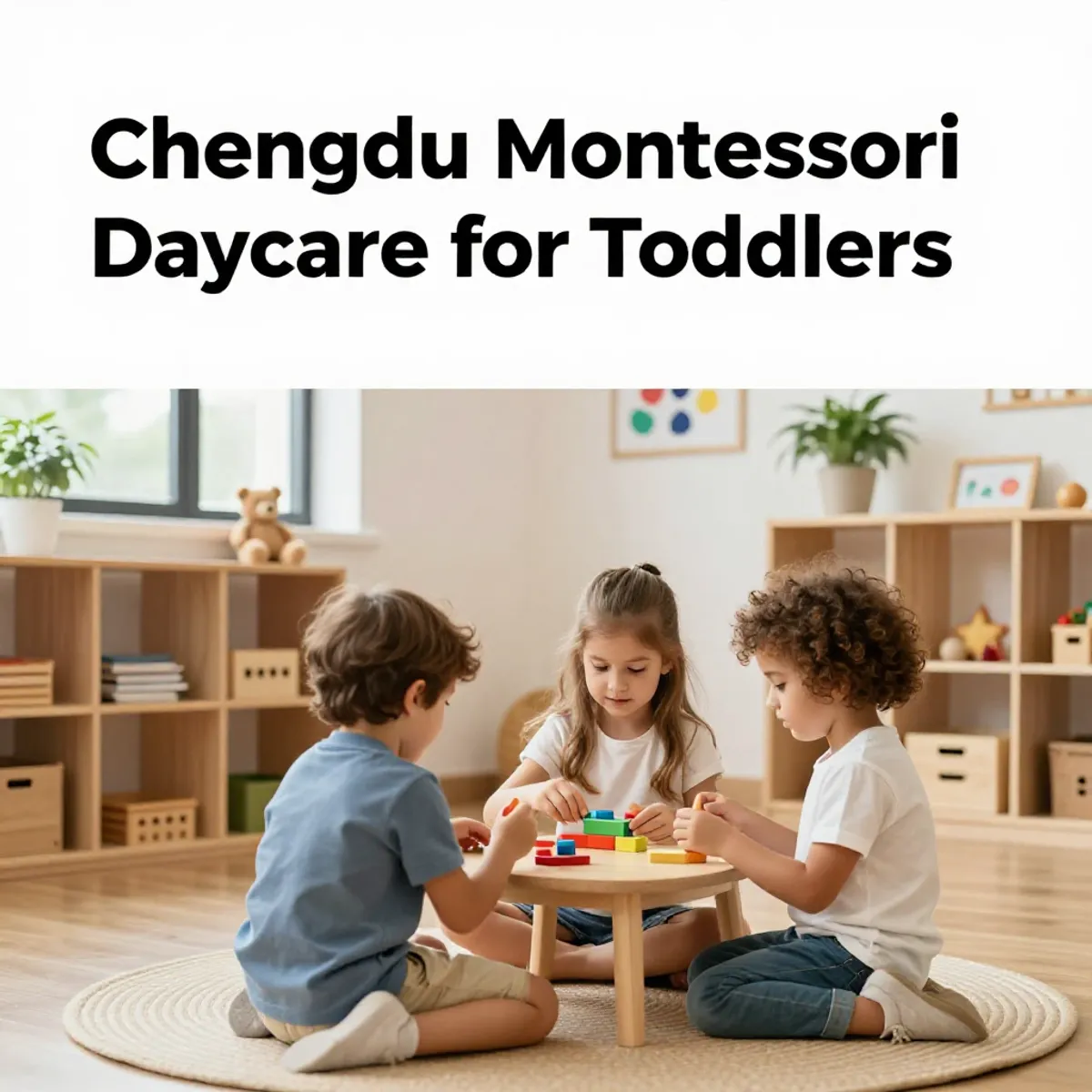
The Montessori approach is built on a meticulously prepared environment tailored to the child's size and developmental stage. For toddlers, this means low shelves with accessible materials, child-sized furniture, and orderly spaces that invite exploration. Every item has a designated place, fostering a sense of calm and autonomy. In a quality Montessori daycare, the environment is both inviting and restrictive—it offers freedom within limits, allowing children to choose activities but within a framework that promotes concentration and respect.
Understanding this principle helps parents evaluate potential daycares in Chengdu. Look for classrooms that are uncluttered, natural materials like wood and glass, and activities displayed on open shelves. The space should feel like a child's world, not an adult's office. This prepared environment is not just aesthetic; it is designed to support the child's natural desire for order and independence, which are especially important for two-year-olds navigating their growing capabilities.
Self-Directed Activity
In Montessori, children are empowered to select their own work from a range of appropriate options. This self-directed activity cultivates decision-making skills, intrinsic motivation, and sustained attention. The teacher, or "guide," observes rather than directs, stepping in only to present new materials or resolve conflicts. For a toddler, this means they might spend an hour pouring water between pitchers or threading beads, following their inner developmental urges.
When assessing daycares, inquire about how much choice children have. A Montessori-inspired program will allow toddlers to move freely between activity areas and work at their own pace. This contrasts with teacher-led group instruction common in many traditional settings.
The goal is to see children engaged in individual or small-group work, not all doing the same thing simultaneously. This principle is central to Montessori's respect for the child as an autonomous learner.
Mixed-Age Groups
Montessori classrooms typically span three-year age groups, such as 2-6 year olds. This mixed-age structure benefits younger children by providing role models and opportunities for imitation. Older children reinforce their knowledge by helping younger peers, developing leadership and empathy. For a two-year-old, being in a room with three and four-year-olds can accelerate social and cognitive growth through observation and collaborative play.
In Chengdu, ask about the age composition of the classroom. A truly Montessori program will not segregate toddlers into separate rooms unless absolutely necessary for safety or developmental reasons. The presence of older children creates a community feel and mimics a family environment, which is comforting for young children. This aspect also means that even in a short-term stay, the child can integrate into an established peer group rather than being isolated with only age-mates.
Role of the Guide
The Montessori guide differs significantly from a traditional teacher. Their primary role is to observe each child's interests and development, then present materials at the right moment to scaffold learning. They are facilitators, not directors, and they minimize interruptions to children's concentration. Guides are trained to recognize sensitive periods—windows when children are particularly receptive to certain skills—and to prepare the environment accordingly.
When visiting daycares, note how staff interact with children. Do they hover or correct constantly, or do they step back and allow children to struggle and succeed independently? The ideal guide speaks softly, moves deliberately, and respects a child's work cycle without rushing them.
This approach requires extensive training, so inquire about staff credentials. Authentic Montessori guides undergo specific certification, which is a strong indicator of program quality.
Chengdu's Childcare Ecosystem
Types of Daycare Centers Available
Chengdu, as a major city in Southwest China, offers a diverse range of childcare options. These include international preschools often affiliated with expat communities, private bilingual daycares, local private nurseries, and government-supported public childcare centers. Each type varies in curriculum language, cost, and regulatory oversight. For a short-term visitor, international and private centers are typically more flexible with enrollment durations and may have more experience with transient families.
Local public options are usually more affordable but may require longer commitments and have stricter residency or hukou requirements. But, they provide an immersive Chinese cultural experience. Family-run home daycares are also common, offering a smaller, home-like setting, but quality can vary widely and regulatory compliance is less consistent. Understanding this landscape helps narrow the search based on priorities like language, cost, and educational philosophy.
International vs. Local Options
International daycares in Chengdu often follow curricula like Montessori, Reggio Emilia, or play-based approaches from Western countries. They typically have English-speaking staff, smaller class sizes, and higher fees. These centers cater to expat families and are accustomed to short-term enrollments, making paperwork simpler. But, they may be concentrated in expat-heavy districts like Jinjiang or Wuhou, and spots can be limited.
Local private daycares may offer bilingual programs or Chinese-only care with some Montessori elements. They are more affordable and deeply embedded in Chinese culture, which can be a valuable experience for a child. Staff may speak limited English, but visual communication and translation apps can bridge gaps.
The key is to assess whether the educational approach aligns with Montessori values, even if the language is Chinese. a number of local centers incorporate hands-on, child-centered activities that parallel Montessori principles.
Regulatory Framework in 2026
China's childcare sector is governed by national and local regulations aimed at ensuring safety, staff qualifications, and curriculum standards. In 2026, Chengdu enforces licensing for all daycare centers, requiring regular inspections, qualified caregivers with early childhood education certificates, and specific staff-to-child ratios (typically 1:5 for toddlers). Centers must meet health and safety codes, including secure facilities, nutritious meals, and emergency protocols.
For parents, this means any reputable daycare should be able to present its license and inspection reports. International centers may also hold accreditations from foreign educational bodies. Understanding these regulations helps in evaluating centers; ask about their license number and how they comply with local rules. This framework provides a baseline for quality, though Montessori-specific training is an additional layer beyond basic licensing.
Defining "Good" Daycare: Essential Criteria
Health, Safety, and Cleanliness Standards
For toddlers, a clean and safe environment is non-negotiable. This includes sanitized toys and surfaces, secure outdoor play areas with soft landing surfaces, and childproofed interiors. Staff should follow strict hygiene practices, such as handwashing routines and proper diaper disposal.
During visits, observe the overall tidiness, air quality, and whether hazardous items are out of reach. Fire exits should be clear, and first-aid supplies readily available.
In Chengdu's humid climate, mold prevention and pest control are also important. Ask about cleaning schedules and how illnesses are managed—centers should have clear policies for excluding sick children and notifying parents. A good daycare prioritizes health as much as education, as a sick child cannot learn or play effectively. This criterion is universal and should be assessed regardless of educational philosophy.
Qualified and Caring Staff
The caregivers' qualifications and demeanor are paramount. Staff should have formal training in early childhood education, with Montessori certification being a plus for Montessori-oriented centers. Beyond credentials, observe how teachers interact with children: are they patient, attentive, and affectionate?
Do they engage at the child's level, listen, and respond to cues? Low staff turnover is also a positive sign, indicating a healthy work environment and consistent caregiving.
In China, many daycare staff have degrees in preschool education from local colleges. For international centers, staff may have foreign qualifications. Ask about ongoing professional development and how staff are supported.
The ideal caregiver balances warmth with structure, guiding without dominating. Since language may be a barrier, pay attention to nonverbal communication—smiles, gentle touches, and patient gestures speak volumes about care quality.
Curriculum Alignment with Your Values
Even if not strictly Montessori, a good daycare will have a clear, developmentally appropriate curriculum. Look for a balance of structured activities and free play, emphasis on practical life skills, and opportunities for sensory and motor development. In Montessori, this means specific materials for pouring, sorting, and puzzle work; in alternatives, it might mean art projects, outdoor exploration, or music. The curriculum should be visible in the classroom—materials organized on shelves, activity plans posted, and children engaged in purposeful work.
Discuss with the director how daily schedules are structured. A typical toddler day might include circle time, work cycles, outdoor play, meals, and nap time. Ensure there is ample time for child-initiated activity, not just teacher-led group sessions.
The curriculum should respect individual pacing and foster independence, core to your son's current experience. If Montessori is preferred, ask specifically about the use of Montessori materials and adherence to its philosophy.
Location, Hours, and Flexibility
Practical considerations like location relative to your in-laws' home are crucial. A long commute could add stress to drop-off and pick-up, especially in Chengdu's traffic. Aim for a center within a reasonable distance, ideally 20-30 minutes away.
Also, confirm operating hours—most daycares open around 8:00 AM and close by 5:30 PM. Ensure these align with your family's schedule during the month-long stay.
Flexibility is key for short-term enrollment. Can you enroll for exactly one month? Are there part-time options (e.g., three days a week) if desired?
Some centers may require minimum stays or have blackout periods. Discuss these details upfront to avoid surprises. Also, inquire about holiday closures—if your visit overlaps with Chinese holidays, the center may be shut, requiring backup care.
Parent-Teacher Communication
Regular communication between parents and caregivers is essential for continuity and peace of mind. Inquire about how updates are provided: daily notebooks, apps like WeChat, or verbal chats at pickup? For non-Chinese speaking parents, ask if there is a staff member who can communicate in English or if translation services are available. Good centers welcome parent questions and involve them in their child's day.
During your search, test the responsiveness of the administration. How quickly do they reply to inquiries? Are they open to discussing your child's specific routines from the US daycare?
A center that values partnership with parents will be eager to learn about your child's habits to ease the transition. This communication channel becomes even more critical during a short stay, as you need to quickly establish trust and share important information.
Research Strategies for Short-Term Daycare in Chengdu
Online Resources and Expat Networks
The internet is your first tool for compiling a list of potential daycares. Start with expat-focused websites and forums like Expat.com, InterNations, or Chengdu-specific Facebook groups such as "Chengdu Expats" or "Chengdu Parents." These platforms often have recommendations and reviews from other families who have sought temporary childcare. Search using keywords like "Chengdu daycare," "Montessori preschool," and "toddler care" to gather names and contact details.
Also, look for websites of international schools in Chengdu, as many have attached preschool programs that accept short-term students. Examples include Chengdu International School or Oxford International College of Chengdu, but avoid using "school" in your searches; use "preschool program" or "early years center." Online research provides a preliminary list, but always verify information through direct contact and visits.
Leveraging Local Connections
Your in-laws in Chengdu are invaluable assets. They can tap into local networks—perhaps through their own social circles, neighborhood committees, or WeChat parent groups. In China, many recommendations come through word-of-mouth on platforms like WeChat, where local parents share experiences in group chats. Ask your in-laws to inquire among colleagues, friends, or even local parenting influencers on Douyin (TikTok's Chinese counterpart).
Local connections might reveal hidden gems not widely advertised online, such as small family-run centers with excellent reputations. They can also provide insights into cultural nuances, like which centers are more welcoming to foreigners or which have staff with some English ability. This grassroots research complements online findings and gives a more grounded view of options.
Visiting and Touring Facilities
Once you have a shortlist, schedule visits to each daycare. A physical tour is non-negotiable for assessing quality. During the visit, observe the classroom dynamics: are children engaged and calm?
Is the environment orderly and child-friendly? Note the interactions between staff and children—are they respectful and nurturing? Ask to see the outdoor play area, kitchen, and nap spaces.
For short-term enrollment, discuss the trial process. a number of centers offer a half-day or full-day trial for new children to assess fit. Use this opportunity to see how your child reacts and how staff respond to their needs.
Bring your son along if possible, but also go alone to ask detailed questions without distraction. Take photos (with permission) of the environment to compare later.
Checking Licenses and Accreditations
Verify that each center holds a valid childcare license from the Chengdu Education Bureau or local government.
Verifying Montessori Authenticity
For parents specifically seeking Montessori alignment, a valid local license is just the baseline. You must probe deeper into the program's philosophical fidelity. Ask direct questions: "What percentage of your teachers hold Montessori teaching credentials from MACTE-accredited programs?" "Can you describe how the classroom materials are presented and rotated?" "How do you handle a toddler's 'work cycle'—do children have uninterrupted blocks of time to choose and concentrate on activities?" Authentic Montessori centers will readily discuss their prepared environment, the role of the guide, and their mixed-age grouping philosophy.
Be wary of centers that merely use the term "Montessori" as a marketing label without substantive training or material implementation. Request to see the specific Montessori materials (like the pink tower, brown stairs, or practical life sets) in use, not just stored on shelves.
Seeking References and Reviews
Beyond official credentials, seek anecdotal evidence. When you have a shortlist, politely ask each center for contact information of current or former parents, particularly those with short-term enrollment experience. Expat networks mentioned earlier are goldmines for this.
A quick message in a Chengdu parents' Facebook group asking, "Does anyone have recent experience with [Center Name] for a toddler?" can yield unfiltered opinions. Pay attention to comments about staff turnover, communication responsiveness, and how well the center accommodated special routines or dietary needs. A pattern of positive feedback regarding consistency and care quality is a strong indicator.
Planning the Trial Visit and First Days
If a center seems promising, negotiate a trial period—ideally two to three consecutive days—before committing to the full month. This is critical for assessing the fit for your son. During the trial, observe his reaction to the environment, the teachers, and the other children.
Does he seem curious or anxious? Do the guides approach him respectfully, offering choices rather than directives? After the trial, debrief with the director.
Share your son's typical routines from his US daycare (e.g., nap time, snack preferences, comfort items) and ask how they can accommodate them. A flexible center will work with you to ease the transition, perhaps allowing a familiar blanket or a photo from home.
Navigating Language and Cultural Cues
In a Chinese-language setting, communication becomes a practical hurdle. Confirm there is at least one staff member with functional English to discuss daily matters. a number of international centers have bilingual assistants; local private ones may not.
Utilize technology: WeChat is ubiquitous in China for parent-teacher communication. Ask if the center uses a WeChat group for class updates and photos. For critical discussions, translation apps like Pleco or Google Translate (used carefully) can help.
More importantly, observe nonverbal interactions. Are caregivers warm, patient, and physically gentle? Do they get down to the child's eye level?
These universal cues of quality care transcend language.
Finalizing Logistics and Backup Plans
Once you select a center, clarify all logistical details in writing, even for a short stay. Confirm the exact start and end dates, total cost (including any registration or material fees), payment schedule, and cancellation policy. Ask about their policy on holidays—if your stay coincides with a Chinese public holiday like National Day in early October, the center will be closed.
You must have backup care identified, perhaps through a trusted local nanny recommended by your in-laws. Also, discuss health protocols: what is their policy on minor illnesses (runny nose, slight fever)? Understanding these rules upfront prevents last-minute stress and ensures your son's month is as stable as possible.
Conclusion: Embracing the Adventure with Confidence
Securing appropriate daycare in Chengdu for a month may feel like a complex puzzle, but breaking it down into systematic steps makes it manageable. The core principle is continuity—preserving your son's sense of security, routine, and developmental momentum. Whether you find a perfect Montessori match or a nurturing local alternative that mirrors its values, the goal is achieved.
By combining online research, local insights, thorough visits, and clear communication, you create a seamless bridge between his life in the US and his month in China. This effort not only safeguards his growth but also gifts your family peace of mind, freeing you to enjoy Chengdu's wonders knowing your toddler is thriving in a caring, structured environment. The temporary setting becomes a positive chapter in his multicultural story, not a disruptive gap.
With careful preparation, this short-term educational connection becomes a smooth and enriching part of your family's adventure.
Responses • 0
0/2000
ID: 1326
Chris
Online
From
Bakersfield, United States
Send Message