Ancient DNA Rewrites Chu Zongzi History
AI Learn Chinese
2 hr • 0 read
Ancient DNA and chemical analysis reveal Chu (楚) tombs contain earliest Zongzi (粽子) with oak leaves and uncooked rice and millet.
Introduction: The Wrapped Enigma
For over two thousand years, the triangular parcels of glutinous rice known as zongzi have been inseparable from the Duanwu Festival, a culinary icon so deeply woven into cultural memory that its origins are often treated as settled legend. The standard story centers on the poet Qu Yuan of the Chu state, whose tragic suicide in the Miluo River prompted villagers to throw rice into the water to distract fish from his body. This narrative, while powerful, is a later literary construct that obscures a far more ancient and materially verifiable history. The true, pre-legendary form of the zongzi—its original wrapper, its contents, its primary purpose—has long been a mystery, a gap in the historical record filled only by assumption and tradition.
Physical evidence of the earliest zongzi-like objects has been exceptionally rare and notoriously ambiguous. Without clear archaeological examples, the story of this food relied on textual sources that are themselves derivative and mythologized. Recent archaeological discoveries, however, have begun to change this.
A landmark study published in Science Bulletin now applies cutting-edge molecular science to ancient funerary objects from Chu aristocratic tombs, moving the discussion from speculation to empirical data. The research tackles a deceptively simple question: what was the original, material form of the wrapped grain parcel, and what does its composition reveal about the society that created it?
This investigation represents a methodological shift. Instead of starting with received textual tradition, scientists treated ancient, carbonized plant bundles as direct archives of biological information. By extracting and analyzing ancient DNA and chemical residues, they bypassed centuries of commentary and legendary accretion to have a direct conversation with the past.
The goal was to establish a firm material baseline—to know with scientific certainty the specific leaves, the specific grains, and the preparation state of the earliest known examples. This baseline then becomes a fixed point from which the long, complex journey of the zongzi—its diffusion, adaptation, and symbolic evolution—can be accurately measured.
The findings do not merely add a footnote to food history; they necessitate a fundamental rewrite of the zongzi’s origin story, rooting it firmly in the ritual practices and ecological knowledge of the Warring States-era Chu state, and revealing a thread of continuity that survives to this day.
The Archaeological Context: Tombs of the Chu Kingdom
The critical evidence was recovered from two elite tombs of the Warring States period (475–221 BCE), a time of intense political fragmentation and extraordinary cultural creativity that preceded the Qin unification. Both tombs belong to the Chu state, a powerful and culturally distinct southern kingdom centered in the Yangtze River valley. Chu was renowned for its artistic brilliance, shamanistic religious practices, and a sophisticated, locally distinct material culture that often stood in deliberate contrast to the Zhou-centric states of the Central Plain. Understanding the Chu worldview is essential to interpreting these finds.
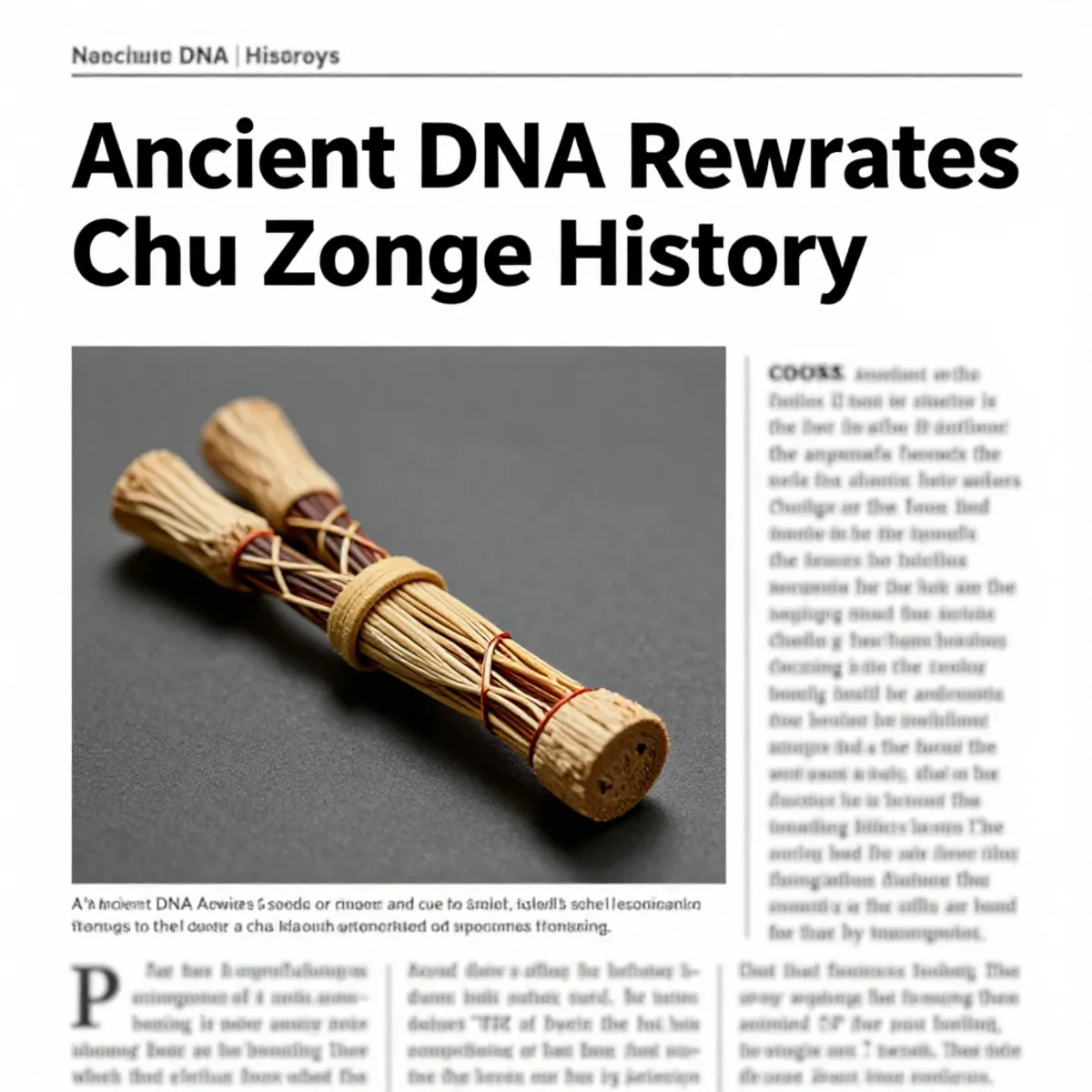
The first cache originated from the Chengyangcheng site in modern Henan Province. This location, near Shangqiu, was a major Chu settlement and burial ground. Archaeologists uncovered a set of "plant packages"—bundles clearly wrapped in large, whole leaves and bound with plant fibers.
The original organic contents had decomposed, but their impressions and mineralized residues were perfectly preserved in the anaerobic, compacted earth of the tomb chamber. The packages were found in a context indicating deliberate, ceremonial placement, likely as part of a larger assemblage of grave goods.
The second set came from the Wuwangdun No. 1 tomb in Anhui Province, another high-status Chu aristocratic burial within a large cemetery complex. Here, the plant packages were discovered alongside bronze vessels and lacquerware, suggesting they were part of a curated set of provisions for the afterlife. The preservation state was similar: carbonized leaf wrappers enclosing mineralized interior residues.
The context of both finds is unequivocally ritual and high-status. These were not kitchen refuse or everyday waste. They were carefully prepared, intentionally placed objects meant to function in the spiritual economy of the tomb.
Their discovery within the Chu cultural sphere, in two geographically separate but culturally consistent locations, indicates this was not a local, idiosyncratic practice but a recognized ritual tradition within the Chu elite. The meticulous wrapping itself implies the container was as significant as the contents, pointing to a belief system where the form and material of an offering held intrinsic spiritual power.
The Scientific Breakthrough: Decoding Degraded Organic Matter
To extract information from these fragile, millennia-old remains, the research team employed a dual-method, interdisciplinary approach that represents the state of the art in paleoethnobotany. The first technique was ancient DNA sequencing (aDNA). This involves meticulously sampling microscopic particles from the charred leaf material under sterile conditions.
Specialized extraction protocols are used to isolate the highly fragmented, damaged DNA strands. These sequences are then amplified and compared against vast modern reference databases to identify the plant genus or species of origin. Successfully retrieving aDNA from such old samples in a humid environment like central China is a technical triumph, as DNA degrades rapidly under those conditions.
The second method was chemical residue analysis, utilizing instruments like gas chromatography-mass spectrometry (GC-MS) and high-performance liquid chromatography (HPLC). These tools can detect and identify specific molecular biomarkers—the chemical fingerprints of organic compounds such as starches, fatty acids, waxes, and proteins—that remain trapped in mineral deposits or adsorbed onto porous materials long after the original organic matter has decayed.
The power of this study lies in the cross-verification between these two independent lines of evidence. DNA provides a biological identification of the wrapper (e.g., Quercus genus). Chemical analysis can confirm the presence of specific foodstuffs inside (e.g., starch biomarkers for rice and millet) and may also detect compounds from the leaves themselves, like tannins.
A positive match from both methods creates a far more robust and confident identification than either could achieve alone. This multi-proxy strategy is the gold standard for studying highly degraded archaeological organics, where visual identification is impossible. The methodology itself tells a story of technological progress; this level of detail from Warring States-era samples would have been unimaginable twenty years ago.
Finding One: The Oak Leaf Wrapper
The ancient DNA analysis yielded a clear and surprising result. The wrapper material from both the Henan and Anhui tomb packages was identified as originating from oak trees (Quercus spp.). This genus-level identification is robust, statistically supported, and crucially, it rules out other common historical and modern wrappers like bamboo (Phyllostachys), reed (Phragmites australis), or banana (Musa). Pinpointing the exact oak species is difficult due to DNA fragmentation and the close genetic relationship of many Chinese oaks, but the genus identification is definitive.
This finding immediately creates a powerful hypothesis: if the ancient Chu used oak leaves, and a specific regional tradition using oak leaves persists today, there may be a direct cultural link. In certain rural areas of modern Henan, particularly around Zhumadian near the ancient Chengyangcheng site, communities continue to prepare a traditional zongzi wrapped in large, pliable oak leaves. The modern preparation typically involves a simple filling of rice and millet, seasoned only with salt, and the leaves are softened by soaking or steaming before wrapping. The geographical and material overlap is striking and non-accidental.
The oak leaf identification challenges the default assumption that bamboo or reed were the "original" wrappers. It suggests the form was ecologically grounded in the Chu heartland's deciduous forests. The durability and natural abundance of oak would have made it a practical choice, but its cultural significance within Chu shamanistic traditions—where long-lived trees were often seen as conduits to the spirit world—cannot be discounted. The leaf was not a neutral container; it was an active, symbolically charged component of the ritual object from the very beginning.
Finding Two: The Uncooked Grain Filling
Complementing the DNA evidence, chemical residue analysis provided a detailed profile of the interior contents. The researchers identified specific starch grain biomarkers within the mineralized deposits inside the leaf packages. Microscopic and chemical techniques confirmed these biomarkers originated from two cereals: rice (Oryza sativa) and millet (Panicum miliaceum or Setaria italica).
The identification of both grains is significant. Rice was the premier staple of the southern Yangtze region, the core of Chu territory. Millet, a hardy grain more associated with the northern Yellow River valley, was also widely cultivated. Its presence alongside rice may indicate agricultural diversity within Chu, trade networks, or a symbolic inclusion of a "northern" staple in a southern ritual context.
More profoundly, the chemical signature—including the preservation of certain starch granule structures and associated phytoliths—indicated these grains were in an uncooked state when wrapped and deposited. This is a critical distinction. Everyday food remains or even portable travel rations would typically show signs of cooking (gelatinized starch, altered protein structures). Uncooked grains, sealed within a leaf, represent potential, fertility, and the basic staff of life in its most inert, symbolic form.
In ancient Chinese funerary practices, especially within the Chu tradition known for its emphasis on provisioning the afterlife, food offerings were often symbolic. Uncooked grains were not meant to be consumed by the deceased's spirit in a physical sense but functioned as spiritual currency or tokens of perpetual regeneration. They ensured the deceased's continued vitality and abundance in the metaphysical realm.
This finding transforms the packages from hypothetical "ancient snacks" to confirmed ceremonial provisions, explaining their careful preparation and tomb context. They were objects of ritual, not of nutrition for the living.
The Chu Ritual Worldview: More Than a Food Package
To fully grasp the significance of these artifacts, they must be situated within the unique cultural and religious milieu of the Chu state. Chu was not merely a political rival to the Qin and Han; it was a vibrant civilization with its own language (distinct from Old Chinese), mythology, and artistic idioms. Chu religion was characterized by shamanic rituals, communication with spirits and ancestors, and a worldview where the boundary between the human and spirit worlds was permeable. The Chu Ci (Songs of Chu), a foundational poetic anthology, is replete with descriptions of divine beings, celestial journeys, and offerings.
Within this context, the "Chu package"—an oak leaf wrapped around uncooked rice and millet—becomes a coherent ritual object. The oak tree, long-lived and sturdy, was likely associated with endurance, the ancestral realm, and the permanence of the spiritual world. Its leaves, containing natural tannins, also possessed preservative qualities, a practical feature that would have enhanced its ritual efficacy by ensuring the offering's longevity. The combination of rice and millet may have held symbolic weight, uniting the prized southern staple with the hardy northern grain, perhaps representing a comprehensive provisioning for the afterlife that spanned the known world.
The act of wrapping itself was likely a ritualized, performative act. Carefully enclosing potent grains within the leaf of a significant tree concentrated and contained life-force (qi) for transmission to the deceased. These were not primitive sandwiches; they were sophisticated Chu ritual technology.
Their placement in tombs alongside bronze ritual vessels confirms their role in the same spiritual economy as more famous grave goods. The form was a physical manifestation of Chu cosmology.
The Preservation Hypothesis: Nature's Antibacterial Shield
One of the study's most compelling propositions is that the choice of oak leaves was driven by a practical, empirically discovered function: natural preservation. Oak leaves are exceptionally high in tannins and other phenolic compounds, which are potent antimicrobials. These chemicals inhibit the growth of spoilage bacteria and fungi.
When used to wrap a moist product like soaked grains, the oak leaf acts as a natural preservative wrapper, significantly extending the edible life of the contents—a crucial advantage in the pre-refrigeration era. The researchers hypothesize that this functional benefit was likely discovered through trial and error by ancient peoples and subsequently embedded into ritual practice because of its proven efficacy.
This hypothesis creates a elegant bridge between practical observation and cultural tradition. It suggests a key element of zongzi's defining form—the inseparable, functional leaf wrapper—was shaped by a deep, experiential knowledge of the natural world. The oak leaf was not just a container; it was an active agent in preservation. This functional layer may have been the initial reason for its adoption, with symbolic meanings (durability, connection to nature spirits) being subsequently layered onto the already-established, effective practice.
This model—a practical innovation gaining cultural resonance—is common in food history. The persistence of the oak-leaf tradition in Henan could be seen as the survival of a functionally superior technique that was later supplanted in most regions by alternatives like bamboo or reed, which have milder flavors but similar structural properties. The leaf's preservative power also explains why these particular funerary offerings survived archaeologically, creating an accidental time capsule for modern science.
A Living Thread: The Oak-Leaf Zongzi of Henan
The most breathtaking evidence for cultural continuity emerges from the present day. The study highlights that in specific locales within Henan Province, particularly in the Zhumadian area surrounding the ancient Chengyangcheng site, communities continue to prepare a distinctive style of zongzi wrapped in oak leaves (locally called hu ye). These modern preparations typically contain a simple filling of rice and millet, sometimes with a touch of salt, and are steamed or boiled for hours.
The preparation method—soaking the grains, softening the tough leaves over fire or in hot water, the specific triangular or pyramidal folding technique—shows remarkable consistency with the inferred ancient method, though direct ethnographic linkage is speculative. This is not a recent folk revival but an unbroken, localized tradition passed down through generations, often as a seasonal specialty for the Dragon Boat Festival or as humble, everyday sustenance.
The geographical overlap is profound: the ancient Chengyangcheng site is in Henan, and the modern oak-leaf zongzi tradition is also centered there. While it is impossible to prove an unbroken, direct lineage across two millennia of population movements and cultural change, the constellation of traits is too precise to dismiss: the specific leaf (Quercus), the specific grain mix (rice and millet), and the specific geographic location. This living tradition serves as a vital ethnographic analog, a window into how such ritual foods might have been prepared and perceived in the past. It demonstrates that the "Chu package" was not a dead artifact but a seed that grew into a persistent, localized culinary practice, resisting complete homogenization during centuries of imperial integration.
Linguistic Fossils: Textual Traces and Dialectal Maps
While the physical artifacts provide concrete evidence, the written word offers a parallel, more interpretive record. The famous Qu Yuan narrative, first crystallized in texts like Jia Yi's Lament for Qu Yuan (c. 174 BCE), mentions throwing "rice" (mi) and "bamboo tubes" (zhong) into the river.
It does not describe a leaf-wrapped triangular parcel; that connection is a later conflation. Earlier, oblique references like "triangular rice" (sanjiao mi) in the Zuo Zhuan (4th c. BCE) exist, but the first unambiguous description appears in the Fengsu Tongyi (c.
195 CE) by Ying Shao, who details wrapping rice in bamboo or reed leaves, calling it jiao shu ("horned millet").
This textual record captures the codification and northward spread of a tradition that likely had deeper, more localized southern roots. The very character for zongzi—粽—is a linguistic artifact. Its phonetic component, 宗 (zong, ancestor, clan), directly references its ritual function in ancestor veneration.
Its semantic component, 米 (mi, rice), denotes the primary ingredient. This phono-semantic compound suggests that by the Han dynasty, when characters were standardized, the food was firmly associated with familial and ancestral rites. The older term jiao shu faded, replaced by zongzi, a shift that mirrors the consolidation of a Chu regional ritual into the mainstream Han calendar.
The nomenclature for zongzi across China’s dialects is a map of historical migration and local ecology. While Mandarin uses zongzi, regional variations abound. In Wu-speaking areas, it’s often zong or jiaobao ("cornered bundle").
In Minnan, bah-chàng (with meat) versus gû-chàng ("ancient zongzi"). The Henan oak-leaf tradition has its own specific names, like ye zong ("leaf zongzi") or lu ye zong, often specifying the oak leaf (hu ye). This lexical specificity—naming the leaf type—is rare elsewhere and signifies a conscious preservation of material knowledge, a linguistic fossil pointing to an ancient, localized technique.
The dialectal diversity in verbs of preparation (e.g., the Cantonese verb zung derived from the noun) further indicates that for these communities, making zongzi is a distinct, ritualized practice with its own semantic territory, not merely a subset of cooking. The archaeology of language, like the archaeology of objects, reveals layers of localized practice that challenge a monolithic national narrative.
Diffusion and Adaptation: From Chu Ritual to National Festival
The archaeological confirmation of a Warring States Chu zongzi does not imply a static or geographically confined tradition. The Qin unification and the long Han dynasty created conditions for the widespread diffusion and adaptation of Chu customs. The Fengsu Tongyi's description, written in the Han capital of Luoyang, indicates that by the 2nd century CE, a version of the leaf-wrapped parcel was practiced in the Central Plains, transmitted via administrative integration, population movement, and cultural exchange. As the Han empire consolidated, it incorporated and standardized elements of Chu culture, and zongzi appears to have been one such element, transformed from a regional Chu funerary item into a pan-imperial festival food associated with the Duanwu holiday.
As the tradition spread across diverse ecologies, it underwent fascinating material adaptations. Bamboo leaves, abundant in the subtropical south, became the iconic wrapper there. Reed, common in northern wetlands, became standard in Shandong and Jiangnan.
In the tropical south, banana or palm leaves were adopted for their size. This material adaptation is a clear example of glocalization—an imperial tradition taking on local forms based on available resources.
The fillings also transformed radically. The simple rice-and-millet combination from the Chu tombs reflects a pre-Han, possibly more austere, dietary base. As sugar production increased during the Tang and Song, sweet fillings (red bean paste, jujube) became popular in the south.
The introduction of New World crops after the 16th century (sweet potato, corn) further diversified fillings. In the north, savory zongzi with mung beans, pork, and salted egg yolk became the norm, reflecting a heavier, salt-preserved culinary tradition. Each regional variant tells a story of agricultural history, trade routes (like the Grand Canal), and taste evolution, all built upon the ancient, simple template of "grain-in-leaf." The form—a wrapped parcel—remained constant, while the content became a canvas for regional identity.
The Dual Life: Ritual Object and Daily Sustenance
A crucial dimension of zongzi's cultural history is its simultaneous existence in sacred and secular spheres. The Chu tomb packages were unequivocally ritual—funerary offerings for the afterlife. Yet, the very properties that made them suitable for tombs—the durable, preservative leaf, the non-perishable grain—also made them practical for everyday use as portable, long-lasting food.
This duality is central to their enduring appeal. The transition from pure ritual object to daily sustenance is a common path for festival foods (e.g., Easter eggs), but it underscores how deeply the form was embedded in practical life from the start. A food designed for the afterlife, with inherent durability, was perfectly suited for the living's needs: travel, field work, or as a pre-prepared meal.
During the Duanwu Festival, consumption bridges ritual and recreation. But, in many parts of China today, zongzi are not exclusive to Duanwu. In Guangdong, they are a common year-round breakfast snack.
In Henan's rural areas, oak-leaf zongzi may be a seasonal specialty but also a humble, everyday food. This quotidian use may be a direct descendant of the original ritual act—the sacred form was so useful it naturally permeated the profane.
The preparation process itself embodies this duality. The meticulous, skill-based wrapping—often a multi-generational, gender-specific activity during festival seasons—is itself a ritual, a meditative act connecting the maker to ancestors. The time-consuming nature transforms food production into social and cultural ritual.
Thus, the "quotidian" zongzi is never entirely secular; it carries the aura of its ceremonial origins. Even when eaten as a simple lunch, it evokes participation in a continuity stretching back to the Chu state.
Interdisciplinary Horizons: Future Research Directions
This study is a landmark in interdisciplinary research, demonstrating how scientific techniques can directly engage with historical and cultural questions. The identification of oak leaves via ancient DNA and uncooked rice/millet via chemistry moves beyond speculation to concrete data. This methodology opens new avenues. Similar "plant packages" from other periods (Qin, Han) or regions (e.g., the Dian kingdom in Yunnan) could be subjected to the same analysis to map the geographical spread and chronological development of wrapped food technologies.
Future research could address lingering questions. The DNA identified the leaf to the genus Quercus, but which specific species? Different oaks have different tannin profiles and leaf textures, which could refine understanding of ancient environmental selection and deliberate species choice.
In addition, while chemical evidence points to uncooked grains, could more sensitive future analysis—like lipidomics or proteomics—detect traces of seasoning (salt, herbs, fermentation)? Such a discovery would revolutionize understanding of the ancient Chu palate and ritual provisioning, moving from "what" to "how" it was prepared.
Another exciting frontier is the systematic correlation of archaeological finds with textual sources. Could computational linguistic analysis of the Chu Ci's poetic descriptions of offerings (mentioning plants like xi or lan) be correlated with a systematic survey of Chu aristocratic burials? This would solidify the link between the material culture and the documented religious beliefs of the Chu people, painting a fuller picture of their afterlife concepts. The intersection of science and humanities here is not about validation, but about building a richer, multi-dimensional narrative.
Rewriting Cultural Identity: The Chu Legacy in a Han-Centric Narrative
The standard narrative of Chinese civilization often centers on the Yellow River valley and the Han Chinese heartland, framing peripheral cultures like Chu as "barbarian" influences that were eventually sinicized. The archaeological confirmation of a distinct, sophisticated zongzi tradition within the Chu sphere challenges this diffusion model. It suggests that a key element of what is now considered quintessentially "Chinese" festival culture has roots in a southern, non-Zhou culture once regarded with cultural superiority by the Central Plains states. The Chu were not passive recipients of northern culture; they were active innovators whose practices were later adopted and adapted by the Han imperial project.
This finding empowers modern regional identities. For Henan, the oak-leaf zongzi tradition is not a quaint folk custom but a direct, living link to a prestigious ancient kingdom that rivaled the Qin and Han in cultural brilliance. It provides a tangible counter-narrative to the idea that all important traditions flowed from north to south.
For scholars of Chu culture, it offers a rare instance of material culture—a food practice—that can be securely tied to their civilization, complementing the more commonly studied bronze vessels and poetry. It grounds their literary and artistic legacy in a daily life practice. On a national level, it enriches the understanding of Chinese cultural genesis as a syncretic process.
The zongzi story is one of a Chu innovation (the leaf-wrapped grain parcel for ritual) that was absorbed, renamed, and normalized within a broader imperial framework, while its original form (oak leaf) persisted as a regional marker. This model—local innovation + imperial adoption + regional retention—is likely a common pattern for many "Chinese" traditions. It moves the discussion beyond "Han vs. minority" to a nuanced appreciation of how China's cultural unity has always been built upon immense regional diversity and creative exchange.
The zongzi, therefore, becomes a delicious metaphor for Chinese civilization itself: wrapped in layers of history, with a core that hints at a more complex, multi-polar origin.
Conclusion: The Leaf, the Grain, and the Thread of Continuity
The application of ancient DNA and chemical residue analysis to the Chu tomb packages does more than identify the oldest known zongzi-like object. It fundamentally reframes our understanding of this iconic food's origins. The evidence points conclusively to a Warring States-period Chu origin, where leaf-wrapped grain parcels served a primary ritual function as uncooked funerary offerings, distinct from later quotidian or festival consumption.
The use of oak leaves was likely both a culturally specific choice, rooted in the Chu environment and worldview, and a practical application of natural preservation through tannins. The uncooked rice and millet filling underscores its role as a symbolic offering for the afterlife, representing potential and life force. The modern survival of this exact form—oak leaf, rice and millet—in Henan provides a breathtaking potential thread of continuity stretching across two thousand years, suggesting a localized tradition that resisted complete homogenization during centuries of imperial integration.
Thus, the story of zongzi is not a simple legend about a single poet but a complex tapestry woven from ancient ritual practice, empirical knowledge of plant properties, and the quiet persistence of regional culinary traditions. The leaf, it seems, has always been an integral part of the story—not just a wrapper, but a preservative, a symbol, and a cultural marker. This finding transforms the zongzi from a mere festival food into a profound archaeological and cultural document.
It encapsulates the dialogue between the Chu south and the Han north, between ritual and daily life, between empirical observation and symbolic meaning. In unwrapping the molecular secrets of these ancient tombs, we have not just dated a food; we have uncovered a thread in the intricate weave of Chinese civilization itself, a thread that began in the shamanistic rituals of the Chu and continues to bind families together in kitchens across Henan every spring. The tradition is not static; it is a living record of adaptation, resilience, and the human impulse to mark sacred time with the tangible gifts of the earth. The oak leaf, once a practical and spiritual vessel for the afterlife, now carries the weight of two millennia of history, proving that the deepest roots of culture are often found not in grand texts, but in the humble, wrapped parcels left behind.
Responses • 0
0/2000
ID: 1326
Chris
Offline
2 hr
Visited
From
Bakersfield, United States
Send Message