America's Soft Cookie, China's Hard Market
AI Learn Chinese
2 hr • 0 read
A strategic blueprint for Americanstyle soft cookie success in China's competitive dessert market.
Introduction: The Craving and the Calculus
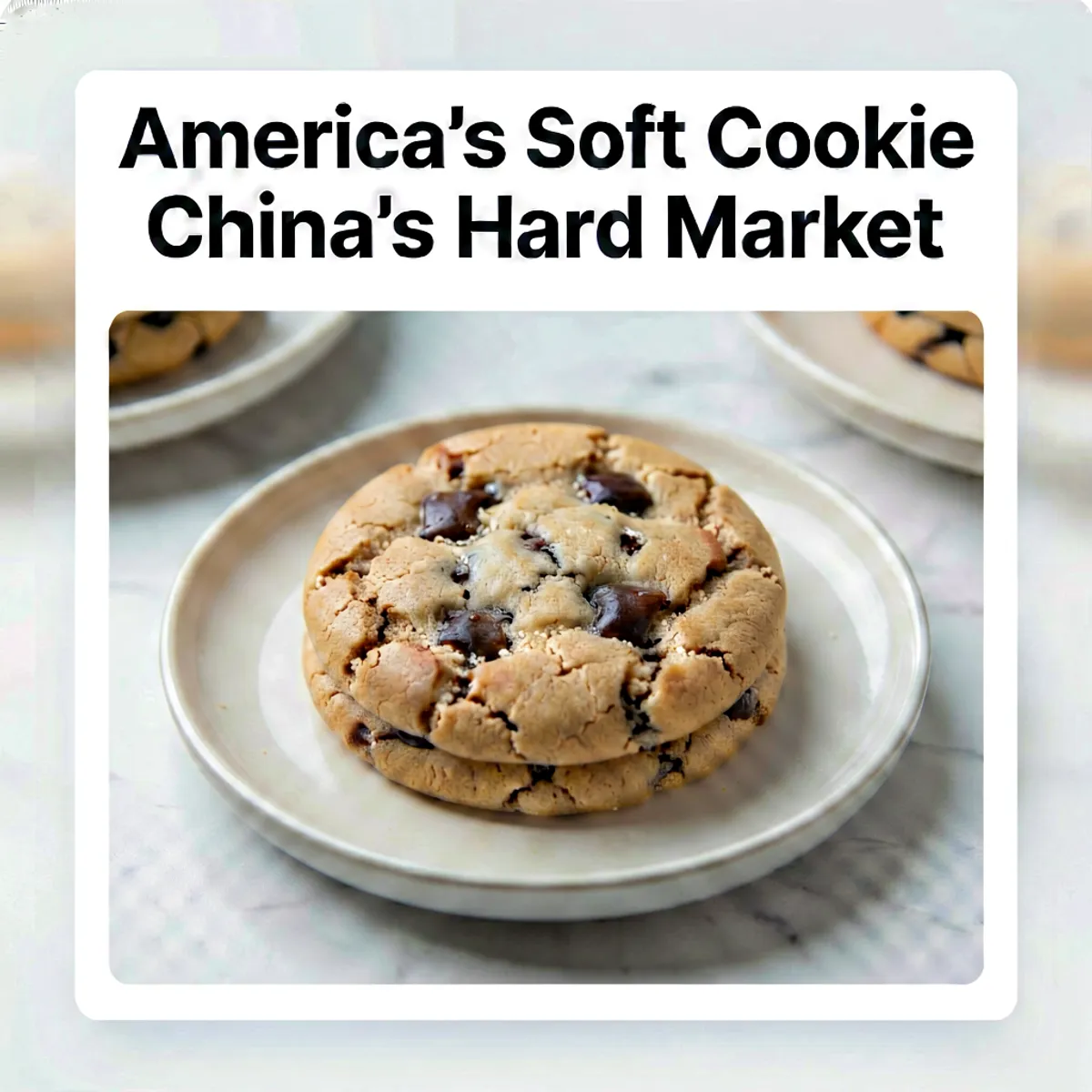
The story of a returnee’s specific, unshakeable craving—for a cookie that is thick, soft, and gooey, a world away from the crisp butter cookies of Europe or the subtly sweet treats of local Chinese bakeries—is more than nostalgia. It is a business hypothesis in miniature. That craving, for an experience akin to a Levain or Crumbl cookie, points to a potential gap in the market. Yet, a single consumer’s desire is the starting point of analysis, not its conclusion.
The China market is a complex ecosystem. It is defined by deeply rooted style preferences, an intensely competitive shopscape, and operational realities that differ starkly from the States. The fundamental question transforms: not if there is a craving, but how to build a viable, scalable business around it. This requires moving beyond the simplistic "do they like sweet?" query.
We must dissect the cultural philosophy behind "not too sweet," map the existing competitive terrain from international chains to supermarket aisles, evaluate the stark financial realities of different business models, and confront the granular work of recipe and operational localization. The goal is to construct a logical, evidence-based case for whether this is a big opportunity or a hard sell, framed as a sequence of strategic decisions. Success hinges not on exporting an American product verbatim, but on intelligently adapting its essence to a new context.
Decoding the Chinese Palate: Beyond "Not Too Sweet"
The most cited barrier is the preference for "not too sweet" (不太甜, bù tài tián). This is not a minor taste tweak; it is a cultural philosophy with historical and social roots. Traditional Chinese dessert principles (tian 甜) emphasize balance—sweetness often paired with light floral notes, bean pastes, or a hint of bitter tea.
The ideal is a clean, nuanced sweetness that avoids cloying the palate. This contrasts sharply with the American tradition where sweetness is frequently the primary, celebrated driver of pleasure in comfort food.
This preference is amplified by contemporary health consciousness. In urban China, concerns about weight management, skin clarity, and long-term health are pervasive. The government's "Healthy China 2030" initiative and constant public discourse on sugar intake frame excessive sweetness as "empty calories" and an irresponsible choice.
A product perceived as overly sweet risks being categorized as a rare, guilty indulgence, capping its consumption frequency and portion size. The archetypal big, thick, gooey American cookie inherently signals high sugar and fat, making it a prime target for this perception.
But, this does not indicate a rejection of indulgence. The stratospheric success of brands like Heytea, Mixue Ice Cream & Tea, and high-end cake shops demonstrates a massive appetite for rich, sweet, and visually striking treats. The key distinction is the profile of indulgence.
These local winners balance sweetness with unique textures (cheese foam, brown sugar pearls), premium ingredients (fresh fruit, high-grade tea), and stunning aesthetics. The pleasure derives from experience, quality, and novelty, not merely a sugar spike. This suggests the opportunity lies not in replicating American sweetness, but in transplanting the textural experience of a thick, soft cookie into a more balanced flavor framework.
Regional variations are critical. In Tier 1 cities (Shanghai, Beijing, Shenzhen), high international exposure and a significant expat population create a more receptive niche for authentic foreign style desserts. Here, the "real American cookie" might find a dedicated following.
In lower-tier cities, where local taste preferences are stronger and international influence weaker, flavor adaptation becomes non-negotiable. The entrepreneur faces an early, pivotal strategic choice: target the cosmopolitan authenticity-seeker or the mass-market localizer? This decision dictates everything from recipe development to marketing tone.
Finally, the social context of consumption cannot be ignored. The described craving is personal—a post-study or post-work reward. In China, food is profoundly social; sharing is a fundamental gesture of care and obligation.
A cookie that is "big enough to share" aligns perfectly with this norm. But, sharing implies specific economics: a price point that doesn’t make group purchase feel punitive, and a portion size that facilitates division. A single, massive, expensive cookie might be a personal trophy but a barrier to group sharing.
The product design, from size to packaging, must consciously address whether it is engineered for solitary solace or communal enjoyment. The cultural insight is clear: the path to acceptance is not a battle against "not too sweet," but a design challenge to create a product and narrative that fits within the established frameworks of balanced indulgence, aesthetic appeal, and social harmony.
Mapping the Competitive Terrain: Where is the Gap?
Identifying a true gap requires a precise map of existing players. The China cookie market is segmented and crowded. The relevant competition falls into four distinct layers, each presenting a different challenge to the soft cookie concept.
1. International Café & Bakery Chains: Starbucks, Costa Coffee, and Paris Baguette offer cookies as standardized, secondary menu items. They are typically crispier, positioned as coffee accompaniments, and benefit from immense brand power and prime real estate.
Their strength is convenience and consistency. Their weakness is a lack of specialization; cookies are not the star. A specialist soft cookie shop must offer a superior core product experience to justify a dedicated visit over a convenient grab-and-go.
2. Local Chinese Bakeries (超时 & Independent): These dominate daily pastry consumption. Their cookie offerings are almost universally the classic crisp butter type (nainai cookies), sometimes with a milk or simple chocolate chip variant.
They are affordable, ubiquitous, and trusted for staples. The texture is universally far from the thick, gooey ideal. Competing on price is suicidal.
Competing on experience means positioning against the entire "daily bread" paradigm, which is a different value proposition.
3. Premium & "Internet Celebrity" (网红) Brands: This is the most relevant competitive set. Brands like Aunty's Cookie (阿姨 cookies), which popularized the soufflé soft cookie, and artisanal bakeries in major cities have validated demand for non-crisp textures.
They market heavily on Xiaohongshu and WeChat, leveraging aesthetics and limited-time offers. They prove a segment will pay a premium for softness. But, they often calibrate sweetness to local tastes and their style tends toward delicate and petite, not big and unapologetically gooey.
They have occupied the "balanced, artisanal soft cookie" niche but may have left the "hearty, American-style indulgence" niche relatively open.
4. Packaged Goods & E-commerce: Supermarket and platform (Tmall, JD.com) shelves are dominated by long-shelf-life packaged cookies from giants like Three Squirrels (三只松鼠) and Oreo. They compete on value and convenience for home consumption.
They are not direct rivals to a fresh, warm, shop-based concept, but they set the consumer's mental benchmark for cookie cost-per-calorie. A fresh 25-35 RMB cookie must justify its premium against a box of 20 for 30 RMB. The value argument must be about freshness, quality, and a unique experiential moment.
The Ghost Competitor: Home Baking. With ubiquitous recipes on Meishi and Bilibili, and affordable small appliances, the barrier to baking a soft cookie at home is low. A commercial shop must therefore offer what the home baker cannot: consistent, optimized texture at scale, a specific American-style profile hard to replicate with local ingredients/ovens, ultimate convenience, and the irreplaceable experience of a warm, fresh product.
The Gap Synthesis: The void is not for "cookies." It is for a very specific style: thick, soft, big, and sweet—positioned as a premium, experiential treat distinct from coffee-shop accompaniments, daily staples, delicate artisanal versions, and packaged goods. Existing players either miss the texture, miss the indulgence level, or are not specialists. The opportunity is to own the archetype of "unapologetic, textural comfort."
Business Model Canvas: Choosing the Operational Foundation
The romantic vision of a cozy shop clashes with the financial reality of prime retail rent in Shanghai or Beijing. The operational model is the foundational strategic choice, defining cost structure, customer reach, and brand expression. Three primary models demand evaluation.
Model 1: Flagship Physical Retail Store. This is the ultimate brand builder. It creates a destination, an immersive sensory experience (the smell of baking, the sight of big rounds on trays, the feel of warmth), and maximum control over the customer journey. It justifies a premium price and builds cult loyalty.
But, it carries the highest fixed costs: astronomical rent, front-of-house labor, utilities, and fit-out. Success is hyper-dependent on foot traffic and location, making it the most hard to execute profitably in early stages. It is a capital-intensive bet on brand primacy, suitable only with significant funding and a long-term expansion vision.
Model 2: Delivery-Centric "Cloud Kitchen" (Dark Kitchen). This model minimizes upfront risk by operating from a low-cost, non-retail space (often in a shared commercial kitchen facility) and focusing entirely on delivery via Meituan and Ele.me. It allows for aggressive pricing experiments, rapid menu iteration based on sales data, and direct targeting of the "post-hard work" craving. The entire work flow is optimized for production and logistics, not ambiance.
The major downsides are the 20-30% platform commission that erodes margins, the lack of brand ambiance, and the existential threat to the product's soft texture during transit. It is a data-driven, lean validation model.
Model 3: The Hybrid/Phased Approach. This seeks to de-risk by combining elements. A common prudent path: start as a cloud kitchen to validate the product, build a delivery customer base, and refine operations. Then, add a small, experiential "pickup window" or a compact shop in a high-density residential or office district with lower rent.
Alternatively, operate primarily via delivery but host weekly pop-ups in tech parks or weekend markets to generate buzz, collect direct feedback, and build community. This model offers flexibility and a staged investment, but its work is more complex, managing multiple operational streams. For a first-time entrepreneur testing an American concept in China, this is likely the most strategically sound path, balancing learning, cash flow, and brand building.
Model Implications for Supply Chain: The model dictates the supply chain. A physical shop needs a steady, high-volume flow of specific ingredients (high-fat butter, chocolate for big chunks,特定面粉). A cloud kitchen requires centralized, efficient production and flawless logistics to multiple delivery zones.
The hybrid needs a flexible supply chain that can scale for pop-up events. Each model faces the same core R&D challenge: sourcing local ingredient substitutes that don’t sacrifice the signature thick, gooey texture, or managing the cost and complexity of imports. The business model choice is not about sales channels alone; it defines the entire operational work scope, cost structure, and growth trajectory.
It must align with the core value proposition: is it the cookie itself, or the total "soft cookie shop" experience?
The Localization Imperative: Recipe as a Starting Formula
Assuming a delivery-first or hybrid model, recipe engineering is the single most critical—and difficult—task. An American recipe, baked in China, will fail. This is not a judgment on skill but a recognition of fundamental variables: ingredient composition, ambient climate, equipment, and consumer expectation. The objective is not to create a "Chinese cookie," but to engineer a cookie that feels like the American ideal within the constraints of the local environment.
Ingredient Variables: American all-purpose flour (10-12% protein) differs in gluten development from Chinese medium-gluten flour (zhongmianfen). Extensive local testing is mandatory. Butter fat and water content vary significantly by brand and origin.
The iconic gooey center relies on a precise fat-to-flour ratio and melting point; a local butter substitution can alter spread and mouthfeel catastrophically. Chocolate is another frontier. Big, melty chunks require couverture chocolate blocks.
Sourcing these locally at the right price/quality or deciding to import has direct cost and quality implications.
The Sweetness Equation: Reducing sugar by 20-30% is the common starting point. But sugar contributes to moisture retention and spread. Simply cutting it risks a dry, cakey cookie.
The solution often involves a compensatory increase in brown sugar (for moisture and molasses depth) or a touch of corn syrup. The goal is to hit a local "sweet spot" that feels indulgent but avoids the "too sweet" stigma. This demands rigorous sensory panels with local testers to find the new equilibrium where softness, thickness, and perceived sweetness are in harmony.
Portion Size & Economics: An 8-ounce (227g) cookie is a meal in the US. In China, where individual portions are often smaller and prices are highly scrutinized, this can seem excessive and overpriced. A 150-180g cookie may be the psychological and practical limit for a single-item purchase.
This "shrinkflation" is commercially painful but may be necessary. The narrative must then pivot to "perfect sharing size" or "generous portion," aligning with social norms. A tiered offering—a smaller "personal" cookie and a "shareable" big version—can address both use cases.
Process & Environmental Adaptation: China's climate varies from Beijing's dry winters to Guangzhou's humid summers. Humidity affects dough consistency and set. Oven calibration is critical; many local commercial ovens lack the precise control or steam injection assumed by States-developed recipes.
The signature "soft in the middle, set on the edges" window can be missed by seconds. Baking time and temperature must be recalibrated for local equipment. Localization is a deep, iterative, scientific work flow.
The recipe is not sacred text; it is a starting formula to be optimized for a new set of constraints and preferences.
Brand Narrative & Marketing: Selling the Emotion, Not the Origin
In China's saturated F&B landscape, a compelling, authentic brand story is a primary differentiator. For an American cookie concept, the narrative cannot be "we make cookies like in America." That is a feature, not a story. The story must connect the product to a deep, relatable human emotion or experience within the local context.
The user's personal narrative—"the taste of comfort after hard work or study"—is a perfect template. It translates powerfully to the stress of the gaokao, the pressure of corporate life in tier-1 cities, or the loneliness of being far from home. The cookie becomes a small, portable, immediate act of self-care. The brand voice should be empathetic and grounding, not boastful or culturally arrogant.
Platform Strategy: Marketing on Xiaohongshu (Little Red Book) and WeChat is non-negotiable. Content must focus on these relatable moments: a late-night study session, a tough week at the office, a small personal victory. User-generated content (UGC) campaigns encouraging customers to share their "cookie moment" build community. The key is to localize the emotion of the craving, not just the flavor profile.
Visual Identity: The thick, soft, gooey texture must be communicated in every asset. Slow-motion pull-apart shots with molten chocolate stretching. Close-ups of the craggy, uneven surface.
This aesthetic is the antithesis of the perfect, uniform, crisp style of many local cookies. It should feel rustic, generous, and genuinely delicious. Branding should avoid cartoonish "American" tropes (baseball, eagles).
A sophisticated, minimalist design with subtle cues (font, a cream-and-brown palette) feels premium and timeless.
Influencer & Launch Strategy: Partner with food critics on Meishi and lifestyle influencers who embody the "busy professional" or "dedicated student" archetype. The pitch is not "try this foreign food" but "try the ultimate comfort food for your demanding lifestyle." Targeted sampling in co-working spaces, university libraries, and tech company offices near the cloud kitchen directly targets the "after hard work" moment.
Pricing & Naming: Pricing strategy must align with narrative. Is it a premium, occasional treat (35-42 RMB)? Or a more accessible regular reward (25-28 RMB)?
The former supports a luxury positioning; the latter supports volume. The story must match the price. The name itself is a strategic decision: an English name with Chinese characters (e.g., "Soft Cookie Lab" – 软曲奇实验室), a descriptive Chinese name (e.g., "厚乳软曲奇" - Thick Milk Soft Cookie), or a clever bilingual hybrid.
This affects searchability and cultural resonance. Marketing must also preemptively address the "too sweet" perception, highlighting "balanced sweetness" or "less sugar than you think," supported by the actual recipe adjustments and premium ingredient claims.
The marketing work is about building the perception that this is not just a foreign cookie, but the definitive cookie for a specific, widespread Chinese lifestyle need.
Operational Hurdles: The Grind Behind the Softness
The dream of a warm cookie masks a world of gritty, daily work. Scaling a soft cookie business in China presents unique, brutal operational challenges that can destroy a venture if underestimated. The product's very nature—high fat, high moisture, delicate texture—is an operational enemy.
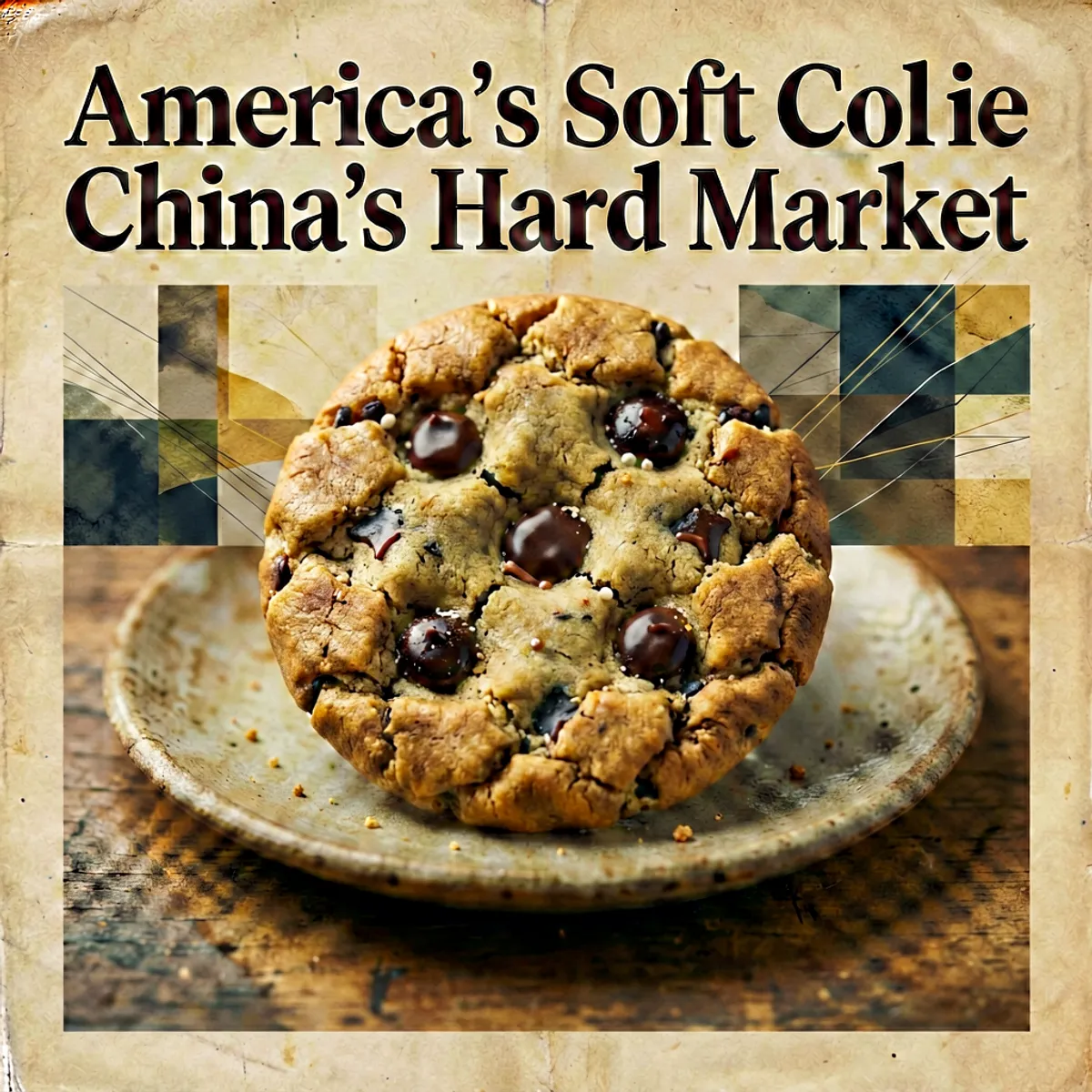
1. Production Consistency at Scale: The thick, gooey center is a fragile state, achieved through precise ratios, mixing time (to avoid over-developed gluten), and a narrow baking window. In a high-volume kitchen, maintaining this across hundreds of trays daily is a monumental work flow challenge.
Oven temperature fluctuations, dough ball size variations, and tray placement can create batches of undercooked or overcooked cookies. This requires rigorous SOPs, constant monitoring, and potentially investing in programmable commercial equipment. Training a team, many accustomed to crisp pastries or bread, to hit this narrow target consistently is a major management task.
2. The Delivery Time Bomb: This is the single greatest threat to the core value proposition. A soft, gooey cookie cools and sets rapidly.
A 30-minute scooter ride in a Beijing winter transforms it into a firm, possibly greasy, different product. The solution is a multi-front war: Packaging: Insulated bags, perhaps with heat packs—a direct cost. Logistics: A brutally small delivery radius (1.5-2 km) to ensure a 15-20 minute max transit time.
This severely limits the addressable market and demands either extremely dense urban placement or acceptance of a tiny service area. * Product Design: Can the recipe be tweaked to hold "soft" for 20 minutes post-oven? Adjustments to sugar/fat risk moving from the ideal texture.
The operational work involves constant coordination with platform dispatch systems and potentially building a proprietary small-fleet delivery for high-value orders.
3. Ingredient Sourcing & Cost Control: Key ingredients (high-fat European-style butter, specific chocolate, vanilla extract) often need importing. This introduces supply chain volatility, customs delays, and higher costs.
A 10% tariff or shipping delay can annihilate a week's margin. Building relationships with reliable importers or finding high-quality local substitutes is crucial work. Simultaneously, the cost of all ingredients—flour, eggs, energy—must be tracked obsessively.
The big, thick cookie is ingredient-intensive. The selling price must cover this "ingredient intensity" plus rent, labor, delivery fees, commission, and marketing. Unit economics must be modeled with precision.
A cookie costing 8 RMB to make needs to sell for ~32 RMB to achieve a healthy margin after all costs—a price that must still feel fair.
4. Labor & Hygiene: Cookie production is labor-intensive: mixing, scooping (large, thick dough balls require strength/consistency), baking, cooling. In China, labor costs are rising, and finding reliable, skilled kitchen staff is a constant F&B challenge.
The process must be designed for efficiency—possibly using machinery for scooping. Hygiene standards are strict and enforced. A cloud kitchen must pass regular health inspections.
The work of managing a team in a hot, high-pressure kitchen—shift scheduling, quality control checklists, waste management—is immense and often underestimated.
The operational hurdles are the unglamorous, daily hard work that determines survival. They are the difference between a passionate baker and a sustainable business. Every variable, from chocolate chunk weight to delivery rider route, impacts the final experience. Failure to systematize this work flow leads to inconsistency, complaints, and founder burnout.
Pricing, Positioning, and the Path to Profitability
With product, brand, and operations defined, the nexus of pricing and profitability demands a cold, hard look. The big, thick, soft cookie is inherently premium: more ingredients, more precise labor, higher delivery/logistics costs than a standard cookie. The question is not if it is premium, but how premium and what value justifies it.
Cost-Plus Reality: A baseline model: Ingredients (premium): 8-10 RMB Labor (efficient cloud kitchen): 2-3 RMB Packaging: 2 RMB Overhead (rent, utilities, etc.): 1-2 RMB * Pre-Commission Cost: 13-17 RMB
Platform commission (30% of sale price) is a massive variable cost. To achieve a 60% gross margin (typical F&B target), the pre-commission sale price needs to be ~32-42 RMB. After a 30% Meituan commission, net revenue is 22-29 RMB.
This leaves a razor-thin 5-12 RMB gross profit per cookie if costs are high. The math is brutal.
Strategic Choices
1. Reduce Costs: Find local ingredient substitutes without sacrificing texture, optimize labor via automation, minimize packaging. This risks diluting the "premium" perception. 2. Increase Price: Sell for 38-45 RMB, positioning as a true luxury treat. This requires unassailable quality and a powerful narrative, limiting the customer base to a small, affluent niche. 3. Increase Average Order Value (AOV): This is the most common and necessary solution. Sell cookies in pairs ("for you and a friend") or in boxed sets of 4-6 for a slight discount. Bundle with a premium drink (specific milk, craft soda). This dilutes the commission impact across more items. The business model must be built around bundles and sets, not single cookies.
Positioning Alignment: Pricing dictates positioning. * ~28 RMB/single: "Premium Everyday Indulgence." The treat after a hard week. Fun, social-media-friendly packaging.
Focus on speed/convenience. * ~42 RMB/single: "Special Occasion Luxury." A gift or a major personal reward. Exquisite, gift-ready packaging.
A serene, boutique shop feel if physical. The narrative is about celebration, not routine.
The Profitability Path: Profitability hinges on volume and margin optimization. With a stretch goal of 10 RMB net profit per cookie after all costs, selling 500 cookies daily yields ~150,000 RMB monthly profit. Achieving 500 daily deliveries in one zone requires top platform search rankings and strong repeat rates, highlighting dependency on algorithms and retention.
Building a direct-to-consumer (DTC) channel via WeChat Mini Program or a proprietary app is a crucial long-term goal to avoid platform commissions, but it requires building an independent customer base. The hard truth: significant profitability likely comes only at scale—multiple cloud kitchens in key cities, a robust DTC network, and possibly a few flagship experience shops. The initial phase is about proving unit economics in one location, building a loyal base willing to pay the premium, and then leveraging that model for expansion funding. The "big" opportunity is in scaling the hard-won formula, not in the first shop's profit.
Conclusion: The Sweet Spot of Strategic Adaptation
The proposition of an American-style soft cookie shop in China is not a binary question of "will it work?" It is a complex strategic challenge with a high ceiling for those who navigate it with precision. The personal craving is real and points to a genuine, albeit niche, desire. The market is not a vacuum; it is a sophisticated ecosystem with clear rules.
Success is contingent on four interdependent pillars: 1. Scientific Localization: A recipe that maintains the essential soft, thick, gooey identity while recalibrating sweetness, size, and ingredient sourcing for local palate, climate, and cost structures. This is R&D, not guesswork.
2. Operational Rigor: Building systems that ensure batch-to-batch consistency in a high-volume kitchen, solving the existential delivery logistics problem (time, temperature, packaging), and mastering ingredient supply chains in a volatile environment. The work must be systematized.
3. Narrative-Led Branding: Selling the emotional experience of comfort, reward, and shared indulgence—not the foreign origin. Marketing must resonate on platforms like Xiaohongshu and WeChat with authentic, relatable moments, supported by visuals that scream soft, gooey texture.
4. Prudent Business Modeling: Choosing a hybrid/cloud-kitchen path to de-risk, pricing for AOV bundles rather than single items to overcome commission drag, and understanding that profitability is a scale game, not a first-location game.
The hard work is immense: wrestling with ingredient substitutions, battling the clock on delivery, calculating thin margins, and marketing against deep-seated "too sweet" biases. But the potential reward is a defensible, profitable niche in a booming specialty dessert market.
The cookie’s simplicity is its curse and its blessing. Its success or failure is brutally transparent in every bite. There is no hiding a dry cookie or a grainy texture. This transparency forces a standard of excellence that, if met, builds fierce loyalty.
For the entrepreneur willing to engage in this granular work, to respect the local palate while fiercely protecting the core product identity, the opportunity is real. The soft cookie, in its intelligently adapted form, can indeed find a hard-won place in the China market. It will not be a big blockbuster like a milk tea chain, but it can be a beloved, sustainable, and profitable specialty brand. The crumb trail leads not to mass-market domination, but to a cherished, scaled niche—a sweet spot where cultural insight meets culinary obsession and operational grit.
Responses • 0
0/2000
ID: 1326
Chris
Offline
2 hr
Visited
From
Bakersfield, United States
Send Message