Xia Dynasty
Original
Chinese History
Dec 02 • 1691 read
Xia Dynasty (2070-1600 BC) was the first recorded government to emerge in China and became the first government to stick to the policy of dynastic succession; which makes it the first Chinese dynasty.
/fit-in/0x0/img/201912/Xia_dynasty_-_hello-article-1575278463.jpg)
The Xia Dynasty (2070-1600 BCE) was the first recorded government to emerge in China and became the first government to stick to the policy of dynastic succession; which make it the first Chinese dynasty. Until the mid-20th century the Xia Dynasty was regarded as a mythical construct of later historians, there was a long debate that whether it was myth or reality. Since writing was developed later, there is no literary record of supporting stories of the long-vanished era of the Xia dynasty. However, the archeologists in the late 20th century found sites that corresponded to the descriptions in these earlier historians’ accounts.
The records, archeological evidence found in the excavation and the existence of the Xia Dynasty are disputed. It is believed that the Xia dynasty was replaced by a more certain historically government body the Shang Dynasty which was in turn replaced by the Zhou Dynasty. The historians who are calming that the Xia Dynasty is a mythological construct believe that the Zhou Dynasty which ruled China much later invented the idea of the Xia Dynasty to validate their leadership, to support their claim that China could only be, and had always been ruled by one ruler. Also, to make clear that the previous ones lost their right to rule through immoral conduct.
However, the scholars still maintain that the Xia Dynasty is a myth, but they seem to be at a loss to explain why the physical evidence or the Erlitou culture for which many sites have been excavated argues against their claim. Those scholars who say that the Xia Dynasty is a reality and believed it has consisted of several clans are at an equal disadvantage in that none of the sites uncovered till today positively identify themselves as belonging to the Xia Dynasty which could easily be identified as ancient Shang Dynasty buildings. Whether the Xia Dynasty existed or is only mythological, however, it is an integral part of China’s origin story.
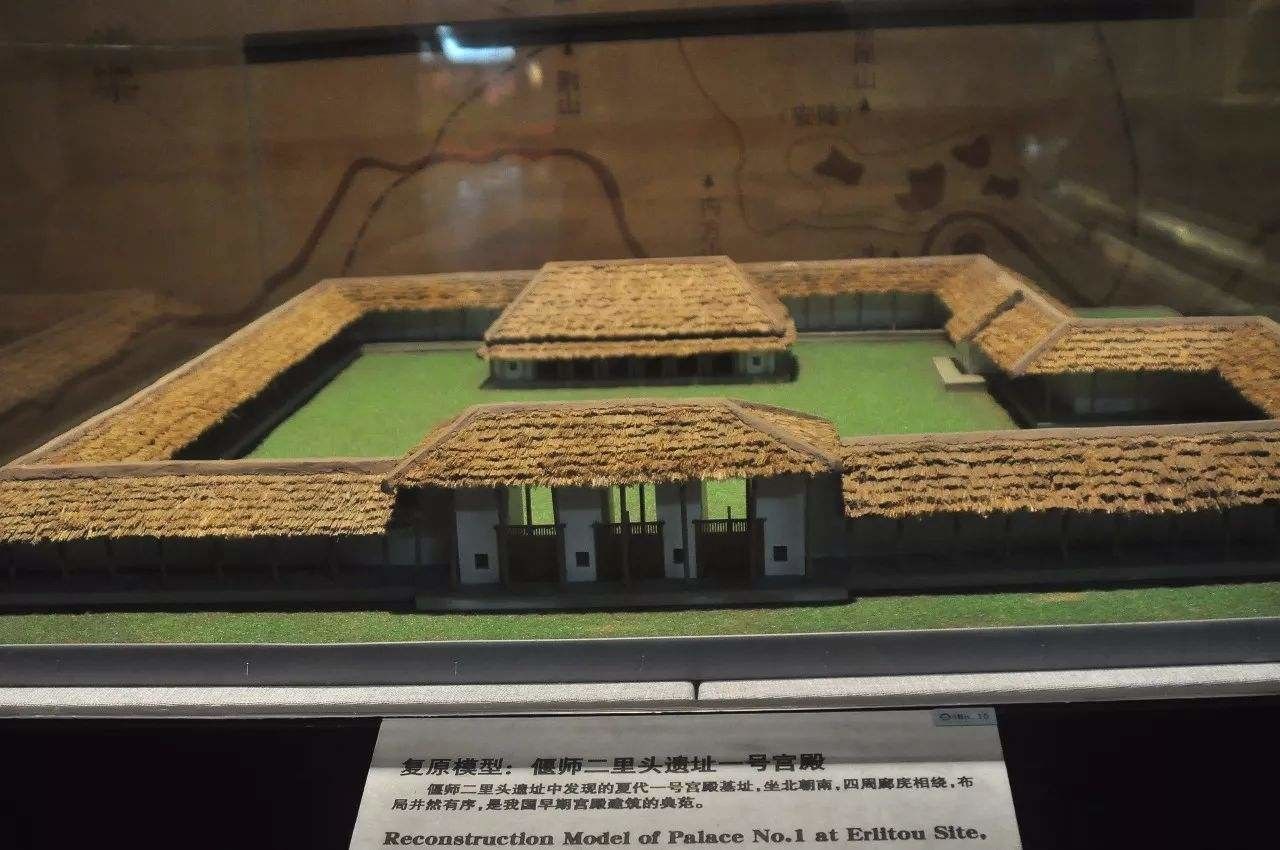
The development of the Xia Dynasty
Sima Qian, a renowned Chinese historian of the second century, argues that there was once a great king named Huang-ti (also Huang, Emperor) better known to as the Yellow Emperor who emerged from the system pre-historic China to rule the area of Shandong between 2697 to BCE. The Yellow Emperor created Chinese tradition and formed a government that would last for centuries. He is credited with developing agriculture, the production of silk, medicine, inventing musical units and the institution of law and customs. Upon his death, he was buried in Shaanxi province, inside the mausoleum which is nowadays a modern traveler enchantment.
Huang-ti succeeded by his grandson Zhuanxu, one of the famous Five Emperors, who founded the Xia tribe. After defeating their opponents, the Xia installed the first dynasty in China below the leadership of Emperor Yao. Yao ordered exquisite palaces to be built, and small villages grew into urban centers. He is considered a fantastic philosopher-king who ruled his people rightly and worked for their prosperity following the principles of Huang-ti.
The Flood
In the reign of Yao, there was a severe problem to control the flood water of the Yellow River, which damaged agriculture and displaced people as well. Then, he hired a man named Gun to look after the situation. Gun attempted for nine years to stop the flooding, but every year the waters grew stronger and caused more damaged to land, agriculture and human lives. Finally, Gun built a series of dikes which he was hoping could preserve the water but the dikes collapsed, causing further damage and deaths. Till this time, Yao had relinquished rule to his successor Yu Shun who was not pleased with Gun’s failure to control the water. According to different versions of this story, some believe Gun killed himself, while others believe Yu Shun imprisoned him, and according to others he exiled himself to the mountains. After that, the Emperor Shun appointed Gun’s son Yu, to finish the work and prevent the flood.
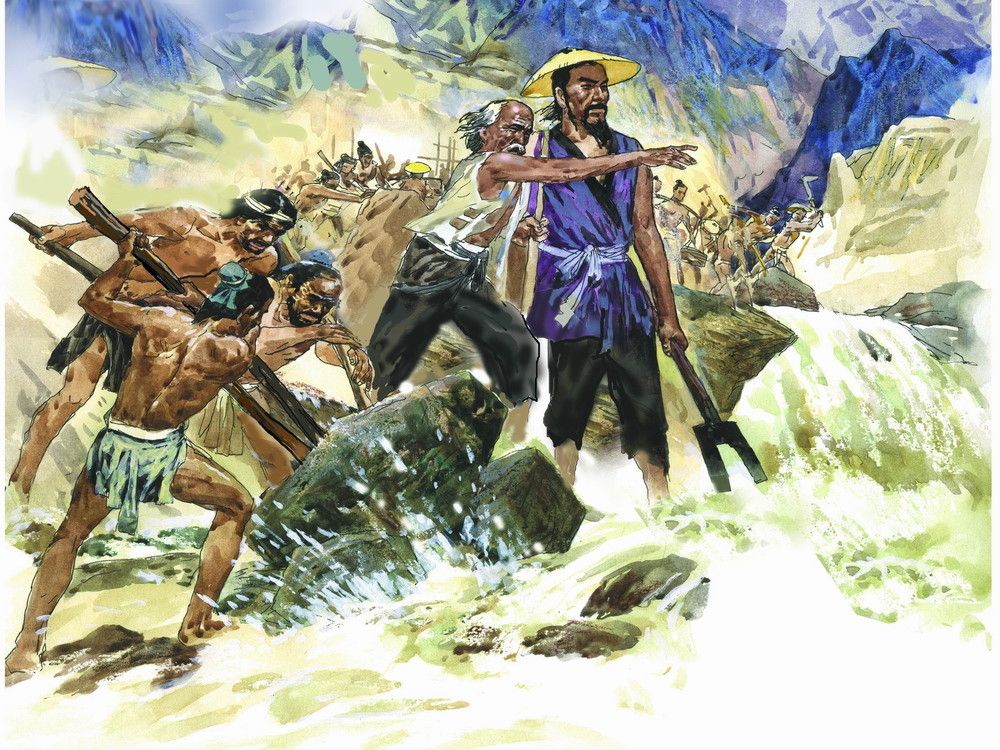
The Great Yu
Yu was smart; he learned from the mistakes of his father: Gun had tried to do too much on his own; he had underestimated his need for help and had overestimated his personal abilities. He had also acted without admiring for the forces of nature and had worked against the water rather than working with it. Yu enlisted the resources of the tribes and had successfully constructed to funnel water to the ocean.
Yu's mission lasted for thirteen years, and he became so dedicated to his project that he never visited his home even once, even though he passed three times by his house. Yu's wife and his younger son would call out to him as he passed by home, and his colleagues would tell him to go home for rest, but he never abandons his task until it was completed. He claimed many were homeless, who had lost their relatives, and children to the flooding, and he did not sense that he should rest until the problem was solved. His commitment and dedication to his task inspired the people around him, and he was considered as a role model and work harder until there were no more floods.
Shun was very proud of Yu after he solved the issue of water and eventually appointed as commander of his army. Yu led the army against the Sanmiao tribe who were hostile to the Xia and were often raided their borders, but Yu defeated the Sanmiao. By defeating Sanmiao and building canals to help prevent the Yellow River flood, Yu had made a name for himself. For all his victories, Shun declared him king of the Xia as a reward.
Yu's rule regarded as the start of the Xia Dynasty, and he is known as Yu the Great because of his victories over the flood and the Sanmiao and for establishing a stable, efficient government in which the Xia grew in power. Under King Yu, feudal lords governed regions and provinces throughout the area. Each lord swore his loyalty to the ruler. He also divided the land into nine provinces to make governing such a large area more manageable. In the culture of the Xia, most of the people were farmers, who had invented bronze casting, and their everyday tools were made from bone and stone. Under his reign, the Xia developed new agricultural practices such as irrigation. The Xia developed a calendar that is sometimes regarded as the origin of the traditional Chinese calendar.
The decline of Xia and the death of Yu
Yu rules lasted for 45 years, on his deathbed, Yu named his son Qi as a King. Qi was a young boy during that time of the tremendous flood and many people like him for the story of how his father refused to return home until the flooding had been stopped and how young Qi bore his father's absence so nicely. Yu wanted to name his minister as a king and was not wishing his son Qi to have the burden of the rules; however, so many people favored Qi that Yu had no choice. In naming Qi as a king of Xia, Yu supposedly began the practice of inherited rule in which the power pass from father to son and where the leaders came from the same family. A model that was continued in the later Shang and Zhou dynasties in which the descendants of Yu lasted ruling for almost 500 years. Before this inherited rule practice, the leader of China had been chosen by ability.
There are seventeen recorded King of the Xia dynasty in which some of them were good leaders like Yu the Great, while others consider terrible. Tai Kang, the son of Qi’s, was a poor ruler, however, his successors were skilled, and several inventions and innovations are attributed to the later Xia, which includes the improvement of armor in war and rules of chivalry in battle. The fourth ruler after Qi was Shao Kang who revitalized the country and is credited with starting the tradition of ancestor worship in China, he is also well known through the many legends which tell his tales. Bu Jiang was the longest-ruling king of the Xia dynasty, he is also considered one of the Xia’s wisest ruler. The decline of the Xia Dynasty began under the ruler of Kong Jia (c. 1789-1758 BCE)) who cared more for strong drink than the responsibilities of government. Gao who was succeeded by Fa succeeded him, neither of them did a great deal to improve the lives of people but themselves. King Jie was the last emperor (1728-1675 BCE) who was known as a tyrant and who lost the mandate of heaven to rule. According to mythology, when King Jie became cruel and corrupt, then Chen Tang overthrew him and established the Shang dynasty.
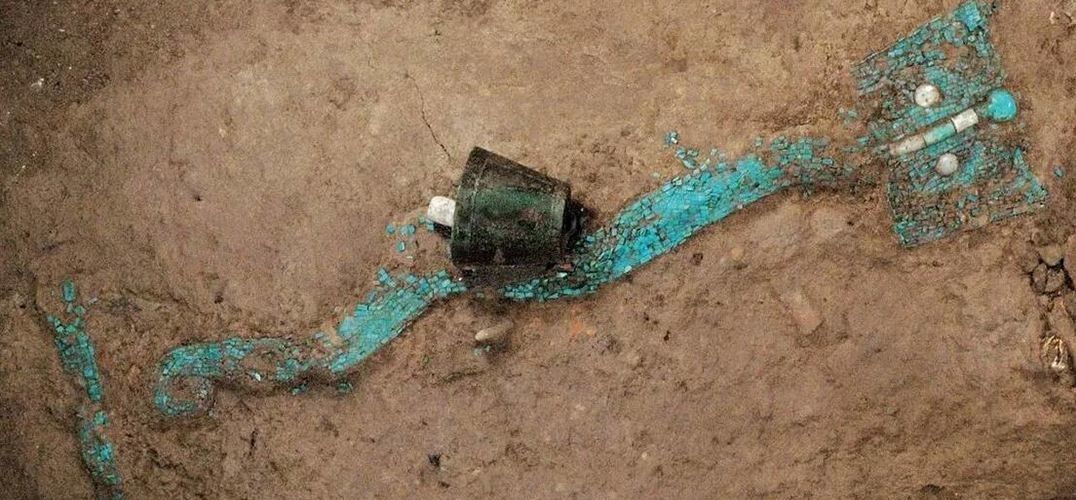
Mythology and history
Most of the above were considered mythology from the 1920's CE till the mid-1960's CE when archaeological proof emerged to validate the stories of the historians. Even now, the scholarly consensus is that the records of the Xia Dynasty are considered mythological even if this kind of dynasty did actually exist. The skepticism grew due to the fact there were no early accounts of the Xia Dynasty and because no physical evidence argued for its existence. It was thought that historians, in particular, the famous Sima Qian, created the Xia Dynasty as a version precedent to provide an explanation and justify a dynastic change in China. The scholar Justin Wintle explains this:
Sima had a particular political motive (in giving credence to mythological figures and events). In his view, as in the opinion of others, kings were entitled to govern according to the Mandate of Heaven. If they misgoverned, then that license was forfeit. The Yellow Emperor and his successors, including Yu, not only invented all the essentials of civilizations but supplied a version of government. As a result of people's corruption, however, this divinely instituted order soon collapsed, and thus began the well known ‘dynastic cycle.’ A new regime comes to power, but sooner or later loses the divine right to govern, at which point it is by another that does enjoy the Mandate. And this transferability of the Mandate, Sima Suggests, is the underlying principle of records.
However, the Xia Dynasty may not be a complete fabrication because the mythological interpretation of the Xia Dynasty was challenged in the 1960s and 1970s CE with the invention of palaces and four-walled homes (as impressive from in advance round homes) matching the descriptions of the historians who wrote on the Xia Dynasty centuries after its decline. Further archaeological proof of the Xia's existence has been discovered. Archaeologists have found an advanced Bronze Age culture in China. Its capital, Erlitou, was a big city around 2000 BCE. This might, in fact, be the people referred to in Chinese mythology as the Xia. Some evidence suggests that the people in the Xia Dynasty developed agricultural tools and methods and experienced considerable prosperity. However, since there is no written record on any of these structures, tools positively identify them as Xia constructs. In 2016, a group of international archaeologists founded evidence of a great flood in the Yellow River at a site called Lajia, dated about 1920 BCE. The archaeologists claimed that the evidence provided support to the great flood in the Xia Dynasty. However, as the article appeared in August 2016, disagreeing comments were received after the interpretation of the archaeological and geological data, so the Lajia site remains an open question like other sites. The debate keeps on whether or not the first dynasty of China was a reality or a politically motivated fabrication of later writers.
Responses • 0
0/2000
ID: 322
Matthias
Offline
1 day
Visited
From
Orlando, United States
Send Message