Why Chinese new year is 15 days
Original
Chinese Festival
Dec 18 • 485 read
The Chinese new year traditionally initiates on the first day of the first lunar month in the Chinese calendar and ends on the 15th day, which is known Lantern Festival.
The first day
In Chinese, the first day of the New Year called Yuan Dan, which means the first morning of the year. During these 15 days, Chinese people make New Year visits to close relatives and friends. On the first day, people visit the oldest and most senior members of the family; the visits help to strengthen family ties. Bài nián denotes to both pay a New Year call as well as ‘wishing somebody a Happy New Year.’
Also, there is a tradition of welcoming guests with sweet and tea treats, such as sugared fruits, which are believed to sweeten one’s upcoming year. Fruits and sweets served on a round or octagonal tray, the form symbolizes togetherness, and hence the tray is translated as the ‘Tray of Togetherness.’ Most likely, the number of sweets can be arranged in eight units, as the number eight symbolizes luck. Sometimes, an arrangement of nine units can be found; the number symbolizes wealth, and family unity (note that for the Chinese the number 8 is a lucky number while the Thai-Chinese believed 8 and 9, both are lucky numbers. The visitor often gives a small gift of oranges, tangerines, mandarins, or such alike to the visited family. The visitors bring fruits as a gift to the host family because, in Chinese tradition, the fruits symbolize gold, wealth and good fortune. The day symbolizes as well a new start in one’s life, refreshing hopes for prosperity, wealth, and happiness.
A traditional Buddhist vegetarian dish called ‘Jai’ or Buddha delight is prepared on the 1st day of Chinese New Year using 18 different ingredients as the Chinese believe eighteen is a lucky number signifying prosperity and wealth. Of course, every single one of the ingredient represents a particular symbolic meaning. On the first day, abstaining from meat consumption is believed to enhance longevity. Also, a vegetarian dish helps to purify and clean the body, as it honors a Buddhist tradition that living things should not be killed on the first day of the New Year.
According to a Chinese myth, Nüwa (nǚwā) is the goddess who created the world. She created individual animals on different days; hence, each day is regarded as the birthday of the corresponding animal. Humans were created from yellow soil on the seventh day after the creation of the world. On the street, Lion Dances can be seen, or a troupe might perform on private premises. Chinese operas and Dragon Dances perform in the streets.
The second day, Birthday of Dog
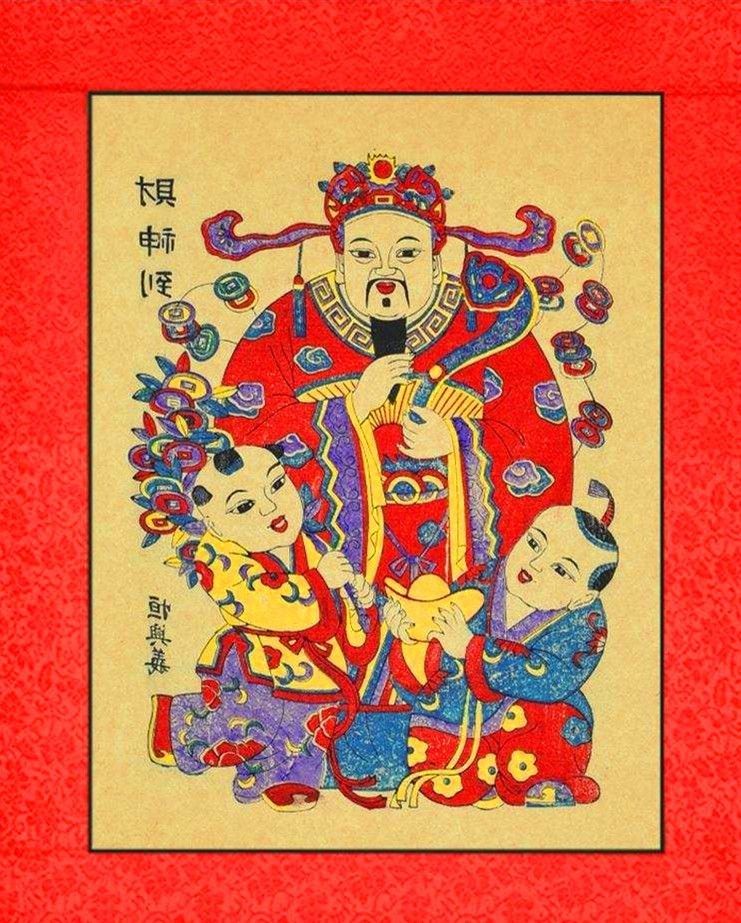
It is said that after people offered sacrifices to Tsai Shen; the God of Wealth, leaves for heaven on the 2nd day of the Chinese New Year. People burn the picture they welcomed on the New Year’s Festival and see the deity off, wishing for a prosperous year. In honor of the deity, people eat wonton, resembling the shape of an ingot. Traditionally married women visit and pay respect to their birth parents. On the second day, people pray to their ancestors as well as to all the gods. Since the day is characterized by the birthday of the dog, people fed pets and strays.
The third day, Birthday of Pig
The third day is allocated to visiting the grave. Some people conclude it is unfavorable to do any house visit at all because it is believed that evil spirits roam the earth on 3rd day, that is why it would be bad luck to be outdoors. Businesses that had been closed during the prior festivities can be reopened, and prayers held to be blessed with wealth in the coming year. Conservative Chinese businesses do not open till the fifth day due to previously mentioned roaming ghosts.
The fourth day, Birthday of Sheep
The fourth day is considered an auspicious day, a day to welcome the God of fortune, the Kitchen God, and other gods as they return from heaven to earth. Family’s burn incense and light candles to welcome the gods. Families also prepare chicken, alcohol, fruits, pork, and fish for their meals on this day. In the rural area of northern China, people light a stick with fire and throw it into a river, to prevent any fire-related accidents in the year ahead.
Day Fifth day, Birthday of Ox, Cattle
The fifth day is considered as the birthday of the God of Wealth, and hence respect is paid to the god. Also, it is believed that to not leave the house for too long because the God of Wealth can pay a visit to the family’s house. All businesses will be reopened on the fifth day. People in northern China, eat dumplings on the morning of break five (pò wǔ). People visit classmates and friends on this day. Also, it is considered to have a connection to the five primary colors, hence to the Five Elements Theory.
Day sixth, Birthday of Horse
On the sixth day, Chinese people throw away their ragged clothes, rubbish, and clean their homes, hoping to drive away from the ghost of poverty from the past and welcome a prosperous and successful new year. According to myth, the Ghost of Poverty is the son of Emperor Zhuan Xu. He was weak and short and liked wearing dirty clothes and eating poor-quality porridge. Even he would not accept new clothes from people, and he would not wear them until he ripped them up or burned them. He was christened ‘The Man of Poverty,’ and with time, he became the Ghost of poverty.
Day Seventh, Birth of Human
In Chinese, the seventh day of the first lunar month is called renrì literally means Human Day and is regarded as the birthday of ordinary human beings. This day is also called Men Day or Day of Men. According to Chinese legends, Nüwa is a God who created the world. There are two mythical stories regarding her creations. Nüwa and her brother named Fuxi lived a distressing disaster, which had spread out all other life. Retired to Kunlun Mountain, where they prayed for a sign from the Emperor of Heaven. The divine being permitted their union, and the siblings set about producing the human race. Note: according to other folktales, Nüwa is believed to be Fuxi’s wife.
According to another myth, Nüwa created certain animals on different days because she was lonely and desired the animals as a company. After the creation of the world, on the seventh day, Nüwa created human beings from yellow clay. With the divine power assigned to her, Nüwa made the clay figurine to become alive. Renri is the day when all humans are growing a year older, and the day is celebrated with special foods according to the origin of the people. The ingredients of the dishes maintain a symbolic meaning, and they should enhance health.
Day Eighth, The Completion Day
The eighth day is considered to be the birthday of millet, a significant crop in ancient China. According to the tradition, if this day is clear and bright, then the year will bring a good harvest; if not clear and bright, then the year will suffer a poor harvest. Also, on the eighth day, the Fujian people have another family reunion dinner, and at midnight they pray to the Jade Emperor.
Day Ninth
The birthday of the Jade Emperor, highly respected and considered the supreme deity of Taoism. The Jade Emperor is also called Yù Dì or Yù Huáng and is identified as the Heaven God, the Ruler of all Heavens Earth and the Hell, Creator of the Universe, and Lord of the Imperial Court. This event is marked by feasting and offering a sacrifice of chicken in his honor.
Day Tenth
The tenth day regarded is the birthday of the god of stone. It is forbidden on this day to move any stone, including stone mills, stone rollers, and stone mortars, so it is also called as ‘Shi Bu Dong’ meaning do not move any stone. On this day, families burn candles and incense to honor stone and offer pancakes to the god of stone.
Day eleventh and twelfth
These two days are for fathers-in-law to entertain their sons-in-law. There is much food leftover from celebrating the birthday of the Jade Emperor, so the leftover food is eaten in these days.
Day Thirteenth
On this day, people diet a bit after eating so much rich and often greasy foods. On the 13th day, Chinese people prefer vegetarian dishes to help soothe digestive systems. Also, the 13th day is a good opportunity to buy lanterns and ingredients for tang yuan.
Day Fourteenth; the Lantern Decoration Day
The families prepare lanterns and make tang yuan on the 14th day. People buy lanterns and build a lantern shack to prepare for the Lantern Festival. It is also a day in which lion and dragon teams practice for the upcoming festivities.
Day Fifteenth, Lantern Festival
This day marks the first full moon after the Spring Festival and of the New Year. In the Chinese language, this day called ‘Yuán xiāo jié,’ which means ‘the first night of the full moon.’ The day is famous for the Lantern Festival day. On this day, Chinese people held another reunion dinner with lanterns and oranges being a large part of the celebrations. Traditionally, people eat special sweet and dumplings called ‘Yuanxiao’ resembling the shape of the full moon. People display lanterns during this festival, and children carry lanterns to temples. The festival is linked with guiding lost, and ill-bred evil spirits home while celebrating and cultivating positive relationships between nature, families, people, and the higher beings because they are regarded to be responsible for reuniting and bringing the light each year. Another myth links the Lantern Festival with Taoism. The Taoist God ‘Tian Guan’ is considered the ‘Ruler of Heaven’ and the god responsible for wealth, good fortune, and good luck. He was born on the 15th day of the first lunar month. It is believed that Tian Guan was fond of all types of entertainment, that’s why his followers prepare various kinds of entertainment activities during which they pray for good fortune.
Responses • 0
0/2000
ID: 322
Matthias
Offline
2 day
Visited
From
Orlando, United States
Send Message