What does the Chinese new year mean
Original
Chinese Festival
Dec 11 • 426 read
Chinese new year mythic and non-mythic origins stories are the foundation for how Chinese people around the world celebrate the New Year today.
/fit-in/0x0/img/201912/What_does_Chineser_new_year_means_1-article-1576041464.jpg)
Chinese New Year Mythic Origins
Chinese New Year, which is also known as the Lunar New Year is the biggest holiday in China, in many other countries in Asia, and for the communities of Chinese people who live all over the world. There is decoration, lots of food, reunion family dinners, gift-giving, and visiting with family and friends. The celebrations last for around two weeks, so it is like the winter holidays of Christmas, Hanukkah, and New Year’s Eve all rolled into one. The origin of Lunar New Year is like those of Christmas and Hanukkah, which are thousands of years old.
No one knows precisely when the Lunar New Year has begun; however, some historians believed that around 2000 BC, the Lunar Year has begun as a holiday. According to myth, a monster or mythical animal known as the Nián, which is also the Chinese word for ‘year,’ appeared before the coming of spring, bringing disease and bad luck to families still struggling to survive a cold, long winter. An old man recommends villagers to scare the Nián away with the red color, bright lights, and loud noises. So, in the night, the people wore red clothing, hung red banners and paper cut-outs in doorways, and lit firecrackers. And it worked, the Nián left, and every year on that same day, Chinese people celebrate this victory over the Nián, but also over the adversities of winter. In the morning, it was a brand-new day, and people were ready to begin their preparations for spring and the year’s crops.
Another myth features the powerful Jade Emperor. In Chinese mythology, the Jade Emperor was in charge of a godly court and supervised the other gods who were in charge of their own domains, like Tian Hou, who governed the Kitchen Gods, who took care of families and villages, or the sea and protected fishermen. In some Chinese houses, people install a shrine to the Kitchen God of their home village, which is usually an open-sided red box with a porcelain figure of that god. During the week and especially on significant dates such as birthdays or holidays, the family will place tea, fruit, and incense in the box as an offering. It is believed to keep the god happy will help the family’s fortunes.
Chinese New Year Facts
In Chinese culture, numbers and how they are used are very significant and are often supposed to influence someone’s luck. During the New Year celebrations, this belief, called numerology, is especially important. Chinese families prepare an even number of dishes for dinner, such as eight or ten, but not an odd number.
Traditionally, the number eight is considered lucky because, when spoken in Chinese, it sounds like the word for ‘wealth.’ Also, the number six is also believed lucky because it sounds similar to the word for ‘well-off’ or ‘smooth.’ The number four sounds like the word for ‘death,’ and it should be avoided. Auctions are held in Hong Kong to sell the luckiest license plate numbers. When planning significant events, like graduations, weddings, or the opening of a business, calendars are carefully consulted to make sure a date is a good number.
One day, Emperor Jade grew frustrated with how to measure the passage of time. He decided to design a calendar and to name each year after an animal. He held animal race across a wide river and decided the first year would be named for the first animal to cross the finish line. The clever Rat was the first to cross the finish line, followed by eleven other animals, each with their own strengths and weaknesses that contributed to how speedily or slowly they completed the race. That is why the lunar calendar or Chinese calendar is divided into twelve-year cycles, with each year named after one of the twelve animals. Emperor Jade, after the race, held a grand celebration for the first day of the New Year, the year of the Rat.
The Chinese New Year is not on the same day every year because holidays usually follow the lunar calendar, which follows the phases of the moon. The traditional Chinese month begins with new moon invisible in the night sky, and the days follow the moon as it waxes, or grows bigger. The full moon specifies the middle of the month, then begins to grow smaller, until it disappears, marking a new moon and a new month.
Chinese New Year is celebrated at the beginning of the second month after the winter solstice or the shortest day of the year. It marks the end of winter and the beginning of spring and the start of a new year. An animal represents each year in the lunar calendar. The first one is the Rat, and the other eleven are the Ox, Tiger, Rabbit, Dragon, Snake, Horse, Goat, Monkey, Rooster, Dog and Pig. Each of these animals has specific traits; for instance, the Rooster is proud, and the Monkey is mischievous. People born into these years are believed to have these same traits. Altogether, these years and animals form the Chinese zodiac, which works much the same way as the Western horoscope: A person date of birth determines what kind of person he or she likely to be.
Every year people pay special attention to the coming year zodiac animal with calendars, paper cut-outs, and stuffed toys. In 2020, the year of the Rat, the Taipei Zoo in Taiwan prepared for extra visitors to its twenty-five species of primates, including orangutans, chimpanzees, and lemurs. And monkey pajamas, purses, and cufflinks were all available for sale.
Chinese New Year Facts
Just for fun, take a look at the following list to see if the animal sign you were born under sounds like you.
Rat: (1984, 1996, 2008, 2020) Charming, clever, ambitious
Ox: (1985, 1997, 2009, 2021) Patient, determined, honest
Tiger: (1986, 1998, 2010, 2022) Strong, brave, daring
Rabbit: (1987, 1999, 2011, 2023) Creative, caring, peaceful
Dragon: (1988, 2000, 2012, 2024) Lucky, powerful, wise
Snake: (1989, 2001, 2013, 2025) Intelligent, calm, elegant
Horse: (1990, 2002, 2014, 2026) Independent, popular, clever
Goat: (1991, 2003, 2015, 2027) Sensitive, artistic, caring
Monkey: (1992, 2004, 2016, 2028) Confident, mischievous, inventive
Rooster: (1993, 2005, 2017, 2029) Kind, adventurous, proud
Dog: (1994, 2006, 2018, 2030) Loving, Loyal, intelligent
Pig: (1995, 2007, 2019, 2031) Peaceful, noble, forgiving
The Not-So-Mythic Story
For centuries, most of the Chinese people were farmers who rented their farms from wealthy landowners. The landowners would collect the rent owed them on the last day of the year—New Year’s Eve. This was a day that filled farmers with dread. Sometimes the harvest had not been plentiful, and the farmers had not saved enough money. Sometimes the landowners would increase the rent without notice. Surviving this day was a goal for many families. The next day which is the first day of the New Year was often celebrated with loud fireworks, grand feasts, and the famous Chinese game of Mahjong.
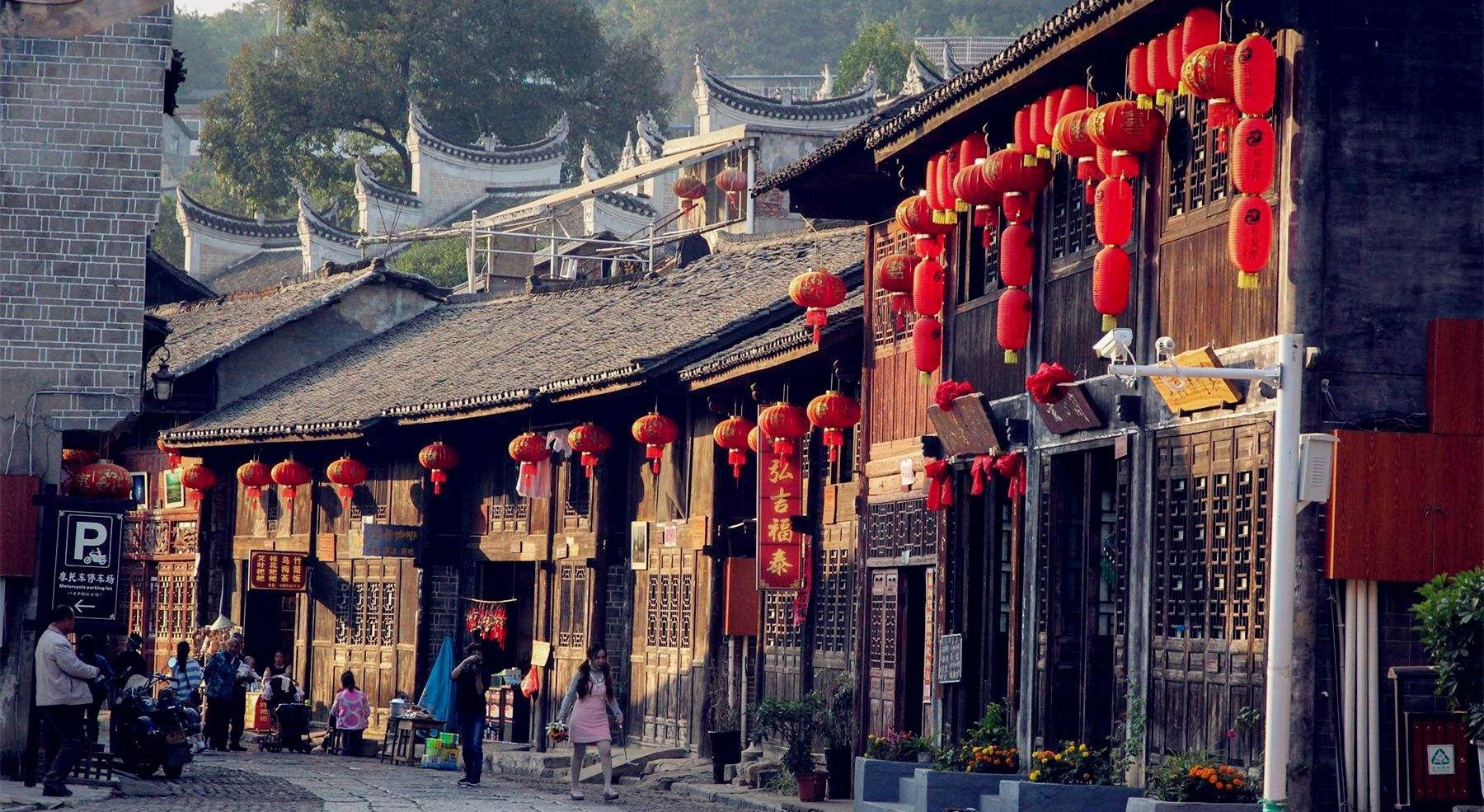
These mythic and non-mythic stories are the foundation for how Chinese people around the world celebrate the New Year today. People still light firecrackers and dress, and in China, as well as in many countries you will see gold and red banners hanging in shop windows. Often one of the twelve calendar animals—such as the Pig, Dragon, or Monkey—is on these banners. Like many different holidays from other cultures, Chinese New Year honors tradition and the old stories passed down from generation to generation.
Chinese New Year Facts
During Chinese New Year, Chinese people pay close attention to the words they use in order to draw good luck for the coming year. This can be complicated in Chinese, which has a lot of homophones, or words that sound the same but have different meanings, like the English words ‘hear’ and ‘here.’ We have previously discussed how the number four can sound like the word for ‘death.’ Fat choy, the black moss that is generally used in a soup made mainly during the New Year celebrations, sounds like the word for ‘prosperity’ and is part of the very common New Year greeting ‘Gung hay fat choy.’ Sometimes, when people are learning the Chinese language, making sense of all the homophones can be hard. Chinese speakers have fun by using puns in jokes and comedy shows. The Chinese language has only 400 syllable sounds, which seems a lot, but English contains more than 15,000. That means many Chinese words sound the same, adding to the confusion, but also to the fun.
How Chinese New Year Changed
Chinese New Year usually falls between January 21 and February 19 and initiated as a public celebration in the fourteenth century. China was under imperial rule until 1912, which means that it was governed by emperors and empresses who hereditary their roles through their families, very much like the kings and queens of other countries, such as England. China became a republic after 1912, or a country governed by a constitution. At the time, the government wanted China to become more Western and to appear more modern, so it began calling the New Year celebrations the Spring Festival instead, hoping that the people of China would start honoring the Western New Year.
However, many world events that occurred in the years that followed affected Chinese citizens in everyday ways, including how and when they celebrated holidays. World War II and the Communist Party, which still governs China today, were particularly significant to the country’s history. There were many years, even up until the 1980s when villages and cities did not mark the holiday at all. Many ordinary Chinese people were poor, and the government was still struggling to build up the country after the devastating destruction of World War II.
That war, which lasted in China from 1937 to 1945, is still a painful memory for many Chinese people. The war was fought in many countries of Europe and is most remembered as a long-running conflict between Nazi Germany and the allied countries of Great Britain and France. But it was also fought in Asia, where Japan battled to gain control of other Asian countries, including China. Japanese forces entered, fought in, and occupied much of China, including big cities like Shanghai. As many as twenty million Chinese people died during the years of fighting. In 1945, Japan was beaten, and China started the long process of rebuilding its cities and towns.
By the 1980s and ’90s, China was releasing its strict rules on businesses. Its citizens had more money than ever before, and they wanted to celebrate their good fortune! So the Spring Festival, as it is still called, became the most significant annual holiday in China and in Chinese communities around the world. It became so big that the Chinese government officially made it a weeklong national holiday, a time when people can take time off work, rest and enjoy themselves.
Responses • 0
0/2000
ID: 322
Matthias
Offline
2 day
Visited
From
Orlando, United States
Send Message