Spring and Autumn Period
Original
Chinese History
Dec 02 • 2025 read
Eastern Zhou Dynasty, from 770 to 256 BC, is divided into two periods, the Spring and Autumn period which lasted (from 770 to 476 BC) and the Warring States period from 475 to 221 BC.
/fit-in/0x0/img/201912/Spring_and_Autumn_Period-article-1575278843.jpg)
In the 10th century BCE the Zhou, a small clan of formerly nomadic people overthrew the Shang dynasty and established the Zhou dynasty. The 800 years long-ruling period of the Zhou dynasty (1045-221) is divided into three periods in China history called the western Zhou period from 1045 to 770, the Spring and Autumn Period which lasted from 770 to 476 and the Warring States period from 475 to 221. Though the name ‘Spring and Autumn’ sounds peaceful this period was full of bloodshed and conflict in ancient Chinese history. A decline in Zhou court power marked this period and slowly increased in the strength of individual states. However, this period was a fertile time for the emergence of significant schools of thought, philosophers such as Confucius, Lao Tzu, and Sun Tzu and religious ideas as small states expanded peacefully and fought wars.
It is said that in 771 BC, the Zhou dynasty king You replaced his wife a concubine, the capital was attacked by his father and law who was the ruler of a nomadic tribe called the Quanrong and a region called Shen. At that time other rulers of several areas proclaimed the queen’s son named Ji Yijiu to be the new ruler. In 770 BC, The capital was moved from Haojing in Xi’an province to Luoyang in present-day Henan Provance which marked the beginning of the Eastern Zhou Dynasty. The change in the ruler and the shift in capital marked the end of the rule of the Ji clan over the whole region while the Zhou dynasty became the nominal leading clan after 771.
The Spring and Autumn Period was the start of the Eastern Zhou period. During this era, the Zhou reached the Yangtze River, and it was basically centered on the eastern part of the Yellow River. It is said that King Ping was the first king to rule the east capital Luoyang. The Zhou rulers ruled as figureheads. Though at Luoyang they did have a small territory of their own, that was too small for raising their army. So they relied on the surrounding regions for their defense.
In the Spring and Autumn period, the Zhou society became the centre of none-stop conflict within and between regional powers, and of escalating disintegration of political units. In ancient Chinese history, this was one of the gravest systemic crises. Crisis in the central authority emerged during the Spring and Autumn period. The Zhou rulers were the first to lose their power, and after the disastrous loss of their western domain, they were unable to restore their prestige. Subordinate regional polities to the Zhou monarchs soon became engulfed in a bitter internecine struggle, and the rulers of the age sought in vain to stabilize the newly emerging multi-state system.
Political organization
The entire Zhou Empire was basically centered on the eastern part of the Yellow River. The territory was divided into kingdoms and fiefdoms. The political system of the many states at the starting of the era was reasonably loose. Rulers of the most powerful states and weaker states held a council to discuss universal treaties or other problems. The rulers of the powerful state would be recognized as the hegemon during a time of crisis or war. During this time, the frontier states such as Qin grew powerful because they had more room for the expansion.
Important Events during the Spring and Autumn Period
The Zhou dynasty emperors were ceremonial figureheads although they did have a small area of land of their own at Luoyang. Their territory was too small to increase the military of their own that was sufficient to protect them. They relied on the nearby regions, and they performed religious ceremonies. Perhaps they were like the modern royal British except the public believed they had real powers as representatives of heaven as gods. Around 300 years of the Spring and Autumn period, many small states and fiefdoms gradually coalesced through conquest. Around 550 BC, there were four significant powers; Qi in the east, the Chu in the south, Jin in the center and Qin in the west. In 497, at Jin, the nobles start a civil war. Four major regions were left in 453, and in the same year three, less powerful clans were destroyed the stronger, leaving alone, Zhao, Han, and Wei. They divided the Jin state in 403 among themselves. This action left eight states in the former Zhou empire region; Yue, Chu, Qin, Zhao, Wei, Han, Yan and Qi near modern-day Beijing.
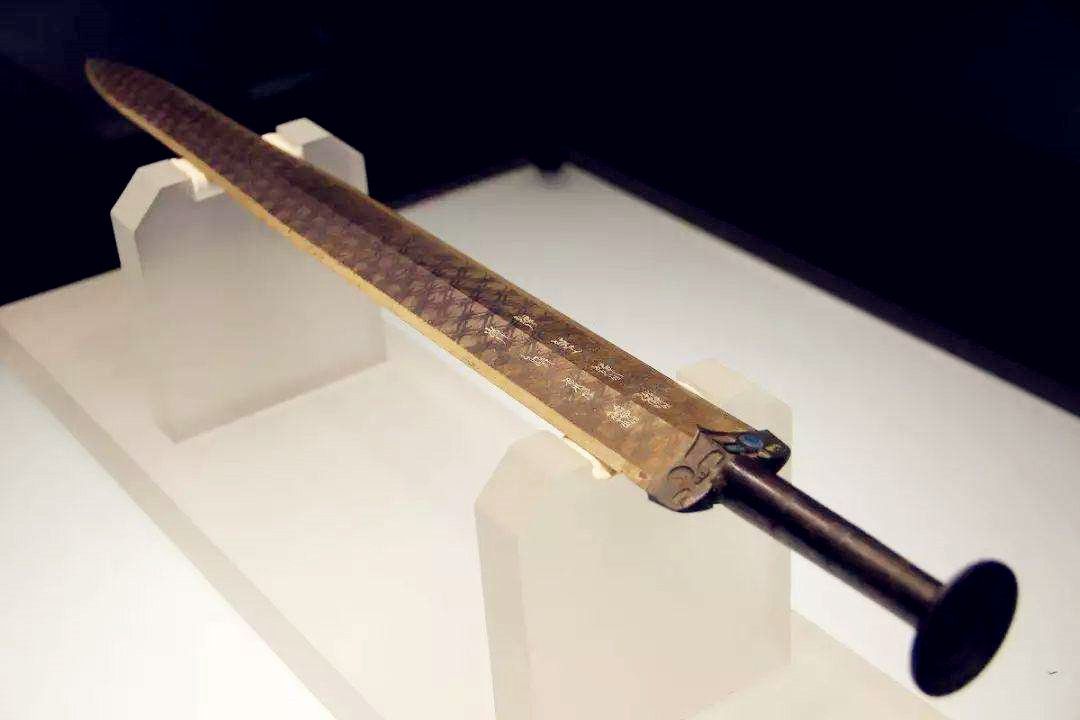
Four Great Powers
According to Dr. Robert Eno Indiana University (source indiana.edu ), in ancient times Wey, Zheng and Song would play important military roles in the contests for supremacy of China. However, after 700 BC the area of the smaller Central States becomes less important except as a region of contested influence among several larger Regional States. Among these, the most significant states both initially and in the long run were the following four; Qi, Chu, Qin, and Jin. From 700 BC until the Spring and Autumn period in 464 BC, geographically China may be pictured as a central region of many states surrounded by four great powers; Qi, Chu, Jin and Qin one in each of the cardinal directions. In the 5th and 6th centuries, we will need to add this picture to two short-lived states in the southeast, Yue, and Wu. Also, an old Zhou state of considerable size, Yan, existed in the northeast throughout this period but remained peripheral and passive until the Warring States period. The regional cultures of the four great powers were quite distinct from each other. In the below section, we will briefly characterize four great power states.
Qi State
The Qi state occupied a broad spit of land extending to the Pacific Ocean, called the Shandong Peninsula in modern-day. The land is a combination of full and productive plains upon which seem in places low but precipitous mountains. The capital city of Qi place in the northern part of the peninsula, not very from the lower reaches of the Yellow River. Qi was one of the four great powers that were initially a patrimonial estate bestowed on a Zhou creator. It was given to the Grand Duke Wang, who was not a member of the Zhou royal lineage but who was the chief military advisor to King Wu. His generation ruled as Dukes of Qi until another clan usurped the throne in the 4th century. The estate of Qi was established to help the Zhou pacify lands far to the east of its original homeland. The original inhabitants of these Shandong lands seem to have been a combination of Chinese and non-Chinese groups. After establishing the power of his presence through military means, the Grand Duke is said to have adopted a policy of accommodation with his none-Chinese neighbors. Perhaps, as a result, the state of Qi ultimately yielded a rich cultural tradition. Throughout the late Warring States period, it was home to the intellectual vanguard of China. During the Spring and Autumn period, Qi is principally distinguished by the enormous influence of the hegemony of its duke, Huan, over China during the years 680-643 BC.
Chu State
After conquering smaller weak states and tribes in the south of China, Chu occupied a large area characterized by an abundance of the river, fertile soil, lakes, and a temperate climate. The capital was near to the banks of the Yangzi, and was distant from the other states and well insulated against attack. Ironically, it became the only great-power capital to be sacked during the Spring and Autumn years. According to Dr. Robert Eno, the origin of the Chu people is unknown. They seem to have emerged during the late 9th century as a different non-Chinese people who represented a significant threat to the central government and the Zhou order. The earliest rulers of the powerful Chu, who ruled from 740 to 690 BC, adopted the title of King rather than Duke, clearly showing that he did not recognize himself as a subject of the Zhou. However, later in Chu rule, he adopted a peacemaking policy and sued for peace, submitting to Zhou suzerainty while nevertheless retaining the title of King for himself and his descendants. However, the culture of Zhou was distinct from other Chinese states. The Chu people did not speak Chinese, and Chinese was gradually adopted in the Chu, from the top down, over the centuries. The art, religion, and the Chinese language literature of the Chu were distinct from a more restrained metropolitan culture to the north. The study of Chu culture is a trendy topic in modern scholarship.
Qin State
The government of Qin occupied the old Zhou homelands area in the Wei River valley, west of the bend in the Yellow River. This area was dry, but canals and the fertile loess soil deposited by winds coming from the western deserts make it a fertile field. The Qin territories formed a basin enclosed by mountain ranges of middling height, making the whole state a virtual fortress. Entree to the North China Plain in the east was provided by the Hangu Pass, just south of the bend in the Yellow River, and the area of Qin was called the Land within the Pass. Qin's geographical location was of enormous army value. According to Dr. Robert Eno, the Qin tribe was initially non-Chinese who was living at the western edge of the original Zhou polity. In the 8th century rulers of Qin provided significant services to the lords and kings who established the Eastern Zhou in Luoyang. These actions received the Qin rulers an official designation within the Chinese patrician system, and they were “adopted” as Chinese, though the aristocrats of the Central States actually viewed them as little more Chinese than the people of Chu or others nomad tribes which harried the external and internal borders of the Zhou states.
During the Spring and Autumn period, the internal politics of Qin were not known in great detail. The Qin were less engaged in the division of their domestic territories into patrimonial estates than did most of the purely Chinese states and so developed a relatively centralized pattern of government. This political tradition may underline the dramatic centralization of Qin that dates from the 4th century and led to its conquest of all China in 221 BC.
Jin State
Jin extended north and east from the bend of the Yellow River, covering the plateaus and gullies of the loess deposits in its western half onto the broad and fertile reaches of the North China Plain at its eastern edge. Its land was productive, but crops were dependent on the weather as average rainfall was low. The eroded topography of mountains and steep valleys cut the region of Jin into relatively isolated settlement pockets. Communication and transportation were consequently slow, which hindered political institutions. According to Dr. Robert Eno, Jin was one of the highest power with a ruling family from the Zhou royal clan of the Ji. The histories noted that King Cheng playfully bestowed around 1040 BC, the original estate of Jin to his younger brother as part of a pretend game. The game was overheard by a transcriber who maintained that such a noble act could not be taken as a joke; therefore, the grant was recorded in earnest. Jin relocated northward when the Zhou house escaped east because to cede its original territories, which were adjacent to Luoyang, to the Zhou ruler. The culture of Jin was like Zhou. It demonstrates the typical lifestyle of Zhou China. Its sub-region was ruled by powerful clans who were in service to the duke of Jin, but they were also in an excellent position to resist or threaten the duke authority.
In the Spring and Autumn period, Jin was more often than outstanding among the aristocratic states. Also, it was subject to internal trouble. In the end, Jin was the only one among four great powers to suffer from civil war. The division of Jin into three states of Wei, Zhao, and Han in 453 BC signals the close of the Spring and Autumn period.
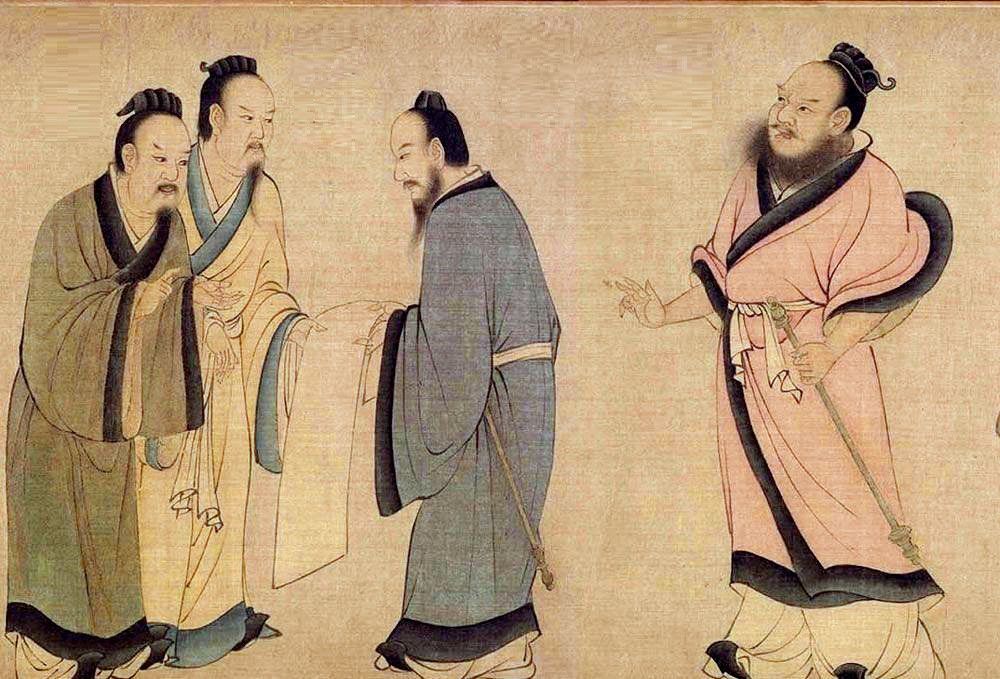
The Philosophy and Religion during the Spring and Autumn Period
The Spring and Autumn Period is known as the time of the ‘Hundred Schools of Thought.’ Initially and in the middle period of the era, the existence of many small fiefdom and states with their own tribal and cultural backgrounds, allowed many schools of thought to be established. At that time, there was peace at some level, and people were able to discuss and teach their ideas freely. The Spring and Autumn Period was a productive time for the development of religion and philosophy. Major philosophies such as Legalism, Confucianism, and Taoism emerged that were passed to later empires. Other significant schools of thought such as Buddhism, Mohism and others that were not popular did not give to the later empires.
Confucianism
Confucianism was probably the first major school of thought to emerge from the three remaining dominant schools. Confucius was one of the foremost Chinese philosophers at that time who lived during the Zhou dynasty and laid the foundations of Confucianism. Confucius was the first significant philosopher whose teachings survived and became widely accepted during the Spring and Autumn Period. Confucius was mainly concerned about the balance of society, and he sought to reform the existing government system and had encouraged a system of reasonability between superiors and inferiors. Confucius believed that everyone should strive to be virtuous and good in every situation. In Confucius's philosophy, virtue is called ‘Jen’ and humans were seen as useful by nature. After the death of Confucius, his students wrote his ethics and moral teaching in Lun-yu. The concept in the teaching of Confucious was ‘Chun-Tzu’ who has cultivated Chi (wisdom), ren (love of humanity), Yung (courage) and Yi (righteousness). Confucius supported the idea that education can improve the individual life; therefore if we educated all the people, then the universal peace would become a reality. Confucius was a Shih, a type of servant who was hired based on talent rather than their birth. From the Han dynasty until the end of dynastic rule in China, the Confucianism philosophy remained dominated throughout China. However, it was reformulated during the Tang dynasty from 618 to 907.
A book of Confucius saying called ‘Analects,’ it is believed that he said he did not create any of his philosophy. He was just transmitting the ancient teachings to his disciplines and to the people to read the ancient texts. He wanted to teach and restore the doctrine of the ‘Mandate of Heaven.’ He mixed his thought of politics with theology. He encouraged people to behave in the right way in every situation of daily life and perform their role in their society. He believed that if they did so, there would be prosperity, happiness, and harmony.
Legalism Philosophy
The ideas of legalism philosophy were not accepted anywhere. Court rulers later developed a dominant antithetical philosophy of legalism in Qin after Shang Yang (390-338) came to power. The legalism philosophy held that humans are inherently bad by nature; therefore, the state needs to keep them in line. The state was more important than individuals; everyone was expected to be subject to the law in legalism philosophy. Mohism had also emerged under the philosopher Mozi at the same time as other philosophies discussed here. The vital concept was ‘impartial care’ or also called as ‘universal love’ which meant that people should care equally of other people and protect them from harm, no matter what is their relationship with each other. Mohism also stressed the ideas of self-reflection and authenticity. They believed, society is like an organism; if people help each other, it would be improved and would work smoothly. Legalism taught that people’s primary role in life is to obey the rule of emperors, and so they did away with familial relationships, freedoms, and accepted cultural ethics throughout their domain.
Daoism philosophy
Another major school that became a basis for post-religion is called Daoism. Laozi is believed to be the founder of Daoism. Scholars have different opinions about whether he was born during the Spring and Autumn Period or afterward. It is not sure Laozi was real, or it is just a myth. According to the tale, he was possibly born around 604 BCE, and he wrote his teachings and thoughts in the book called Tao Te Ching and was never seen after that. Laozi is famous for his concept of Wu-Wei, which means do not try to conquer nature but ride nature. He taught that reality is two-sided, one side he called Yin that is dark, moist and feminine and another side is Yang which is bright, dry, and masculine. These both are necessary and equal and need to be kept in balance to avoid chaos. Laozi believed that humans should follow the mysterious force of the universe and should act following nature. Daoism was individualistic and emphasized the oneness of all things and had opposed the philosophy of Confucianism. Daoism religion emerged over time which involved the worship of god and ancestors. Historians also debate whether he wrote ‘Dao De Jing’ or not. Some scholars believe he lived around 450 or 600 BC while others think that he lived about 380 BC. It is thought that Zhuangzi; another prominent Daoism philosopher wrote the Zhuangzi. It is also said that Daoism was not thought of as a systematic school of philosophy and religion until the Han dynasty. During the Han dynasty period, the Dao De Jing was considered to be the main Taoist scripture, and the Zhuangzi was a secondary scripture.
Tours of Spring and Autumn Period sites
Many Spring and Autumn Period sites are located in Luoyang. An important Zhou dynasty site is the Museum of the Zhou imperial Carriages where you can tour the archaeological excavations and see the artifacts. Many of the discovered historical relics from the Zhou Dynasty are displayed at Shaanxi Historical Museum in Xi’an Province.
Responses • 0
0/2000
ID: 322
Matthias
Offline
1 day
Visited
From
Orlando, United States
Send Message