Plant Related Chinese Words
Original
Learn Chinese
Nov 21 • 1894 read
Plants, flowers, and trees are also closely related to people’s lives in the Chinese language; there are many interesting plants related Chinese words.
Plant Related Chinese Words
Like the Animals related Chinese words, many Chinese words are about flowers, trees and other plants which are also closely related to people's life. For hundreds and thousands of years, plants have become an inspiration for many vivid language expressions that have been passed down from generation to generation. For example, Chinese people often associate “美女” (mei nv, a pretty girl) with “flower” and “君子” (jun zi, a gentleman) with “bamboo.” First, these associations may derive from the outward appearance and the inner nature of the plants. Second, poets and scholars in the past had, to some extent, endowed various characteristics to many plants in their works, which enhanced people’s perception of certain plants.
Willow 柳树
/fit-in/0x0/img/201911/4746397543760026-article-1574298876.jpg)
Expressions with “柳” (liu, willow) mean more connotatively than literally. For example:
柳暗花明
(liuan huaming, dark willows and blooming flowers—a beauteous scene; a new vista)
As described in The Book of Songs (《诗经》, shi jing), willow implies “departure, and wandering experiences.”
折柳赠别
(zheliu zeng bie, to see sb. off with a willow branch)
During the Han Dynasty, in “长安” (Chang’an), this expression was very popular. But why does “柳” mean "departure"? Probably it is because the character "柳" has the same pronunciation with "留" (liu, stay).
柳腰
(liu yao, willowy or slender waist)
In earlier writings in literature, the dangling willow branches in the wind often symbolize “soldiers’ homesickness.” But to some other writers, the dancing willow leaves in the wind usually reminded them of ladies’ slim figures, so came this expression.
柳眉 (liu mei)
As is known, willow leaves are long, thin and curved. Therefore, people coined this expression to describe “the arched eyebrows of a pretty girl.”
Also, the dancing willow twigs also remind people of ladies who "are at the mercy of others," the prostitution. Therefore, in expressions such as "寻花问柳" (xunhua wenliu, dally with prostitutes), "墙花路柳" (qianghua luliu, street girls), "柳" implies "prostitutes."
残花败柳 (can hua bai liu)
This expression “similarly means “ladies in the brothel who have for a long time been dallied with and have already lost their beauty.”
Peach 桃树
/fit-in/0x0/img/201911/07113695690574384-article-1574298876.jpg)
“桃” (tao, peach), for its color and fragrant smell, has been one of the earliest discovered plants of our ancestors. Like a willow, it usually makes people think of "delicate and charming girls."
粉面桃花
(fenmian taohua, the sweet, charming appearance of a girl”)
桃腮
(tao sai, meaning the “pink cheeks of a girl)
Peach blossom has always been known for its color and the sweet appearance, but in the wind, the blossoms soon fall off trees. And this often reminds people of the short youth time and the misfortune a pretty girl. Therefore, there came the expression:
桃花命
(taohua ming, meaning the “misfortune”)
桃花 (红颜) 薄命
(hong yan boming, a popular saying meaning the "tragic fate" of a pretty girl)
"桃" is culturally associated with women and sex in China. So there are the collocated sayings, “桃色新闻 (taose xinwen) and 桃色事件 (taose shijian),” which mean "sex scandal."
Another expression, 桃花运 (tao hua yun), is sometimes ironically said to young men. It often implies “a girl being involved with a sexual affair or a man who has sex with many girls.
In language, “桃” often goes together with “李” (li, plum). Like a peach tree, plum trees also bloom in spring and are known for their beautiful blossom. Therefore, “桃李” has become a collocated saying referring to “a girl’s appearance.” Similarly, “桃李人” (taoli ren) means “a woman of matchless beauty,” and “桃李精神” (taoli jingshen) refers to “the way a pretty girl carries with herself.
Both “桃” and “李” are known for their blossom and fruit. Gradually, their fruits became culturally connotative meaning the “well-cultivated pupils.” So the popular saying today “桃李满天下” (taoli man tianxia, have pupils everywhere) is usually uttered to praise “an outstanding teacher who has been engaged in teaching for a long time and whose pupils are scattered in the world."
"桃" is usually associated with "longevity." As the legend goes, ordinary people can live forever and never grow old if they eat the peaches in heaven. Furthermore, peaches are also called “寿桃” (shoutao), when used for the congratulation of the elderly on their birthdays. In New Year pictures, people can usually find pictures of “寿星” (shou xing, the God of Longevity) holding a peach and with a walking-stick on walls.
Apricot 杏树
/fit-in/0x0/img/201911/08421629906851025-article-1574298876.jpg)
“杏” (xing, apricot), a woody plant, is characteristic for its yearly blooming and fruit-bearing. “杏” is an uncommon word, because many expressions such as “杏坛” (xing tan), “杏园” (xing yuan), and “杏林” (xing lin) all carry special meanings.
杏坛
According to historical records, “杏坛” comes from a story about Confucius. During a lecture break, he sited and rested on “坛,” which he calls it “a platform or forum.” The place he sited happened to be under the apricot trees, therefore people later coined the expression “杏坛.” The expression “讲坛” (jiang tan, forum, saloon) probably came from “杏坛” and is popularly used in the academic field today. Nowadays “杏坛” has a broader sense, meaning “the place for teaching or giving lectures.” It can also refer to “education in general.”
杏园
"杏园" is also called "杏花园" (apricot flower garden), which is situated at the suburbs of Xi An. In the Tang Dynasty, “进士” (Jin Shi, successful candidates in the highest imperial examination) would be honorably presented at a feast hosted by the imperial court in “杏花园.” So "杏园" today implies "scholarship."
杏林
“杏林” today is often related to the “medical field.” The origin of this word goes far back to the period of the Three Kingdoms. There was a man then named “董奉” (Dong Feng) who lived in seclusion in Mt. Lu Shan. He volunteered to treat the sick people there for free, but in return, he asked the patients who had recovered to plant apricot trees for him. If one were seriously ill but were completely recovered after his treatment, the patient had to plant five apricot trees for him. Other patients with minor illnesses who were recovered after his treatments had to plant one tree for him. So after several years of his voluntary service, the area surrounding Dong’s living place became a forest with more than 100,000 apricot trees. And since then the expression “杏林” has been associated to “good doctor” or the medical professions.
Like many flowers, apricot flowers are so beautiful that they are frequently used to describe pretty women. For example, “杏脸” (xing lian) and “杏腮” (xing sai) refer to the pink cheeks of girls. “杏” is sometimes used with “柳” and “桃,” such as “杏眼柳眉” (xing yan liumei) and “桃腮杏脸” (taosai xinglian) which are common expressions used to describe "the pretty face of a girl".
Pine 松树
/fit-in/0x0/img/201911/3984300647944834-article-1574298876.jpg)
“松” (song, pine) is evergreen in the four seasons of a year. Even in cold weather and winter, pine trees always stand arrogantly in the air. Another tree with the same characteristics as “松” is “柏” (bai, cork). It is said that both “松” and “柏” can live as long as a thousand years, so they are both considered as symbols of longevity by the Chinese people.
Besides, ancient Chinese associated “松” and “柏” with the human qualities of not fearing hardships and danger and being faithful and unyielding.” So “松柏” were frequently used by poets to imply “the noble characters of people.”
松柏之盟(songbai zhimeng)
It has the same meaning as the expression "患难之交" (huannan zhijiao, friends in adversity or everlasting friendship).
Pines are very green in cold winter, so people are amazed at its power to survive in severe winter. In Chinese paintings, "Pines and Cranes" are usually seen together to express people's sincere wishes for long life.
The evergreen pines also remind people of the immortal soul. That explains why pines are often found growing well before the tombs. Also, in novels or movies, when a revolutionary martyr dies a heroic death, people always choose the description of pines or a close-up shot of pines to commemorate the memories of the dead.
Bamboo 竹
/fit-in/0x0/img/201911/7004536862404191-article-1574298876.jpg)
"竹" (zhu, bamboo) grows in the south of China and is known for its eternal green color in summer and winter. Though it is hollow inside and has joints in its outward appearance, bamboo is tall and solid in texture and always stands straight. Ancient Chinese often use bamboo in language to describe people who are upright, haughty and aloof and with high moral principles.
But why is the word “贤士” (xian shi, the person of virtue) associated with bamboo? Bamboo is characteristic for its firm roots (本固, ben gu), which imply “坚忍不拔” (jianren buba, the firm and indomitable spirit) of a noble person. The tall and straight outlook of bamboo conveys a sense of “straightforwardness and impartiality” (性直, xing zhi) of a person.
Bamboo is also known for its hard outward texture, and the “inside hollowness” (心空, xin kong), which implies the “unselfishness” (大公无私, dagong wushi) of a person. Bamboo is also featured for its “joints” (节, jie); “节” implies “节操” (jiecao, high moral principle) and “气节” (qi jie, moral courage). Today the popular expression “高风亮节” (gaofeng liangjie, noble character, and sterling integrity) was derived in fact from the image of bamboo joints. So, people often associate the noble qualities of “君子” (junzhi, gentlemen or persons of virtue), “贤士” with bamboo.
There are many collocations with "竹," among which the most commonly used ones are "竹帛" (zhubo) and "竹马" (zhuma). “竹帛” is bamboo slips and silk, used for writing during ancient times, when paper hadn't been invented. "竹马" is a toy horse made of bamboo stick. There are two expressions derived from the word "竹马."
竹马之友
(zhuma zhi you, meaning “friends since childhood)
青梅竹马
(qingmei zhuma, green plums and bamboo horse)
It means that a girl and a boy play innocently together or refers to a man and a woman who have had an innocent affection for each other since childhood.
The following words are more expressions with "竹":
- “竹板” (zhu ban): bamboo clappers
- “竹筏 (排)” (zhu fa (pai)): bamboo raft
- “竹竿” (zhu gan): bamboo pole
- “竹简” (zhu jian): bamboo slip (used for writing during ancient times)
- “竹笠” (zhu li): bamboo hat (with a conical crown and broad brim)
- “竹笼” (zhu long): bamboo cage
- “竹器” (zhu qi): articles made of bamboo
- “竹荪” (zhu sun): a kind of edible fungus found in bamboo groves
- “竹筒” (zhu tong): a thick bamboo tube
- “竹席” (zhu xi): bamboo mat
- “竹叶青” (zhu ye qing) : 1.green bamboo snake; 2.bamboo-leaf-green liquor
- “竹篱茅舍” (zhuli maoshe): thatched cottage with bamboo fence—simple dwelling of a hermit
- “竹头木屑” (zhutou muxie): bamboo ends and wood shavings—things of not much value but some use
- “竹筒倒豆子” (zhutong dao douzi): pour beans out of a bamboo tube—withhold nothing
- “竹篮打水一场空” (zhu Ian da shui yi chang kong): draw water with a bamboo basket—achieve nothing; all in vain
Plum 梅花
/fit-in/0x0/img/201911/6970027850718448-article-1574298876.jpg)
Probably most people get to know “梅” (mei, plum) by its blossom (梅花, mei hua) first, which blooms in early spring and at the end of winter. The flowers are fragrant and attractive. The flower is white or light red with usually five pieces of petals. Its fruit, called “梅子” (mei zi, plum), is also very appealing and attractive to people. In fact, people think more highly about the blossom than its fruit during the times of the Northern and Southern Dynasties (南北朝, nanbeichao, 420 A. D.—589 A. D.).
Plum blossom is known for its resistance to cold and its arrogance in the freezing weather, which is often associated to the human trait of “坚贞不渝” (jianzhen buyu, undying loyalty). This image of plum blossom has been soon accepted by people, especially the poets. But during the Tang Dynasty, as the capital Chang An is located in northwest China where plum did not grow so well as it was expected, therefore, there are few descriptions about plum in the Tang Poetry. In the Song Dynasty, however, plum started to attract the attention of poets and scholars. One of the popular sayings at that time was: “学圃之士 (xuepu zhishi), 必先种梅 (bixian zhongmei), 且不厌多 (qiebu yanduo).” (True Scholars must learn to plant plums first, and the more, the better.)
Plum has been highly recognized like “松” and “竹,” as they have some common characteristics, such as standing firm and unyielding in cold weather. Plum is noted for its beauty in frost and snow. In spite of their common features, they each have their own unique images in the minds of people. “松” is noted for “its unyielding spirit in hardships and danger.” “竹” is known for “its haughtiness and high moral principle,” Plum is typically known for its “高洁” (gao jie, its arrogance and purity), “超凡脱俗” (caofan tuosu, its transcendence of the worldly), and “孤芳自赏” (gufang zishang, its indulgence in self-admiration) which are its noblest characteristics that the Chinese people appreciate the most.
In the past, plum can also refer to “young girls with pure hearts,” who are often called “梅香” (mei xiang). But in many modern literary works, “梅香” has been chosen as the name of waitresses or slave girls.
Other expressions with “梅” :
- “梅花鹿” (meihua lu): sika (deer)
- “梅雨” (meiyu): intermittent drizzles in the rainy season
- “梅花大鼓” (meihua dagu): a variation of bass drum
- “梅毒” (mei du): syphilis
Lotus 莲花
/fit-in/0x0/img/201911/8679464493472375-article-1574298876.jpg)
“莲” (lian, lotus) grows mainly in shallow water area in the southern part of China. Its seed, called “莲子,” (lianzi lotus seed) is its fruit grown above water, and its stems under the water are called “莲藉” (lian’ou, lotus root). Lotus leaves are round-shaped and its blossom, white or light red, is sweet and fragrant. The custom of “采莲” (cai lian, picking lotus) can be traced far back to the Western Han (西汉, xihan, 206 B. C.—25 A. D. ) Dynasty, when girls typically picked lotus seed from boats. Therefore, the words “莲女” (liannv, Lotus Girl) and “莲舟” (lian zhou, Lotus Boat) were coined.
Chinese people like “莲子” and “莲藕” because they are considered delicious food. “莲子” has been used as a kind of Chinese herb and an important ingredient of “药膳” (yaoshan, medicated food), which are thought esp. conducive to those who have a weak stomach and bad spleen. “莲藕” is a delicious aquatic plant and loved by many Chinese. When people cut “莲藕” with a knife, they will find that it can’t be cut clean through. The parts will be somewhat connected by fibre texture. Therefore, a widespread expression “藕断丝连” (ouduan silian) was created, which implies that lovers who have decided to separate are still in contact with each other somehow.
Another favorite food with lotus is “藉粉” (oufen, lotus root starch). It is made by grinding dried lotus roots. It is believed to be extremely helpful for the weak and sick people. “West Lake Lotus Root Starch” (西湖藕粉, xihu ou fen) has been well-known in China, because lotus grows exceptionally well in the West Lake, where the water is considered high-quality.
“莲” has the same pronunciation with “怜,” so “莲子” sounds like “怜子,” which means in present-day language “爱你” (aini, love you).
The saying, "莲,出污泥而不染" (lian, chuwuni er buran, lotus comes out of mud but is pure), has been quoted by many people because “莲” usually implies “people who are pure, upright, modest, simple and elegant.”
Lotus flower is often associated with Buddhism, which became popular during the times of the Southern and Northern Dynasty. For example, Bodhisattva Guanyin (观音菩萨, guanyin pusa) is often seen in temples sitting or standing on a seat made of lotus flowers. “莲服” (lian fu) is another name for “袈裟” (jia sha), clothes worn by Buddhist monks; “莲房” (lian fang) is the house where monks live; “莲宇” (lian yu) is a more elegant name for Buddhist temples.
Other Plants
/fit-in/0x0/img/201911/5547905405094276-article-1574298876.jpg)
The legend goes that Phoenix likes to stay and rest on “梧桐” (wutong, Chinese parasol tree). As a magic bird, it is believed that Phoenix can bring luck to people. Therefore, “梧桐” became a lucky tree.
Since ancient times, “牡丹” (mudan peony) has been titled “the Queen of Flowers.”
国色天香
(guose tianxiang, ethereal color, and celestial fragrance)
This word is originally coined to describe peonies, which implies “荣华富贵” (ronghua fugui, happiness, glory, splendor, wealth and rank). Peony has also been recognized as the "National Flower" of China.
"槐树" (huaishu, Chinese scholar tree) is noted for its long lifespan (usually lasting hundreds of years) and its rich and thick branches and leaves. It is said that “槐树” can bring protection and happiness to the descendants.
"菊花" (juhua, chrysanthemum) blooms at the end of autumn or in early winter. It is noted for its resistance to cold and frost. Therefore people endowed it with the human characteristics of endurance, persistence, elegance, and simplicity.
"兰花" (lanhua, cymbidium or orchids) mainly grows in valleys. The flower is pure and elegant and give out a delicate fragrance. The flower carries natural and unrestrained grace and is associated with people of “elegance and purity.”
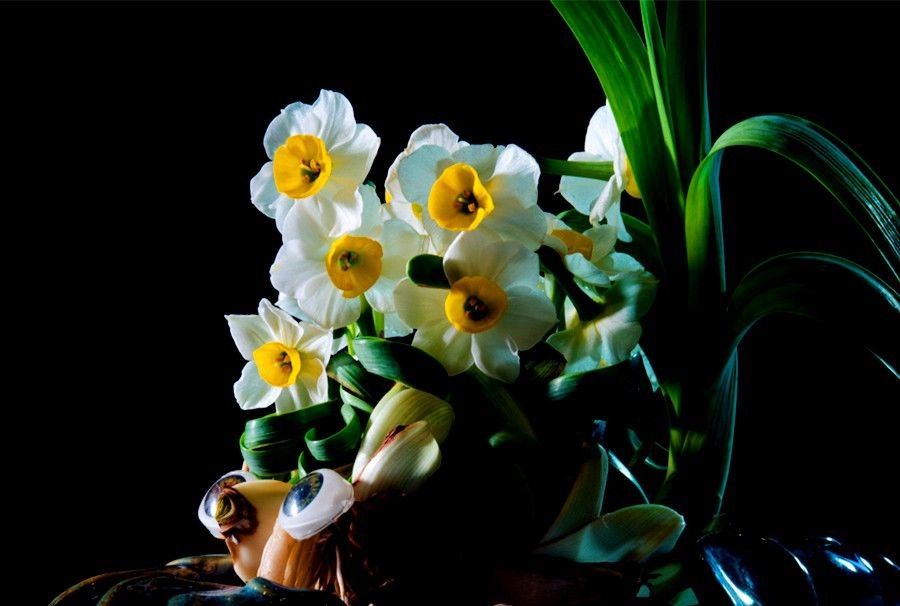
"水仙" (shuixian, narcissus), also called “水中仙子” (shuizhong xianzi, celestial being in water) is noted for its life underwater. The flower, white and fragrant, makes people think of those who are "pure and elegant."
"梨" (li, pear), for its white and fragrant flower, is often related to girls who are "pure, clean and honest."
"枫叶" (feng ye, maple leaves) turn red because in autumn. So "讽叶" is also called "红叶" (hongye, red leaves), which are often the symbol of the elderly who are old but full of vitality (老当益壮, laodang yizhuang).
"红豆" (hongdou, red bean) is also called "相思子" (xiangsizi, lovesickness seed). The story goes that a girl in ancient times died under Abrus precatorius, the red bean tree because she missed her husband who died at the frontier. Thus, “红豆” often implies today “lovesickness.”
Responses • 0
0/2000
ID: 322
Matthias
Offline
2 day
Visited
From
Orlando, United States
Send Message