Jiangsu Cuisine-Sweet and Sour Mandarin Fish
Original
Chinese Food
Nov 21 • 1982 read
Jiangsu cuisine is mainly braising, stewing, steaming, frying, soup and keep the food flavor freshness, the representative is Sweet and Sour Mandarin Fish. Huaiyang cuisine is also one of the Jiangsu cuisines.
Jiangsu Cuisine
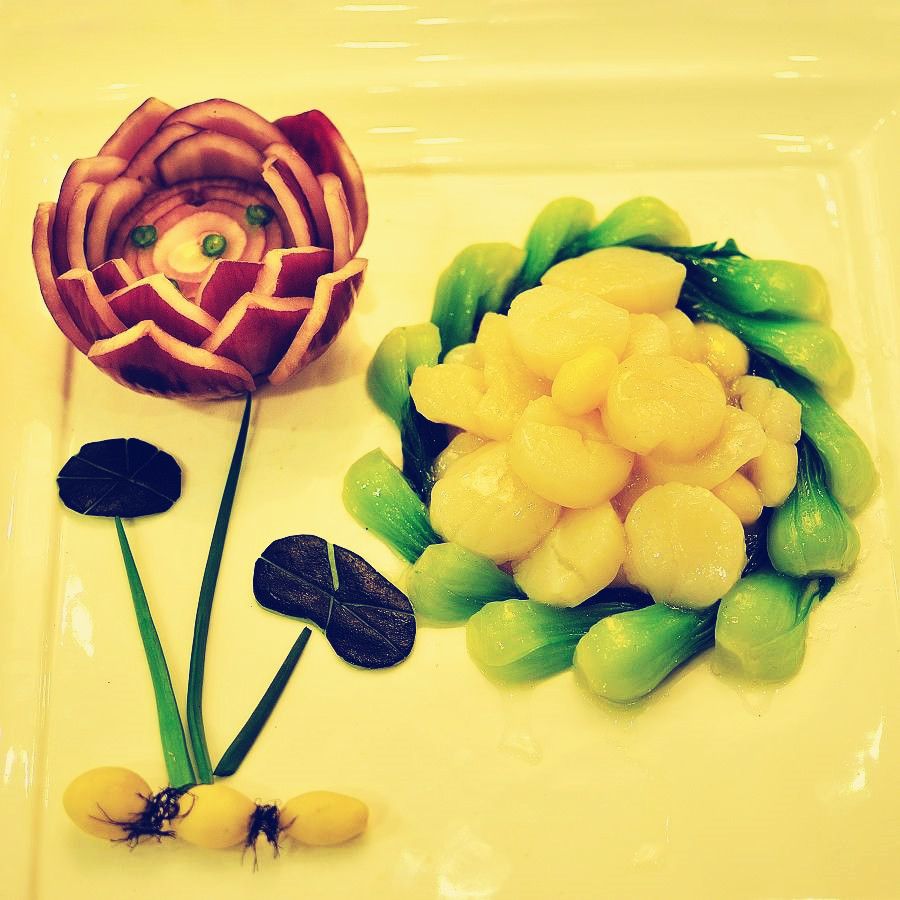
Jiangsu cuisine is mainly braising, stewing, steaming, frying and soup. Its characteristic is to keep the food flavor freshness, thick but not greasy, and do not break food’s shape. Before we talk about Huaiyang cuisine is also one of the Jiangsu cuisines. The representative is Sweet and Sour Mandarin Fish.
As early as over 1000 years ago. Chinese people praised this city from mouth to mouth. It is said just as “In heaven there is paradise, and on earth, there are Suzhou and Hangzhou.” Jiangsu cuisine, one of Chinese Great Eight Cuisines, referred as Jiangsu cuisine. This city which is called paradise can satisfy the ultimate pursuit of people for an ideal life. People can enjoy a pleasant climate, abundant natural resource, living environment of classical gardens, and of course, an array of delicious food. If there is no delicious food, Suzhou won’t be called as paradise.
The character of Jiangsu cuisine
/fit-in/0x0/img/201911/6620774678037671-article-1574298849.jpg)
Jiangsu or Suzhou is located in the hinterland in the south of Yangtze River, with two-thirds of waters in Taihu Lake, Suzhou enjoys numerous lakes and abundant resource. Therefore, its cuisine can be particular about the freshness, and vary with the season. Then the fish dish enjoys the priority in Jiangsu cuisine. Fish Proverb in Four Seasons. Carp with fine meat for lunar January, mandarin fish with fat meat for lunar February. Soft-shelled turtle is able to nourish one’s body for lunar March. Every month enjoys its own fish all year round. It explains exactly the time to eat. Some food should be eaten at a certain time, even on a certain day.
For non-local people, especially northerners, when they taste Jiangsu cuisine. for the first time, they would feel too sweet. The taste of being too sweet seems to have become one of the characteristics of Jiangsu cuisine. In Suzhou people always like to put a bit of sugar in it.
For over 2500 years, Jiangsu cuisine has been a leader among that delicious food repeatedly, forming the fine, fresh and seasonal characteristics. There is a word, Su-like, in Sichuan dialect, which means something in Jiangsu style. If someone tells you that you look Su-like, he means you look stylish, and you wear fashionable clothes. Su-style represents a trend, but in terms of its nature, it means very refined and insipid taste. Talking about the cuisine style, it is made uniquely in series.
Sweet and Sour Mandarin Fish 松鼠桂鱼
/fit-in/0x0/img/201911/6065689166550077-article-1574298849.jpg)
In Qing Dynasty, the Qianlong Emperor entered the shopfront of the restaurant and saw a fish tank on the altar. There is an alive mandarin fish in it. “I want to eat this mandarin fish,” he said. Then the cook made immediately. Qianlong Emperor wanted to have mandarin fish. The cooks came up with a new idea naturally by making the fish into a squirrel shape. So this dish had a reputation as Sweet and Sour Mandarin Fish.
How to make the Sweet and Sour Mandarin Fish
To make Sweet and Sour Mandarin Fish, first, we have to pay attention to the choice of materials. Mandarin fish should be of moderate size. If the mandarin fish is too big, the meat will be too tough. If the mandarin fish is too small, the meat will be difficult to shape.
To make mandarin fish look like a squirrel shape, the first and the most important thing is cutting technique. First, cut it with slanting cuts. The chief has to do it quickly, finally, steadily, accurately and skillfully. In order to keep the freshness of the alive fish, making a mandarin fish into a squirrel shape only costs three minutes. Shaped mandarin fish needs to be washed with water. Stir in egg yolk, size with flour and apply it with dry starch by beating. In this way, fried mandarin fish can be golden, soft and juicy.
Then you have to make the tail towards this side, and place fish bone towards this side. After the upper part taking shape put it in the pot. After the front part taking shape, we still have to carry the tail. After taking shape put it in it. Fried mandarin fish is fished with its head and tail up, in golden color, crisp outside and tender inside. After being transferred to a plate, it must be topped with sweet and sour marinade. When hot marinade tops over brought out of the oil pot, it looks like a squirrel.
Yangcheng Lake hairy crab 阳澄湖大闸蟹
/fit-in/0x0/img/201911/13214391584157648-article-1574298849.jpg)
Yangcheng Lake hairy crab in Jiangsu appears on the market in seasons of ripe rice and yellow chrysanthemum every year. This crab, known as the queen of aquatic product, catches every raring guest’s eyes. Compared with other kinds of crabs, the Yangcheng Lake hairy crab enjoys its own special feature. Well, its back is cyan, but with a little bit yellow. It seems it has a thin layer of oil and looks very glossy. It has only the smell of water grass. The lakebed of Yangcheng Lake is full of sand. When the crab crawls, its legs get exercise and become strong and powerful. In the past, people made the crabs crawl on the glass to distinguish the Yangcheng Lake hairy crab from others. The crabs which can crawl on the glass can only be considered as “good.” It is said that top Yangcheng Lake hairy crab can crawl on an acclivity.
Crabs walk sideways finally to people’s dinner table. Maybe the only autumn is the most proper time to taste crabs while appreciating chrysanthemum. However, Suzhou people who love eating crabs use a special way to extend this elegance to the Lunar New Year. People often prepare a container, with straw and some water in it. Then put the crab into it. Under the condition of keeping immovable, it can live up to the Lantern Festival. On that day, the host will cook the crab to serve the guests. Whether tasting crabs while appreciating chrysanthemum or crabs watching lanterns, they both belong to literati’s elegant activity.
In the past, people have to pay attention when we taste crabs, so we don't eat crabs at formal dinners. If all the people are busy with their crabs, there will be to talk, nor communication during the banquet. The atmosphere is not what a banquet should be. In addition, there is much capacity of crab spawn and grease which are very sticky. Tasting a crab often results in a mouthful of yellow and white things. It’s not so good for people who attend the banquet, especially for one who grows a beard, tasting a crab may even bring him a great discomfiture.
Show Crab Bucket 雪花蟹斗
/fit-in/0x0/img/201911/9092634910196249-article-1574298849.jpg)
The original of the show crab bucket: In a late autumn of the 1970s, Norodom Sihanouk, Prince of Cambodia, visited Jiangsu with the company of Premier Zhou Enlai. The cooks in the Pine and Crane Restaurant paid a lot of attention to preparing the state banquet. Crabs must be served, while steamed crab was cast aside. Therefore, the sophisticated Suzhou cook created an innovative food, named “Show Crab Bucket.” First, steam the crab for 4 or 5 minutes. After that, pick the crab meat out bit by bit. As Suzhou has a rich resource of crab, there are a lot of dishes made with crab meat, like “Minced Crab Meat and Bean Curd,” and “Fried Crab Meat,” they are very famous. Jiangsu cuisine always needs lots of time and energy. Watching the cook patiently picking crab meat out is also a good opportunity to learn how to taste the crab.
Next, make the snowflake of the dish, ”Snow Crab Bucket.” Actually, it’s made of egg white. An egg’s white can only make one snowflake. Next, the crab bucket. Make the egg white into a little circle first. And the snowflakes are done. And steam them for 3 minutes. When steaming them, the cook starts to fry the crab meat. Put the crab spawn into shells which have been cooked before, and cover with the snowflake. Then decorate the dish with ham pieces and cilantro leaves. Thicken it with chicken soup. And the tasty Snow Crab Bucket is done. It looks very beautiful, and it’s very delicious.
The boat dish 船菜
/fit-in/0x0/img/201911/8476829437587274-article-1574298849.jpg)
Jiangsu cuisine which originated from the Spring and Autumn Period and formed in the Tang and Song Dynasties had been well developed in the Ming and Qing Dynasties. Because the boat dish invented at that moment. The boat dish refers to the cuisines and feast made on the boat. On fine days in spring and autumn, the flower boat appears ahead, and the wine boat follows behind, heading for the faraway place of the lakes and hills. The boat dishes were very expensive, and most of them were the creative dishes whose creation process was joined in by the literati. The second reason was its tremendous work and fineness. It is one dish with personalized service which needs efforts expressing in today’s words. The boat dish with tremendous efforts and fineness promoted the creative development and feature shaping of Jiangsu cuisine.
What’s the feature of boat dish? The small pot for a small amount of dish, its fineness, and particular caring was originated from these. Because there was sufficient time to deal with these dishes on the boat, it enabled them to make these dishes exquisite and delicious. These dishes had not only delicious tastes but also graceful shapes.
Today, due to the environmental protection, it is hard to seek any sigh of boat dish, but the making of boat snack is still sophisticated. Boat dish belongs to cuisine, but it needs not only the cuisine but also snacks. The boat snack and dish developed at the same time, and they set each other off. The first step of making boat snack is to knead the dough and then is color matching. Color matching refers to matching various colors of dough by applying juices squeezed from all kinds of natural materials, such as green vegetables and radishes, and flour.
Most of the Jiangsu boat snacks are small, but eating boat snack is not about starvation relief, it is about taste. It emphasizes taste and pleasure.
The famous restaurant with Jiangsu cuisine
/fit-in/0x0/img/201911/1234853466795578-article-1574298849.jpg)
Taijian Lane of Guanqian Street (观前街的太建巷), located in the center of the ancient city of Suzhou, is the land where Jiangsu cuisine and delicious food gather. It has nearly a hundred years of history. Thus the saying of eating all around Guanqian Street means eating all around Taijian Lane.
There is a saying in Jiangsu, “eating all around Taijian Lane.” Although “eating all around” is an exaggeration, it has a heroic spirit rather. This small lane which is less than 100 meters has the city’s most famous restaurant, such as Pine and Crane Restaurant, Tak Yuet Lau, New Jufeng Restaurant, Wangsi Restaurant, etc. The Pine and Crane Restaurant is the oldest one. It was founded in the Qianlong Period of the Qing Dynasty(1711A.D.-1799A.D.). It is said that the most famous dish of it has some connection with Qianlong Emperor. When Qianlong Emperor went to the south of Yangtze River, Jiangsu local cuisine and Pine and Crane Restaurant were his favorite.
The influence of Jiangsu cuisine
/fit-in/0x0/img/201911/Jiangsu-Cuisine----influence-article-1574298849.jpg)
The nourishment of boat dish and ornament of boat snack enable the distinctive features and everlasting glamour of Jiangsu cuisine to be preserved till today. Jiangsu cuisine is the art of the time, as well as the art of space. It has the meaning that the heaven, earth and the human beings are all in harmony. Its stress on season refers to the time; its stress on freshness refers to the favorable geographical position, and its being famous for fineness refers to human beings in harmony.
Chinese Great Eight Cuisines
/fit-in/0x0/img/201911/Chinese-Great-Eight-Cuisines.jpg-768-article-1574298849.jpg)
- Shandong Cuisine(鲁菜): Salty fresh, thick oil sauce, food therapy health;
- Sichuan Cuisine(川菜): Heavy oil, heavy salt, spicy hot;
- Cantonese Cuisine(粤菜): Original, salty, fresh and light;
- Jiangsu Cuisine(苏菜): Sweet and yellow wine;
- Fujian Cuisine(闽菜): Salty-sweet (southern), spicy (northern);
- AnHui Cuisine(徽菜): Heavy oil, heavy salt;
- Hunan Cuisine(湘菜): Heavy oil, heavy salt, heavy spicy, preserved flavor;
- Zhejiang Cuisine(浙菜): Special, fresh, tender, with yellow wine.
Responses • 0
0/2000
ID: 322
Matthias
Offline
2 day
Visited
From
Orlando, United States
Send Message