History of Chinese Wine Making
Original
Chinese Culture
Nov 21 • 1664 read
Chinese Wine Making can ho traced back as far as about 4,000 BC to the early period of the Neolithic Yangshao Culture. During its long development Chinese Wine Making has taken on a distinct form - saccharification and fermentation are promoted with a ferment in which the main microorganisms are molds, many-stage fermentations are used, and the fermented matter is sometimes semi-solid.
Chinese Wine Making
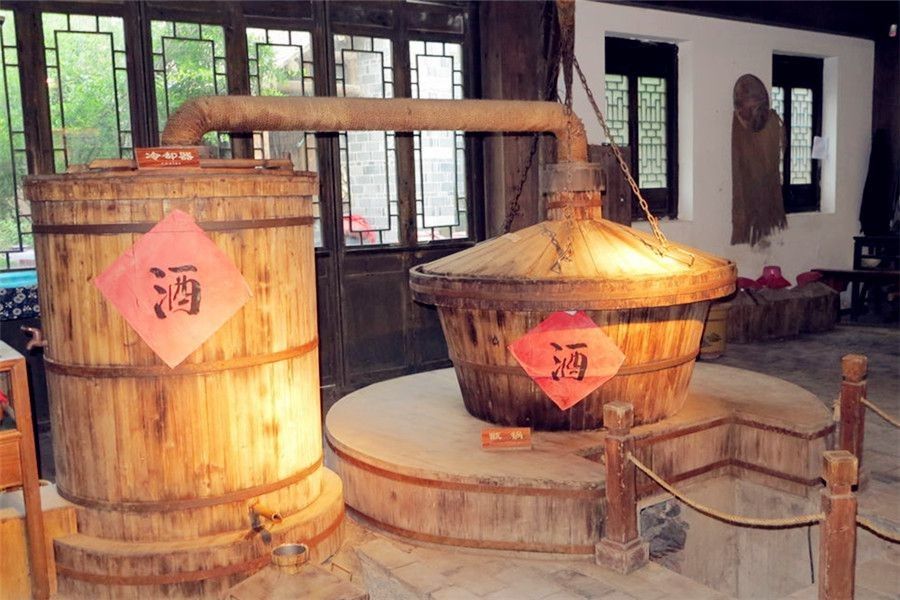
Chinese Wine Making can ho traced back as far as about 4,000 BC to the early period of the Neolithic Yangshao Culture. During its long development Chinese Wine Making has taken on a distinct form - saccharification and fermentation are promoted with a ferment in which the main microorganisms are molds, many-stage fermentations are used, and the fermented matter is sometimes semi-solid. These are the classic characteristics of oriental Wine Making. Chinese wine is mainly based on grains, and there are only a few wines made from fruit; in recent years beer had been introduced to China and had developed very rapidly. Currently, the annual beer production in China ranks the second place in the world. According to the latest national standards, Chinese alcoholic are divided into three main categories: fermented alcoholic beverages, distilled spirits, and mixed alcoholic beverages. The fermented beverages are divided into the five subcategories of beer, wine, fruit wines, Chinese rice wine, and miscellaneous other; distilled spirits include Chinese spirits and other spirits like brandy and whiskey.
On the evidence vessels, tor making and containing wine unearthed by archaeologists, the years from the early Yangshao culture to the beginning of the Xia dynasty (2070 – 1600 BC) were the formative years of Chinese Wine Making. In this period people took the clue from the natural fermentation of fruit wine and began to steep fermented grain to make Fermented alcoholic beverages gradually standardizing the fermentation method. From the Xia to the Zhou dynasty (1046-256 BC) Wine Making techniques in China advanced by leaps and bounds, and government officials set up a special bureau to manage wine production.
Because of the distance in time, there are no written records of this early Wine Making available for our scrutiny. But in 1979 in Shandong Province archaeologists excavated grave of the Dawenkou culture, and found a set of Wine Making vessels from 5000 years ago, 100 or pieces in all, including vessels for boiling; the ingredients, for fermentation, and for straining and storing the product. There were also several different kinds of cups tor consumption of the wine. This discovery shows that Wine Making techniques at that time were already fairly advanced.
pre-Qin period
/fit-in/0x0/img/201911/Chinese-Wine-Making----pre-Qin-period-article-1574298899.jpg)
With the steady development of Wine Making techniques, the drinking of wine slowly became more popular. This is confirmed by the large number of bronze wine vessels which have been unearthed. During the Shang dynasty (1600-1046 BC), revelling and carousing were fashionable among the aristocracy. According to the Basic Annals of Yin (i.e. Shang) in The Records of Historian, in the last years of the dynasty the ruler King Zhou; who was much given to drinking and sensual pleasures, had a pool of wine made in which he got naked men and women to chase each other; and this and the heavy all-night drinking precipitated the fall of the dynasty. Learning a lesson from the fall of the previous dynasty, the first ruler of the Western Zhou (1046 - 771 BC) promulgated an abstinence order in the Wei Kingdom, the place of origin of the Shang, thus issuing the first anti-wine regulation in Chinese history, the Proclamation on Wine. At the same time, the authorities established a set of offices to keep the production and consumption of wine under strict management. Under the Western, Zhou wine was divided into three categories.
One was the wine specially prepared for ritual offerings, which was fermented for a comparatively short time and then used immediately. The second was the wine which had been kept to mature. The third was the wine which had been strained. This categorization of wine shows that production techniques had already developed to quite a high standard.
According to the saying, "the ferment is the backbone of the wine." Way back before the Qin unification, the early Chinese invented the technique of using a ferment to make wine, a definite advance in Wine Making methods. The principal ancient classic The Book of Rites, which describes the ritual system and ritual ceremonies of that period; records six critical things to watch for when making wine:
the grain used must be ripe, the ferment must be added at the right time while steeping and boiling everything must be clean, the water must be good, the containers must be ceramic and selected for their quality, and the heating time and temperature must be right.
A notable feature of the way in which the culture of wine had developed in the pre-Qin period are the links which often appeared between wine and the political. There is a saying which refers allusively to a historical event: "The wine of Lu is scanty, and Handan is besieged." This refers to a story which connects wine and politics. In the Spring and Autumn Period (770-476 BC), after the state of Chu had claimed hegemony over the south, its arrogant ruler King Xuan ordered the various feudal rulers to come to his court bearing wine. Duke Gong of Lu was late for some reason and did not bring very much wine. King Xuan was extremely angry and insulted him in front of a lot of onlookers. Duke Gong did not take kindly to being insulted in this way, and said: "I am the descendant of Duke Zhou and a distinguished servant of the royal house; for me to bring you wine was already demeaning and a violation of ritual, and yet you go on to reproach me and say that the wine I prepared was inadequate. You should know when to stop." He then departed without taking his leave. Because of this King Xuan decided to send an expedition to attack Lu. King Hui of Liang, who had long wanted to invade the state of Zhao but had been afraid that the Chu would come to their aid, seized his opportunity and sent a force to besiege the Zhao capital Handan. So it was that when the wine of Lu was scanty, the Zhao city of Handan became the innocent victim of the power struggle between the feudal lords.
Han to Jin dynasty
/fit-in/0x0/img/201911/Chinese-Wine-Making---Han-to-Jin-dynasty-article-1574298899.jpg)
In the Han dynasty (202 -220 AD), progress in agriculture led to an increase in grain production, and this provided the material basis for a boom in the wine industry. Because of developments in ferment making, different areas used different grains to make ferments, and the range of alcohols became more varied. There was inexpensive “ordinary wine,” there was “sweet wine” which used a small amount of ferment for a lot of grain and was “ready overnight;” there was a pale wine called han, a red one called li or “under the lees,” and a clear one called li (pronounced in a different tone). The people of Han Dynasty called a wine “heaven’s bounty,” a gift was given to men from heaven above. It was good for conviviality and also for drowning your cares, something which could both delight the palate and deepening the experience.
From the Warring States Period to Hand Dynasty many drinkers, because of these qualities, drank with great abandon and got drunk, enjoying the pleasant, uninhibited feelings that wine gave them. In a Han period wall painting discovered in Shandong province, there is a scene of Wine Making, a panorama of how wine was made at that time. A kneeling figure is breaking up ferment with a pestle, one is lighting a fire, one is splitting firewood, one stands next to a steamer stirring rice, while one strains a ferment solution into cooked rice; elsewhere another two have the job of filtering the wine, and another figure uses a ladle to transfer wine into an amphora.
At the end of Eastern Han period (25 - 220), the Counselor-in-Chief Cao Cao (155 - 220) made a gift to Liu Xie, Emperor Xian of the Han, of some “nine-stage spring wine” produced in his place of origin, Bozhou in Anhui. Along with this gift, he presented a memorial explaining how the wine was made. During the fermentation period, the ingredients were not put in at once but were added in many different stages. First, the ferment was immersed, then 50 Kilo of rice was added in the first instance, and then a further 50 Kilo was added every three days until this had been done for nine times. Cao Cao claimed that wine made by this method was costly, mellow and fragrant, and that was why he presented it as a tribute wine to his emperor and recommended the production method.
In the following period (220 - 589), when the Wei Dynasty gave way to Jin, and then a succession of different dynasties ruled north and south, peasants from the north fled south in large numbers to escape disaster, bringing advanced production methods with them and increasing the labor force in the south. As a result agriculture in the south of China saw an overall improvement in Wine Making. The transfer of northerners to the south caused the wine cultures of north and south to merge, and some famous wines emerged in consequence. Jia Sixie, a well-known ancient Chinese agriculturalist whose exact dates are unknown but who lived under the Northern Wei, wrote a famous treatise on agricultural and other rural technologies, the Qimin Yaoshu (Essential Arts for the People’s Welfare), which has extensive sections on techniques for making wine. He sets out 8 ways of making ferment and more than 40 methods for making wine, a comprehensive summary of the methods used since Han times.
Sui to Song Dynasty
/fit-in/0x0/img/201911/Chinese-Wine-Making---Sui-to-Song-Dynasty-article-1574298899.jpg)
Under the Sui (581 - 618) and the Tang (618 - 907) dynasties, Wine Making continued to develop. Sui policies on making the wine were fairly relaxed; they no longer limited private production of wine and they abolished the wine monopoly so that ordinary people could make and sell wine freely. In the earlier period of the Tang Dynasty, Sui policies were continued: no wine monopoly was established, and there was no tax on wine. But in the Middle and Late Tang, because the national treasury’s coffers were empty, a monopoly on wine was reinstituted to increase the revenues of the central government.
By the Song Dynasty (960-1279) Wine Making techniques after over a thousand years of practical experience had come to constitute a complete theoretical system, and in particular, the production process, technical apparatus, and production equipment tor Chinese rice wine had in that period already taken a settled form. From the Southern Song (1127-1279) there is a book called “Record of Famous Wines” which describes in full a hundred or more famous wines from all over the country. Some of these wines were made in the imperial palace, some in the households of great ministers, some in wine shops, and some in the homes of ordinary people.
In the Yuan (1206-1368), the Ming (1368-1644) and Qing (1616-1911) Chinese Wine Making reached its peak, and the theory of Wine Making came close to maturity. The Ming scientist Song Yingxing (1587-1663) in his main work Tian Gong Kai Wu (The Exploitation of the Works of Nature) describes how a red ferment is made and includes illustrations of the process, a precious contribution to our knowledge. The ancient Chinese medical encyclopedia, Compendium of Materia Medica, also has a lot about wine, and divides it into three main categories, wine made from grain, distilled spirits, and wine; it also collects together a significant number of recipes for medicinal wines.
Ming and Qing Dynasty
/fit-in/0x0/img/201911/Chinese-Wine-Making----Ming-and-Qing-Dynasty-article-1574298899.jpg)
The Ming Dynasty was an essential period in the history of China's urbanization when the development of industry and commerce brought a significant increase in the urban population. Demand for wine grow steadily, and Wine Making gradually ceased to be a part of agriculture and became an independent craft industry. In the Ming Dynasty, this industry spread all over China, and it is recorded that in Hengyang of Hunan Province along there were as many as 10,000 small workshops making wine. The existence of this multiplicity of small producers caused the industry to develop as never before, and distilling techniques also matured. The Ming period not only abounded infamous wines, but was also set apart from earlier periods by a notable characteristic, the variety, and scale of production of wines for health and healing.
The Qing Dynasty surpassed previous dynasties in demand for wine and the number of varieties available, and the industry reached new heights. In eating and drinking habits the Qing was a continuation of the Ming. In a synthesis of China’s ancient food preparation techniques which was compiled under the Qing Dynasty, the Tiao Ding Ji (The Harmonious Cauldron), there are more than 100 entries on wine, and it is worth noting that it includes a comprehensive description of the techniques for making rice wine. Also, many miscellaneous jottings also record the cultural environment of wine consumption in that period.
In the Ming and Qing Dynasties, along with the continuous development of the industry came a maturing of people’s ideas about drinking wine.
While emphasizing the virtues of wine and moderate drinking, they thought that drunkenness could do great harm to one’s health as well as bringing joy. In the late Qing China’s traditional Wine Making arts began to merge with newly introduced techniques for making “foreign wine.” The result was the profusion of varieties and flavors that can be found in Chinese white spirits, beer, and grape wine. Despite all these, China’s alcoholic beverage manufacturing industry largely remained a cottage industry, characterized by original equipment, low productivity, a small operating scale, and unstable product quality. Production was mostly manual, and there was no laboratory, no large-scale mechanical equipment, and even no electricity or tap water. The sophisticated production techniques were passed down by word of mouth, and there were no industrial standards.
Contemporary
/fit-in/0x0/img/201911/Chinese-Wine-Making---Contemporary--article-1574298899.jpg)
After China began economic reforms in 1978, the transformation of the economic system catapulted the nation’s alcoholic beverage industry into a period of rapid growth; the industry’s operating scale quickly expanded and various large-sized enterprise groups emerged. Since 1993, dozens of enterprises in the alcoholic beverage industry have obtained listing on stock exchanges. In 2008, nationwide there we were more than 38,000 spirits makers, including nearly super-sized modernized distillery conglomerates with an annual production capacity of more than 10,000 kiloliters, and there were over 30,000 white spirits brands with a combined total production of 5.69 million kiloliters, representing a nearly 60-fold increase from 1949. In the same year, beer production totalled 41 million kiloliters, representing a 5,800-fold increase from 1949; yellow wine production totalled 809,300 kiloliters, representing a more than 30-fold increase; and win production totalled 698,300 kiloliters, representing a nearly 3,500-fold increase.
Since China’s accession to the WTO, due to the influence of Western consumerism, new consumer needs have been emerging in quick succession. And the demand for alcoholic other than spirits has surged; as a result, a fundamental change has taken place in the structure of alcoholic beverage products in China’ beer, wine; and yellow wine are enjoying steadily rising market share; and beer has surpassed white spirits to become the highest selling kind of alcoholic beverage in China. In the new century, China’s traditional alcoholic beverage culture has embraced elements of modernity and fashion.
Responses • 0
0/2000
ID: 322
Matthias
Offline
1 day
Visited
From
Orlando, United States
Send Message