Chinese and English Different Thought Patterns
Original
Learn Chinese
Feb 07 • 3630 read
Chinese people prefer synthetic thinking, image thinking, circular thinking, and subjective thinking; while Western people prefer analytic thinking, abstract thinking, linear thinking, and objective thinking.

Language thought and thought patterns
To probe into the relationship of language and thought, the definitions of language and thought should be clarified first.
According to Wardhaugh® (1989), language is “a system of arbitrary vocal symbols used for human communication”. Language must be a system since all elements in it are arranged in terms of certain rules. They can not be combined at will. It is because every language has its own system that it could be learned and used consistently. Language is “arbitrary” in the sense that there is no intrinsic connection between a word and something it represents, such as objects, actions, ideas, etc. Language is vocal because the primary medium is sound for all languages, and the writing systems came much later. Language issued for human communication for it is human-specific. Language is possessed only by human beings. It is an instrument used in the communication of thought. Language allows people to say things to one another and to express their thoughts and needs, which is regarded as the cornerstone of society.
On the other hand, what is thought? The thought is generally regarded as a process of our minds doing analysis, synthesis, judgment, inference, and other cognitive activities on the basis of presentation and concept. It is a unique spiritual activity of our human beings and it comes into being through social practices. Philosophically, it is a process of our human minds reflecting the objective reality.
The relationship between language and thought has been an issue of great controversy and interest to the studies in philosophy, linguistics, and psychology. It has haunted the philosophers ever since the time of ancient Greece. The monistic view that language can be regarded as the dress of thought and thought is wordless language can be traced back to the time of Plato. According to Plato, “thinking is talking to oneself or is a form of a monologue. Without thinking, language would be meaningless; without language, thought would have no form and would not be known to others.” But for Plato, language is only the symbol or sign of thought and thought is in no way equal to language. More recently, many philosophers, linguists, and psychologists believe that language determines the way we think—not only how but what we think. In the philosophical field, Wittgenstein stated in his book the Philosophical Investigations (first published posthumously in 1953) that the limit of language is the limit of the world and that the only way we can understand our world is through language.
It is generally accepted that language and thought to interact in many significant ways. Comparisons of different languages can lead one to pay attention to the “universals” (the ways in which all languages are similar) and to the “particulars” (the ways in which each individual language, or type of language, is special, even unique). Linguists and other social scientists interested in universals have formulated theories to describe and explain human language and human language behavior in general terms as species-specific capacities of human beings. However, the idea that different languages may influence thinking in different ways has been present in many cultures. It is so difficult to pin down the effects of a particular language on a particular thought pattern, so the issue still remains unresolved.
Language by nature is the embodiment of human thoughts and human thoughts in return are the mental reflection of the world around us on the basis of some analysis, judgment, reasoning, and generalization. Kaplan (1966) made a study about Chinese, Korean, English, Latin, Russian and Semitic thought patterns respectively in writing. He concluded that in different cultures, the various approaches to making a written statement are related to each culturally influenced pattern of thinking, none of which is better than any other. The ways of thinking are quite different. Actually, people living in a certain area have their own way of thinking. It connects to various kinds of factors, such as language, geography, history, customs, nation, knowledge, concepts and so on.
Thought pattern, as an essential part of a culture, is naturally embodied by its corresponding language. With the different natural and social environments, each nation has its own specific pattern of thinking and perception.
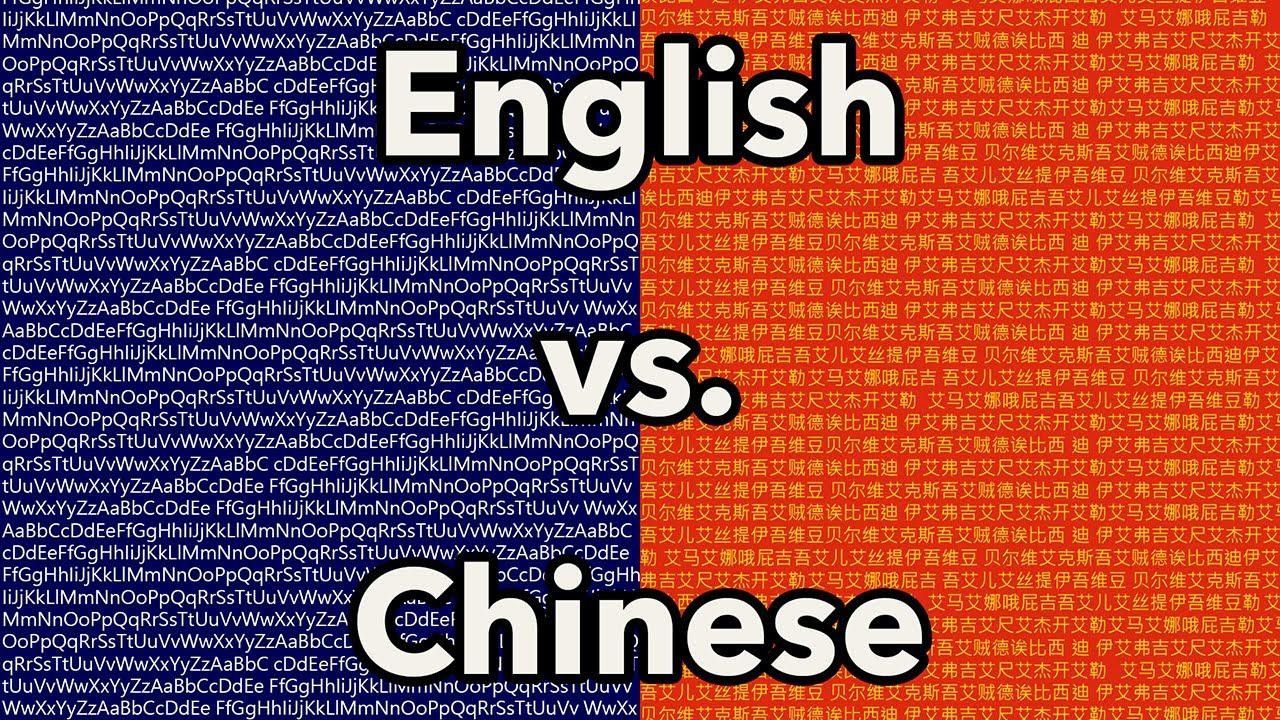
Chinese thought patterns and western thought patterns
Different nations and cultures have different thought patterns due to the different geographical surroundings, ways of life, ways of production, ways of behavior, historical backgrounds, political systems, social structures, economic systems, traditional customs, religious beliefs, languages, values, psychological characteristics, philosophy and so on. The Chinese culture has been influenced mainly by such religious and philosophical systems as Confucianism, Taoism, and Buddhism, which profoundly affects Chinese people’s way of thinking.
Traditionally, the Chinese take human beings as the center of the universe, which are the scales of everything. Since ancient times, the Chinese language, full of humanities consciousness, has been of human-centered culture in essence, in which humanity's spirit is highly valued. The opinion that “everything existing in the world is planned for man” is supported and further developed by ancient Chinese scholars. Qianmu (a master of studies on ancient Chinese civilization) once pointed out that Chinese culture, which is regarded as the most typical one laying stress on the human spirit, centers itself on humans. And this gives birth to the formation of the Chinese subjective thought pattern. In addition, the Chinese believe that knowing the self is equal to knowing nature and the basic law of the universe. They think human beings started looking at the world from themselves and emphasize man, s subjectivity. They observe, analyze, ratiocinate, and study objective things with human beings as the center. Sao their thinking tends to be subjective thinking.
In communication, the Chinese tend to be indirect and they always use rhetorical devices such as metaphor, analogy to develop their opinions. Then they go back to the topic or intentionally refer to history, tradition or something else to conceal the theme. They express their emotions and opinions implicitly and indirectly. Sao Chinese are believed to have circular thinking which is characterized by circumlocution that is not stating opinion directly or frankly. It goes from particular to general, from infiniteness to finiteness, from big to small, and makes independent parts into a whole.
Unlike Chinese culture, Western culture pays much attention to objects and items. The spirit of Western culture and philosophy is to regard nature as the cognitive object and think that it is only by knowing nature that man can grasp, probe into and conquer it. Therefore, the ideas that “subject is separated from an object” and “heaven and man are opposite” are posed. In this case. Westerners gradually form objective thinking which treats the objective world as the center of observation, analysis, inference, and study. The different thinking patterns between Chinese and English are reflected in their languages. Chinese sentences often center on the theme, but the actor is human. However, Westerners emphasize the separation of subject and object. They often use impersonal sentences and passive voice. The subject is always the objective and abstract nouns to highlight its objectivity and impartiality.
In contrast to Chinese, Westerners are used to talking on the topic at the beginning so as to attract the attention of listeners or readers. Sao, they tend to be direct and their thinking is linear thinking which is characterized by speaking of one’s opinion directly and without reservation. The idiom “Call a spade” is just the vivid description of their linear thought pattern. It goes from general to particular, from abstract to concrete, from outcome to the reason, from small to big and divides the whole into parts.
Thought pattern is a bridge of communication on culture and language. Different nations have different thought patterns. “Individuals with different linguistic and cultural backgrounds think differently.” As Chinese and English are geographically separated, they are relatively independent of each other. The development of each culture is different, so they have a very different way of thinking.
It is generally accepted that the Chinese thought pattern is very different from that of the West. Chinese thought pattern emphasizes intuition and images and is likely to be quiet, introverted and conservative, whereas the Western thought pattern pays more attention to nature, science, and technology and tends to be active, extrovert and open. Chinese people are inclined to seek similarity, stability, and harmony; on the contrary, Western people pursue dissimilarity, variation, and competition. They believe that logic, analysis, and linearity are the peculiarities pertaining to the thought patterns of Western nations. Conversely, those of eastern nations are famous for their intuitive holistic nature and harmonious dialectical nature. Western people are expert in analysis and logical reasoning, so their thought pattern appears linear. On the other hand, Chinese people are good at holistic thinking associated with imagination and intuition. Consequently, their thought patterns seem to be circular.
All in all,
the differences between Chinese and Western thought patterns are mainly divided
into four categories: 1) imagination vs. abstract;
2) synthesis vs. analysis 3) unity vs. opposite 4) group-oriented vs.
ego-centered. Generally speaking, Chinese people prefer synthetic thinking,
image thinking, circular
thinking, and subjective thinking; while Western people prefer analytic
thinking, abstract thinking, linear thinking, and objective thinking.
Synthetic thinking vs. analytic thinking
Synthetic thinking is also called holistic thinking, integral thinking or collective thinking. It means that thought can unite all parts of an object into a unity, and integrate all its attributes, aspects and relations. It is a kind of thought which combines the separate integrity and unity of nature and human society. It regards man, nature, individuals, and society as an inalienable and interactive organism. It understands the harmony of the diversification and unity of the opposites dialectically.
Chinese people prefer synthetic thinking. The Chinese thought pattern has been greatly influenced by such religious and philosophical systems as Confucianism, Taoism, and Buddhism. The concept of “the unity of heaven and man” is deeply rooted in traditional Chinese culture. It seeks the harmony of man and nature and the integrity of heaven, earth, and man. The Book of Changes, the primary opposition of Yin and Yang is not viewed as an antagonist but as a complementarity. The Yin is not complete without Yang and vice versa. Taoism advocates the idea of harmony of opposites, holding that the conflict is comparatively superficial. Confucianism seldom views a man as individuality but considers him as an integral part of his environment. Under such circumstances, Chinese people get used to treating the universe as a unity and are inclined to think in a synthetic way. With respect to the language, for example, the Chinese expression of “time” follows such an order of year, month, date, hour, minute and second. When it comes to the expression of “place”, the Chinese are likely to say the country first, then province, city, and street.
Analytic thinking is also called partial thinking or individual thinking. It means that thought can divide an integral object into many parts, or separate all the attributes, aspects and relations of an object. It is a kind of thought which separates the whole object into parts. It lays stress on the analysis of objects. It dissects events and concepts into the pieces and categorizes them into universal criteria according to their causal chains.
Westerners prefer analytic thinking
to synthetic thinking. Traditional western thought pattern follows the Greek.
It is descended from the philosophers of ancient Greece and shaped subsequently
by Roman, Medieval European, and later Western thinkers. Plato and Aristotle,
the two famous Western philosophers express the idea of “subject and object are
separated”. They believe that nature and the cosmos are always the human,
cognitive objects, and human’s basic task is to understand the cosmos and to
conquer nature. Man and nature are antitheses among the permanent
contradictions. The Western philosophy is dualism, which definitely separates a
subject from object, a man from nature, spirit from the material, thought from
existence, a soul from the body, phenomenon from essence, and makes two
opposite. As a result, they tend to emphasize the parts rather than the whole
of things. They tend to split an object into various parts for analysis rather
than to take it as a whole for synthesis. In regards to “time”, for example,
the English expression follows such an order of minute, hour, date, month, and
then the year. And in terms of “place”, the English expression follows such an
order of street, city, province (or sate) and then the country.
Image thinking vs. abstract thinking
Image thinking is a psychological process in which human beings remake memory presentations in the brain so as to form the new ones. It is also called intuitive thinking. Image thinking is a common imagination, which is made up of analogy, metaphor, simile, and symbol.
Chinese characters take “hieroglyph” as the basic means of word-building. The Chinese character 人 is exactly the image of a man standing with legs shaped. And the Chinese character 雨 has four dot-strokes symbolizing raindrops. Ancient Chinese people were used to forecasting the weather by surveying “astronomical phenomena”. All these cultural customs reflect that Chinese people pay particular attention to image thinking. It refers to a thinking analysis activity of the human brain towards images, which employs specific image materials to reappear and mirror its foundational nature and regulations of the objective existence. It is a special form of thought, namely, imagination.
Image thinking is one of the most important characteristics of traditional Chinese culture. The Book of Changes seeks for the origin of Chinese culture by “observing the images”, traditional Chinese doctors advocate the principle “viewing the appearance colors” to diagnose a disease; ancient Chinese were used to forecasting the weather by surveying “astronomical phenomena”. They are inclined to express their feelings freely through images and extract an image from an object. They attach more importance to the “true meaning lies in the outside world” and conceal the very meaning with vivid symbols, thinking that image is more important than language. Chinese have formed the habit of expressing ideas by metaphors, similes, and allegories. They would use every known device to make a thing plain and meaningful by comparing it to something else. There are many Chinese words and idioms using figurative comparison to make the idea concrete and sensible, such as this idiom 自相矛盾, 矛 and 盾 are two objects used by the warriors who are adversaries. Sao the two characters easily give people the impression that they are contradictory. And then the meaning of the idiom comes into being. Another example is 薪水, which means salary in English, but this Chinese word is the combination of the two Chinese characters 薪 and 水, which means firewood and water respectively. Sāo gives us the impression that the salary is very important in our life just like firewood and water.
In contrast, abstract thinking is typical in the Western culture which derives from the ancient Greek and Roman traditions. In the process of exploring the objective world, the Western people determine to find out the common traits among all kinds of concrete objects and make abstract generalization by using the taxonomy and ultimately, elevating to a higher level - Platonic “ideal world”. Therefore, abstract thinking is the essence of Western thought patterns. Abstract thinking refers to the process of gaining knowledge of the objective realities through various thought patterns such as concept, judgment, contrast, etc. The Western people with such thinking use concepts to judge and reason. The concept is the basic element for abstract thinking and follows logical laws. Westerners attach much importance to science, rationalism, analysis, substantial proof. They use logic to learn about the nature and laws of an object. Therefore, abstract thinking is also called logical thinking.
Abstract thinking is also called logical thinking. It is used to make judgments and inferences by using conception and reasoning. It is required to conform to logical laws, so it is also called “logical thought” or “Aristotelian logical thinking”. Traditional Western thought pattern attaches more importance to science, rationalism, analysis, substantial proof. Therefore, Westerners have got accustomed to knowing the nature and laws of an object with logical devices.
Abstract thinking is one of the prominent characteristics in Western culture, which derives from the ancient Greek and Roman traditions. In the process of exploring the objective world, the Western people aim at exploring the essence and origin of the world. They try to find out the common traits among all kinds of concrete objects and make the abstract generalization by using the taxonomy. They favor science and ration and at the same time emphasize analysis and fieldwork. Consequently, they develop the habit of thinking logically and abstractly. The wide use of prepositions is an example to show the abstractness in English. For example, the phrase “Cut it with a knife.” means “Cut using a knife”. Here the preposition “with” is used instead of the concrete verb “use”. Another example is that English letters are alphabetical. They do not represent any images now, though it is said that the original English written forms were once pictograms as well.

Circular thinking vs. linear thinking
Studies about the writings by students from different nations show that Chinese prefer circular thinking; in contrast, westerners prefer linear thinking. It is believed that the Chinese thought pattern is circular because they focus on integrity and depend on intuition; while the westerners’ thought pattern is linear because they are good at analyzing and logical reasoning.
Circular thinking is characterized by circumlocution that is, not stating an opinion directly or frankly but using rhetorical devices such as metaphor, an analogy to develop opinions, then going back to the topic at last, or intentionally referring to history, tradition or something else to conceal the true theme. Circular thinking is also called inductive thinking or particular - general thinking. Some people pose the concept of “induction or inductive thinking”. Induction refers to the process in which we infer conclusion on the basis of facts or draw a conclusion from particular to the general. The typical Chinese thought pattern, circular thinking, is influenced by traditional Chinese culture. In China, Confucianism has been prevalent for thousands of years. The doctrines of Confucianism such as tolerance, benevolence, and politeness influenced the Chinese so greatly that they tend to be moderate and reserved. A case in point is the traditional Chinese writing. It is structured in the sequence of “Qi, Cheng, Zhuan and He”. Qi refers to the introduction, Cheng refers to the development of the theme. Zhuan refers to the transition from one viewpoint to another and He is the conclusion. In other words, in writing the Chinese discuss the importance of the topic at first, and then expound it over and over, go back to the topic, at last, emphasizing it again and again.
Linear
thinking is also called deductive thinking or general-particular thinking. Some
scholars pose the concept of “deduction or deductive thinking”. It goes from
the general to the particular from the abstract to the concrete, from outcome
to reason, from small to big, and makes use of generality to understand
particularity.
Linear thinking is emphasized in
Western culture. Influenced by individualism, Westerners are encouraged to
express their opinions directly. They prefer a clear and direct way of
communication, which can be found in the idioms like “call a spade a spade”, “Don’t
beat about the bush”, so on and so forth.
Subjective thinking vs. objective thinking
Subjective thinking refers to the thinking with which humanity is the center to observe, analyze and research into objects. Subjective thinking emphasizes human subjectivity, and people have a strong sense to participate in events. The character of subjective thinking is to regard humans as the center of cosmos and to maintain that man and heaven, subject and object are inseparable.
Chinese culture focuses on the subject and regards man (the subject) as the center and the starting point of the cosmos. The beliefs, such as “Object is me, and I am the object.”, “Nature has my heart, and I have nature in my heart.” are commonly accepted by Chinese people. It is under the long-term influence of such beliefs that subjective thinking, as the representative in Chinese culture, came into being. Such a thought pattern is embodied in the Chinese sentences, in which the animate subjects are frequently used. For example, the Chinese are like to say 我突然想到了一个好主意, while the English would like to say “A good idea suddenly occurred to me”.
Objective thinking takes an object and nature as the core and pays more attention to the observation and research of natural objects. Objective thinking emphasizes that it is only by knowing nature that man can grasp, probe into and conquer nature. For Westerners, the subject is separated from the object and “heaven and man are opposite”. Influenced by such beliefs, Westerners got accustomed to objective thinking. Objective thinking is stressed in English, so the English and American people pay much attention to the influence of the objective world upon human beings. Consequently, inanimate subjects, including material objects, abstract concepts and nouns derived from verbs or adjectives, are frequently applied in English.
To
sum up, the differences between philosophy and cultural background between
English and Chinese have resulted in different thinking patterns. Synthetic
thinking, image thinking, circular thinking, subjective thinking as well as
other thinking ways are united as a whole and together determine Chinese
thought pattern actively. On the contrary, analytic thinking, logical thinking,
linear thinking, objective thinking, and other thinking ways contribute to the
Western thought pattern. The distinguished features of them are related to and
influence one another. However, the differences between Chinese and English
thought patterns are not absolute. As a matter of fact, some thought patterns
are shared by different nations. It is because of the differences between
cultures that every nation has its own tendency and preference in thinking.
Responses • 0
0/2000
ID: 322
Matthias
Offline
1 day
Visited
From
Orlando, United States
Send Message