太好了!
Chinese Painting
Original
Chinese Art
Feb 23 • 8337 read
As compared to western painting, Chinese painting is mostly associated with water-based methods, rather than acrylics or oils. Here, introduce the Characteristics and Aesthetics of Chinese Painting.
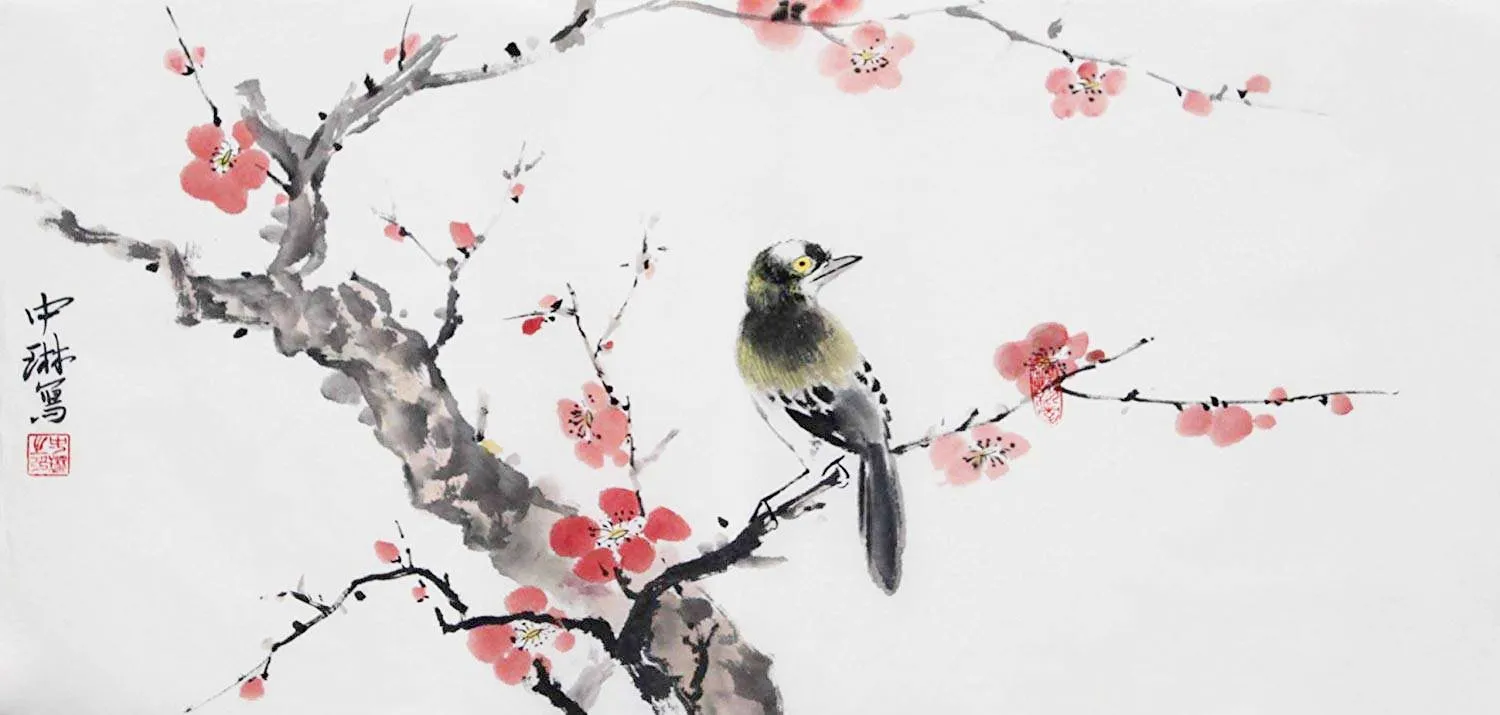
1) Introduction:
Chinese has an ancient history of painting and the related art of calligraphy. One of the initial practices was the painting of Chinese pottery, as represented by the perceived painted ceramic arts during the age of Neolithic art, the last stage of the Stone Age. The Neolithic art (7500-2000 BCE), the Bronze Age period demonstrated by the Shang Dynasty art, as well as the Zhou Dynasty art (1050-221 BCE) is the best example of Chinese art.
The Chinese painting holds the styles and ethnicities in different characters, birds or flowers, and landscape painting themes. Chinese painters over the ages have completed up this collection creating and executing various movements and variations within these traditions.
As compared to western painting, Chinese painting is mostly associated with water-based methods, rather than acrylics or oils. Moreover, Chinese painting is usually more abstract, formalizes, and less lifelike than western art. It also highlights the significance of white space and maybe supposed to favor landscape painting over photograph painting or figure sketching.
Traditional Chinese painting called “Guo Hua” is related to calligraphy, which is supposed to be the top form of Chinese painting. It is performed with a brush dipped in black or colored ink, oil is not normally used. It is mostly done on paper or silk, but several paintings are performed on walls or lacquer work. The complete artwork can be mounted on scrolls, or traditional Chinese painters may work directly onto the album sheet, folding screens, walls, and other media.
Generally, there are two types of traditional Chinese painting “Guo Hua”: first one “Gong-bi” or meticulous-style, also known as court-style painting; the second one is “Shui-mo” or “Xie Yi”, also known as ink and brush painting.
The original art of the Chinese landscape originates from internment spots from the later Iron Age ahead (c.450 BCE). These paintings were performed on silk banners, walls, and other lacquered media. Their main purpose was to protect the dead or support their souls on their journey to heaven. These tombs painting art got its high rank during the Han Dynasty.
2) Chinese ink and Wash Painting:
Chinese art, style, and traditions are surrounded by significant and exclusive traditional Chinese ink and wash painting. During the prosperous period of Tang Dynasty art (618-907), ink and wash painting were developed by Wang Wei. He was the first Chinese artist who relates color to exiting types of painting.
Just like its name, ink and wash painting is an art created with pure ink. The tools used in ink and wash painting are very similar to the materials used in calligraphy. Chinese wash painters usually grind their ink using ink sticks and crushing stones. Inks sticks are generally collected from solidly packed charcoal ash from bamboo or pine dust mixed with glue mined from fish bones. Ink also can be used to make different colors scheme and changing ink thickness. The brush is dipped in ink and moved on a piece of paper to draw smooth brushstrokes. The influence of ink can be changed by mixing water and light ink in it.
Different types of brushes are used in wash painting and these brushes are normally made from an ox, horse, goat, sheep, and other animal’s hair. As different brushes have different assets, a small brush made with wolf hair is shaped to a fine point that can draw a very thin line of ink, while a wide wool brush is used to draw a wide stroke of ink. In wash painting once a brushstroke is created, it cannot be removed or changed, therefore ink and wash painting demand years of training.
Traditional Chinese wash painting is famous for its delicate gradation in the tonality of black, white, grey, and variations of brushstrokes, and their portrayal of landscapes, flowers or birds, and figures. There are four noble subjects exposed in ink and wash painting that is the four types of plants: the orchid, bamboo, plum blossom, and chrysanthemum. In Chinese culture, these four plants signify the four seasons, summer, winter, spring, and autumn, moreover the four qualities of the model Confucian man.
The Chinese painters famous for their skill in ink and wash painting are Mi Youren, Bada Shanren, Qi Baishi, Su Shi, Daqian Jushi, and Xu Beihong.
/fit-in/0x0/img/202012/chinesepaintingflower-article-1607051656.jpg)
3) Characteristics of Chinese Painting:
The characteristics of ancient Chinese painting cannot be implicit without clarifying the conception of “form and spirit”, “rules and ideas”, which form the two vital and profound conflicts in Chinese art. It could be said that these are the keys to understood Chinese art.
All nations have their own artistic views and their own standards for appreciating nature and figures. Therefore the art of different regions reflects their own aesthetic concepts. The development of a nation's art can be seen throughout its history.
A rich development of Chinese artistic characteristics lies behind traditional Chinese paintings. Before the Qin Dynasty, Chinese scholars were usually writing books with direct and indirect orientations to painting. These references represent the traditional and academic views of artists.
For example, Confucius acclaimed that only silk cloth can be used for painting, Han Feizi preserved that painting spirits are easier than horses and dogs. These ideas on painting encouraged quality, naturalism, and expression of advanced feeling. Moreover, they had an important effect and can be considered the first instructions on Chinese painting.
Since the Sung Dynasty, Chinese scholars progressively began to create more paintings, highlighting the harmony between the artistic spirit and the symbols of expression. They start studying the “form” and “spirits” that led to a faster concerned of the mysteries of nature. Thus birds, flowers, mountains, and rivers were gradually included in Chinese paintings. So, the work of the scholars’ plays an important role in the development of Chinese art.
Chinese painting is the most significant art in China. Chinese painting is exclusive and formed with the love and intellect of Chinese people. Therefore, Chinese painting is famous all over the world. The characteristics of Chinese painting are just like calligraphy, which is thoroughly bound up with nature. The main materials are ink and brushes, the painters use a brush made of animal hair and paints on silk or sheet of paper. The painting demands intend confidence, speed, and skill developed only by long practice. Before starting work the painters need to intend what to do, he has to carefully control the brush tip concludes the vibrant character of the brushstroke, and focuses on both the artist and critical spectators.
The Chinese canon of artistic which resolute the value of a painting in a liveliness that is of the painting itself is concerned more to open the way to the soul than to report the mind. This canon is most embedded in the figure of scroll and painting albums.
The oriental painter is a seer, an artist, and a philosopher, who prepares himself for artistic expression by mystical absorption and by the severe discipline of the vigorous mind. After controlling his hesitation of mystical senses and his confidence, he takes his brush and ink with a critical sensual spirit.
There is a crucial connection between a poet and a painter; these two skills may often combine in one person. In fact, the artist’s brush is the only writing standard in China, and that calligraphy itself is adept with an artist’s attention. The brush stroke delivers the artist’s feeling, personality, and objective forward. The goals of these two artists are associated with a similarity found in western painting and poetry. In western paintings, there is a force of firm motivation, an exhibitionist spirit, a show of personal feeling, and a display of skills.
It could be said that there is no conception of art without the peace of soul. The faculty of calming the reporting intellects and the thinking mind, the ability to intensify the soul from the center of all being. To which one may extend the perception of the orient, that there can be no intense pleasure of painting without peace of soul.
4) Expressionism (Not Symbolism)
Some observers clarify Oriental art as mainly symbolic. Even Japanese authors have highlighted this account as a bond between Eastern success and Western enjoyment. Japanese art both statuette and painting are further noticed with symbolic than skill by Chinese artists. A symbolic art in the common consideration is that which sets up one's academic idea to suggest another. Symbolic is a stuff of the logical mind and intellectualism is very outlying from the nature of Oriental art.
It is somewhat expressionism that is typically explained in the great organization of Asiatic art. Expressionism’s three prominent characteristics or qualities may be marked as basics of Chinese art: greatest exploitation of the unusual materials and means of the art, resulting in consistent form organization and rich aesthetic standards, and expression in terms of the internal sympathetic or vital structure of the theme. The intent is too definite the feeling of the things rather than to imitate its magnitudes, outlines, and material facts. It is important that in the first of their canons of traditional painting Chinese speak of metrical life or formal drive, while the Japanese speak oftener of enhancing and symbolic qualities.
Normally the symbols in Oriental art are additional rather than vital attention, lying beyond the standards of the shaped, artistically moving composite of strict foundations. If the word “symbol” is used more lightly in the intellect, for example, a landscape signifying insights larger than it, inducing a sense of peace, and by further extension motivating a sense of release from the chaos and dust of city-bound existence, and then Oriental painting may also be abundantly symbolic. But it is only in spiritual painting, mainly Buddhist, in which a set of symbols, as matters or attitudes and signs, standing for academic perceptions is common.
The faith upon symbolism as a clarification appears to be due to the necessity in the notices of Western art criticizers to find some object for the hold of Oriental art upon great numbers of people. An obligation of formal superiority as such has not in the past been a common execution of the cultured art lover of Europe and America.
It’s a question of everyone, how smartly the painters learned structure and linear perspective and wonderful reliability of representation and adding instruction about the meaning of the subject material. Generally, the spectator missed the basic features in the gallery of Chinese and Japanese art.
Since 1980, some artists have made more practices to discover a way out through the junction of tradition and modernism. If the German expressionism is a contest against idealism, naturalism, and academic with passion, the expressionism in Chinese painting is actually against the fake art based on the radical tradition of abstract. The expressionist Chinese paintings with their deep intellect of cultural criticism, high spirited life passion, and firm visual demand, take away market-pleasing fake standards. The roughness and mystical intensity in Chinese painting reproduce the originalities of the artists as humans.
In favor of Chinese traditional painting, expressiveness is a key aspect. The introduction of washing painting indicates the revolution of Chinese traditional painting from real images to fantasy images, from realism to impressionism, from imitation to expression.
5) Differences between Oriental and Western Art:
One who wants to develop and appreciate Eastern art must have to put himself into the way of frequent interaction with authentic paintings and sculptures. There is no supernumerary for practice. Though he can enhance his improvement toward consideration by remembering these few basic differences between Oriental and Western art:
Oriental art
Oriental art is generally not realistic or procreative. It is usually imitated by its experts to be a way of creation, concerned with life standards not to be perceived or proved in terms of the casual and transitory aspects of outer nature. It is contingent first upon absorption of feeling and then upon expression in forms of closely obstruct elements. On the other side, art is considered a spiritual concern. Alike other spiritual actions, it assumes peace in the mind and heart and stillness in the soul. In order, Oriental art brings peace, blissful conception, and authority. If someone holds living life with the brain constantly active and refuses to be to some extent spiritual, he might as well disregard Eastern art.
Western art
Western paintings are usually very detailed; these still life paintings are generally complete in oil on canvas. It normally takes months to complete a still life Western art painting. There are rather low differences between Oriental and Western art, but both regions have different cultural assets, social standards, and geographical position, and moral values.
Commonly the both Oriental and Western artists try to concentrate on their cultural aspects in their portraits. However, Western artists typically focus on religious values while Eastern artists present different views of their art.
6) Continuous Development:
While a completely developed Indian Buddhist sculpture was presented, in China, a similar idiomatic art of fresco painting originated with it. The models still enduring fragmentarily in cave shrines, as upgraded by Chinese designs and techniques, are by no means insignificant or boring. They directed to a familiar expression of Chinese Buddhist sculpture, but by the intent of the foreign group, they are out of the leading line of progress of a typical native art.
Experts and creative practices are already been there. If one is striving to suspect the fictional records which assign activities in painting, design of legend, and morally decorative painting to the eras before Christ, there is still great emphasized building tiles shaped not after the second century.
The shifting of the figures in existing space, the gentle brush-touch, the calligraphic softness of lines, the expressionistic absorption on fundamentals, all these appear to have been learned by the artists long before.
The bluntness and nature variation not of primitivism but of wisely considered flexible expression felt for laterally a path leading directly away from practicality.
Greek painting had occupied at the other conclusion of the path at naturalism, after a long development from the delicate formalism of Execias and Euphronius. The central way of Chinese painting was already showed through some profound receptivity.
Almost every painting work of the subsequent eight hundred years has been misplaced. But if one places Tang or Song scrolls nearby these initial tiles it becomes clear that in the superseding centuries a conventional course had been run, in which the art being progressively polished and perfected rather than transformed. The moderated strength, rhythmical absorption of the statement, and light delicate method are ethnic characteristics.
Reproduced records of certain misplaced works of that time persist. They leave no suspicion that the art was almost constantly raised and valued. During the eighth century, a military leader appointed 18 artists to adorn a temple. After that, he invented their work so excellently beautiful that he directly had all 18 put to death so that such artwork could never be continual for his competitors.
There are even rare examples attributed to recognized artists of that century. Ku Kai-Chih, an expert of the fourth century, in both Buddhist symbolic art and field works, characterized by a following scroll painting in the British Museum, famous as The Admonitions of the Instructress in the palace, and by reel in the Abler collection in Washington. Both display an amazing delicacy, representative mastery of expressive line, and compositional confidence. They may be duplicated by later leaders or by hacks, so either improved or poorer than the originals.
Reproduction was a fair and valuable activity through all future eras, with a sensible if not a spiritual defense in the Chinese belief that the artwork is alive, a life-giving object in its delicate right. One of its traditions of giving a life might be in stimulating later experts to the copying of the original creation, or slightly mixed expression on a similar subject.
For the writer, it looks profitless to form for Western readers the schools, periods, and characters of Chinese painting. Our information related to Oriental history is so indefinite that no connection can thereby be recognized between artworks and changes in civil and communal structures.
It would appear more beneficial in an outline and explanation, to indicate the meaning of the Chinese painter, and to carry, if possible, something of the essence of his work by progression.
/fit-in/0x0/img/202012/chinesepaintingshanshui-article-1607051703.jpg)
7) Mountain-and-Water Paintings:
It is well to arch over those several centuries in which painting developed only to leave condemnation and mythologies rather than illustration and to extend in the age of the Tang Dynasty when the arts prospered with the authorized blessing of the ruler. China was never exposed to foreign powers; however Chinese art was never again to be so characteristically itself. Buddhism was by this time a comprehensively Chinese organization and in the beginning, the efflorescence of painting took practice in Buddhist symbolic works.
In China, Wu Tao-Tzu is considered a leading art master and is attributed with having added innovative form and rank to Chinese painting in the eighth century. The reflected softness and slight understatement carried into his primary work out of tradition gave an approach to a broader and more influential style. He made hundreds of mural paintings and was famous for further Buddhist artworks too.
Mountains and water play an important role in traditional Chinese art. For hundreds of years, Western painters have confidently discovered new themes and means, constantly struggling to transcend the familiar and research the secretive, while their Chinese complements have appreciated the creation of enduring natural sceneries. Chinese painting scrolls feature lofty mountain points and heavy waterfalls, hills receding far into the distance and slightly rolling streams. No traditional Chinese garden would be complete without mountains and water.
China’s geography offers insight into artists. The mountainous landscape and beautiful rivers of the country, express the beauty of the land. The natural beauty of China has formed its traditions and precast the mind of people towards art.
8) Tang Landscape Paintings:
The most representative form of expression was landscape painting which was originated to be in the Tang age. In the eighth century, there were recognized customs of landscape conduct. All passed significantly beyond the objective of the quaint naturalism of the Occident, which was not developed until eight centuries far along. The Chinese term that tallies to the word “landscape” indicates exactly “mountain and water”. Certainly, the purpose of all Chinese landscape painters over the eras has been to refine the spirit of these freest of natural essentials, high mountains, and floating or still water. As the Taoist advisers required the secret of calm and spiritual identification in protected areas far-off from cities, dust, and war, so the painter's sough to resolute the feeling of planetary insight and complete spirituality in mountain and water paintings.
9) The connection between Calligraphy and Painting:
There were different institutes and techniques in the eighth century. A specifically quiet, grace of minuscule painting is attributed to the first holders. There were both painters and poets, who recognized in pictures on silk, the open features of an expressive picture. The legendary connection is further evoked in the often-stated calligraphic character of the direct parts of the objective.
In Chinese calligraphy, the symbols originate from illustrative backgrounds. The word is a shorthand description of the body named, now closely abstract though with some feeble similarity. There are some other meanings in which the symbol is illustrated, in the movement of the line, its crispness or smoothness, fragility or strength.
It is just an overstatement to say that calligraphy becomes fine art in itself, under these situations. For example, a certain character for “man” may be covered and composed comparatively by the weakness or vigor of the brush strokes, to indicate a weak or strong man, a hero or coward. This is the component that cannot be explained when Chinese rhymes are carried over into the non-pictorial idioms, and we are typically left with denatured abstract complements.
Inscribed poems formally supposed an artistic character due fairly to the softness and inventive shading of the calligraphy and the entire pictorial effect of the script. Control of the brush became proficient and opens to an incredible extent in the Western world. And certainly, the painter and poet in the Orient are so suitable together in an objective, both ruling their material in individual emotion and insight, and their way in the proposal. They lead to a solid calligraphic character in the art, as may be realized in frameworks nearly extraordinarily revealing and a play of smooth and fragmented line like in woven counterpoint.
The main tools, Chinese ink, and brushes are similar in both arts. The practice of direct practice upon soft paper or silk eliminates all prospect of working over or modifying.
Most profound among the inventor commentators of Oriental art to the West, Binyon, clarified illuminatingly how the calligraphic technique and the poet’s attitude result in the influence of significant space of aliveness in those fragments of the field where the object, line, and color are not.
He said: the artist systematically notices and stores his observations in his mind. He considers the design and having accomplished the intellectual image of what he plans to paint. He transfers it quickly and with certain strokes to the silk. The qualities appreciated by the Chinese in a slight ink painting of bamboos, a preferred theme similar to learners and experts, are those valued in a piece of fine calligraphy, only there is added intense gratitude for the immediate seizure of life and usual character in the theme. In an expert’s work, the impression is existing even where the brush has not handed, and this highlights the value of the idea of reserves and quiets, that is essential to notify because no other art has implicit like the Chinese how to make blank space a strong element in the design.
10) Chinese Painting Era (960- 1279): The Golden Age of Chinese Painting:
The landscape pictures covered off into further forms: for example, landscape with characters, which ultimately directed into field painting. On the other way, there were experts dedicated mainly to still-life pictures, flower readings, and birds and animal portraits. Towards all this, there was the similar progress of the spiritual painting, enlightening and attractive in its way and picture art. Moreover, in the tang era and the next era of the Five Dynasties age (907 – 60), there were many variations of style and technique.
However, painting, separated from sculpture, move toward its ending superiority only in the age of Song Dynasty art (960-1279). There was an artist-emperor, Huizong, who start to create his court a center of pictorial art and to renovate his kingdom by authorized elevation of cultural activities. He composed five thousand paintings in one of the originals of the “National Galleries” and established an art school. Maybe, similar to Ikhnaton in Egypt, he contributed too much devotion to mystical and artistic matters and ignored the army.
At any level, the Tatars attacked his domain and directed him into deportee, where he died. Throughout the era or so that it took for the nation-state to engage its new defeaters, the artists are said to have spoiled the already established perception for departure from the active and concerned world. The painting was then most expressive of the districts propitious for spiritual stillness and calm: the inner world of the soul, and mountain fastness, and vague mist-covered meadows. Therefore a minor influence toward practicality touched during Hui Tsung’s rule revolved back.
In the far ahead Song Dynasty age, Li Tang and his followers, according to Binyon, Hsia Kuei, and Ma Yuan, established landscape at its deluxe; imitation in formation, moving in performance, it bonds simplicity with magnificence. Even though Li Sung-nien was carrying on older streams of earlier painting and copying modern living; whereas others were converting Buddhist spiritual art magnificently embellished hangings, and still others were appreciating in realistic accuracy. There are eight hundred Chinese artists noted from the Song Dynasty era. All of these presents passed on into the Song Dynasty (1368- 1644).
What is it that so significantly indicates in a Song era landscape? It is, obviously, the entire artistic effect or recreation a thing inexpressible and vague.
There is no other form of art in which the superiority so extracts in the face of exploration. Nonetheless, because of the weirdness of Eastern art to regular Western eyes, it would give the impression, for once, suitable to drop down the several components essentials to choose to pieces one of these delicate works.
/fit-in/0x0/img/202012/chinesepainting-article-1607051830.jpg)
11) Analysis of a Chinese Painting:
There are several rare mountains and water landscape paintings in the freer gallery of art at the Smithsonian. Actually, the theme is not the main consequence of the beholder. The information of surroundings and legends probably adds additional significance to the educated Chinese and approving the accuracy of this particular setting and the artist’s combination of quiet and majesty. However one needs no legendary or historic key to diagnose that the work is an official work of art. There is theme matter in the other intellect, separately from facts and folklore, history of extraction of the natural sight, constituting a naturally fine illustration of simplicity with magnificence. Exactly one may notice the critical tree charisma, the rock building, and the serenity of water, all these moderated in the environment of mountainous splendor.
This entire look subordinate, though, to the symphonic composition of formal essentials. The brain of movement is unexpected; thus far the picture is composed. All components of design in one-half of the painting field, start with stumbled volumes, forceful line, and conflicting planes, is in dissimilarity with melodious, gentle, musical planes, lines, and capacities of the other half. Nor is the potency of the central soft rhythm destructive of that planeness which is a chief law of ornamental painting.
By the way, this is a configuration, which, after the viewer has illustrious the striking split into a magnificently filled and forward left half and an open, light, and cool right half rewards the wandering eye with delightful slight moments: the zone with the two characters; the tiny tree to the lower right, inspiring as a tree but aiding as an ornately surfaced bit in the formal group, and the secreted inlet way over at the center-left. But the center of concentration, compositionally and expressively, the point at which the visualization comes to respite, to which the eye returns appreciatively after every additional circuit of the field is that foggy, symphonic, active space at the higher center.
That carries us to the fact that ultimately the artist’s objective and attainment is focused upon something that can be neither represented nor pronounced. The last thing modeled in this painting is imperceptible, temperament, and recreation.
Exactly this is completed by underestimation. The profound statement is by intellectual means, by a curiously full blend of formal essentials, a sparing practice of impartial resources. The outcome, the beholder’s reaction, is like the painter’s attitude, closer to inspection than to observation.
One sees that landscape has been entered, intensely understood, reproduced upon; then consistent, and elevated toward the mystical. To the spiritual, nature is no outer thing to be taken forward as an exhibition for fun. The more profound provision is to carry the consciousness of man to that point in which all men's all-natural phenomena occur.
Just as one may settle on those instants where the behavior looks particularly suitable on slight charming ways, so one may pause to appreciate, separately, so to declare, the skill of single formal origins such as stroke or color. The delicate calligraphic line may be considered superior, maybe, in the efficient portrayals of flowers, birds, or animals, which raise misery in the Western draftsman, so very sensitive and communicative is the delineation. What delicate stability of form and figures there is, also, in the picture of Ma Yuan’s setting with bridge and willows and of Chen Jung’s Nine Dragons scroll!
12) Colors in Chinese Paintings:
In Chinese scenery, portrait color is infrequently a stressed component. The softest touch or faded wash may be added to the colorless painting, or as often vanished. However, modulation in Chinese ink is no modulation in the Western intellect. The variety of special effects is huge.
Colors increase to a leading position, but, in the Song and Yuan pictures. The strong performance of hue and shallow in several of the Buddhist hanging portraits is effective beyond portrayal. We appreciate the vicious magnificence frequently in embroidery and woven silk mostly in the official robes for these have been well-kept and carried to the West in a larger number, but there are rare pictures with the excellence. The full shaded and fully formed painting is originated in glorious variation in Tibet and even more especially in Korea.
Chinese mural paintings reached a level not exceeded for embellished abundance in any other demonstration in the world. The frequent change of characters, the strong linear interaction, the unique Chinese design with rich seductive color, all these are to be perceived as extremely achieved even in incomplete structures. Such is an idea of Kuan-Yin, a Ming painting of 1551 in the Boston Museum of fine paintings.
13) Chinese Roll Paintings:
The roll paintings in China and Japan is of a kind of art that is new to the West. The painter creates his painting at one end of an orchestra of silk and works his erratic legend or scenery constantly to the other finale. The illustration is usually preserved as rolled. It may be exhibited in museums, visible at a most delectable channel, or the Oriental technique unrolled gradually at a sedentary and appreciated step by step through the whole assembling. The rare continuous from demands a distinct fluent method; the painting must move forward in a pattern, so as to express, yet present a united pictorial object in each section.
The enjoyment of opening the scenery of an expert painter, resting as one delight, dropping one’s outer self in the gradually changing pictorial experience, is a practice of artistic pleasure different from any known to Western peoples. The process of opening and re-rolling the silk meadow is as familiar as spinning to see the exchanging landscape as one moves out through trees and fields, as natural as the turning of the sides of a fascinating book.
/fit-in/0x0/img/202012/chinesepaintingwenyuan-article-1607051976.jpg)
Over and lastly, it is the disposition that counts when one walks in a gallery of Chinese mountain and water paintings. If you go with harmony in your heart, with the central eye open, you will find yourselves completely engrossed. This is not in-activeness, lack of familiarity, and an ordinary extraction; there is vigorous drive in these things or an optimistic formal experience. However, the experience is conducted by a technique that makes the observer for reposeful deliberation, a pleasure within quietness.
ID: 322
Matthias
Offline
Apr 28
Visited
From
Orlando, United States
Send Message
工笔画:使用细致的线条勾勒,层次丰富,如工笔重彩。
写意画:注重神态,笔墨简练,分为大写意和小写意。
白描:纯粹用线条勾勒,不用墨色渲染。
没骨法:直接用色晕染,不用墨线勾勒轮廓。
二、 按内容题材分类
人物画:描绘人类社会,包含肖像、宗教、历史故事等。
山水画:描绘自然山川景色,是国画独有的艺术形式。
花鸟画:以花卉、禽鸟、鱼虫、走兽为表现对象。
三、 按设色技巧分类
水墨画:仅用墨色浓淡渲染的“纯墨”画,强调墨分五色。
浅绛山水:以墨为主,略施淡赭、淡青色。
青绿山水:以石青、石绿为主色,色泽鲜艳。
金碧山水:金碧辉煌的重彩画,常用于山水画。
四、 常见画幅形式
竖幅:条幅、中堂。
横幅:长卷(手卷)、横披。
精致幅:扇面、册页、斗方。
国画风格独特,讲究意境,不仅展现形象,更传达情感与意境