I have always had this exact thought! Thank you for sharing!
Chinese New Year and Jewish Passover
Original
Chinese Festival
Jan 31 • 3058 read
Chinese Spring Festival and Jewish Passover have striking similarities, some say the ancestors of the Chinese came from Semitic jews.
Chinese
New Year and Jewish Passover similarities
At present, the Spring Festival is celebrating in
China as the Chinese New year. It is the most significant public holiday
celebrated at the exchange of the lunar calendar. The Chinese New Year festival
has many traditions to commemorate.
Jews also have their own Spring Festival just like
Chinese, knows as Passover or Pesach. The Chinese Spring Festival also has
several resemblances to the Jewish Passover. While the similarities between
Jewish Passover and Chinese New Year are not just those of calenderer quirks.
These traditional holidays carve up customs and practices that bear remarkable
and challenging similarities. The both Jewish and Chinese New Year festivals
blot the start of the traditional lunar year.
Origination: Shunning the one devour children and livestock
Jewish Passover in Hebrew is one of the most
consecrated and commonly observed Jewish religious festivals. Passover festival
is celebrated to commemorates the story of the Israelites exodus from earliest
Egypt. According to the Hebrew Bible, Jewish resolution in Egypt first come
about when Joseph( son of the patriarch Jacob) shift his family there during a
horrible scarcity in their homeland of Canaan. After the death of Joseph, a
mainly hostile pharaoh orders their dependence on the drowning of their
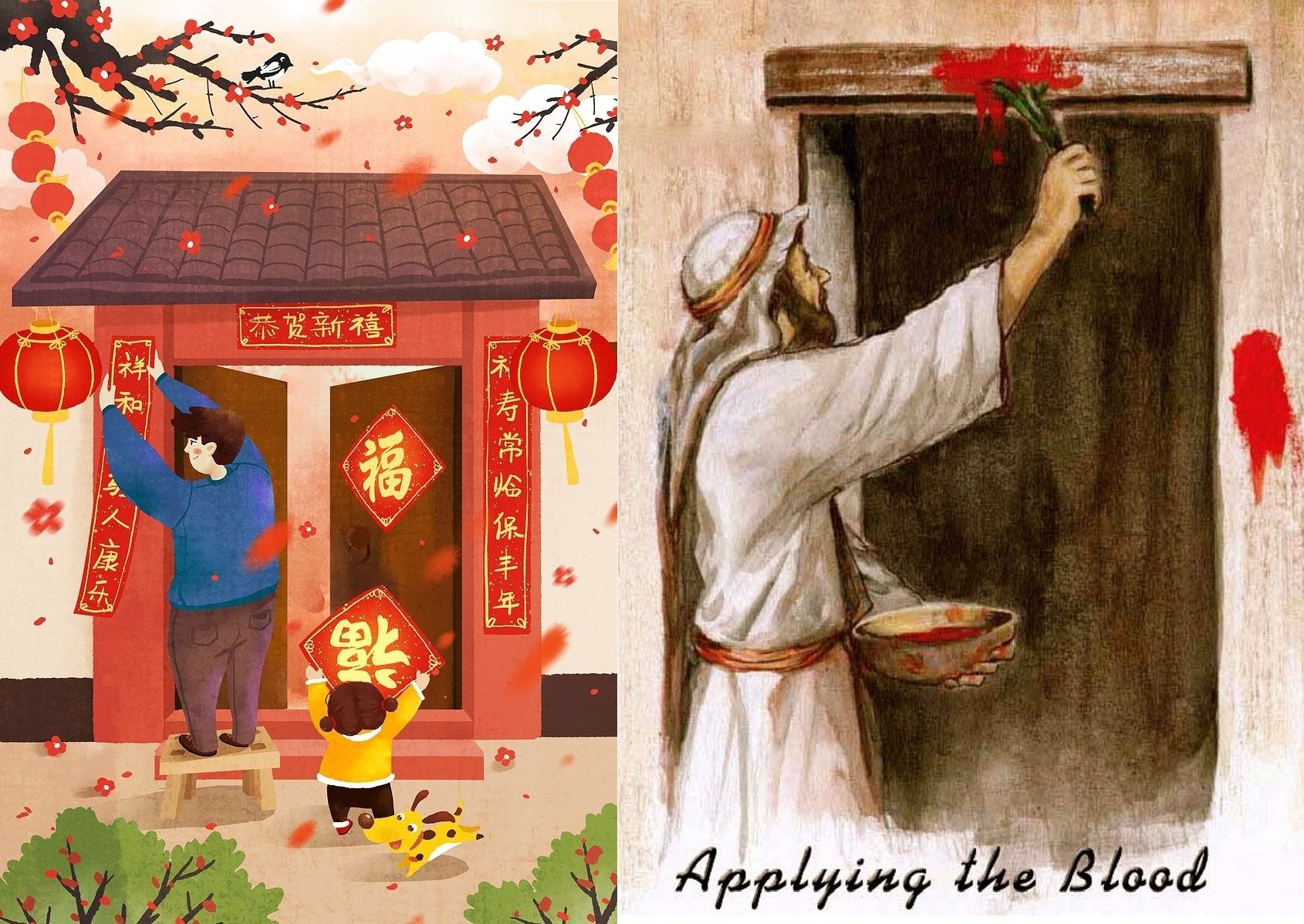
firstborn son in the Nile. Since the Jewish apply the lamb's blood on their
doorframe to keep save their sons from the curse.
The Chinese Spring Festival also has an ancient
history with a similar start. The Spring Festival celebrations also called 过年 (ɡuò nián, passing the year) in China, which means transitory of the year. According to Chinese
history, Nian is a monster that hangs around like a thunderous lion looking for
children and livestock to devour on the last day of the lunar year. So on the
Spring Festival, the Chinese people try to avoid Nian to keep safe their
children and livestock. The ancient Chinese put red cherry wooden and red
lanterns on their doorframes. Now Chinese people tie the Duilian, a set of red
paper written in propitious words on the door frames. It is pretty similar to
the lamb's blood and the words Jewish people wrote on their door frame.
Time and Importance: First month of the traditional Lunar year, Family Reunion
Jewish Passover starts on the fourteenth day of the Hebrew month, and last for seven or eight days. While the Chinese Spring Festival celebrations start from the Chinese New year Eve, the last day of the last lunar month, and continue to the Lantern Festival on the fifteenth day of the earliest lunar month.
The Spring Festival is a very important festival for
Chinese, the people celebrate a reunion family dinner on New Year's Eve,
similar to Passover Seder. On the day all the family members who are far from
their home should come back home for a family reunion. To celebrate the family
reunion, the people usually stay awake all night together and enjoy the dinner
and different traditional activities.
Festival Preparations: Shopping and Home Cleaning
In China, the people usually start preparations for the New Year celebrations several days ahead, the several Chinese families begin to prepare the Spring Festival food from the eighth day of the twelfth month of the lunar calendar. Before the Festival start, every Chinese family goes shopping to buy special food and tools for New Year celebrations. The people often clean their homes before the festival. The people generally do not eliminate the unleavened food, while they reshuffle old and unused stuff, by sell or bore them. It is just like the Jewish people searching for the Chametz and getting rid of the old stuff.
Ritual and practice: Toasting, blessing, unleavened food, and holding stuff
On the Spring Festival, it is a custom to set feasts in which the oldest man of the family sits higher than the salt, hoists the first cup to toast and gives blessings to everyone, after that the other family members toast back and bless one another. At the Festival, the Chinese people make and eat several traditional foods, including dumplings, Tangyuan, Niangao, and spring rolls. They made all this food with unleavened food. Several Chinese families share the New year cake with other people, just similar to the Jewish people share the Matzo at Passover festival. In some rural Chinese areas, it's a custom to hold stuff by the elders of the family, it is also similar to the Jewish people tradition.
Asking and Giving: Questions, Gifts, and New clothes
At the Spring Festival, Chinese people set puzzles and brainteaser games with other people for entertaining challenges. When the Chinese children answer any puzzle question, they will be granted with praises and awards such as the yummy food or other material prizes.
On the day, the old family members and young children
are given new clothes and red envelopes with money which is known as Ang Pow.
At the festival, the children can request for the Ang pow from their relatives
and family members. Just like that the Jewish people also can ask for silver,
gold, and clothing from relatives and neighbors.
Religious ordinariness: Fear, Sabbath, Worships, and Commemoration
In the New year, the Chinese people are normally very joyful and excited about performing the traditional customs. At the festival, some Chinese people are often worried about the Niangua and the irresolute challenges in the upcoming year. It is considered that the firecrackers can scare off the Nian monster and bad fortune. So the Chinese people stay awake on the New Year's Eve night and leave firecrackers at midnight. They also use these firecrackers next day to welcome the New Year. Just like the Chinese people the Jewish also stay at home with their family to welcome the New Year.
Chinese people usually start preparing traditional
foods one week ahead of the festival start. While Jewish also keep Sabbath one
week before the Passover.
At the Spring Festival, the Chinese people frequently worship the heavenly gods and their ancestors. Before having the reunion meal with family, Chinese people offer the food to the heaven god and their ancestors to thank for blessings and pray for good fortune or bumper harvest. While the Jewish people also offer the feast to commemorate the Lord for saving them from the slavery of Egyptian Pharaoh.
ID: 322
Matthias
Offline
1 day
Visited
From
Orlando, United States
Send Message
Sinim (希尼, סינים): as a name of a far land of the east from Israel, some version of the Bible translated it as 秦国 (Qin State)
And in modern Hebrew, "Sinim" means "china-men".
While the exact evidence has been lost in long history.