Chinese New Year and Christmas
Original
Chinese Culture
Nov 29 • 485 read
Chinese New Year and Christmas are both important celebratory occasions, which can bring joy and anticipation amongst those who celebrate these events.
There are interesting similarities between Christmas and the Chinese New Year Festival celebrations such as both contain traditional meals, gifts, decorations, songs, feasts, poems, gods, folklore, and are family-oriented occasions. There are also noticeable differences between these two events, such as the time of year, and the meaning of the occasion within their respective cultures. This article explains the origin, similarities, and differences between Christmas and the Chinese New Year Festival.
/fit-in/0x0/img/201911/Christmas-article-1575011487.jpg)
Christmas is a celebratory religious holiday, which embraces the birth of Jesus Christ. Every year the Christmas takes place on December 24th, the day before Jesus Christ is born. On this day the family members gather for a festive meal, which in North America, usually involves a large turkey, stuffing, vegetables, mashed potatoes, gravy, and wine. It is essential to know that different cultures may eat different meals. According to Wikipedia.org, ‘In Poland, traditional Christmas Eve meals include one or more of the following foods: Golabki filled with Kasza, fish soup, carp, Pierogi, Borscht, and Pickled Herring. Krupnik is sometimes drunk after dinner,’ and ‘In Bulgaria and Republic of Macedonia, a coin is hidden in a bread and the host breaks the bread into pieces of the loaf at the dinner table for each member of the household: it is believed that the one who gets the piece of bread with the coin will be fortunate in the coming year. The dinner is according to the rules of fasting: baked beans, sauerkraut, fish, red wine and walnuts are common.
The dessert may comprise of apples and dried fruits such as dates, plums, and figs. Usually, the table is not cleared after the dinner until the next morning, to leave some food for the holly spirits, a custom, which probably comes from pagan pre-Christian times. Also, many families may attend mass or choose to divine fast on this day.
It is significant to know those non-religious individuals may also celebrate Christmas as well, who mainly focus on the family, feasting, and gift-giving aspect of Christmas. Some may opinion Santa Claus, a mythological figure, to be more significant than Jesus Christ. Santa Claus is famous for traveling across the world on December 24th, from the North Pole, delivering presents to the ‘nice’ children, while the ‘naughty’ children receive a lump of coal. Therefore, Santa’s list for delivering gifts to children is called the ‘nice or naughty list.’ Santa Clause originates from ‘St. Nicholas, who struggled to help others while inspiring his virtues. His heroic accounts mixed with regional folklore and legends of his unselfish spread all over Northern Europe. Ultimately, the image of the stately saint was changed into an almost mystical being, one recognized for punishing the bad and rewarding the good.’ The Dutch immigrants bring Santa Claus’s name who ‘presented Sinterklaas, which means St. Nicholas to the colonies. In their excitement, many English-speaking children spoke the name so quickly that Sinterklaas sounded like Santy Claus. The name evolved into Santa Claus, after years of mispronunciation.’ December 25th is the day where Jesus Christ, well-known to many Christians as their savior, is born.
This is the day where a few individuals will put up numerous decorations, although many will decorate in advance. Examples of decorations used for Christmas are; ornaments, candles, miniature size nativity scene figures, stockings, wreaths, mistletoe, garlands, poinsettias’, Christmas lights and most importantly, the Christmas tree. ‘The origin of the tree is accredited to Saint Boniface who stopped a child from becoming a human sacrifice to a pagan god by striking down the oak tree intended for use as the stake. A fir tree jumped in its place, and he confirmed it a holy tree and taught the faithful to carry one to their homes and surround it with love and gifts.’ Ultimately, the blending of many cultures is how Santa Claus, as well as the many traditions on Christmas Eve and Day, came to be.
The Chinese New Year Festival is a major holiday, which has been celebrated in mainland China for many centuries, taking place on ‘the second New Moon after the winter solstice.’ It is essential to know that this festival is also celebrated in many other countries by its Chinese people, while various foreigners have been known to participate in the festivities as well. During this coming year, 2020, the Chinese will be celebrating the year of the Rat, the first day is on January 25th. According to legends and tales, the beginning of Chinese New Year started with the fight against a mythical monster called the Nien. On the first day of Chinese New Year, the Nien would come to devour crops, livestock, and villagers, especially children. The Chinese people would put food in front of their doors at the beginning of every year to protect themselves. They would not only use food as a means to protect themselves from Nian but also released firecrackers and wore red attire. Hence, the color red is actively used throughout the festival, such as decorations, envelopes, clothing, sweets, gifts, etc. When families come together, they feast on meat, dumplings, mandarin oranges, noodles, rice, sweets, and so forth. Before the feast, which takes place on the Eve of Chinese New Year, red envelopes with money inside and gifts should have already been distributed amongst family members, and children.
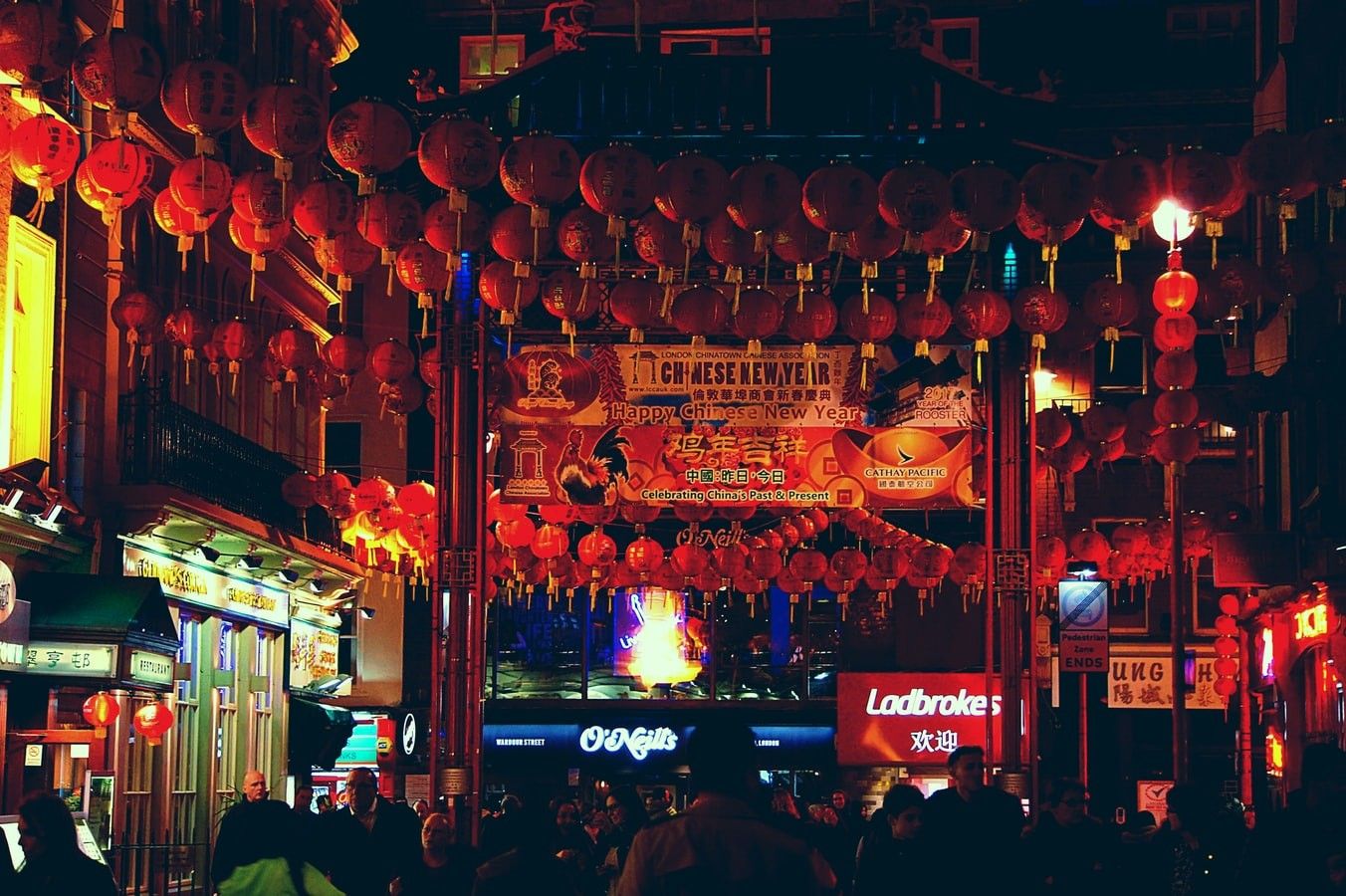
The Chinese New Year consists of fifteen days, with the majority of the days each signifying different customs and actions. For instance, the first day of the Lunar New Year is the welcoming of the gods of the heavens and earth. Many people desist from meat on the first day of the New Year because it is supposed that this will ensure happy and long lives for them; the fifth day is called Po Woo. On the fifth-day Chinese people stay at home to welcome the God of Wealth. No one visits friends and families on the fifth day because it will bring both parties bad luck. The seventh day of the New Year is regarded as the day for farmers to display their produce. These farmers prepare a drink from seven different types of vegetables to celebrate the occasion. It is also believed that on the seventh day is the birthday of human beings. Raw fish is eaten to be auspicious, and noodles for longevity. From the tenth to the twelfth are days that relatives and friends should be invited for dinner. On the 13th day, after so much rich food, Chinese people eat simple rice congee and mustard greens to cleanse the system.
These are just a few of the customs that the Chinese celebrate throughout their New Year Festival. It is also the tradition that windows and doors will be decorated with red color paper-cuts and couplets with popular themes of wealth, happiness and longevity. Decorations are usually red, consisting of greetings, pictures, and Chinese idioms. The Lantern Festival takes place on the 15th and final day of the Chinese New Year Festival. Many Chinese people during this period, decorate the streets with red color Lanterns they have lit. Some people may add a unique style to a lantern such as to add a song or a poem to it. The Chinese New Year Festival is a content time where family and friends come together to celebrate years of tradition, such as decorations, feasts, envelopes, mythology, gifts, national pride, fortune gods. Also, it is an influential festival that has been spread throughout the world.
It is fascinating to learn that Chinese New Year and Christmas have actual similarities, with slight differences to them. For instance, the use of flowers is actively used in both celebrations, although the Chinese convention for flowers has more significant meaning within their culture. A specific flower can symbolize different connotations, for instance, longevity, luck, prosperity, tranquillity, health, etc. The Chinese are known for using different flowers for the Chinese New Year Festival, such as pussy willows, water lilies, plum blossoms, bamboo, and so forth. For instance, the reason for using pussy willows for the Chinese New Year is In Cantonese, ‘Yin Liu’ sounds like ‘Yin Lou’ which is similar to ‘Yin Liang’ (money). Consequently having this plant around during Chinese New Year would represent the invitation of abundant luck and prosperity into homes. Concerning western cultures, when celebrating Christmas, people use flowers mostly for decorations. It is important to know that there is an origin story of how the poinsettia became the official flower for Christmas.
The poinsettia is a shrub that features green leaves combined with white, red, or pink leaves surrounding tiny yellow flowers. Used by the Aztecs as a medicine and dye, it is native to Central America and Mexico where it is known as ‘Flower of the Holy Night’. In 17 century it was used in these areas by Franciscan friars in Nativity processions. In terms of baked goods and sweets, Christmas cake and sticky cake closely resemble one another. Sticky cake, also called as Neen Gow, is a fruitcake that can be either baked or steamed. This particular cake is made for the kitchen god as appreciation. The Christmas cake started out as breakfast cereal from the English and later evolved into a fruit cake.
The ingredients usually consist of flour, sugar, eggs, butter, spices, dried fruit, marzipan, spices, and whiskey. These cakes are made in advance; usually, people start making them in November and then keep them down in an airtight container. A small amount of sherry and brandy or whiskey is poured into holes in the cake every week until Christmas. This process is called ‘feeding’ of the cake. Giving and receiving gifts to friends and family members are part of both celebrations. For example, during the Chinese New Year, people give gifts, which are usually brought when visiting friends or relatives at their homes. Common gifts include fruits, biscuits, chocolates, cakes, candies, or some other small gift. Also, people distribute Christmas gifts, and these gifts can be similar to those that are given on the Chinese New Year, but usually Christmas gifts usually consist of a large variety of options. For example, food, jewelry, electronics, toys, alcohol, automobiles, household appliances.
Chinese New Year and Christmas are both important celebratory occasions, which can bring joy and anticipation amongst those who celebrate these events. These are times when friends, relatives, family, and even complete strangers, can come together in harmonious enthusiasm. Both events contain similarities, such as folklore, feasts, songs, poems, decorations, gifts, traditions, flowers, games, etc. Christmas, a westernized occasion, may cover different symbolic meanings and significance to those who celebrate it rather than those who celebrate the Chinese New Year. But, the most vital thing about these two celebrations, even with their differences, is they bring people together, and both are accepting towards all cultures and beliefs.
Responses • 0
0/2000
ID: 322
Matthias
Offline
2 day
Visited
From
Orlando, United States
Send Message