Chinese New Year Food
Original
Chinese Food
Dec 09 • 1261 read
Chinese New Year's common dishes and food that can be seen on the table of celebrating families are discussed in this story.
One of the great joys of celebrating the Chinese New Year is the Lunar New Year feast on the eve of the holiday. Specifically, in Chinese culture, superstitions intertwine with food to bring about special dishes intended to bring good luck for the New Year. The food appearance or pronunciation represents auspicious meanings, and common homophones include words for success, prosperity, and family togetherness. Chinese New Year is often the only period in China in which the whole family can be together to be able to celebrate tradition. Many regions had various ways of preparing the feasts; however, in this article, the most common dishes that can be seen on the table of celebrating families are discussed below.
Fish
/fit-in/0x0/img/201912/Final_Lunar_New_Year_Food_fish-article-1575866181.jpg)
A whole fish is a primary food for the Chinese New Year celebrations in China and is intended to wish prosperity for the entire year. In Mandarin Chinese, the word Yu is a homophone of fish which means surplus. There is also an idiom ‘níanníanyoǔyú’, which means ‘to have a surplus every year,’ which gave rise to its homophonic pun, or ‘to have fish every year.’ For added symbolism, it is customary to serve the fish as a whole with the head and tail attached and only eat the middle because of another expression: ‘yǒutóuyǒuwěi’, which means ‘to have both a head and a tail.’ This means to be well-organized and finish everything that one starts. It also represents a good beginning and ending for the coming year.
The remaining parts of the fish can be eaten the next day to symbolize that surplus will overflow into the future. For added luck, the fish should face elders or guests as a sign of respect. Steamed fish is one of the well-known Lunar New Year recipes. What fish should be chosen for the Lunar Year dinner is based on auspicious homophonic. The first character of crucian carp in Mandarin sounds like the Chinese word for good luck, therefore eating crucian carp is believed to bring good luck. The first part of the Chinese for ‘mud carp’ is pronounced like the word for gifts, so it is considered that eating mud carp during the Lunar New Year symbolizes wishing for good fortune.
Dumplings
The history of dumplings is more than 1800 years old, and it is one of the traditional and classic Chinese dishes that eaten on Lunar New Year Eve throughout China. Chinese dumplings can be made to luck like Chinese silver ingots. According to the Legend, the more dumplings one eat during Lunar New Year celebrations, the more money they can make in the upcoming year. Generally, the dumplings consist of minced meat and finely-chopped vegetables wrapped in a thin and elastic dough skin. Popular fillings are shrimp, minced pork, ground chicken, fish, vegetables and fish. Dumplings can be cooked by steaming, boiling, baking or frying. Most of the Chinese people can make dumplings; first people mix the dough, then the dough into round ‘wrappers’ with a rolling pin, and then fill the wrappers with stuffing and pinch the wrapper together into the favorite shape, and finally cook them.
Chinese people do not ear sauerkraut dumplings at New Year because it implies an unfortunate and challenging future. Traditionally on Chinese New Year people eat dumplings with cabbage and radish, implying that one’s mood will become gentle and one’s skin will become fair. There should be a good number of pleats when making dumplings. If someone makes the junction too flat, it is believed to purport poverty. Some people put a white thread inside a dumpling, and the one who eats that dumpling is believed to possess longevity. Some people put a copper coin in a dumpling, and the one who eats is supposed to become wealthy. Instead of circles, the dumplings should be arranged in lines because circles of dumplings are thought to mean one’s life may go round in circles, without going anywhere.
Spring Rolls
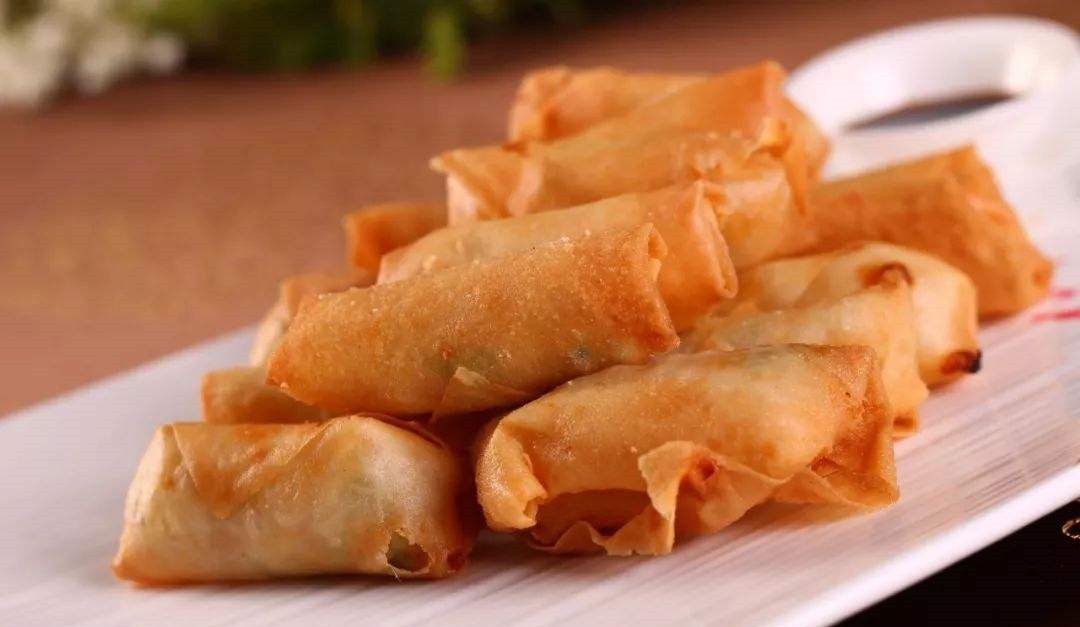
Spring rolls get their name because traditionally they are eaten during the Spring Festival. It is a dish especially famous in East China; Shanghai, Jiangsu, Jiangxi, Guangzhou, Fujian, Shenzhen, etc. Eating spring rolls is a traditional way to welcome the arrival of spring. Spring rolls have a long old history, during the Tang Dynasty Chinese people used to make thin pancakes with flour on the day of the start of spring. It was known as ‘spring dish’, and people used to send as spring presents to relatives and friends. During Ming and Qing dynasties cooks rolled the traditional pancakes into mignon spring rolls. The golden cylindrical-shaped rolls represent gold bars, which symbolize wealth. Spring rolls can be filled with meat, vegetables, or something sweet. After filling it can be wrapped in thin dough wrappers, then fried, when the spring rolls are given their golden yellow color.
Glutinous Rice Cake
Traditionally glutinous rice cake is a Lunar New Year recipe. In Mandarin, glutinous rice cake sounds like it means ‘year high’. For Chinese people, it symbolizes a higher position, a higher income, and the growth of children. The main ingredients of glutinous rice cake are sticky rice, chestnuts, sugar, Chinese dates, and lotus leaves. In China, customs vary in different areas; yellow rice cake is eaten in the northern frontier of China, white rice cake in north China, and water mill made rice cake in southern China. Glutinous rice cake has a history of at least 1000 years. During the Liao Dynasty (907-1125) Chinese people in Beijing had the custom of eating New Year cakes on the 1st day of the first month of the New Year. In Ming and Qing dynasties, these cakes become a typical folk snack and remain so today. Traditionally, this dish is made with red dates, but it can come in various forms including savory.
Chicken
A whole chicken is usually served on New Year to represent family togetherness. As the chicken is high in protein, some consider that chicken during the Lunar New Year also symbolizes rebirth. The chicken should be served as a whole, with the head and feet attached. In some families, the chicken’s feet are kept for the breadwinners of the family to help them grasp onto wealth. Also, families offer chicken to deceased ancestors for otherworldly blessings and protection. A standard method for preparing a Chinese New Year chicken is by marinating it in light soy sauce, sugar, cooking wine, and green onions before sending it off to the steamer.
Sweet Rice Ball (Tangyuan)
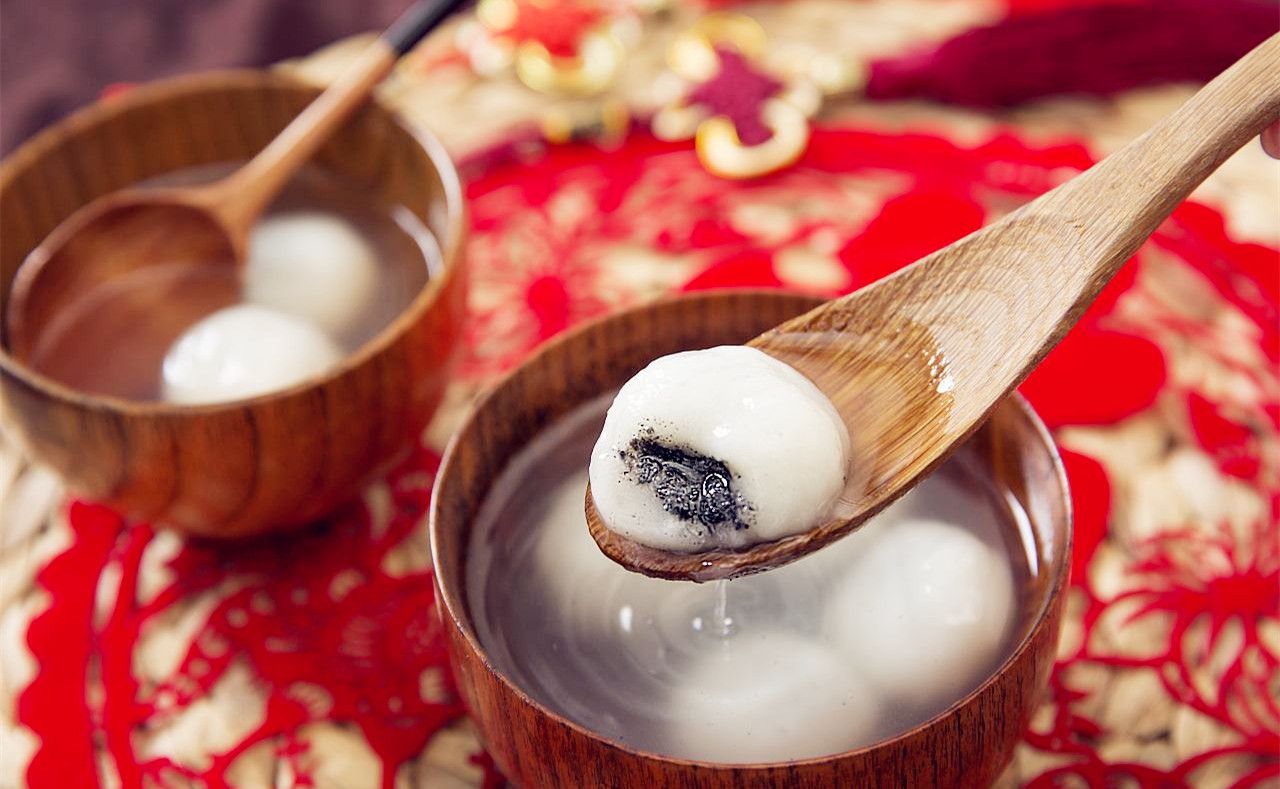
Sweet rice ball is a significant food for the Chinese New Year Lantern Festival; however, in south China, people eat them during the Spring Festival. The round shape and pronunciation of ‘Tangyuan’ are linked with reunion and being together. That is why Chinese people preferred to eat sweet rice balls during the New Year celebrations.
Typically Tangyuan ate on the 15th day (the Lantern Festival) after the lunar new year. Tangyuan is a small and round dumpling made from glutinous rice flour. The rice flour is pressed by hand into its spherical form and is usually filled with back sesame paste, date paste, red bean paste, or peanut paste. The dumplings have a chewy texture and served in a bowl of warm, sweet soup, sometimes infused ginger, or fermented rice wine. There are non-dessert differences too and are usually filled with a mixture of vegetables and meat. Tangyuan is famous in southern and north China. It is a special dish for Chinese Year celebrations because its name in Mandarin sounds like ‘togetherness’ or ‘reunion’. Also, the tang yuan round shape is essential to Chinese New Year celebrations. In China circle symbolizes oneness and unity, and a warm serving of tang yuan eaten from a round bowl is a way to exemplify that concept.
Longevity Noodles
Exceptionally long noodles called ‘Changshou Mian’ symbolize a wish for a long and happy life. It is custom to slurp down the noodle without uncut, either fried and offered on a plate or boiled and give in a bowl with their broth. Great care is taken during the lunar New Year season to ensure that noodles are long and remain uncut.
Good fortune fruits
Eating certain fruits during the Lunar New Year period, such as oranges and tangerines, are believed to be lucky. These fruits symbolize wealth and fullness because of their round shape, golden color and their names in Mandarin. Displaying and eating oranges and tangerines is considered to bring fortune and luck because of their pronunciation and writing. The Chinese name of tangerine and orange sounds like the word for success in Chinese. Eating shaddocks is believed to bring continuous prosperity. The more someone eats the more wealth it will bring as the traditional saying goes.
Responses • 0
0/2000
ID: 322
Matthias
Offline
3 day
Visited
From
Orlando, United States
Send Message