Beijing Cuisine
Original
Chinese Food
Nov 21 • 1495 read
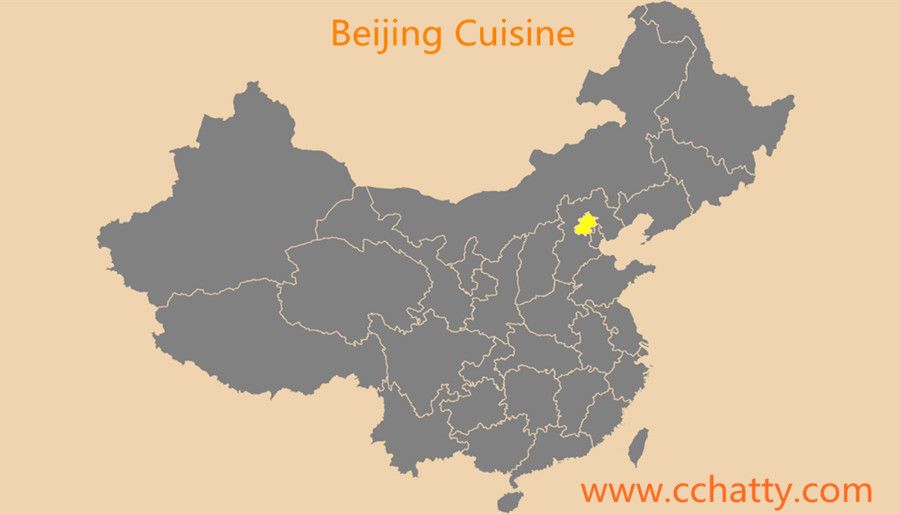
Beijing Cuisine, or “Jing Cuisine” for short, blends the cooking techniques of the Han, Manchu, Mongolian, Hui and other ethnic groups. Jing cuisine absorbs the advantages of various local schools of cuisine in South and North China, such as Shandong Cuisine.
Formation and Characteristics of Beijing Cuisine
After a long period of development, Beijing Cuisine was formed with a lot of local characteristics.
Though not very large, Beijing is the capital of China, as well as the country’s political, economic and cultural center. Therefore, Beijing exerts great influence on the entire country, so does the Beijing Cuisine. For instance, the Beijing Roast Duck is well known both at home and abroad.
/fit-in/0x0/img/201911/Beijing-Cuisine+Hello+Formation-and-Characteristics-of-Beijing-Cuisine-article-1574298889.jpg)
Situated at the northern end of the North China Plain, Beijing has always been a city of great importance. After the Spring and Autumn period (770-221 B.C.) and the Warring States period (770-476 B.C.), Beijing served as the capital for six dynasties, spanning over 800 years. Before the Song Dynasty, Beijing was not a prosperous city. But in the Yuan Dynasty, Beijing became the capital of the largest country in the world. According to the description in Marco Polo’s book, Beijing was then the biggest metropolis in the world. At that time, most citizens in Beijing used coal as fuel, which created an ideal environment for the development of the catering trade. In the Ming and Qing dynasties, Beijing reached new heights in social and economic development, largely thanks to the booming trade and advancement in technology at that time. As time went by, more and more officials moved from South China to Beijing, which introduces the cuisines of South China to the capital.
/fit-in/0x0/img/201911/Beijing-Cuisine+Hello+Formation-and-Characteristics-of-Beijing-Cuisine1-article-1574298889.jpg)
Among all the local schools of cuisine in Beijing, Shandong Cuisine has exerted the most remarkable influence on the Beijing Cuisine and occupies an important position in Beijing’s folk diet and catering trade. In addition, Beijing Cuisine was also influenced by court cuisine, official cuisine and Muslims’ cuisine of the Hui people. Influenced by so many different cuisines, Beijing Cuisine gradually comes into being.
Beijing Cuisine incorporates the cooking techniques of Han, Manchu, Mongolian, Hui and other ethnic groups. It adopted the good qualities of many local schools of cuisine in South and North China, especially those of Shandong Cuisine. As Beijing is the capital of the Qing capital, the Beijing cuisine today inherits many cooking techniques of the court cuisine and the official cuisine of the Qing Dynasty. Under such a unique cultural environment, various Beijing dishes with distinctive characteristics of Beijing city were created. Now Beijing Cuisine boasts a wide variety of meticulously prepared dishes and snacks, which are soft, crisp, fresh, tender and delicious.
2. Special Local Dishes and Snacks of Beijing
-article-1577682282)
As Beijing is a metropolis with a very complex population composition, the tastes of the people living in Beijing vary greatly. Such a complicated population composition creates many challenges for the catering business in the past. However, since the 1980s, the catering industry of Beijing has developed at high speed. Every school of Chinese and foreign cuisine can be found in the ancient city. The number of restaurants has increased from several thousand to several hundred thousand, which serve all kinds of food from all over China and many other countries in the world. Here I would like to introduce to you some Beijing’s special local dishes.
(1). Beijing
Roast Duck—北京烤鸭
There are two types of Beijing Roast Duck: “grilled duck” and “braised duck.” Quanjude Roast Duck Restaurant serves “grilled ducks,” and Pianyifang Roast Duck Restaurant serves “braised ducks,” each having its distinct characteristics. Aside from the two most famous restaurants, many less famous ones also serve Beijing Roast Duck, but if you want to taste genuine Beijing Roast Duck, you are advised to go to more famous restaurants, which are located in Qianmen, Hepingmen, and Chongwenmen.
(2). Instant-boiled
Mutton and Roast Meat—涮羊肉和烤肉
Instant-boiled Mutton and Roast Meat, representative dishes of the Muslims’ food in Beijing, are served by many restaurants in Beijing all the year-round. Some famous restaurants with a long history provide high-quality Muslims’ dishes, such as Donglaishun Restaurant, which mainly serves Instant-boiled Mutton, and Kaorouwan Restaurant, which serves the best Muslims’ roast meat.
(3). Manchu
Dishes
White Boiled Pork (白煮肉) and Stir-fried Pork (烧瞭肉) served by Shaguoju Restaurant is the representative dishes of Manchu Cuisine. In the past, the restaurant slaughtered one pig a day, and it would close the door after the pork of one the pig was sold out, hence a two-part allegorical saying: Like the shop sign of Shaguoju Restaurant—it won’t wait after noontime.
(4). Dishes and
Snacks of the Qing Court Cuisine
Many restaurants in Beijing serve the imperial food of the Qing Dynasty, such as Fangshan Restaurant in Beihai Park, Tingliguan (Listening to Orioles Pavilion) Restaurant in the Summer Palace and Fangshan Restaurant near the Tiananmen Square. Of all the dishes served by these restaurants, the Manchu-Han Banquet (满汉全席) is the most famous. It includes 108 to 134 dishes, 48 cold dishes, and various snacks and fruits. The food served at the banquet is enough for ten people to eat ten days in succession.
The Longevity Banquet (万寿无疆席) of Tingliguan Restaurant is also very famous. It contains all kinds of gorgeous dishes, each having a noble and graceful name, plus meticulously prepared snacks. In the longevity banquet, there are several hundred kinds of dishes and snacks in imitation of the Qing court cuisine, including:
Stir-fried Fish Slices—抓炒鱼片
This stir-fried dish has slices of mandarin fish or snake-headed fish as main materials, and starch, edible oil, soy sauce, cooking wine, onions, and ginger as seasonings. With golden yellow color, the dish is delicious and aromatic.
Fried Lotus
Petals and Chicken Meat Slices—荷花鸡片
This dish’s main ingredients include chicken meat slices and fresh lotus flowers. Its supplementary materials include dried slices of tender bamboo shoots, hams, pea sprouts, egg white, and clear soup. The ingredients are fried with various kinds of seasonings. Having white, green and red colors, this dish is palatable and nutritious.
The imperial snacks include:
Baked Cake Stuffed with Minced Meat—肉末烧饼
Small Steamed Corn Bun—小窝头
Pea Flour Cake—碗豆黄
Kidney Bean Roll—芸豆卷
Assorted Longevity Noodles—什锦寿面
(5). Muslims’
Dishes
The Muslim’s dishes in Beijing have special characteristics. Traditional Muslim cuisine has several hundred kinds of dishes, including the famous dishes below:
Whole Sheep
Banquet—全羊席
Sheep is the main ingredient of the banquet. There are more than 100 kinds of delicious dishes and snacks made of different parts of a sheep. It is the ultimate banquet of the Muslims.
Sheep Head Meat
in Casserole—沙锅羊头
Prepared with sheep head meat, Xianggu mushrooms, the heart of a cabbage and a wide variety of seasonings, this braised dish is aromatic, delicious and, most importantly, not greasy.
Braised Tendons
of Beef in Soy Sauce—红烧蹄筋
With tendons of beef as the main materials, this dish is prepared through a complicated procedure. It is aromatic, soft, chewy, refreshing and not greasy.
(6). Official
Cuisine
As a traditional official cuisine, the famous Tan Family Cuisine evolved from Guangdong Cuisine and featured high-quality dishes prepared with seafood, edible bird’s nests, shark’s fins and abalones. The noted dishes of Tan Family Cuisine includes:
Braised Shark’s
Fin with Brown Sauce—黄焖鱼翅
With shark’s fins as the main material, this dish contains several dozen kinds of ingredients and seasonings and is prepared through a complicated procedure. It is a famous and expensive dish.
Grilled Large
Black Sea Cucumber—大乌参
This dish is prepared with high-quality sea cucumbers. Beijing Hotel leads the country in preparing this dish.
All the dishes served at the Red Mansion Banquet (红楼宴) are created by some scholars and chefs according to the famous classical Chinese novel A Dream of Red Mansions. Laijinyuxuan Restaurant in Zhongshan Park and Red Mansion Restaurant in the Grand View Garden are two restaurants that prepare the unique banquet.
(7). Traditional Snacks of Beijing
There are also a large variety of famous snacks in Beijing:
Shaomai—烧卖
(Stuffed steamed dumplings with dough gathered at the top)
Yipin Baked Cake—一品烧饼
It refers to the baked sesame cake with a sweet stuffing containing some kernels. This cake originated from the imperial court, hence the name Yipin Baked Cake, meaning first-class cake.
Baked Cake Stuffed with Sweetened Bean Paste—豆沙烧饼
Meat Pie—馅饼
Wonton—馄饨
Guanchang—灌肠
It is a kind of sausage prepared with starch and red coloring agent for food made from round fermented rice. Before eating, one need to slice it, fry the slices and then add some garlic juice and other seasonings.
Condensed Tofu—豆腐脑
Fried Small Flour Balls—炒疙瘩
Bean Flour Cake—豆面糕
Glutinous Rice Cake with Bean Paste Stuffing—豆馅切糕
Pea Flower Cake—豌豆黄
Tea Broth—茶汤
Sweetened Gruel—油茶
Almond Tea—杏仁茶
3. Interesting Stories of Some Beijing Dishes
-article-1577682380)
Duyichu—都一处
Duyichu, founded in the third year of the Qianlong reign period (1738), was originally known as the “Wang’s Wineshop.” Its owner was Wang Ruifu. There is a famous story about the signboard of Duyichu.
Legend accounts that one day in 1752, Emperor Qianlong went out of the palace and traveled incognito on a fact-finding mission. He returned to the capital at night by riding a donkey called Snow Covered by Black Clouds. When he came to Qianmen, he felt hungry and thirsty. He wanted to eat in a fancy restaurant, only to find that all the restaurants had been closed, except for a small eatery. The emperor entered the eatery and ordered some wine and several dishes. The wine tasted good, and the dishes were delicious. After having drunk and eaten to his heart’s content, Emperor Qianlong asked the owner: “What is the name of your restaurant?” Wang Ruifu replied: “We don’t have a formal name.” After thinking for a while, Emperor Qianlong said: “It is the only restaurant in the capital that stays open late at night. Let’s call it ‘Duyichu’ (the only restaurant in the capital).”
On the following day, when the small restaurant was just open, the eunuchs arrived, carrying an inscribed board with an inscription of “Duyichu” sent by Emperor Qianlong. After that, the small restaurant won great renown. It was crowded with customers all day long; and it created some famous traditional snacks, such as Shaomai (steamed dumplings with the dough gathered at the top), Friend Triangle, Cool Meat and Braised Pork with Iris Ensata Thumb.
Dragon
Flirts with Phoenix—游龙戏凤
Dragon Flirts with Phoenix is a famous dish of Zhimeilou Restaurant. Legend has it that, one day, Emperor Wuzong Zhu Houzhao of the Ming Dynasty came to Meilong Town in plain clothes. There was a small restaurant in the town run by Li Long and his younger sister Li Fengjie. After entering the restaurant, the emperor caught the sight of Li Fengjie and was fond of the pretty girl right away. He asked Fengjie to prepare a dish for him. Fengjie went to the kitchen and prepared a dish with chicken and fish as raw materials. Drinking the mellow wine and tasting palatable dish, the emperor, served by the pretty girl, was in high spirits. He asked Fengjie what the name of the dish was. Fengjie, who was too shy to answer, kept silent. “Let’s call it Dragon Flirts with Phoenix,” the emperor said. Later this dish was spread far and wide among the Chinese people. A play of the the same name was created and performed all over the country.
Five
Successful Sons—五子登科
Five Successful Son is a famous dish of the Qing court. The legend goes that in the Qianlong reign period, the emperor took five high-ranking officials, including Liu Tongxun, with him to the area near Nanyuan Lake to go hunting one day. Within half a day, they came back with fruitful results. Emperor Qianlong was so excited that he invited the five officials to dine with him. An imperial chef meticulously prepared a dish with chicken, duck, fish, shrimp, and pork. The dish had five colors and five tastes. The emperor who liked the dish very much asked the chef what the name of this dish was. “It is a new dish, and I haven’t given it a name yet,” the chef replied. Then Liu Tongxun asked the emperor to name it. As the dish was prepared with five kinds of materials, and the emperor went hunting and had the dish with five officials, Qianlong said: “Let’s call it Five Successful Sons.” Later the dish was spread far and wide among the people. It used to be a famous dish of the Zhimeilou Restaurant in Beijing.
Small
Steamed Bread of Corn—小窝头
Small Steamed Bread of Corn is a favorite snack in Beijing. A story about Small Steamed Bread of Corn goes like this: At the end of the Qing Dynasty, the allied forces of eight countries invaded China and occupied Beijing. Empress Dowager Cixi fled from the imperial palace in panic. She left in a hurry so that she forgot to take any chefs with her. Therefore, on the way, she had to endure the torments of hunger now and then. One day, she asked her followers to cook something for her, but there was no grain, only a small amount of cornflour.
A person by the name Guan Shili prepared a steamed bread of corn for her. Emperor Dowager Cixi was so hungry that she thought that it was the best food she had ever eaten. Later after she returned to the imperial palace, she thought of the steamed bread of corn she ate on the way of fleeing from home. She asked the imperial kitchen to prepare some such cornbread for her. All the imperial chefs knew well that to satisfy Empress Dowager was a hard job, but none of them dared to disobey the order. Finally, they decided to make some small and exquisite steamed bread of corn by using high-quality corn flour, bean flour, and white sugar. Cixi liked the exquisite steamed bread of corn very much and chose to eat them on every fast day. After that, the Small Steamed Bread of Corn became one of the most famous snacks of the Qing imperial palace.
Pea-flour
Cake—豌豆黄
Pea-flour Cake is a local snack of Beijing often eaten in spring and summer. Pea-flour Cake was originally a folk snack and was later introduced to the imperial palace of the Qing Dynasty. Prepared with white peas as the raw materials, pea-flour cakes made in the imperial kitchen were light yellow, smooth, pure, sweet, aromatic, cool and refreshing, which melted in the mouth. The procedure of making Peal-flour Cake is as follows: Get rid of the skins of white peas, clean them thoroughly, boil them until they are soft, fry the soft peas with sugar, and cut the condensed bean jelly into pieces. Pea-flour Cake made by the Fangshan Restaurant is the most famous.
Aiwowo—艾窝窝
(steamed cone-shaped cake made of glutinous rice with sweet filling)
Aiwowo, a traditional local snack of Beijing, is prepared with glutinous rice, rice, sesame seeds, walnut meat, melon seed meat, white sugar, and osmanthus flowers according to the traditional method. In the shape of snowballs, Aiwowo is glutinous, soft, sweet and aromatic. In the Wanli reign period of the Ming Dynasty, it was called Wowo. Later an emperor of the Ming liked the snack very much and often said: “I like Wowo,” hence the name Aiwowo (Ai means “like” or “love” in Chinese.). Later this snack was well received by ordinary Chinese people.
Chatang—茶汤
Chatang (a paste made of millet or sorghum flour) is another snack in Beijing. Dating back to the Ming Dynasty, Chatang was a famous snack in the imperial palace and was referred to in the same breath with the best “articles,” “prescriptions” and “weapons” in the country. Later, it was well-received by ordinary Chinese people.
Stir-fried
Flour Knots—炒疙瘩
Stir-fried Flour Knots is a snack peculiar to Beijing. Deep yellow in color, Stir-fried Flour Knots are soft, chewy, mellow and tasty. Sometimes such flour knots are fried together with green vegetables. In the early times of the Republic of China, a lady by the surname of Mu and her daughter ran a small eatery called Guangfuguan in Hufangqiao, Xuanwu District, Beijing. According to the request of customers, the mother and daughter created a special snack: They prepared some flour knots, boiled them, mixed them with shrimp sauce and stir-fried them. With the passage of time, the restaurant owner added some green vegetables to the snack, making it more delicious.
A
Happy Family—全家福
A Happy Family is a dish prepared with various kinds of raw materials and ingredients. Legend has it that: One year in the Yongle reign period of the Ming Dynasty, Beijing was bustling with people at the Lantern Festival. One day Emperor Chengzu Zhu Di of the Ming Dynasty went out of the palace to appreciate the colorful lanterns in plain clothes. He returned to the palace late at night and felt hungry. He ordered the imperial kitchen to prepare some food for him. However, most of the chefs had gone to sleep, with only one chef on duty. The fire of the stoves had gone out too. “What food shall I prepare for the emperor?” the chef asked himself. Suddenly the chef had an interesting idea and found a good solution. He poured all cold dishes into a pot, added some seasonings to them and mixed them thoroughly. Then a dish with a strong taste and a faint aroma was ready.
After
eating the food, the emperor asked the chef: “What is the name of the dish?” “A
Happy Family,” the clever chef replied. Upon hearing the auspicious name, the
emperor was excited and ordered the chef to provide him with the dish
frequently. Since then, the dish “A Happy Family” has been handed down
generation to generation.
Responses • 0
0/2000
ID: 322
Matthias
Offline
1 day
Visited
From
Orlando, United States
Send Message